
Handvo Recipe
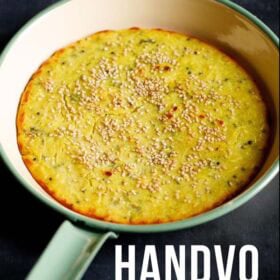
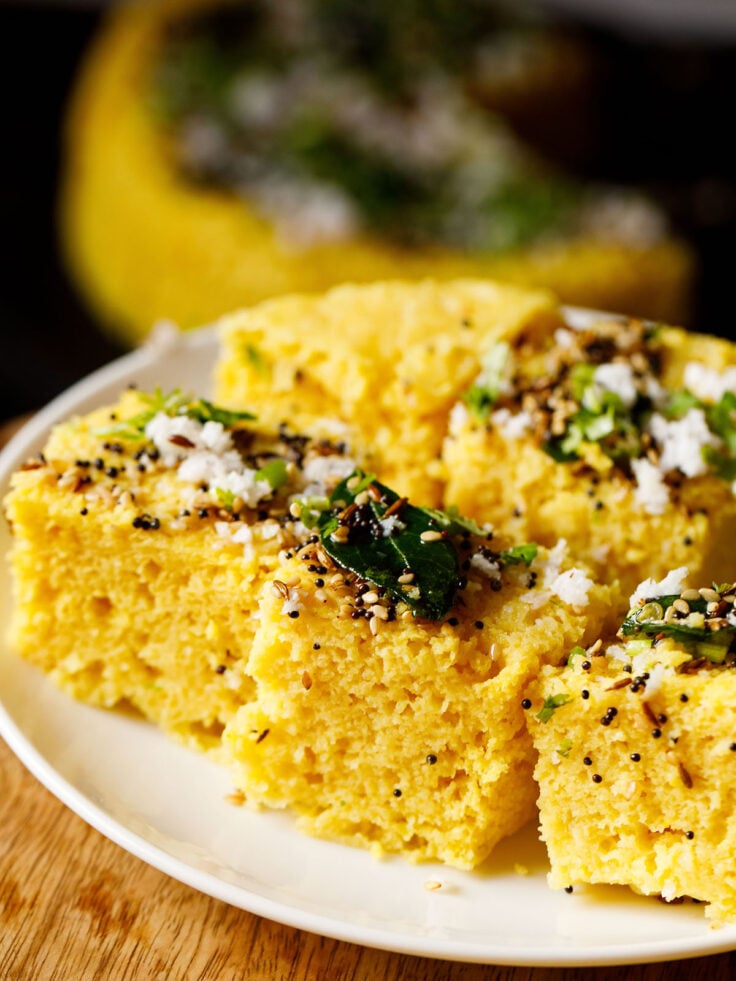
Handvo is a traditional Gujarati savory, spiced cake prepared with a fermented batter of rice and lentils. Vegetables, spices, and herbs are added to the batter, which is then cooked until golden and crisp on the outside while remaining soft inside. Handvo is commonly enjoyed as a breakfast dish, snack, or light meal and is known for being both filling and nourishing.
About This Handvo Recipe
In this recipe, I share a simple way to make Gujarati handvo in a pan. While a traditional handvo cooker is often used, this method works well for everyday home cooking and gives good texture and flavor.
This recipe was shared with me through my sister. It originally comes from her Gujarati friend’s mother, who makes excellent handvo. After trying it a few times and getting consistent results, I decided to share it here.
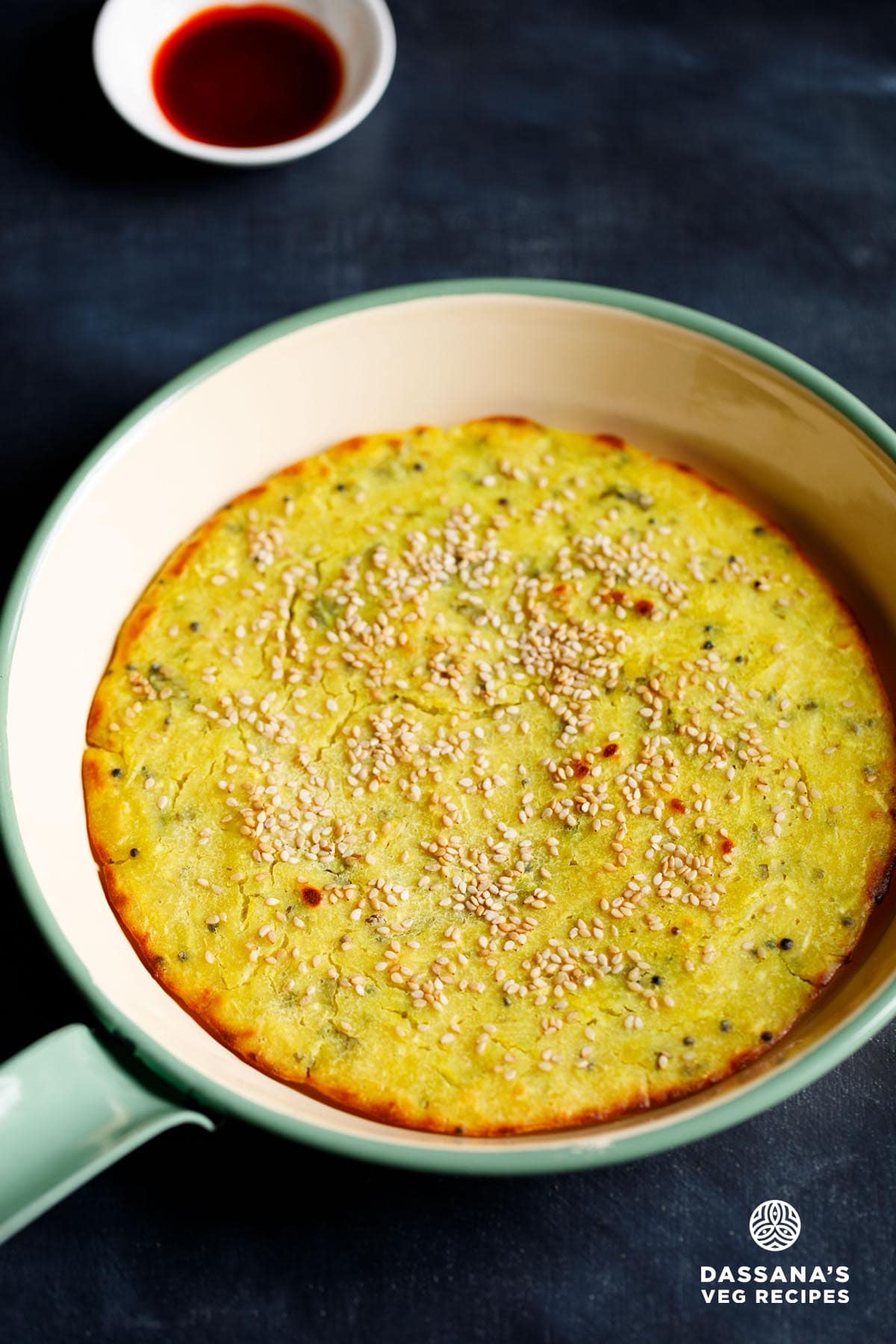
The recipe uses a higher proportion of moong dal and does not include chana dal, which makes the handvo lighter.
If you prefer, chana dal can also be added. Bottle gourd (lauki/opo squash) is commonly used, but other vegetables like carrots, zucchini, or spinach work well too.
Handvo is considered a wholesome food that is easy to digest since the batter is fermented and lentil-based. I enjoy making fermented foods, and if you do too, you may like my recipes for Kanji, Idli, White Dhokla and Panta Bhat.
It is usually cooked in a special handvo cooker, but it can also be prepared in a pan (the method shown here), oven, or a stovetop pressure cooker, depending on what is available at home.
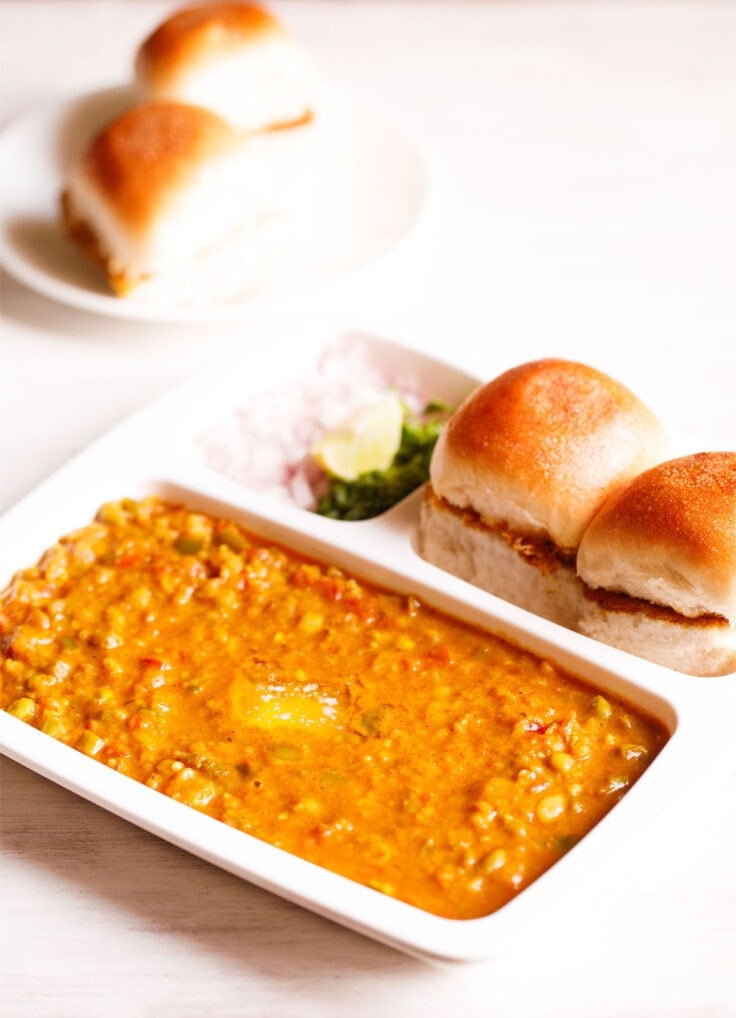
Handvo can be served for breakfast or as an evening snack. It tastes best when served warm with coriander chutney, green chutney, or papaya chutney.
A few more popular Gujarati recipes shared on blog are:
How to make Handvo (Step-by-Step)
To make handvo, rice and lentils are soaked, ground into a batter, and then left to ferment. Vegetables and spices are mixed into the fermented batter, which is then cooked slowly until crisp on the outside and soft inside.
The process is simple, but fermentation and slow cooking are key to good texture and flavor.
Soak Rice & Lentils
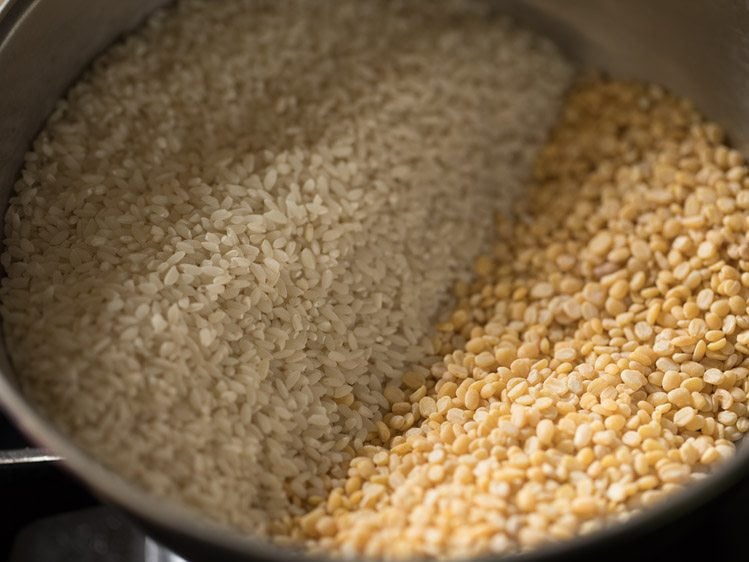
1. In a bowl or pan add 1 cup rice and ½ cup moong dal.
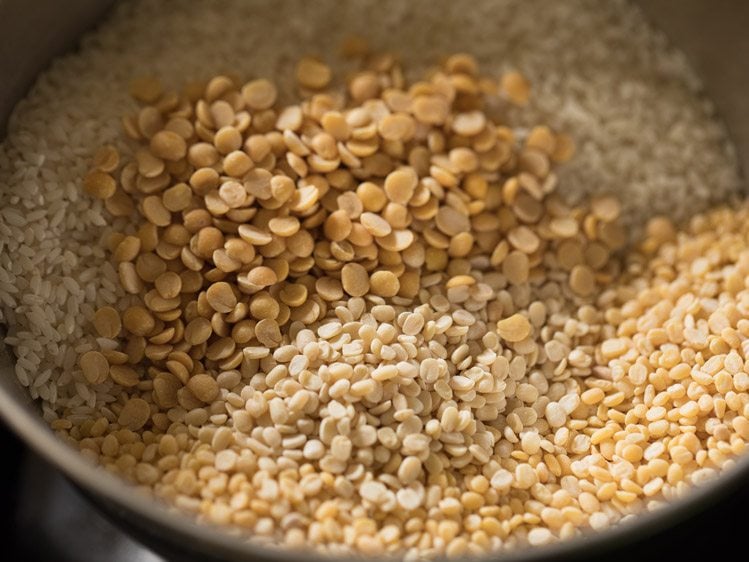
2. Add 1 tablespoon tuvar dal and 1 tablespoon urad dal. You can add 1 tablespoon chana dal if you want.
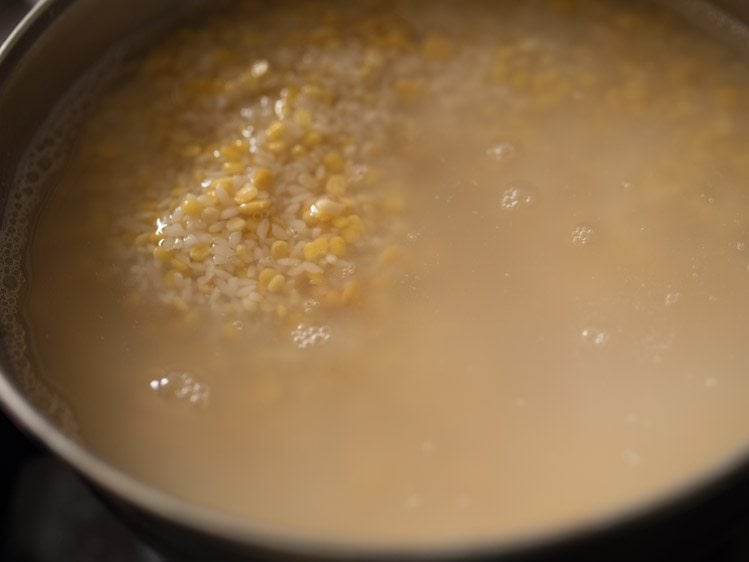
3. Rinse for a minute or so with cool running water, and then soak rice and dals for 4 to 5 hours in just enough water to cover.
Grind & Ferment Handvo Batter
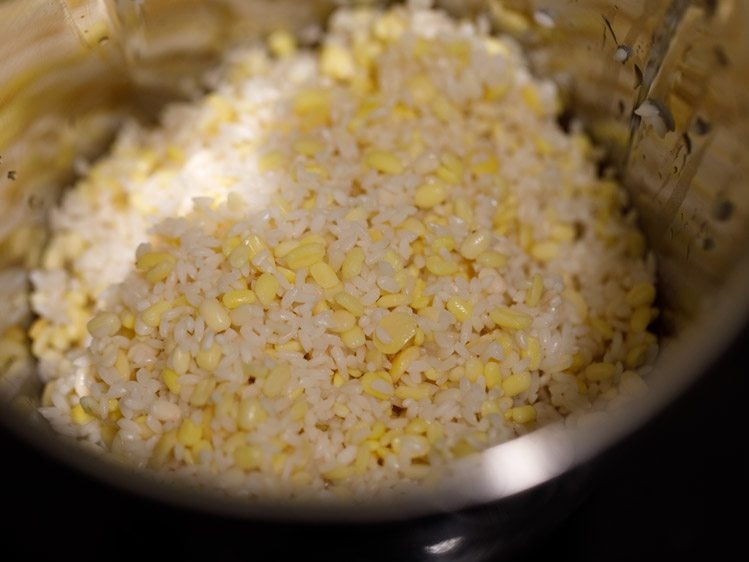
4. Drain all the water and add the rice and dals to a grinder jar or blender.
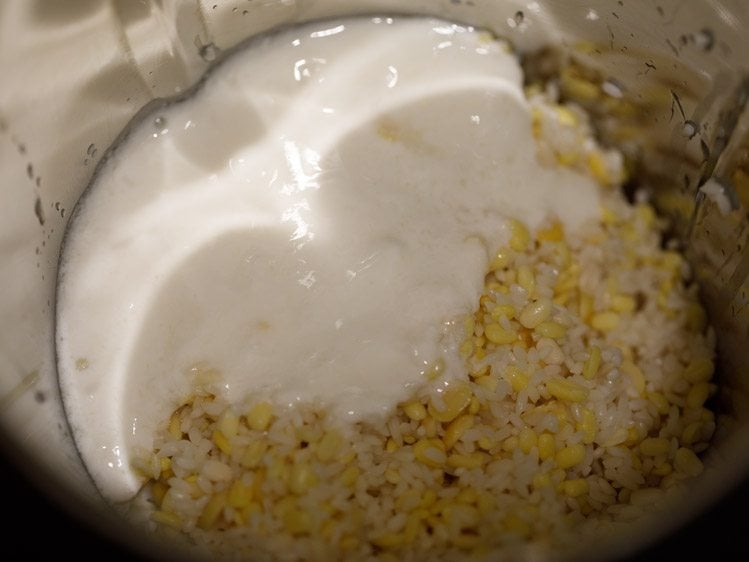
5. Add ½ cup curd (yogurt).
6. Grind to a batter where you get a smooth rava-like consistency. You can grind the batter in batches if needed.
Note: Do not add any water while grinding.
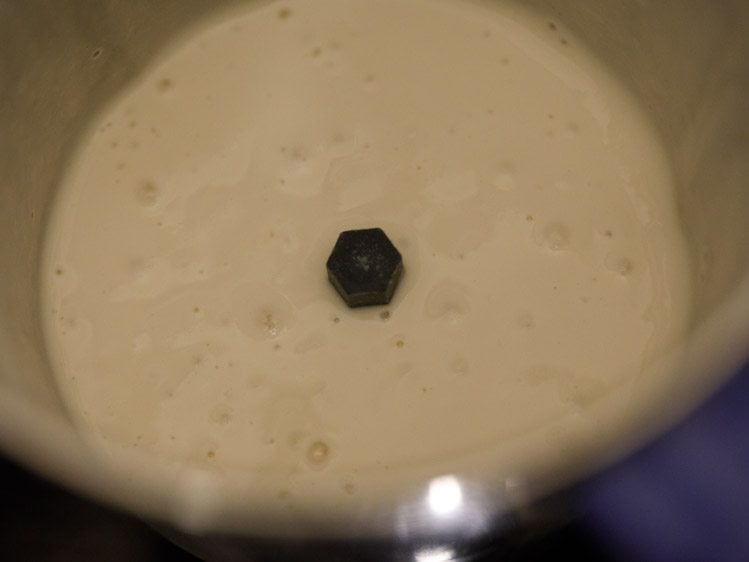
7. Transfer the batter to a bowl.
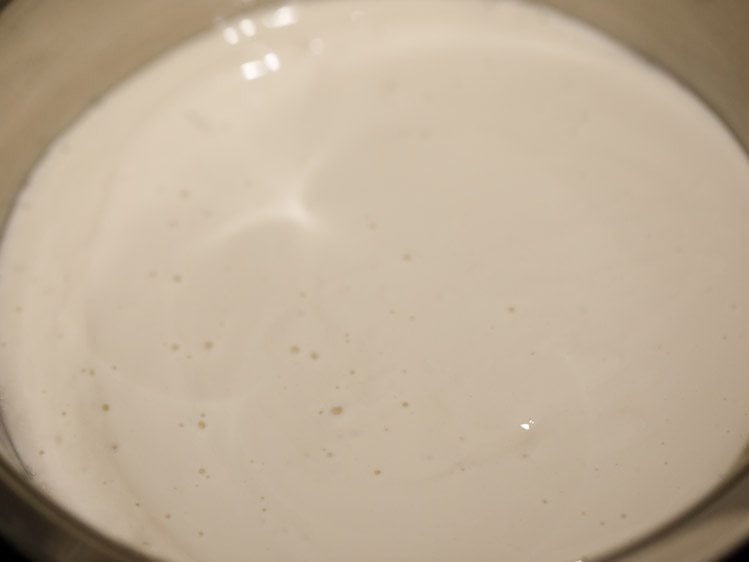
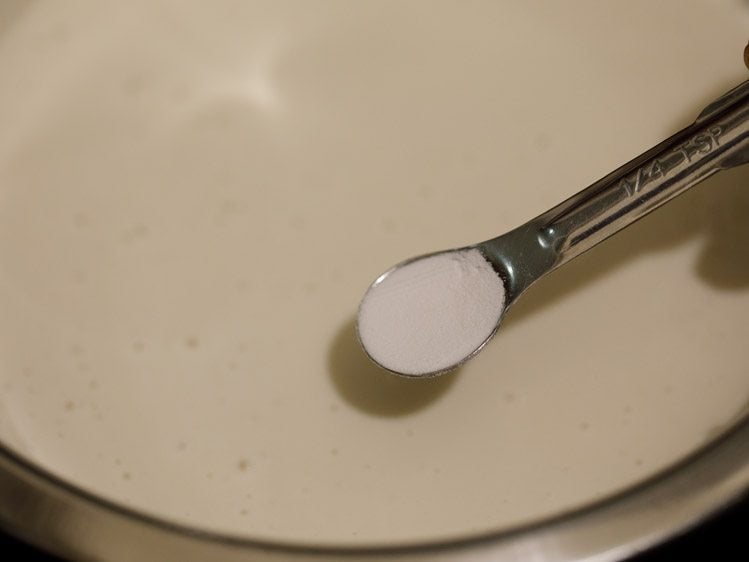
8. Next add ¼ teaspoon baking soda.
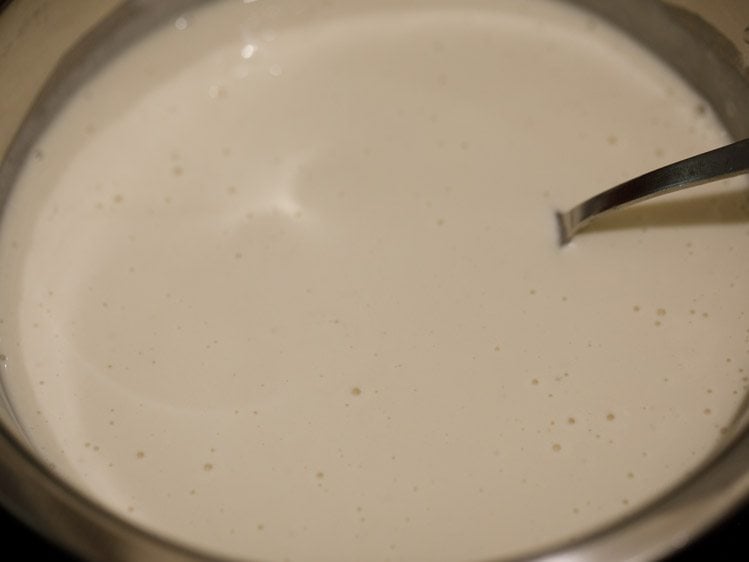
9. Mix very well. Cover the pan and ferment the batter for 8 to 9 hours or overnight.
If you live in a cooler climate you might need to ferment the batter for a few hours more.
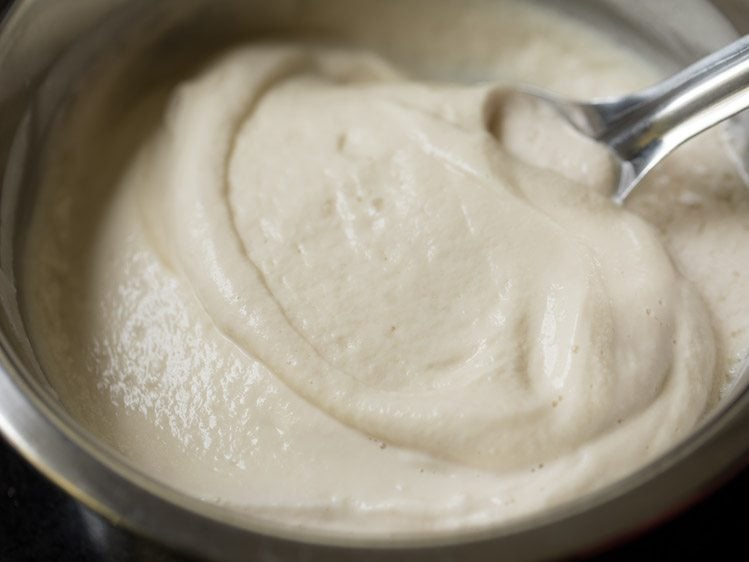
10. Below is a picture of what the handvo batter should look like the next day. The batter will have tiny bubbles and faint sour aroma.
Temper Batter
11. In a small grinder or blender jar add 1 teaspoon chopped ginger, 1 teaspoon chopped garlic and 2 teaspoons chopped green chilies.
You can also use a mortar and pestle to grind the ingredients if you prefer.
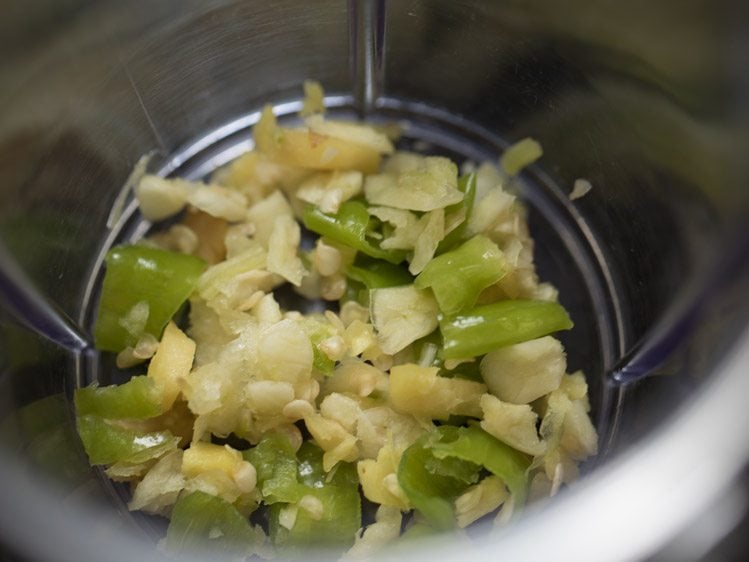
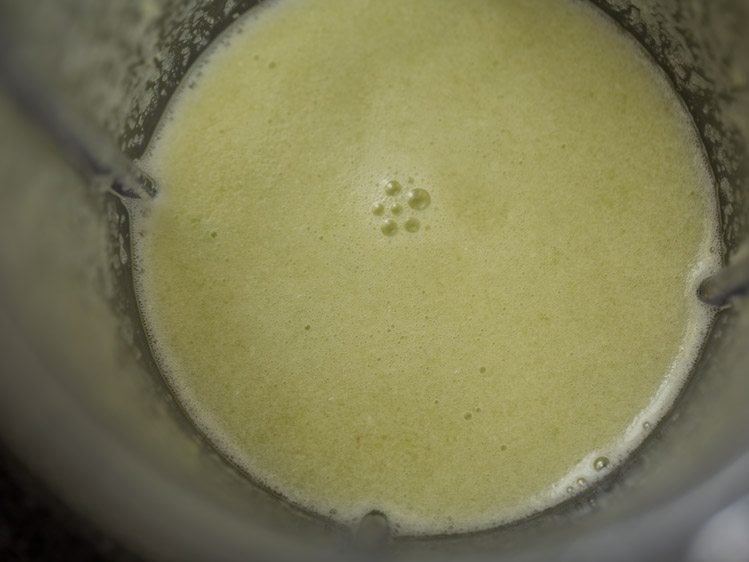
12. Add 1 tablespoon water and grind to a smooth paste. Set aside.
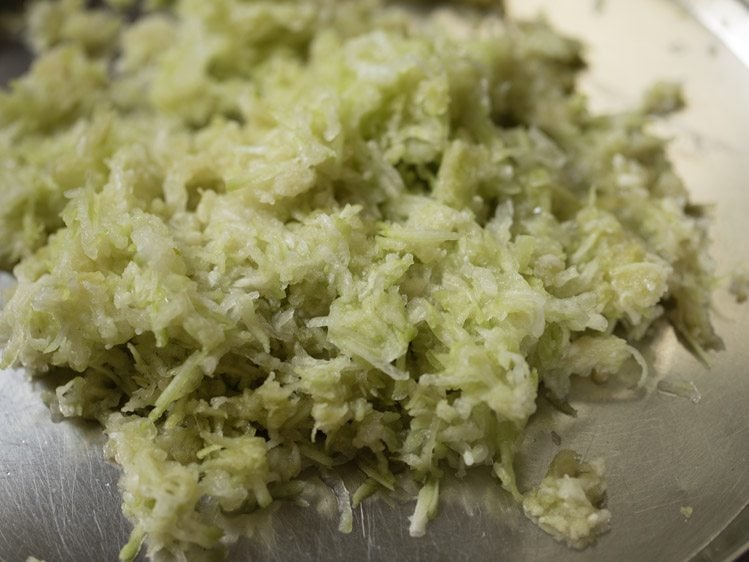
13. Rinse, peel and grate 1 small bottle gourd (lauki, ghia, dudhi, opo squash). You will need 1 cup of tightly packed grated bottle gourd.
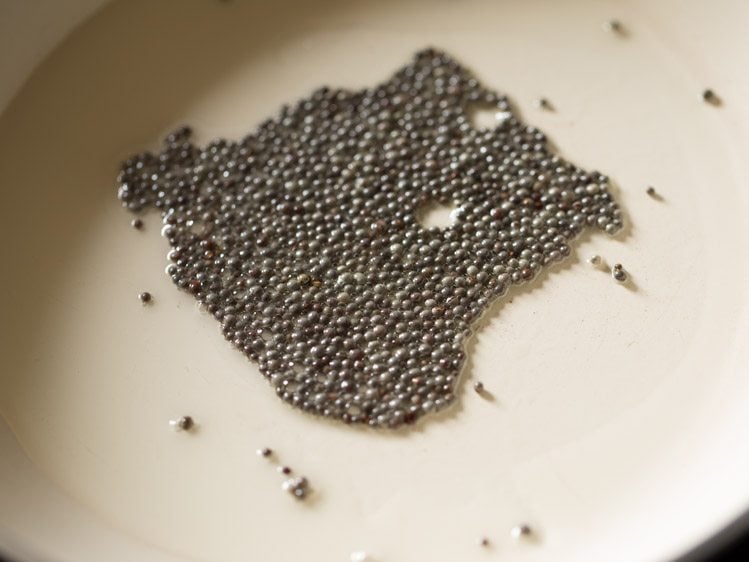
14. Heat 1 tablespoon of oil in a small pan over low heat. Add ½ teaspoon mustard seeds.
Let the mustard seeds crackle.
15. Add 5 to 6 fenugreek seeds, 1 pinch asafoetida (hing) and 1 teaspoon chopped curry leaves.
Fry for a few seconds until fragrant.
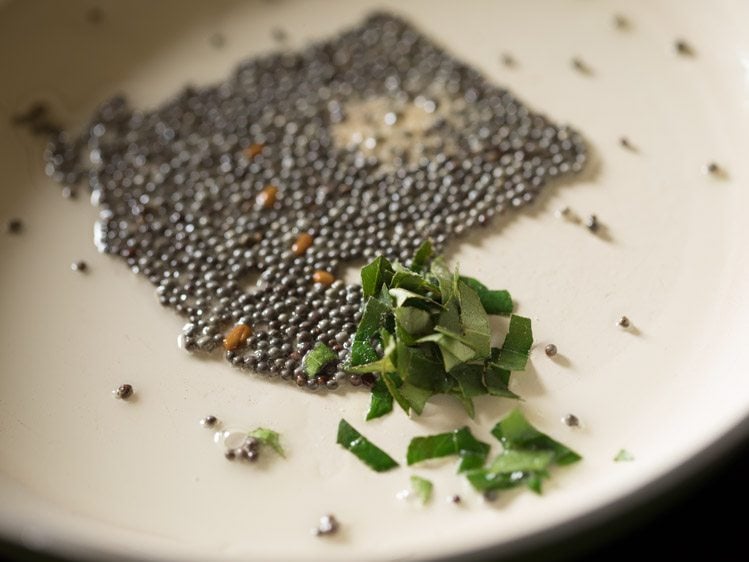
16. Next add the prepared ginger, garlic, green chilli paste. Be careful as the mixture can splutter in the hot oil if you have added more water when grinding the paste.
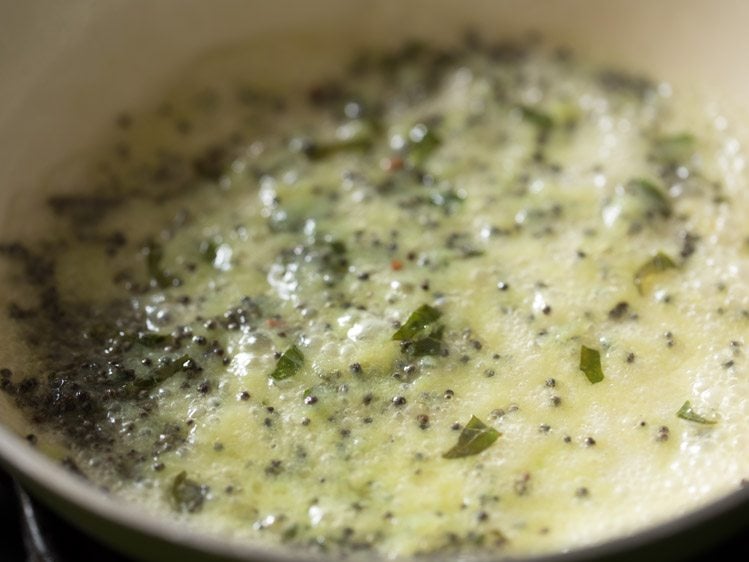
17. Sauté on low heat for some seconds until the raw aroma of ginger and garlic goes away.
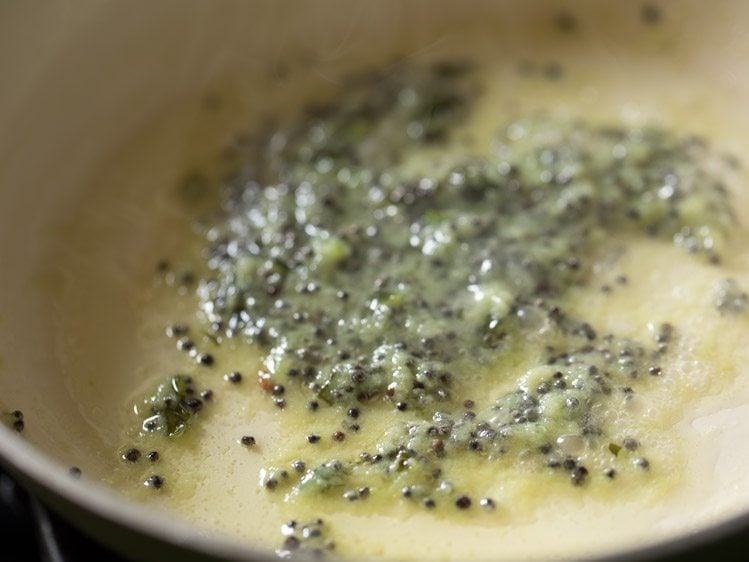
18. Add the 1 cup tightly packed grated bottle gourd to the pan.
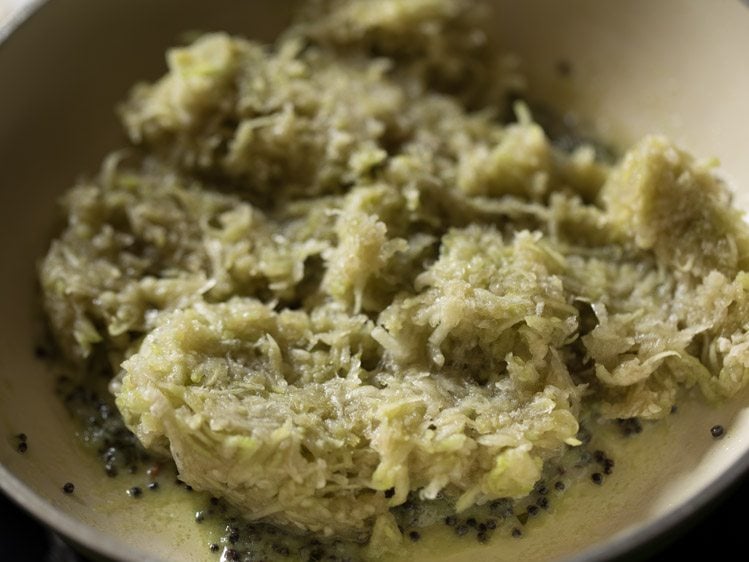
19. Next add ½ teaspoon turmeric powder and ½ teaspoon coriander powder.
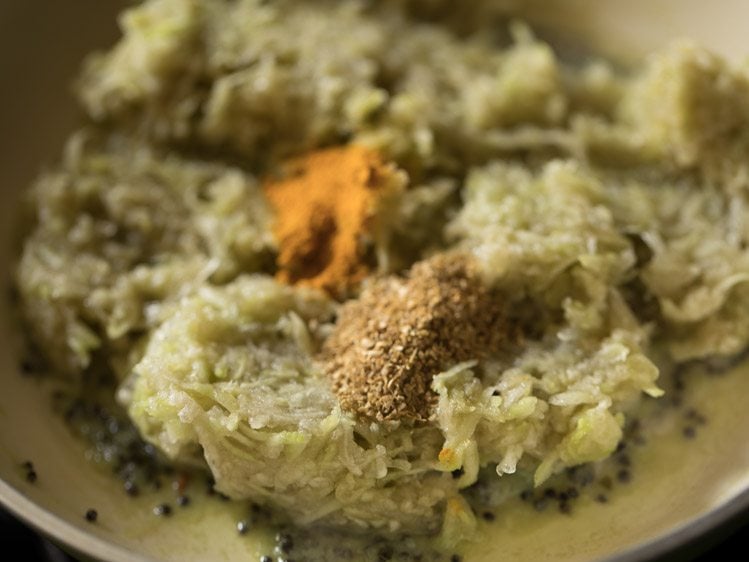
20. Mix well and immediately turn off the heat.
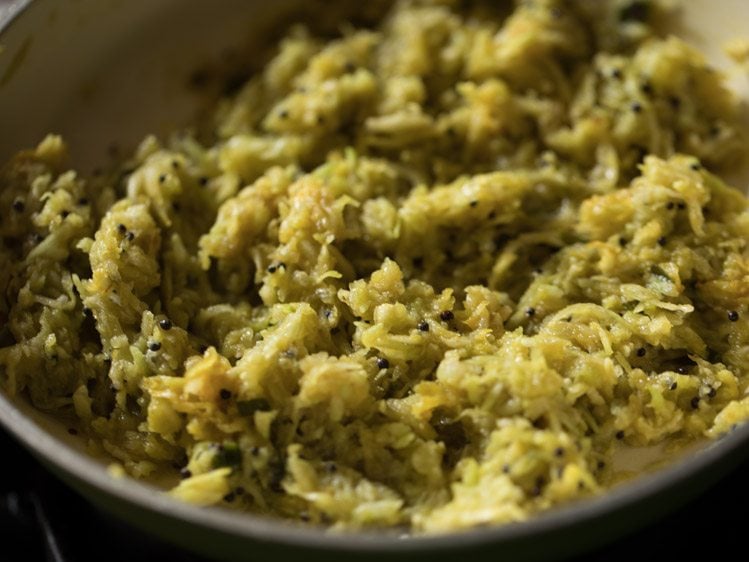
21. Now add ¼ cup chopped coriander (cilantro) leaves and mix.
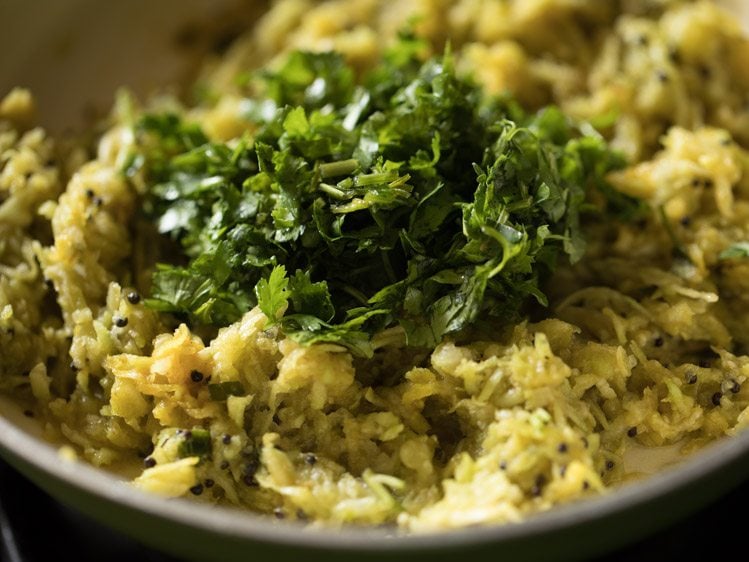
22. Now add the tempered bottle gourd mixture to the handvo batter. Add salt according to taste.
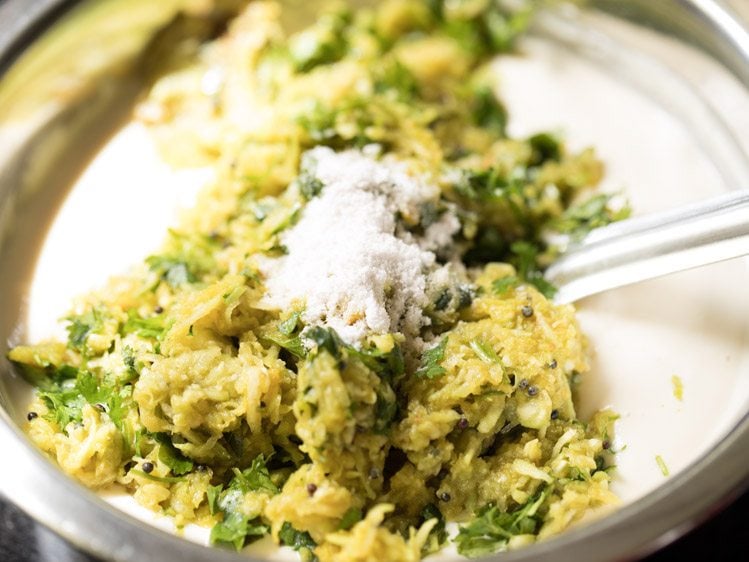
23. Mix very well.
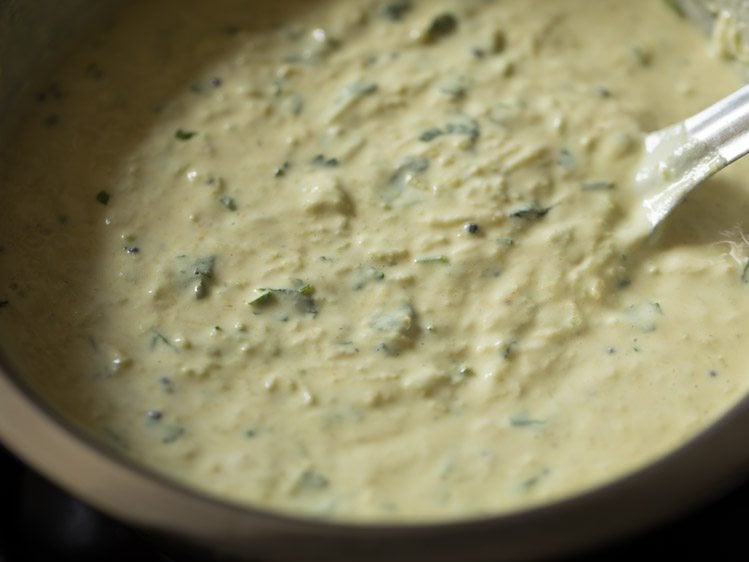
Make Handvo
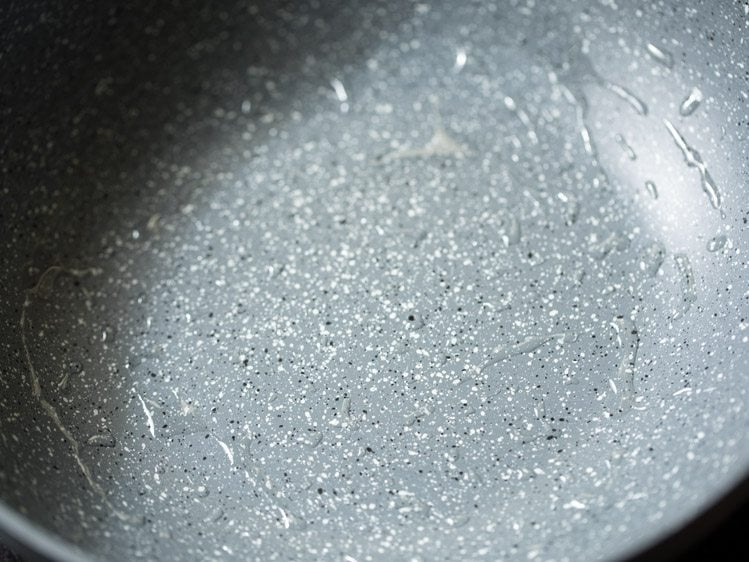
24. Heat a special handvo pan or heavy or thick bottomed large skillet or frying pan on low heat.
Once hot, spread 1 to 2 teaspoons oil in the pan and up into the sides. The more oil you use, the more crisp the handvo will get on the bottom.
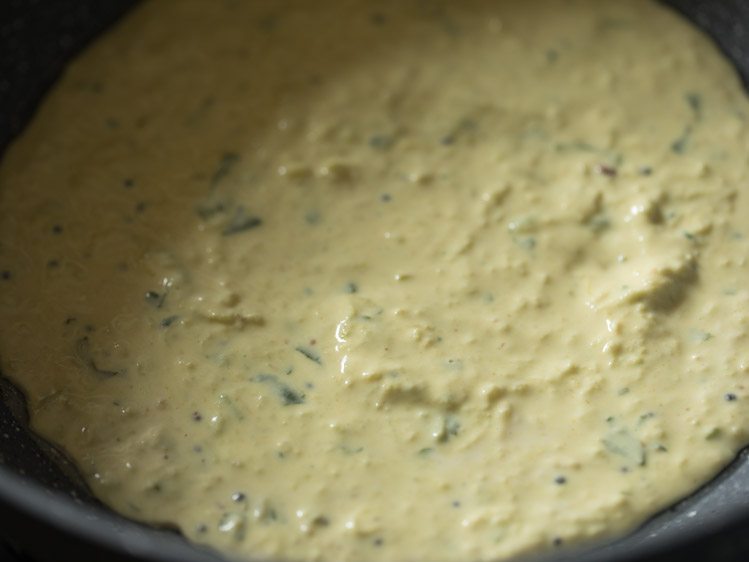
25. Now pour 1.5 to 2 ladles of the handvo batter in the pan. Keep a thickness of 1 to 1.5 inches.
You can add more batter, but then the handvo will increase in size and take a long time to cook. Gently shake the pan or use a spoon to level the batter.
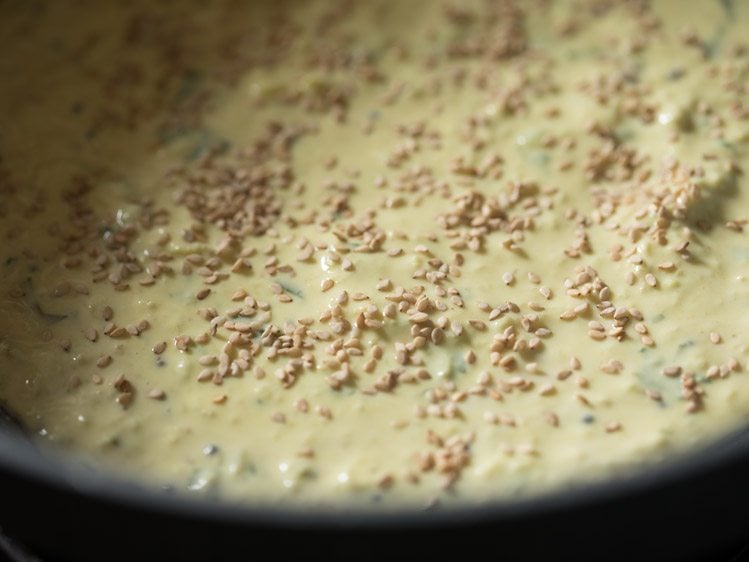
26. Sprinkle some sesame seeds evenly over the top of the batter.
27. Cover the pan with a lid and cook handvo on low heat.
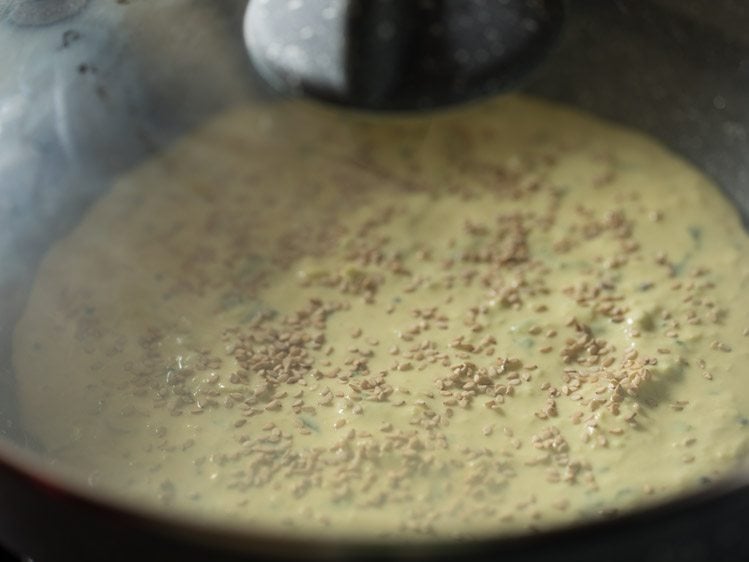
28. Check occasionally as the handvo cooks to make sure it isn’t browning too quickly or burning.
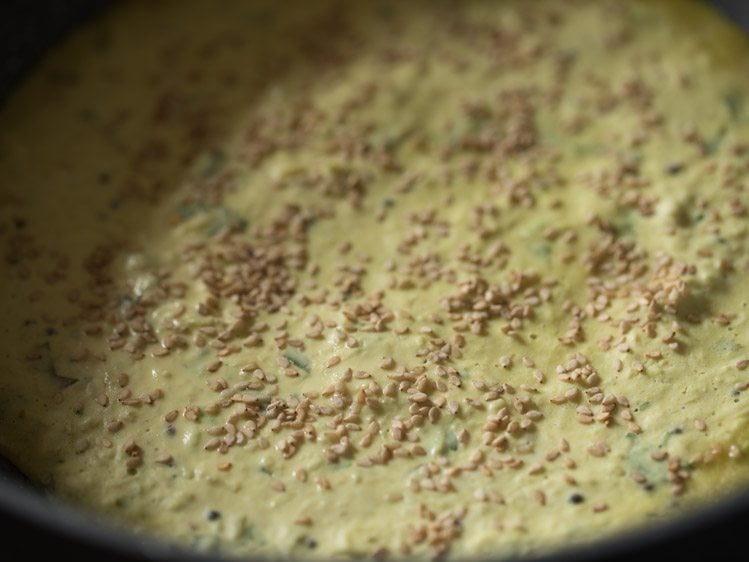
29. When you see the sides golden, use a spatula to gently lift and turn over. You will see some golden spots on the base, and it will be crispy if you used more oil.
The first side may take about 12 to 15 minutes to cook on a low to medium-low heat.
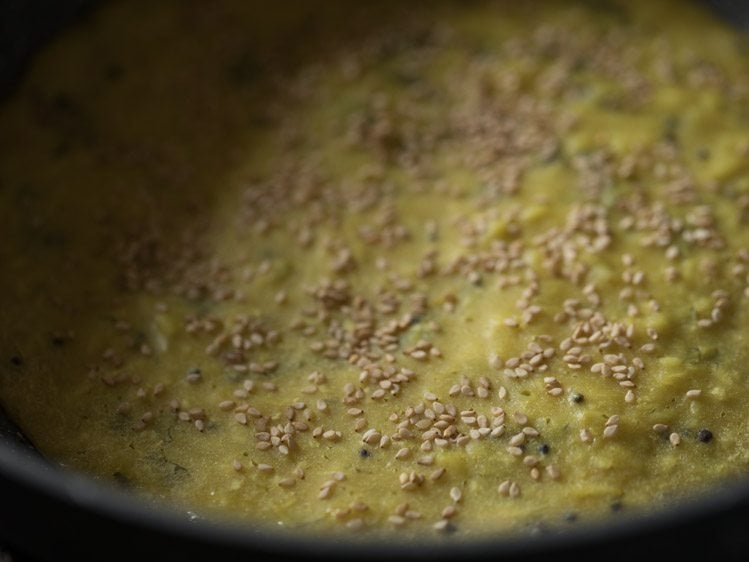
30. Cook uncovered for just some more minutes. This second side takes about 6 to 9 minutes on a low to medium heat.
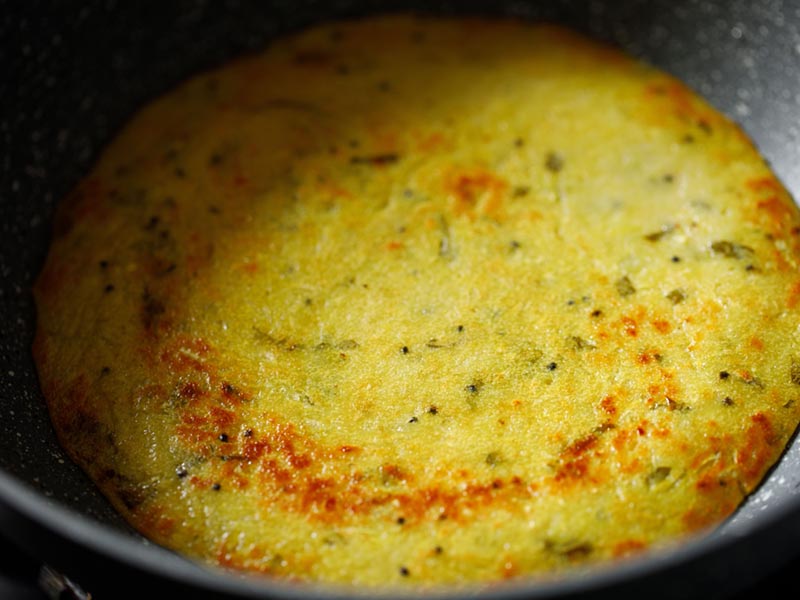
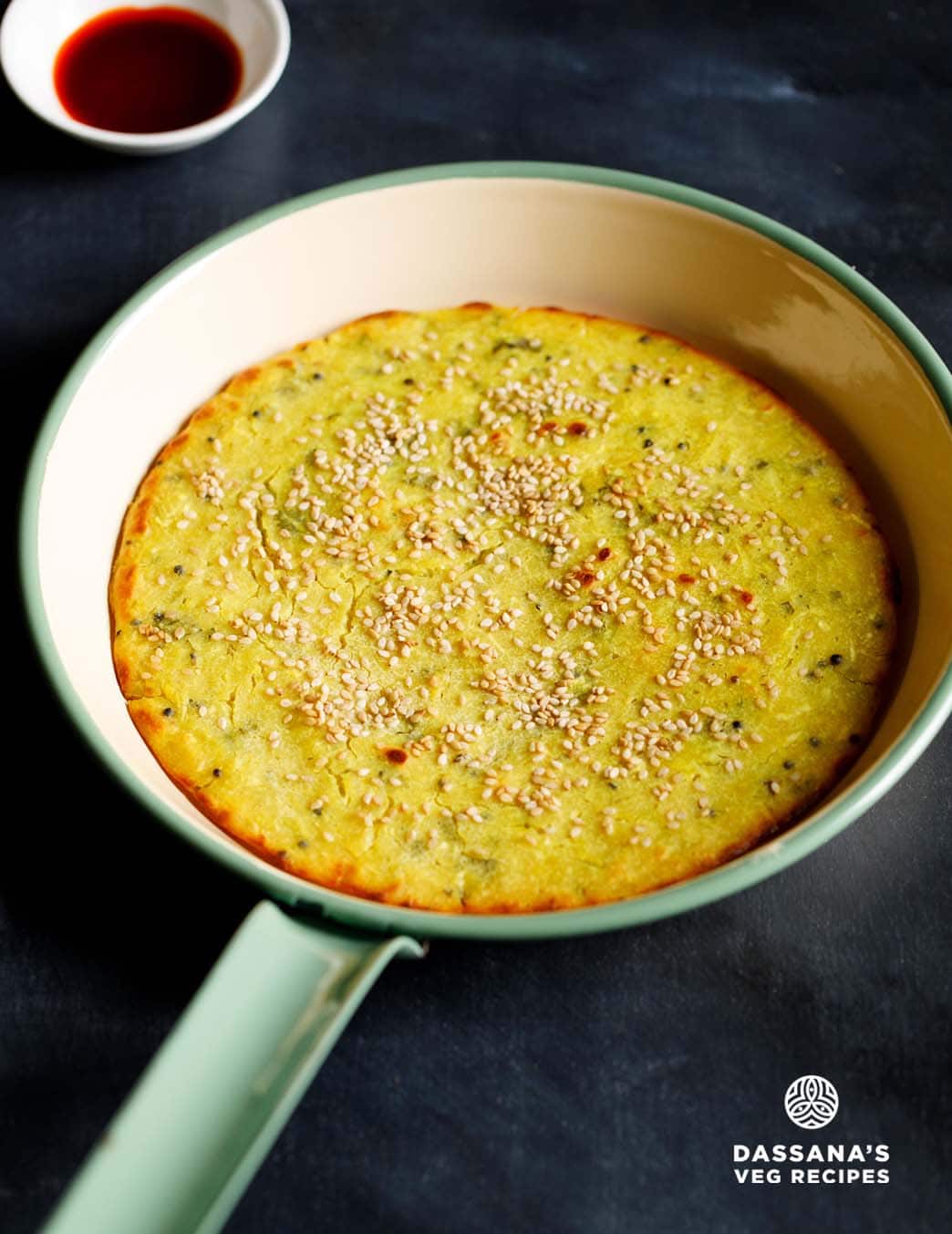
31. The handvo should be evenly golden brown on both sides.
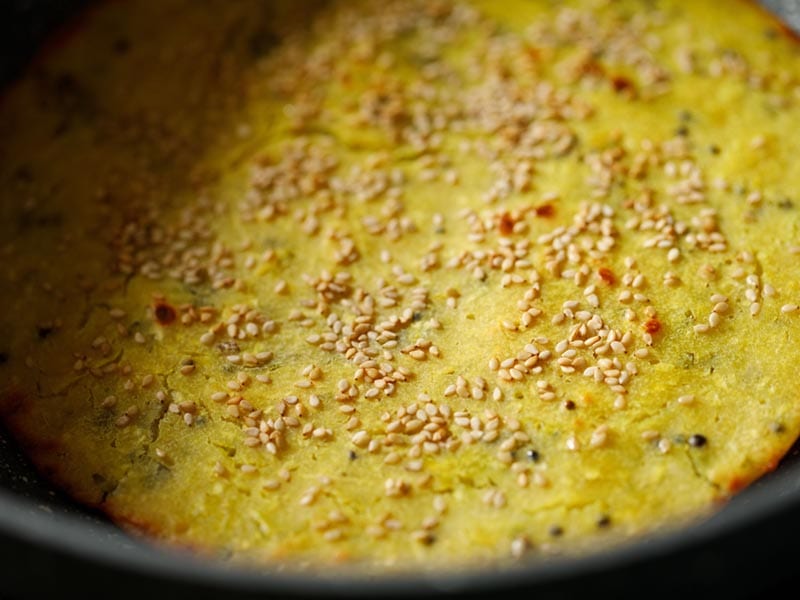
32. Remove the pan from the stove, and let it cool for a moment before you flip out the handvo. Slice and serve hot.
Serving Suggestions
Handvo tastes best when served warm, just after it is cooked. It can be enjoyed on its own or paired with a chutney on the side.
You can serve handvo with Coriander Chutney, Mint Chutney or Papaya Chutney.
It works well as a breakfast dish, a brunch option, or a filling evening snack. A cup of hot tea or coffee pairs nicely with it.
Storage
Handvo is best eaten fresh on the day it is made. If you have leftovers, let it cool completely before storing.
- At room temperature, store in an airtight container for up to 1 day.
- In the refrigerator, handvo keeps well for 2 to 3 days.
- Reheat on a pan on low heat or in a microwave until just warm.
If making ahead, you can also prepare and ferment the batter in advance and refrigerate it overnight. Bring the batter to room temperature before cooking.
Dassana’s Recipe Tips
- Along with moong dal, you can add 1 tablespoon chana dal if you like a slightly firmer texture. This is optional.
- Adding vegetables makes the handvo softer and more nutritious. Bottle gourd (lauki) works best, but carrots, beetroot, cabbage, pumpkin, or zucchini can also be used.
- Seasonal leafy greens like fresh fenugreek (methi) and even spinach can be added in small quantities.
- Curd (yogurt) adds mild tang and helps with fermentation.
- For leavening, you can use baking soda or fruit salt (Eno). If using fruit salt, add it just before cooking for best rise.
- Proper fermentation is important for flavor and texture. In cooler climates, the batter may need a few extra hours to ferment well.
- The batter should be thick or medium-thick yet pourable. If it feels too thick after fermentation, add a few tablespoons of water and mix gently.
- Always cook handvo on low to medium-low heat so it cooks evenly from inside without browning too quickly.
- Let the cooked handvo rest for a few minutes before slicing. This helps it set and gives clean slices.
Asked & Answered
What other vegetables can I use for handvo?
Besides bottle gourd, you can use carrots, beets, spinach, pumpkin, zucchini, or a mix of vegetables you enjoy.
Can I prepare the handvo batter in advance?
Yes. Once the batter has fermented, you can refrigerate it overnight. Bring it to room temperature before cooking.
Why did my handvo turn dense or hard?
This usually happens if the batter is under-fermented, too thick, or if the handvo is cooked on high heat. Proper fermentation and slow cooking give the best texture.
Can I make handvo without curd?
Curd adds mild tang and helps fermentation, but if needed, it can be skipped. The batter may take longer to ferment and will have a milder flavor.
Step by Step Photo Guide Above
Ingredients
For rice & lentil batter
- 1 cup regular rice
- ½ cup moong dal (mung lentils)
- 1 tablespoon tuvar dal (pigeon pea lentils)
- 1 tablespoon urad dal (split & husked black gram)
- enough water for soaking
- ½ cup curd (yogurt)
- ¼ teaspoon baking soda
For paste
- 1 inch ginger or 1 teaspoon chopped ginger (adrak)
- 4 medium garlic cloves or 1 teaspoon chopped garlic (lahsun)
- 1 to 2 green chilies or 2 teaspoons chopped green chilies
- 1 tablespoon water for grinding
For tempering
- 1 tablespoon oil
- ½ teaspoon mustard seeds
- 5 to 6 fenugreek seeds (methi dana)
- 1 pinch asafoetida (hing)
- 1 teaspoon chopped curry leaves
- 1 cup tightly packed grated bottle gourd (lauki or ghia or dudhi or opo squash)
- ½ teaspoon turmeric powder
- ½ teaspoon coriander powder
- ¼ cup chopped coriander leaves
Other ingredients
- salt as required
- 4 to 5 teaspoons oil for greasing pan
- white sesame seeds as required
Instructions
Soaking rice and lentils
- In a bowl or pan take 1 cup rice, ½ cup moong dal. 1 tablespoon tuvar dal and 1 tablespoon urad dal
- You can add 1 tablespoon chana dal if you want.
- Rinse a couple of times with water and then soak rice & dals for 4 to 5 hours in enough water.
Grinding & fermenting batter
- Later drain all the water and add the rice & dals in a grinder jar.
- Add ½ cup curd (dahi).
- Grind to a batter where you get a rava like consistency in the rice. You can grind the batter in batches also. Do not add any water while grinding.
- Remove the batter in a bowl. Add ¼ teaspoon baking soda.
- Mix very well. Cover the pan and ferment the batter for 8 to 9 hours or overnight.
- Next day the batter will have tiny bubbles and a faint sour aroma.
Preparation & tempering for handvo batter
- In a small grinder take 1 teaspoon chopped ginger, 1 teaspoon chopped garlic, 2 teaspoons chopped green chilies.
- Add 1 tablespoon water and grind to a smooth paste. Keep aside. You can even crush ginger, garlic and green chilies in a mortar-pestle.
- Rinse, peel and grate 1 small bottle gourd (lauki, ghia, dudhi, opo squash). You will need 1 cup tightly packed grated bottle gourd.
- Heat 1 tablespoon oil in a small pan.
- Add ½ teaspoon mustard seeds and let them crackle.
- Then add 5 to 6 fenugreek seeds, 1 pinch asafoetida and 1 teaspoon chopped curry leaves.
- Fry for a few seconds.
- Then add the ginger+garlic+green chilli paste.
- Saute till the raw aroma of ginger and garlic goes away.
- Add 1 cup tightly packed grated bottle gourd.
- Also add ½ teaspoon turmeric powder and ½ teaspoon coriander powder.
- Mix well and then switch off the flame.
- Now add ¼ cup chopped coriander leaves and mix well again.
- Add the tempered bottle gourd mixture to the handvo batter.
- Add salt as required and again mix very well.
Making handvo
- Heat a pan and spread 1 to 2 teaspoons oil in it. Spread on the sides too. Keep the flame to a low.
- Now pour 1.5 to 2 ladles of the handvo batter in the pan. Keep a thickness of 1 to 1.5 inches. You can add more also, but then the handvo will increase in size and take a long time to cook.
- Gently shake the pan, so that the batter spreads neatly or you can level the batter with the spoon.
- Sprinkle some sesame seeds on top all over the batter.
- Cover the pan with a lid and then cook handvo on a low flame.
- Do check a couple of times when the handvo is cooking.
- When you see the sides golden, then with a spatula gently lift and turn over. The top will also look cooked. You will also see some golden spots on the base.
- If you use more oil, the entire base will be crisp and golden. If less oil is used, then some golden spots will be visible.
- Cook the second side too. If you want you can drizzle some oil from the sides. When cooking the second side, no need to cover with lid.
- Cook till you see golden spots on this side too and the handvo gets cooked well.
- Remove and serve handvo hot with coriander chutney, sesame chutney or papaya chutney. This way prepare handvo with the rest of the batter. If there is leftover batter, then refrigerate it and use it the next day.
Dassana’s Notes
- Ferment the batter well for best flavor and texture. In cooler weather, allow extra time.
- The batter should be thick or medium-thick but pourable.
- You can use fruit salt (Eno) instead of baking soda. If using fruit salt (Eno) add it to the batter, just before cooking and mix very well.
- Cook handvo on low to medium-low heat so it cooks evenly.
- Let the handvo rest for a few minutes before slicing for neat pieces.


Hi Dassana, will it be ok if toovar dal is not used ? Can we use some other dal instead of it?
Yes. You can add chana dal or add in a total of 2 tablespoons of urad dal.
Can we use buttermilk instead of curd
yes, you can use buttermilk.
Hi what can I use instead of curds? I’m Vegan.
curd is added as it helps in fermentation of the batter. you can use vegan curd – like almond curd or cashew curd. in the absence of any curd, use 1/4th cup urad dal and 1/4th cup moong dal. rest of the ingredients is the same. add 2 to 3 tablespoons lemon juice in the batter. this will give some sourness to the batter and also help in fermentation. hope this helps.
Hi Dassana,
Made handvo as explained by you, and it came out very well.
Thanks for making the recipe seem very simple.
???? ???? ???? ???? ????
thanks jyoti for the feedback on handvo recipe. glad to know.
can we make it in instant pot? it is really a yummy receipe.
thanks shakuntala. i have not used instant pot. so i can’t say.
Hi Dassana,Can you share this in the baked version. Baking temperature,time etc. Thanks
yes suparna i will try to add. for baking most recipes like handvo, you can bake at 180 degrees celsius for 25 to 30 minutes. also preheat oven at the same temperature for 15 minutes.
Hi Dassana! Please share recipe using readymade handvo powder
rashmi, i will share readymade handvo powder recipe. have taken the note of your recipe request.