
Ugadi Pachadi Recipe
Ugadi Pachadi is a traditional festive drink made during the Ugadi festival in Andhra Pradesh and Telangana. It is prepared with six ingredients – tamarind, jaggery, raw mango, neem flowers, black pepper and salt. These ingredients create six different tastes that symbolize the various experiences of life. The drink is simple to prepare and is served as part of Ugadi celebrations.
About Ugadi Pachadi
Ugadi Pachadi is a traditional festive beverage prepared for the Ugadi festival. It combines six different tastes that symbolize the various emotions and experiences of life. This reflects the deeper meaning of Ugadi, which reminds us to accept life in all its forms.
The same New Year day is celebrated in different regions under different names such as Gudi Padwa in Maharashtra, Cheti Chand among Sindhis, Sajibu Nongma Panba in Manipur, and Nyepi in Bali, Indonesia.
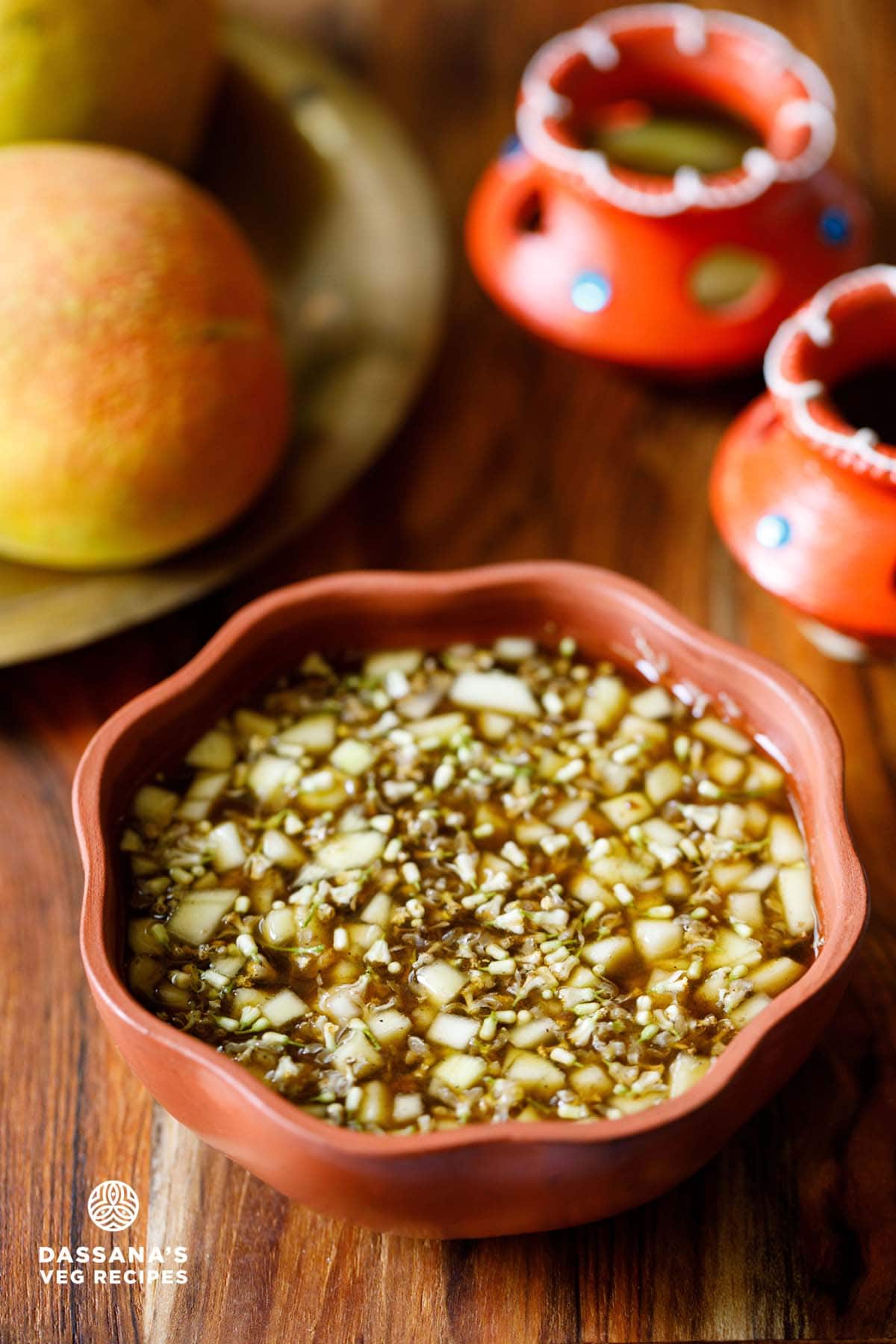
While Ugadi Pachadi is closely associated with Ugadi celebrations in Andhra Pradesh and Telangana, other regions have their own traditional foods prepared on this day.
Table of Contents
Traditionally, Ugadi Pachadi is first offered to the deities and then served as prasad to family members and devotees.
Life is not always sweet. It includes moments of happiness, sadness, surprise, anger and fear, just like the six tastes in this preparation.
Ugadi Pachadi is simple to prepare. Tamarind water is mixed with jaggery, raw mango, neem flowers, black pepper and salt to create the six traditional tastes.
The ingredients can be adjusted to taste, though the aim is to keep a balance of all six tastes and flavors.
The Six Ingredients
Ugadi Pachadi is known for its six ingredients, each bringing a different taste to the drink and symbolizing an emotion of life.
The six ingredients used are:
- Tamarind – sour taste – unpleasantness
- Jaggery – sweet taste – happiness or joy
- Raw unripe mango – tangy, astringent taste – surprise
- Neem flowers – bitter taste – sadness
- Black pepper – spicy taste – anger
- Salt – salty taste – fear
Substitutes
During the Ugadi season in India, neem flowers and raw mangoes are usually easy to find. If you live outside India, neem flowers may not always be available.
In that case, you can use soaked fenugreek seeds (methi seeds) or a small pinch of fenugreek powder to bring in the bitter taste.
Instead of black pepper, some people also use green chilies or red chili powder. I prefer using black pepper for naivedyam preparations that are offered to the deities, so I have used it in this Ugadi Pachadi recipe.
Black pepper was also widely used in Indian cooking before chilies became common, which makes it a traditional choice for flavoring dishes like this.
Explore More Festive Drinks
How to make Ugadi Pachadi (Stepwise)
1. Soak 1 teaspoon tamarind in ¼ cup water for about 40 minutes to 1 hour.
Then, with clean fingers press and extract the tamarind pulp from the soaked tamarind in the soaking water.
You could also use a tea strainer or a small strainer and using a spoon, press and extract the pulp.
Set aside. Discard the seeds and the stringy fibers. In a bowl, add this tamarind pulp.
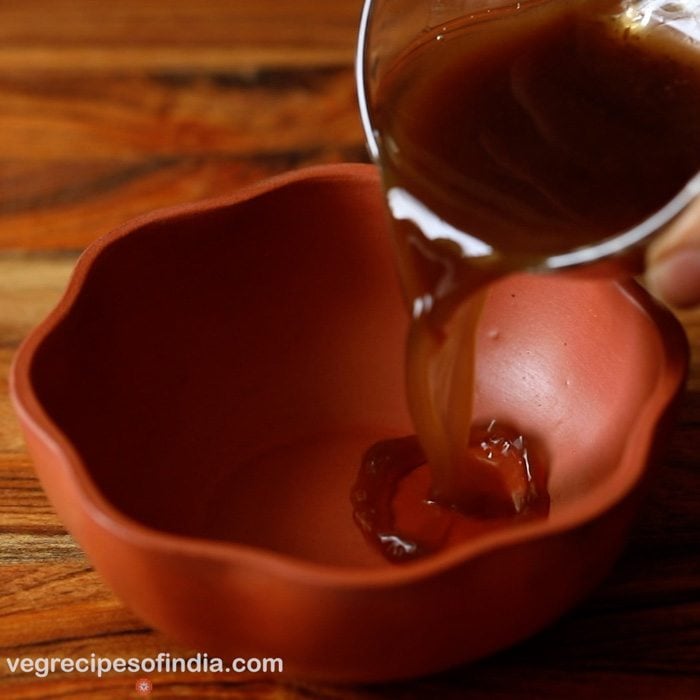
2. Next, add ⅓ cup water.
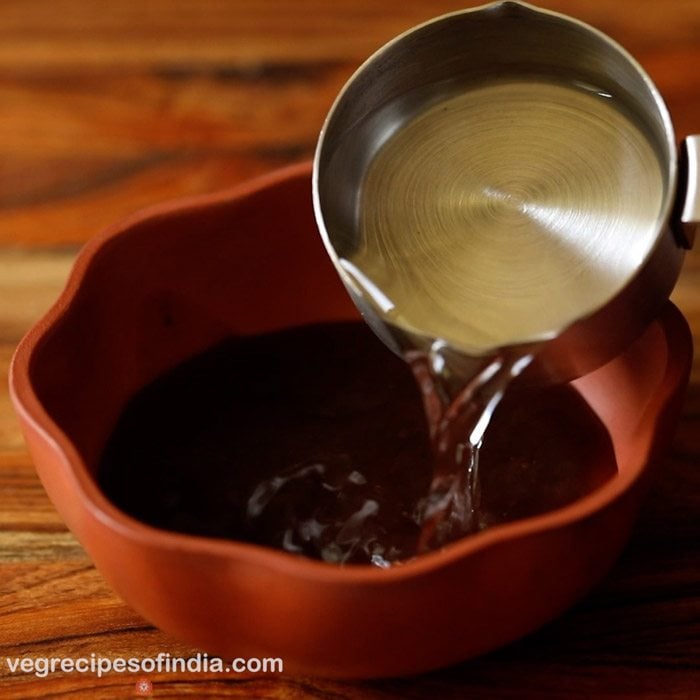
3. Add ¼ cup chopped jaggery.
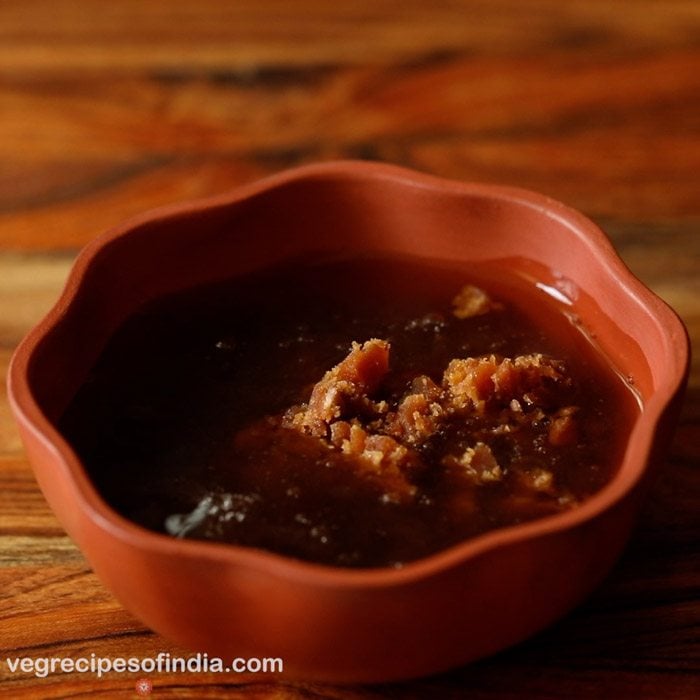
4. Mix very well with a spoon, so that the jaggery dissolves.
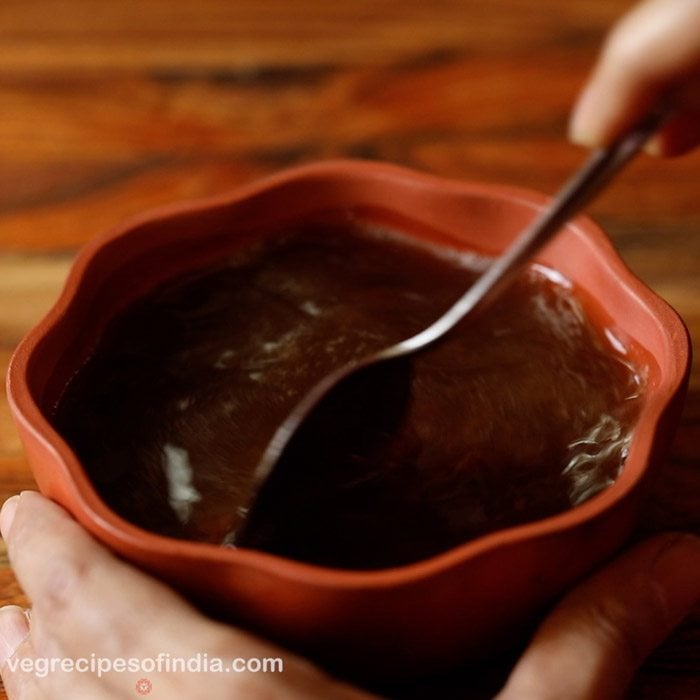
5. Add the finely chopped raw mangoes. You could also add bananas, roasted chana dal, chopped nuts and coconut.
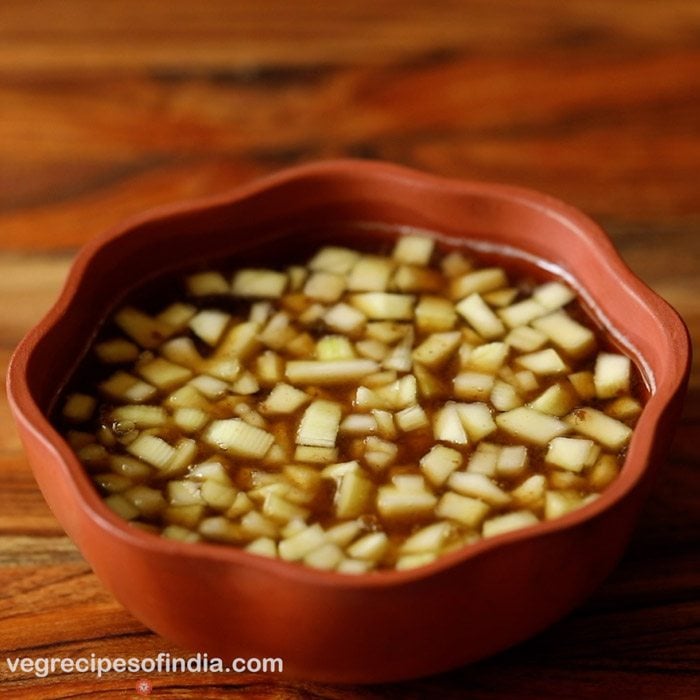
6. Add the neem flowers. If you do not have neem flowers, then you can add some soaked fenugreek seeds or fenugreek powder.
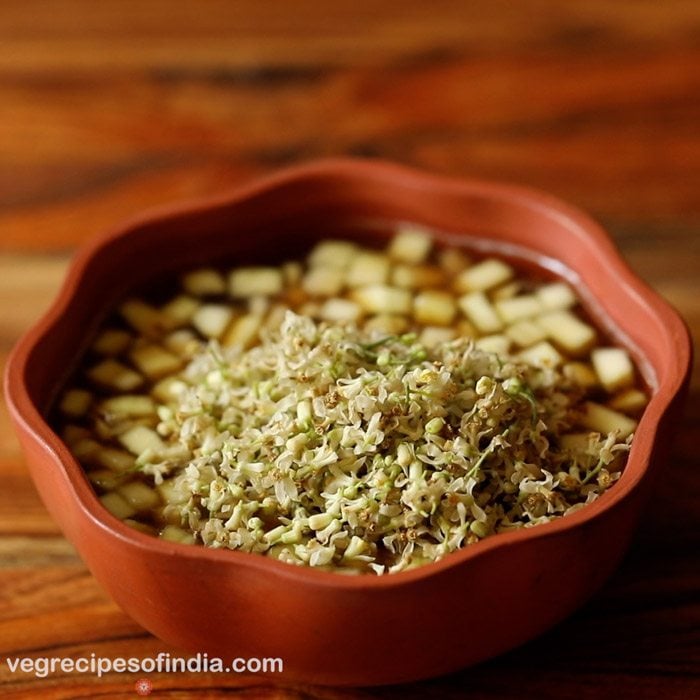
7. Add ¼ teaspoon black pepper powder. You could also add green chilies or red chili powder, instead of black pepper powder.
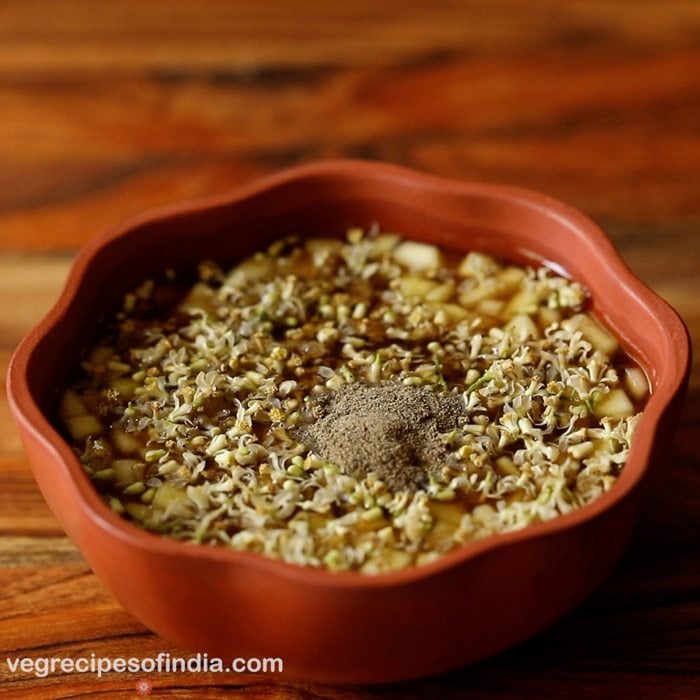
8. Season with ¼ teaspoon salt or as required. Mix very well.
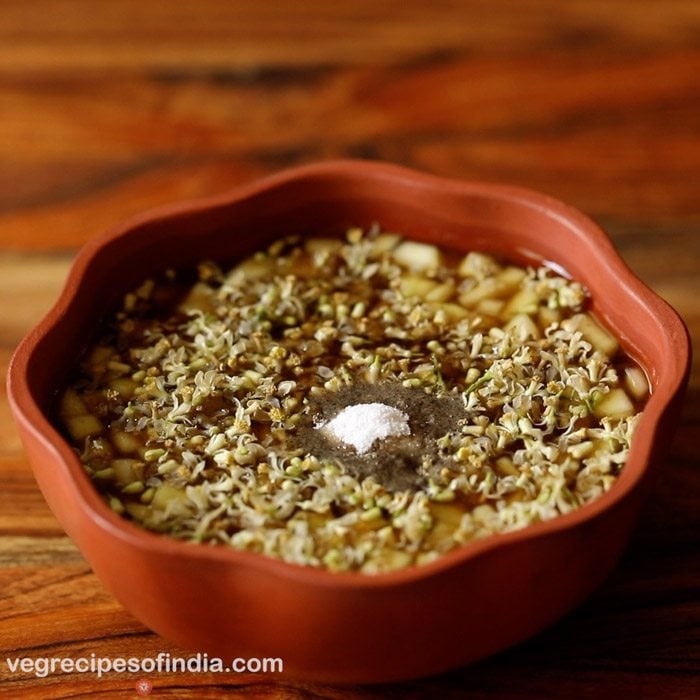
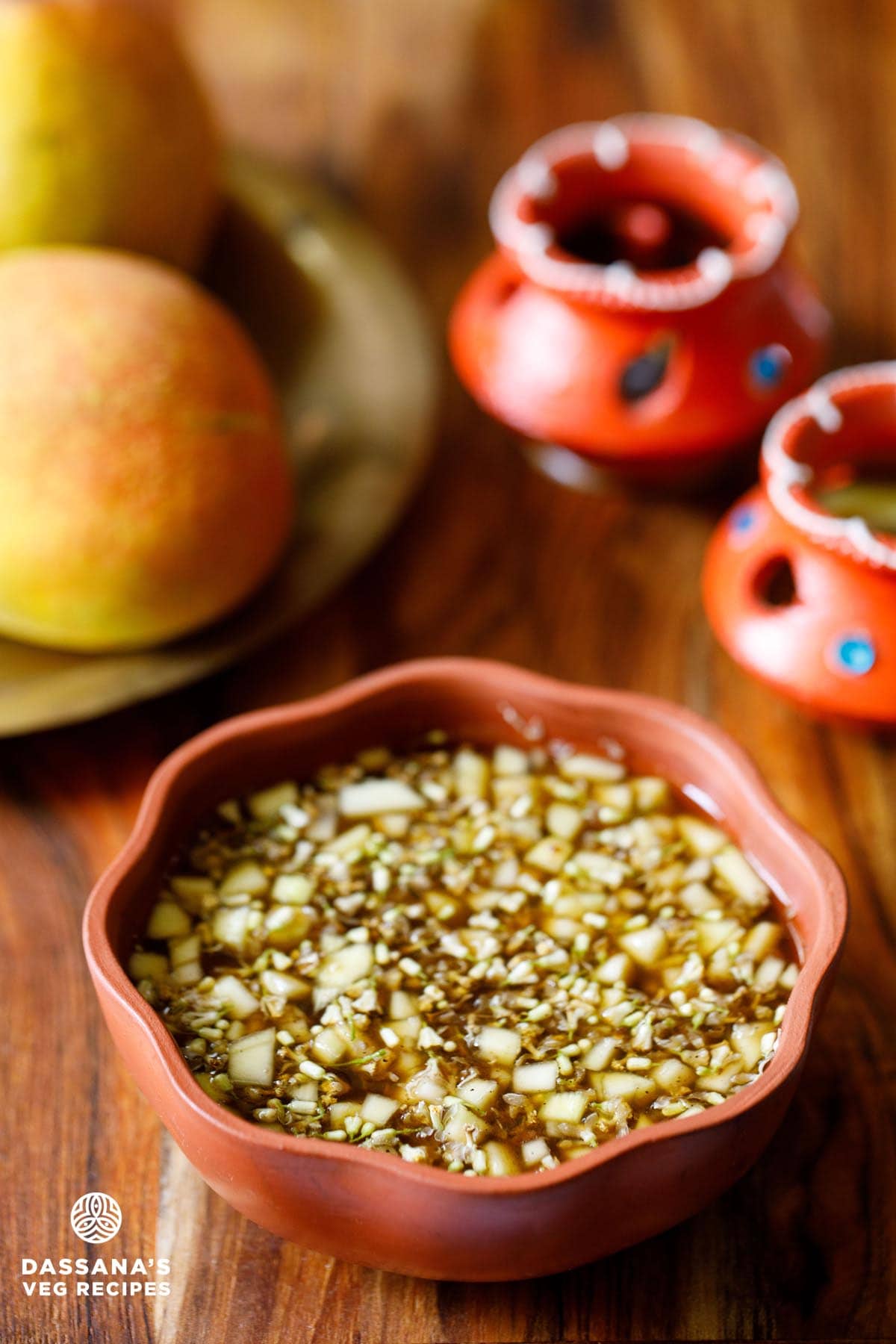
9. Offer Ugadi Pachadi as naivedyam to your deities. Then, serve it to your family.
Helpful Tips
- You can reduce or increase the quantity of any of the six ugadi pachadi ingredients, as per your choice and preferences.
- Bananas, roasted chana dal, dry fruits, nuts and coconut can also be included in this recipe.
- You can leave the skin on the green mango if it is soft, but if it is tough and chewy, then remove it.
- If you do not have neem flowers, then add soaked fenugreek seeds or ground fenugreek powder.
- In place of black pepper powder, you can also add finely chopped green chillies or red chili powder.
- The Ugadi Pachadi recipe can be doubled or tripled according to your needs.
Step by Step Photo Guide Above
Ugadi Pachadi Recipe
Ingredients
- 1 teaspoon tamarind
- ¼ cup water – for soaking tamarind
- ⅓ cup water – to be added later
- ¼ cup jaggery – chopped
- ⅓ cup mangoes finely chopped, unripe
- 2 tablespoons neem flowers
- ¼ teaspoon black pepper powder (ground black pepper)
- ¼ teaspoon salt or add as required
Instructions
- Soak tamarind in water for about 40 minutes to 1 hour. Then squeeze the tamarind pulp and set it aside.
- In a small mixing bowl, add this tamarind pulp.
- Next add ⅓ cup water to this bowl containing the tamarind extract or pulp.
- Add the chopped jaggery.
- Mix very well with a spoon so that all of the jaggery dissolves.
- Add the finely chopped raw mangoes and neem flowers.
- Season with salt and black pepper powder. Mix very well.
- Offer Ugadi Pachadi as naivedyam to your deities. Later serve it to your family as prasad.
Video
Dassana’s Notes
- You can add less or more of any of the six ingredients according to your preferences.
- Instead of black pepper, you can add red chilli powder or finely chopped green chillies as needed. Traditionally black pepper powder is used, but opt to add any of these spices according to your family customs.
- Instead of neem flower, to get the bitter taste, add some soaked fenugreek seeds or ground fenugreek powder.
- Unripe green mangoes can be peeled before chopping them into small cubes. If the skin is soft, you can leave it on, but if it is thick or tough, it is best to remove it.
- The recipe can be easily doubled or tripled.
Nutrition
Ugadi Pachadi recipe from the archives was first published on March 2017.

Now that You have given the ingredients for making Ugadi Pachadi shall try to make it. Thanks.
Looking forward to trying to make this today.
Thanks and hope you like it.