
Poori Recipe | How To Make Soft Puri
Poori, also called Puri, is a traditional Indian fried bread made from a simple dough of whole wheat flour, salt, and water. It is an unleavened bread that puffs up when fried and is commonly served with a variety of Indian dishes. Poori is crisp on the outside and soft on the inside when made correctly.
About Poori Recipe
This poori recipe shows you how to make crispy, fluffy and soft puri at home with step-by-step photos and useful tips.
Poori is made with a simple dough of whole wheat flour (atta), salt and water. A little oil or ghee can be added optionally. The dough is not leavened, so the recipe is quick to prepare.
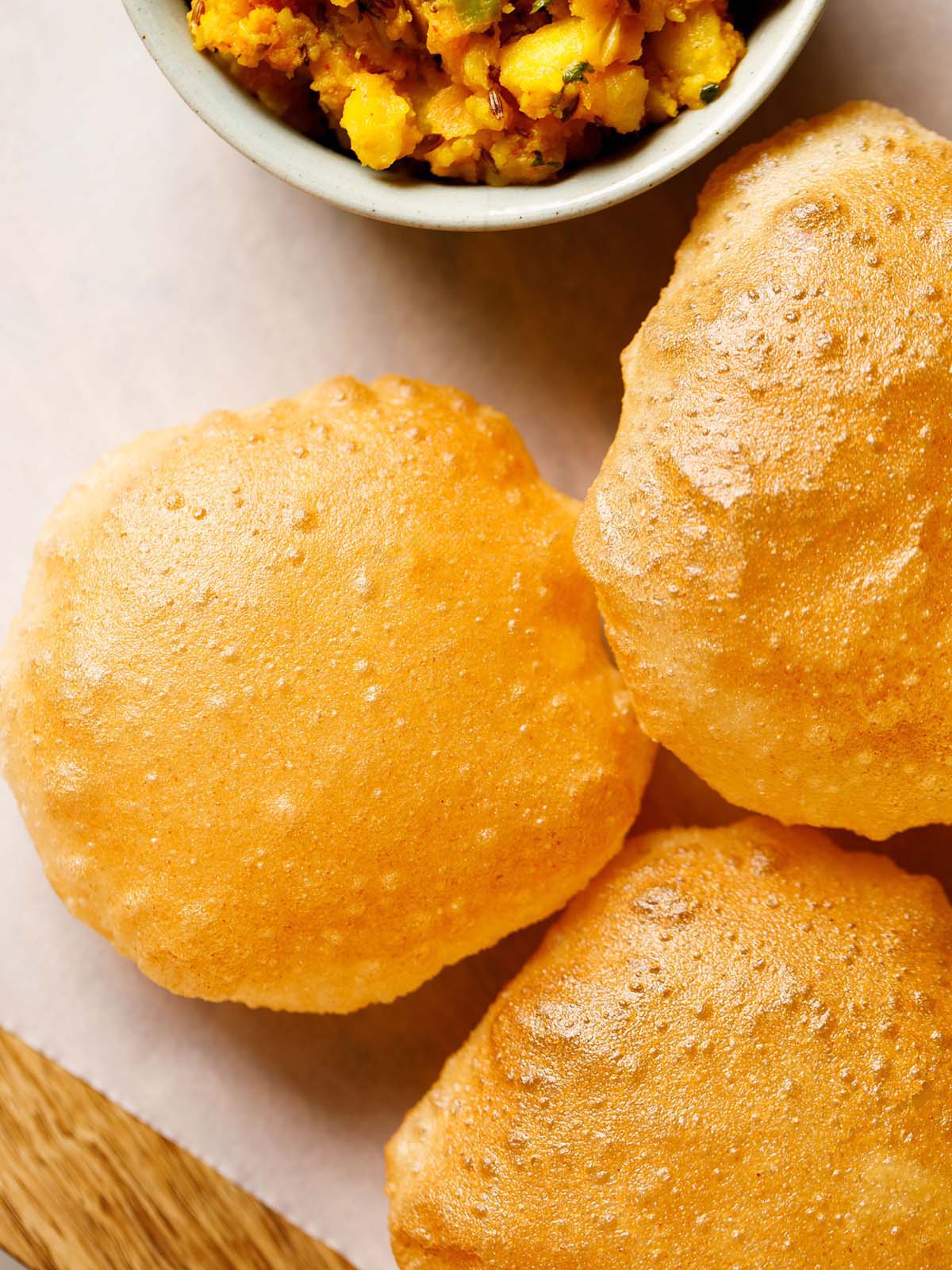
Table of Contents
To make puri, small portions of dough are rolled into discs and deep-fried in hot oil. As they fry, they puff up into light, crisp breads with a soft interior.
Traditionally, puri is made with whole wheat flour across most parts of India. There are also regional variations.
In Bengal, Luchi is made with all-purpose flour, ghee or oil, and has a softer texture.
In North India, Bedmi Puri is a popular variation made with urad dal paste, spices and whole wheat flour.
You can serve poori for breakfast, lunch or dinner. It pairs well with many Indian curries and vegetable dishes.
With the right technique and a few tips, you can easily make crispy, soft and well-puffed poori at home.
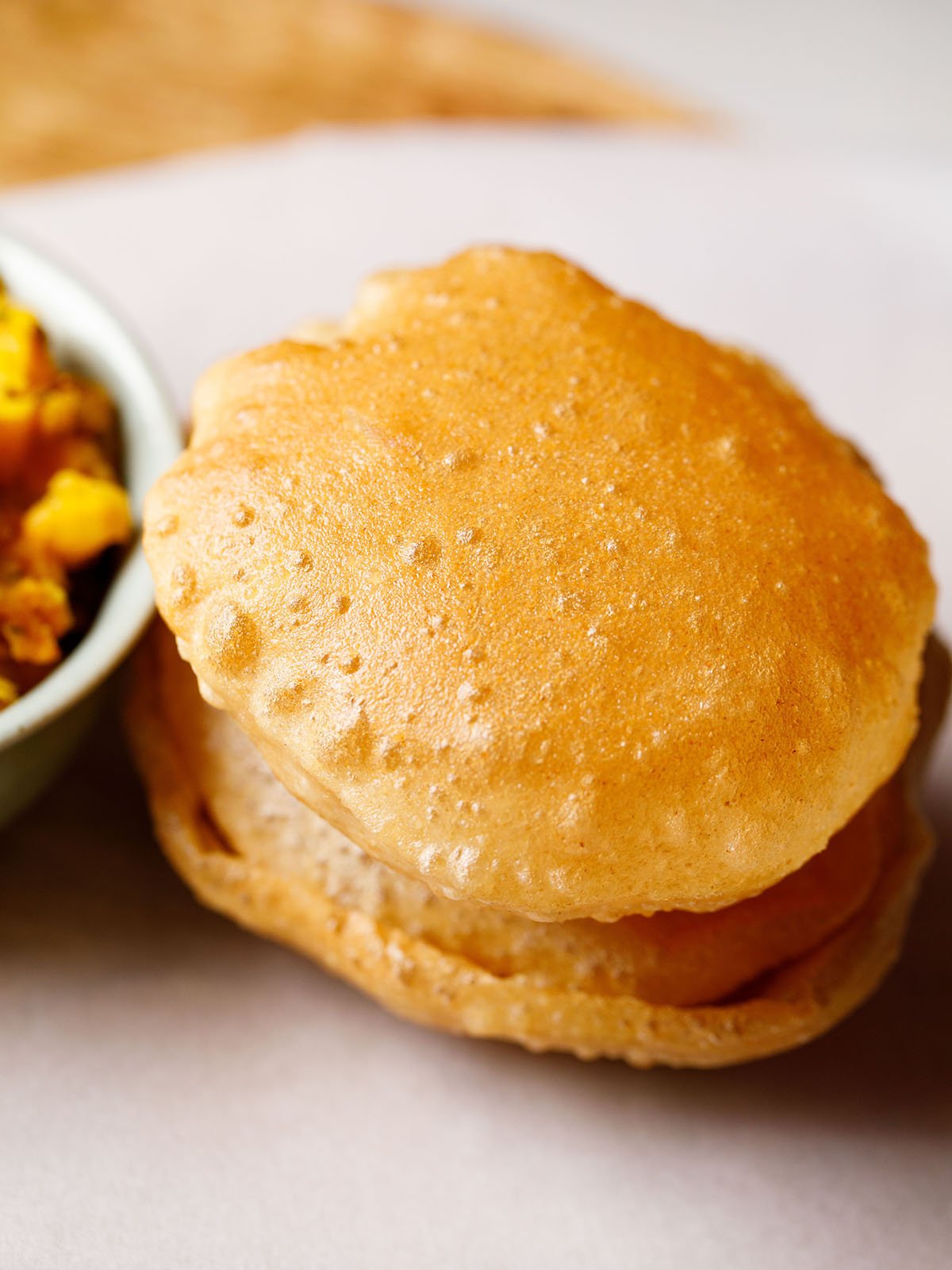
How To Make Poori (Step-By-Step)
Homemade puri only takes about 40 minutes to make from start to finish. Be sure to read the entire recipe, including my tips for the best puri below before you get started!
Make The Dough
1. First, mix together 3 cups whole wheat flour (360 grams), 1 teaspoon salt, and 1 teaspoon oil (optional) in a large bowl.
Tip: For a more crispy texture, you can add ¼ cup fine rava (sooji or semolina).
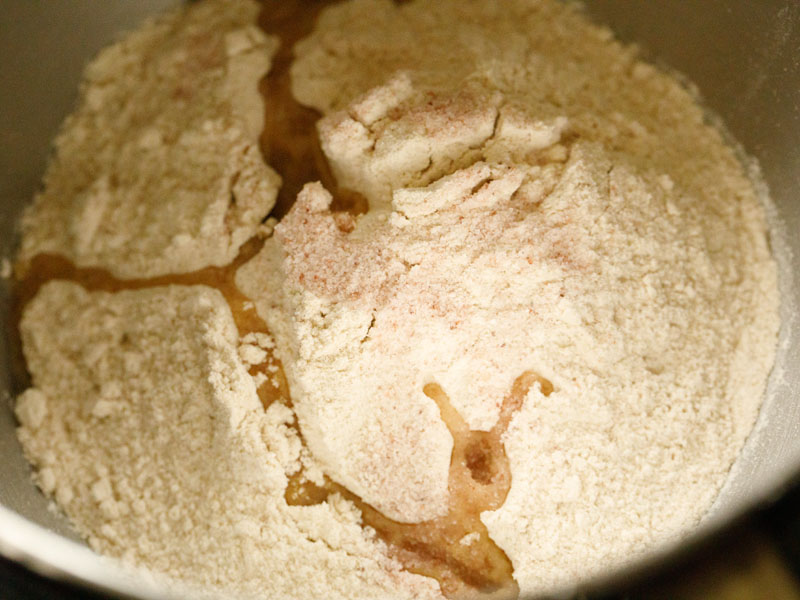
2. Add just a bit of water at a time as you begin to form the dough, making sure to not oversaturate the mixture.
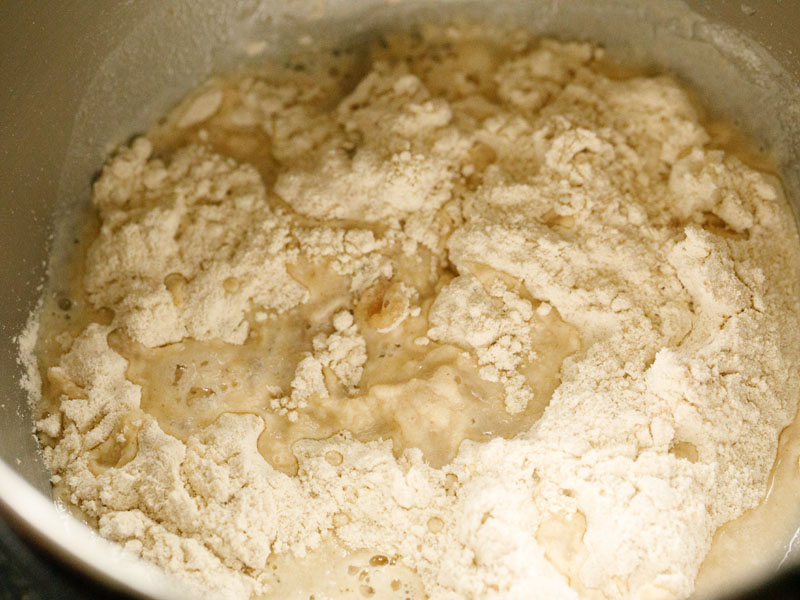
3. Knead the dough with a wooden spoon or your hands, or use a standing mixer. Again, add only a splash or two of water at a time as you work.
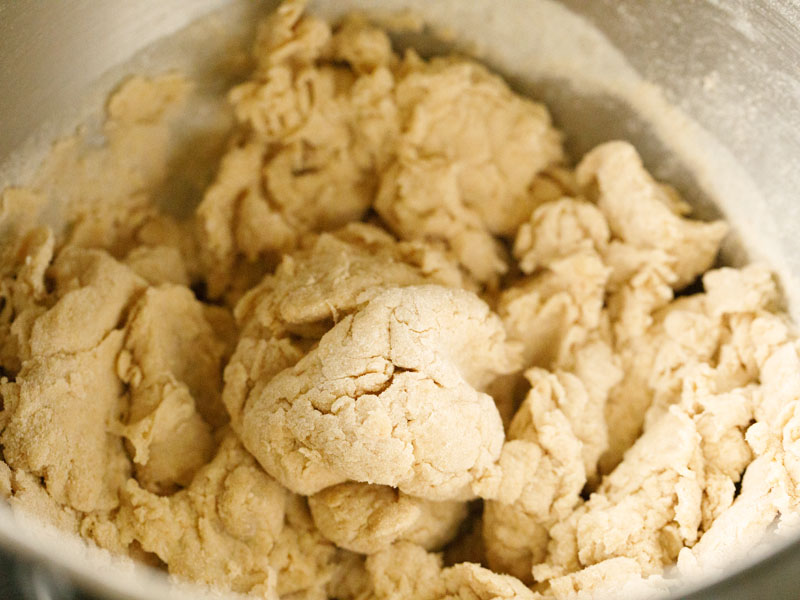
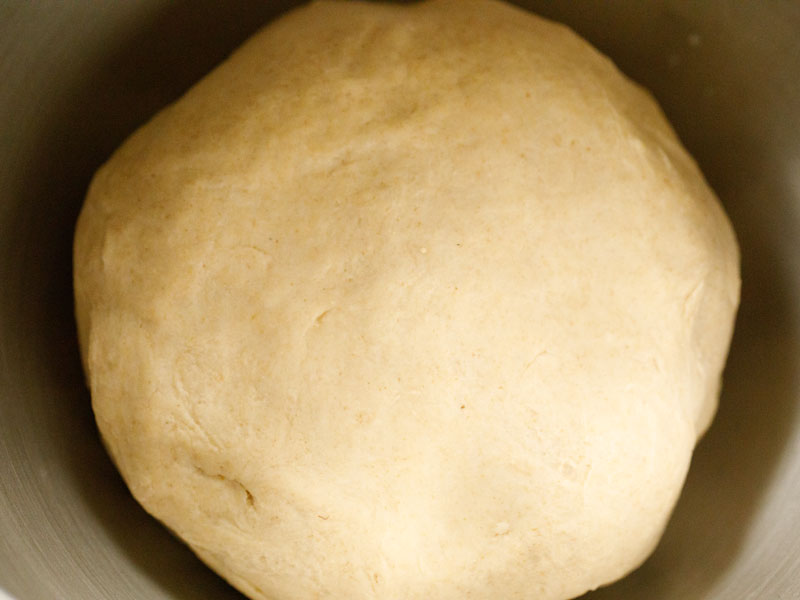
4. Continue to knead until you form a stiff, tight dough. It should not be soft like a roti or a bread loaf. You can add about ¾ to 1 cup of water in total.
Cover the bowl with a kitchen towel or plastic wrap, and let the dough rest for 20 to 30 minutes at room temperature.
Assemble, Roll & Shape
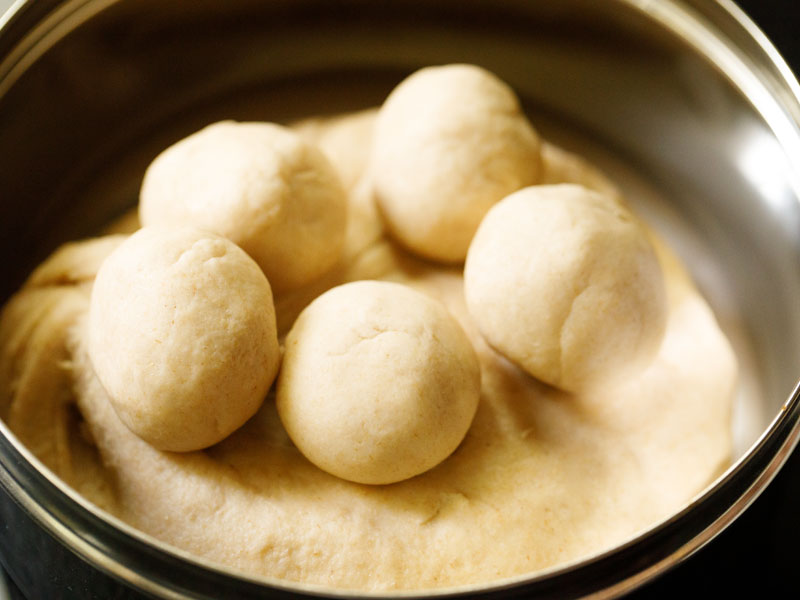
5. When ready to use, divide the dough into about 30 small or 25 medium pieces, and roll each into a tight ball.
6. Next, use the palm of your hand to lightly flatten the dough ball, and then apply a bit of oil to the entire surface.
This helps the bread fry evenly and rise properly, without the need to dust with flour first (which runs the risk of creating burnt flour particles in your oil).
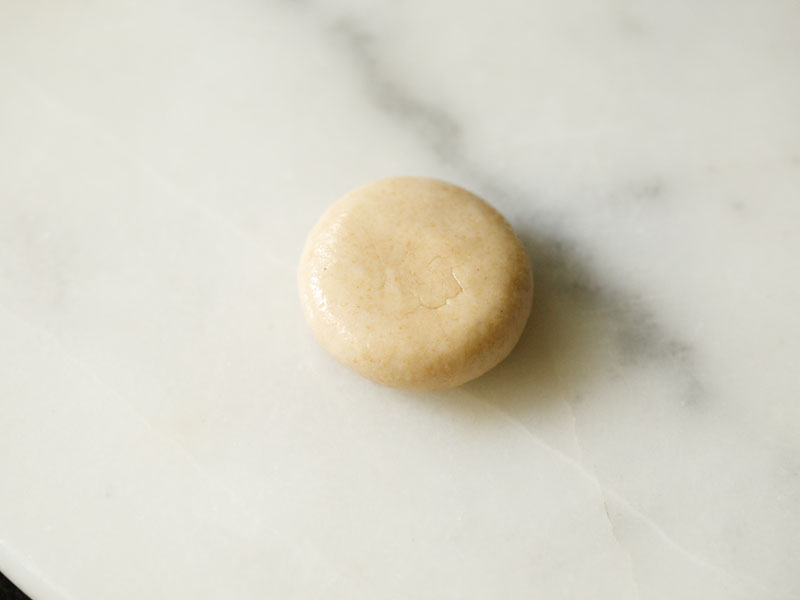
7. Use a rolling pin to roll the dough evenly into circles that aren’t too thick or too thin. Ideally, you want them to be about ¼ inch thick.
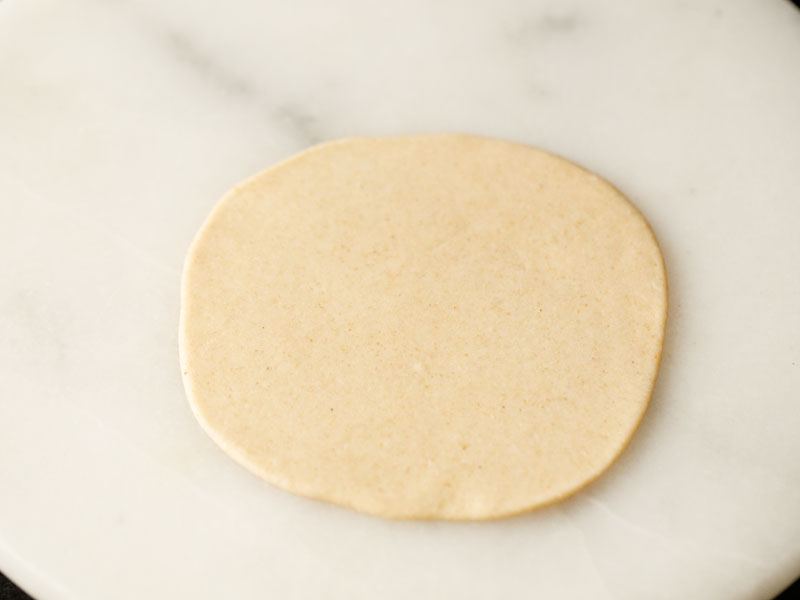
8. Then place the rolled dough circles on a plate, and loosely cover with a clean kitchen towel so that they don’t dry out.
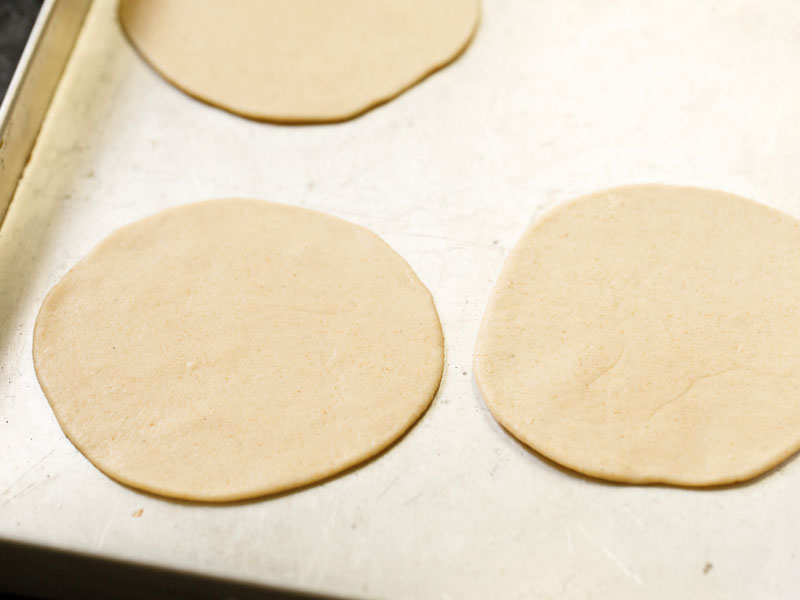
Deep Fry Poori
Frying puri at home is simple, but it needs a gentle touch. Since the puri has to puff, handle it carefully. If it cracks, oil can seep in and make it soggy.
Follow these simple steps to fry perfect puri every time:
9. First, heat oil in a deep pan (kadai). Test the oil by dropping a small dough ball into oil. If it rises quickly to the top, then the oil is hot enough for frying.
Once you have the oil to the right temperature, carefully add one rolled dough disc at a time.
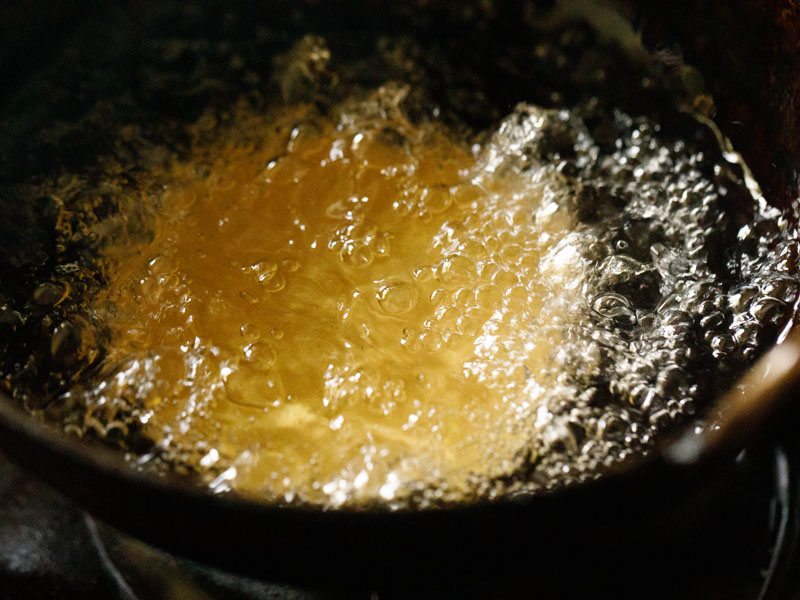
10. It should begin to puff up almost immediately after it hits the hot oil.
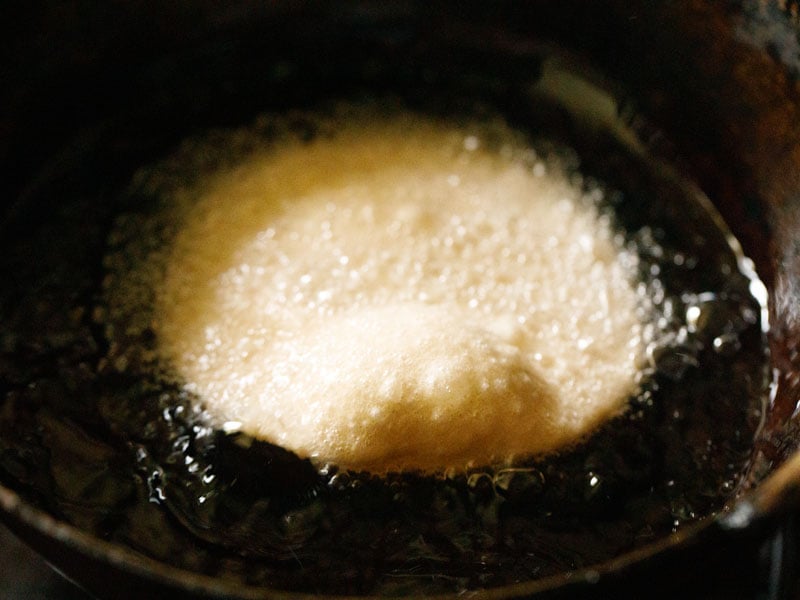
11. Give it a nudge with a slotted spoon or spider spoon to keep the poori moving and therefore cooking evenly.
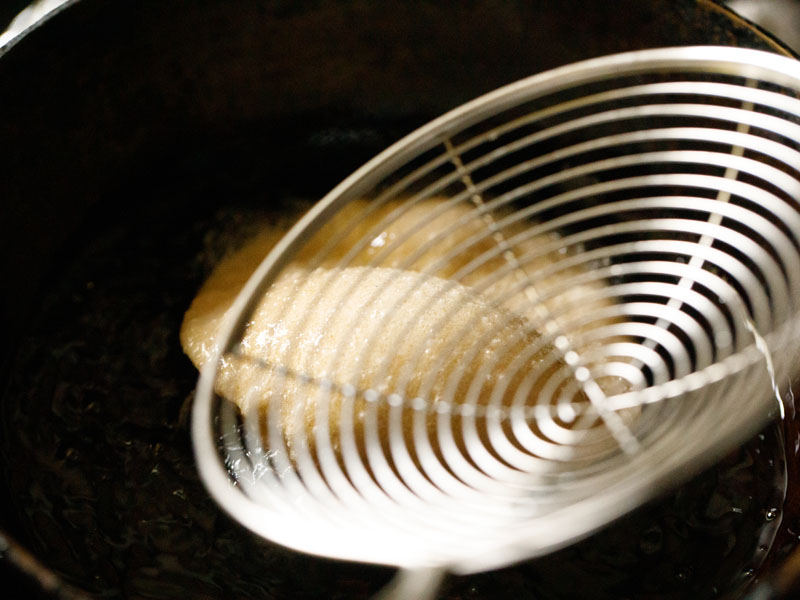
12. Gently press and nudge the poori on the sides with a slotted spoon or spider spoon to help it puff up completely.
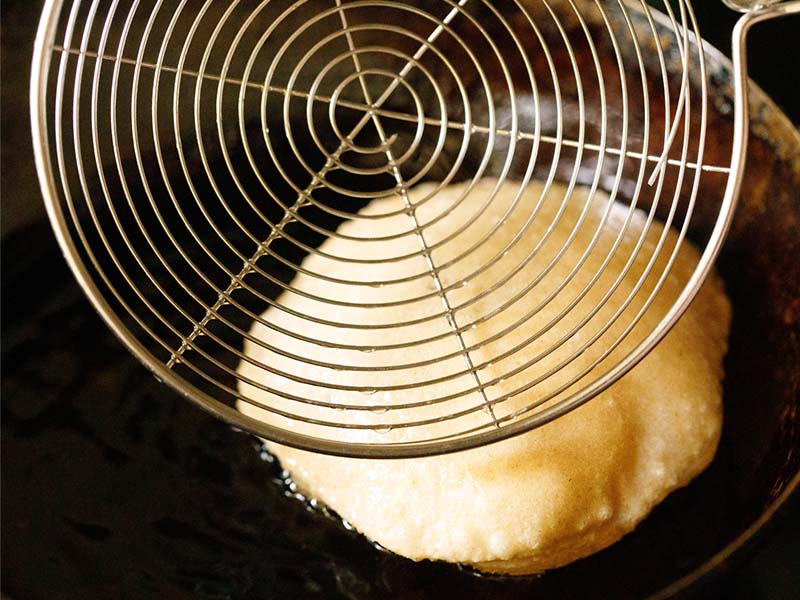
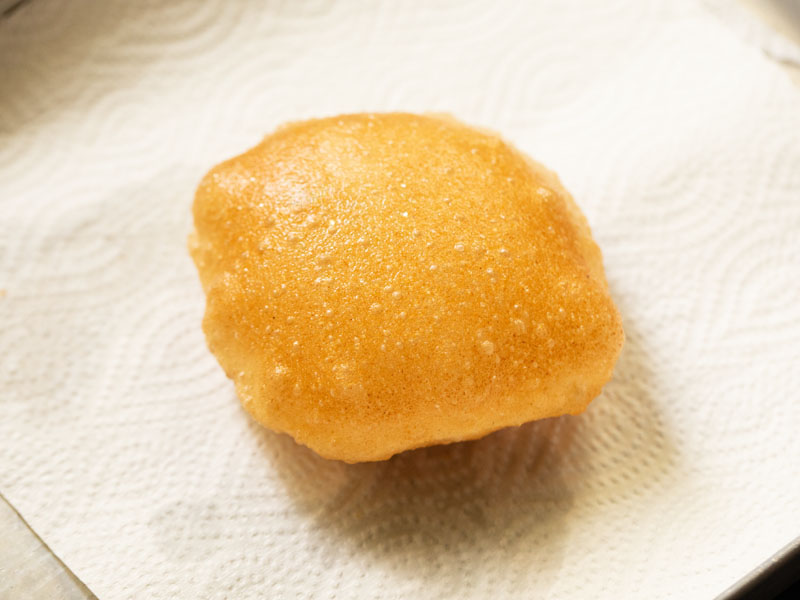
13. Continue to fry for just a minute or two, until the oil stops bubbling and the bottom of the puri is golden to your liking.
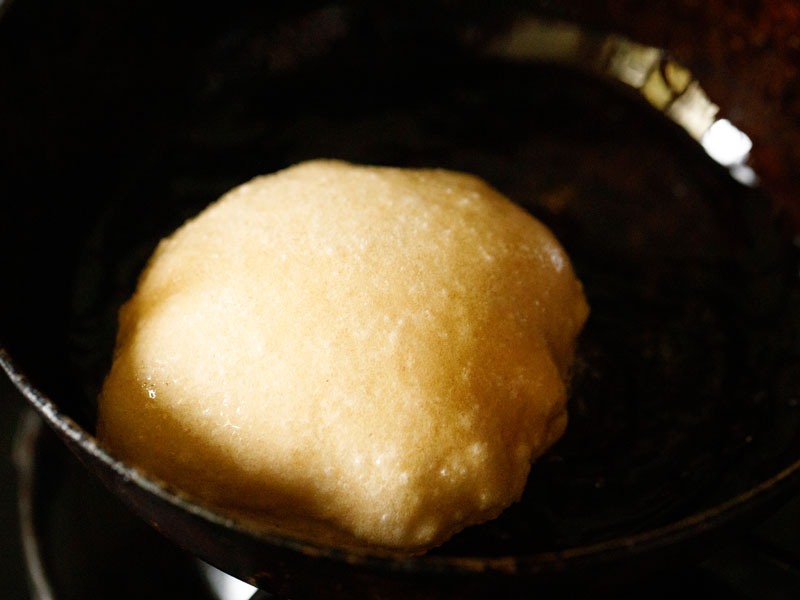
14. Next, turn over and gently press down with the slotted spoon as it fries for a few more seconds. This will ensure that there’s a lovely brown color on all sides.
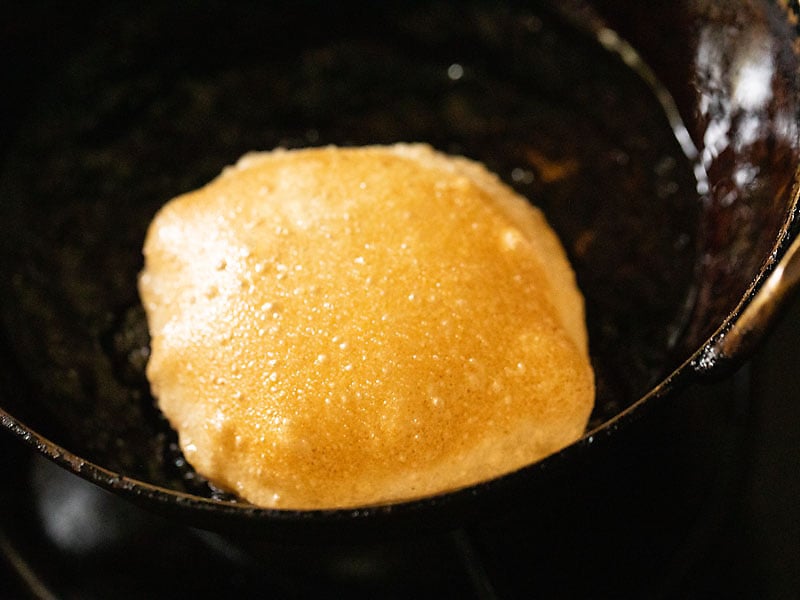
15. Then transfer the fried poori to a plate lined with paper towels to absorb any excess oil.
Fry the remaining poori this way, lowering or increasing the oil temperature as needed to maintain the right level of heat.
Very hot oil will darken the color or there may be uneven color patches on it.
Storage Notes
16. Serve poori hot with any number of sweet or savory dishes, as I have mentioned below. Or enjoy by themselves for a tasty snack!
To keep pooris soft for a few hours, stack them in a steel container, sealing with a lid at room temperature. They will remain soft and won’t become dense and chewy.
Leftovers can be stored in closed container at room temperature for up to 1 day. Because they will lose their crispy exterior, I suggest to rewarm you either bake for just a few minutes in the oven.
Serving Suggestions
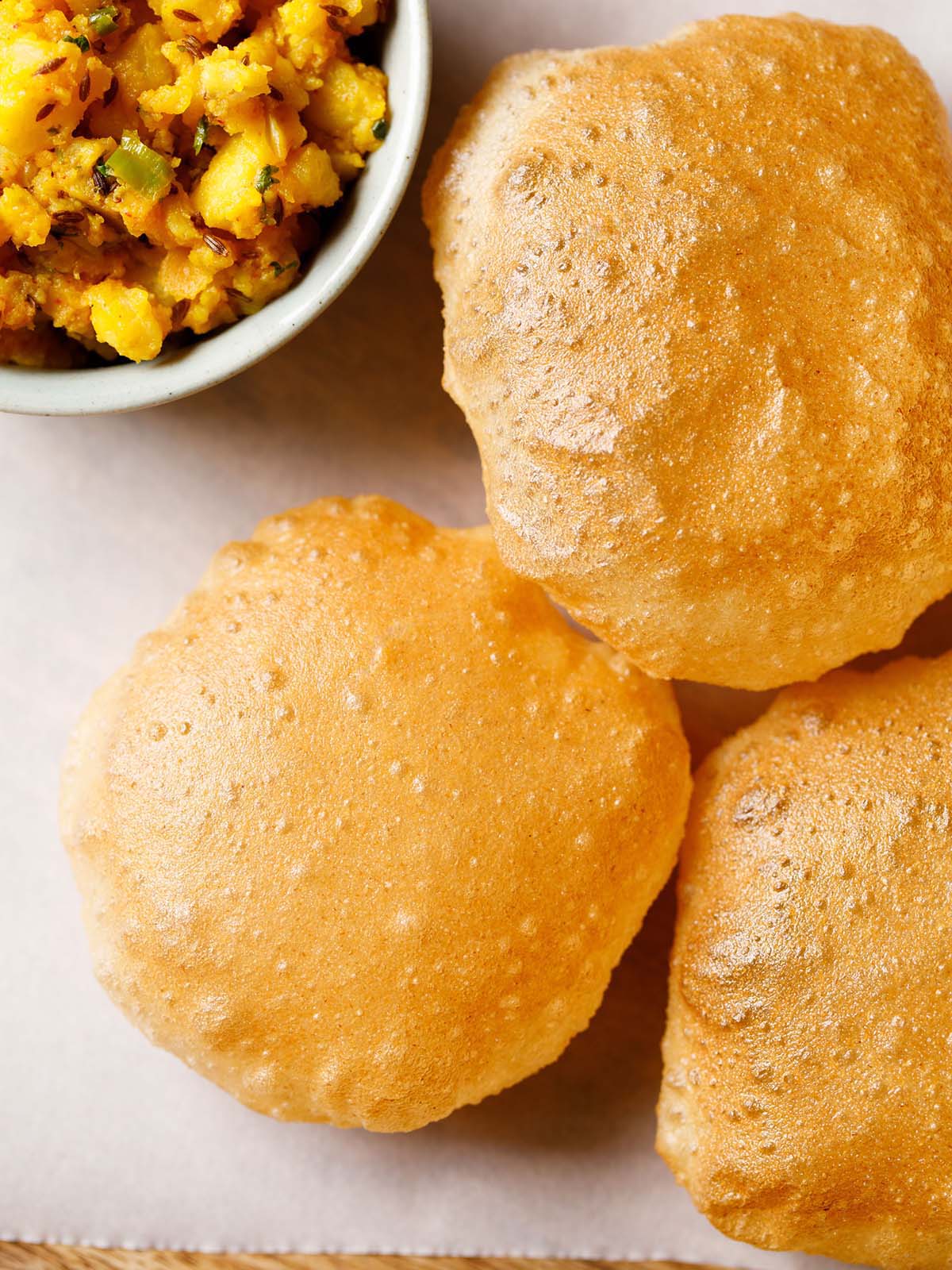
Poori is a common side in Indian cuisine and is usually served with a dry or curried potato dish. Crispy pooris with a saucy Potato Curry make a comforting meal.
Poori also pairs well with sweet dishes. Sooji Halwa is a popular choice, especially for breakfast.
A seasonal favorite is Aamras (mango pulp), which tastes very good with poori. You can also serve it with Shrikhand, made with hung curd and flavored with saffron and cardamom.
You can even make puri as a quick side for lunch and serve it with leftover curry or a simple sabzi.
Dishes That Pair Well With Puri
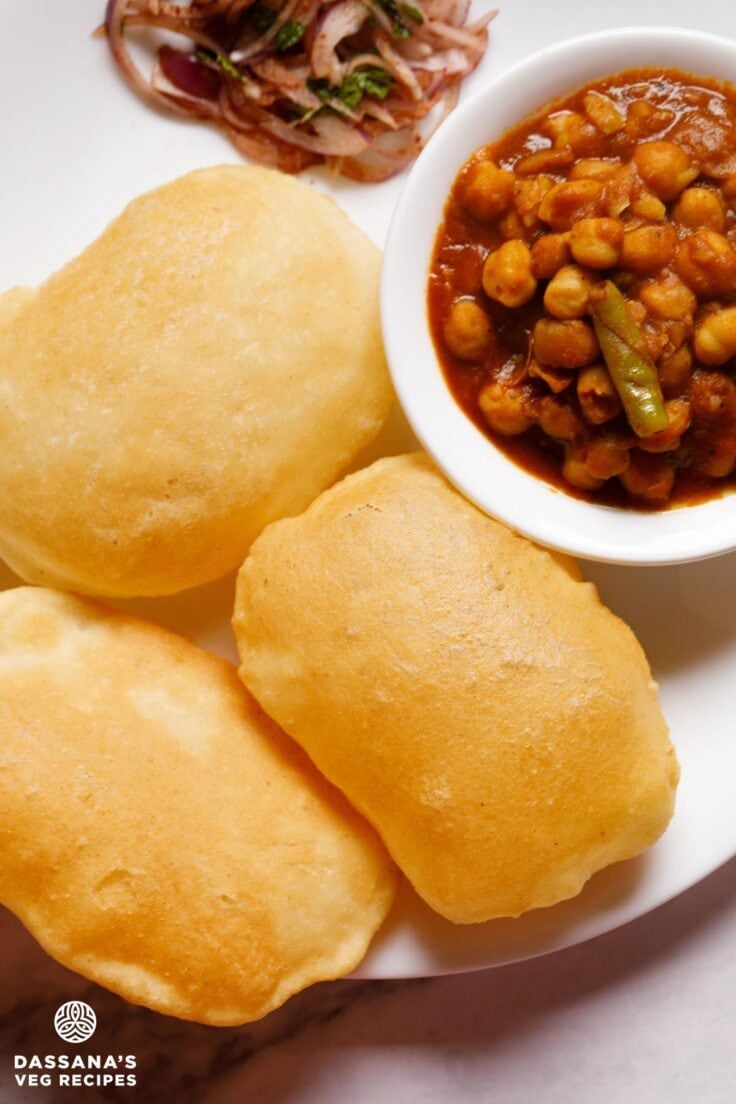
- Chana Masala – The classic North Indian curry made with white chickpeas, onions, tomatoes, and spices.
- Veg Kurma – Also called korma, a saucy mixed vegetable dish with coconut, spices and herbs.
- Kadala Curry – Made with black chickpeas, coconut, and lots of spices.
- Aloo Gobi – A classic side dish featuring spiced cauliflower and potatoes.
- Aloo Chole – This very filling breakfast dish includes potatoes and chickpeas.
- Jeera Aloo – A simple side of boiled and sautéed potatoes with cumin, lemon, and coriander leaves.
- Poori Bhaji – Flavor packed potatoes with onions, spices, herbs and tastes best with pooris.
- Aloo Puri – Punjabi style tangy potato curry in a spiced onion-tomato masala base.
Variations
There are many variations of this Indian fried bread. Here are a few you can try:
- Luchi – As I have mentioned above, in the Bengal region, a popular variation is made with all-purpose flour (maida) is made and usually served with Bengali Dum Aloo.
- Mangalore Buns – Sweet banana fried bread.
- Palak Puri – With palak puree added to the dough making for a green-colored puri.
- Beetroot Poori – With Beetroot puree added to the dough giving a vibrant crimson red color fried bread.
- Rice Puri – Soft puri made with rice flour makes for a good gluten-free puri recipe.
- Potato Poori – The dough is stuffed or mixed with spiced mashed potatoes.
- Sweet Puri – Made with sugar or jaggery are also known as Meethi Puri.
- Vegetable Poori – Variant made with grated vegetables or pureed vegetables.
Dassana’s Recipe Tips
- Dough texture: Make sure your dough is firm and tight because a soft dough will not hold its shape as well when frying. Add a sprinkle of flour to the dough while kneading if you notice it feeling too squishy and loose.
- Rolling: Along with adding a bit of oil to the flattened dough ball, you can lightly grease the rolling pin with oil to help keep it from sticking to the dough. Again, you don’t want to dust with flour because these particles will burn in the hot oil.
- Frying: It is important that the oil is at the right temperature. If the oil is too hot, the puri will brown quickly or burn. If the oil is not hot enough, they will absorb oil and turn soggy. The puris should puff while frying. If they do not puff, the dough may not have been kneaded well, rolled evenly, or the oil may not be hot enough.
- Digestion: Fried food have you feeling a bit heavy? Add ajwain seeds (carom seeds) to the flour before kneading! Carom seeds (ajwain) are very helpful in digestion, and add a lovely light flavor to the puri.
- Crispy texture: For a crispier texture, you can add ¼ cup fine suji (rava or semolina flour) to the dough.
Your Questions Answered
Why does puri becomes hard?
PurPuri becomes hard when it does not puff while frying. This usually happens if the dough discs are not rolled evenly. Uneven or thick areas prevent proper puffing, so the puri stays flat and turns hard.
Why does puri not puff?
Puri may not puff if the dough is not rolled evenly or if the oil is not hot enough. Thick or uneven discs prevent proper puffing, and low oil temperature keeps the puri flat.
Roll the discs evenly to about ¼ inch thickness, not too thin or thick. Fry in hot oil, and gently press with a slotted spoon to help the puri puff.
Why is poori oily?
If the oil is not hot enough, puri absorbs more oil and becomes soggy. Also, if the puri cracks while frying, oil seeps in and makes it oily.
Is puri healthy?
Puri is deep-fried, so it is best enjoyed occasionally. Always use fresh oil for frying. Avoid reusing oil.
Which oil is best for frying puri?
Use an oil with a high smoke point. Peanut oil, sunflower oil, vegetable oil, avocado oil or grapeseed oil work well.
Can I fry puri in a deep fryer?
A kadai (similar to a wok) works best. Its wide and open surface helps the puri puff up easily. A deep fryer is not ideal for this recipe.
How do I check if the oil is ready for frying poori?
The oil should be hot (about 180 to 190°C). Drop a small piece of dough into the oil. If it rises steadily with bubbles, the oil is ready.
If it stays at the bottom, the oil is not hot enough. If it rises too fast or browns quickly, the oil is too hot.
You can also add a small bread cube. If it turns golden in about 1 minute, the oil is ready.
What is the difference between roti and puri dough?
Both use similar ingredients, but the texture is different. Roti dough is soft, while puri dough is firm and tight. This helps puri hold shape and puff when fried.
Step by Step Photo Guide Above
Poori Recipe | Crispy & Soft Puri
Ingredients
- 3 cups or (360 grams) cups whole wheat flour
- 1 teaspoon oil or melted ghee (optional)
- 1 teaspoon salt or add as required
- ¾ to 1 cup water or add as required
- oil for deep frying – as required
Instructions
Making dough
- In a mixing bowl or on your work-surface, take the whole wheat flour, salt and oil or melted ghee.
- Add little water at a time and knead well to form a dough. The dough should not be soft but stiff and tight. You can also make a semi-soft dough.
Assembling and rolling
- Divide the dough into small or medium pieces – about 25 to 30
- Make into medium sized or slightly small balls.
- Spread a bit of oil on both sides of the dough ball. Spreading oil and not dusting with flour helps the oil to stay clean and you won’t see dark burnt flour particles inside the oil.
- Roll the dough evenly into circles of about ¼ inch – neither too thin nor thick.
- Place the rolled dough circles in a plate and cover with a clean kitchen towel, so that they don’t dry up.
Frying
- Heat oil in a deep frying pan or kadai.
- When the oil is sufficiently hot then add one dough circle at a time and fry gently pressing down with the frying spoon or slotted spoon in a circular motion.
- Turn over when puffed up and fry till golden brown.
- Serve poori hot with a vegetable curry like korma or sweet dishes like suji ka halwa or aamras or potato curry.
Dassana’s Notes
- Poori Dough: Make sure the puri dough is tight and firm as a soft dough will not hold its shape when frying. Add a sprinkle of flour to the dough while kneading if you notice it feeling too loose.
- Rolling: Along with adding a bit of oil to the flattened dough ball, you can lightly grease the rolling pin with oil to help keep it from sticking to the dough. Again, do not dust with flour because these particles will burn in the hot oil.
- Frying: It is very important that the oil is exactly at the right temperature. If the oil is too hot the puri will burn. However, if the oil is cold they will become soggy. Frying oil should be between 360 to 375 degrees Fahrenheit or 180 to 190 degrees Celsius. The poori should puff while frying. If not, then either the dough has not been kneaded well, the dough disc has not been rolled out evenly, or the oil is not hot enough.
- Digestion: Add ajwain seeds (carom seeds) to the dough as they are very helpful in digestion, and add a lovely light aroma to the puri.
- Crispy puri: For a crispier texture, add ¼ cup fine suji (rava or semolina flour) to the dough.
Nutrition
Poori recipe from the archives was first published on April 2014.
Hi, your poori recipe is so good, thank you for sharing. Please could you help with the dough measurements if I’m making 200 pooris. Thank you 🙏🏻
Happy you liked the poori recipe. In the recipe card, you can increase the servings to 200 and the ingredient amounts will automatically adjust for you.
Superb easy recipes
thank you.
Hi
I tried this and my poories were a little hard and they didn’t puff completely. I tried for the first time using a deep fryer and heated pool to 375 F and pressed the dough using roti presser (or tortilla press).
What went wrong? I kneaded the dough really well. Please advice. I wanted poori to be in my son’s birthday party menu and I am planning to prepare. So I have been trying to get the perfect poori.
i don’t think using a deep fryer is a good idea for frying poori. a kadai with its open surface is best to fry poori as the poori has a lot of surface to expand, rise and move in the hot oil. so you can try frying poori in a kadai. make sure the oil is hot enough. the first poori may not turn out well, but the second one and thereafter the remaining ones will be good. gently keep on nudging them and pressing lightly for even frying and also so that they puff well. using a presser is fine. hope this helps.
Hai dassana
Am so happy that my poori and aloo Mattar was a huge hit.. I followed your recipe and my hubby loved it very much.. Poori really puffs up when the flour is rightly kneeded.. I would have posted the pic of my food.. But here I didn’t see any option for that.. Thank you so much..
Hai thanks for your info but how the puri becomes so puffy pls help
firstly knead the dough well. then the dough balls have to be rolled evenly. the oil has to be at the right temperature while frying puri. i usually fry at a medium to medium-high flame. on a low flame or if the oil is not hot, the puri won’t puff up and absorb more oil. the amount of water has to be right in the dough. so a slight softer dough is also fine for making puri.
Hi, I’ve tried making these twice from another recipe in a cookbook. The first time, they puffed a little. Second time the dough was too wet, I think and stayed flat. That recipe called for graham flour, which seems to be quite coarse whole wheat. Do you think I should try to grind it finer, or just get regular whole wheat? I am very new to Indian cooking – never even eaten or seen these before. I will try your recipe next time. I would love any advice or tips you could give me, especially about the type of flour. Thanks! 🙂
sandy, the flour has to be fine and not coarse. you can grind them finer. or you can also get regular whole wheat flour. dough should not be sticky. it can be have semi-soft to soft texture. also while rolling, poori has to be rolled evenly and round. when frying the oil has to be medium hot. when you slid the poori in oil, it will come up on the surface and then start puffing up. so gently nudging with a spoon helps poori to puff up well. depending on the size of pan, you can easily fry 1 to 3 poori at a time. hope these tips help.
I got regular whole wheat flour today, got the dough right & rolled evenly. Some were not 100% round. All puffed somewhat, but 2 puffed all the way! I was cheering like a lunatic in my kitchen when the first one puffed right. (I made smaller batch as practice). They all taste great, but the texture of the ones that puffed all the way is amazing! I am completely hooked! Im gong to make more tomorrow & try to make them rounder.
Thank you so much for the help! I really appreciate it. My hubby loved them, too. Can’t wait to make again.
thats great sandy. not all puff. it depends on the way the poori is rolled and also the temperature of the oil. definitely the puffed ones taste better. even i become a lunatic when a recipe which has given me problems in the past become successful after some trials.
thanks again and happy cooking.
Thank you for these instructions. I constantly fail at poori. Either never puffs up or becomes rubbery. Your recipe helped me make my firstever batch of soft fluffy poori!
Welcome Abhi. Glad to know that this post helped you in making soft and fluffy puri.
Dassana if you apply oil while rolling puri won’t puff up.
it does. i make poori this way and never had any issues with the poori not puffing up in oil.
Perfect recipe Dassana!! Tried it out today and it turned out to b fantastic?
thanks a lot loveena for this feedback on the poori recipe.
Please post potato soyabean recipe.
nisha, i do not use soybean chunks or granules. so won’t be able to add soybean recipes.
6th Oct 2015: I tried making Puri along with your chole recipe and they turned out pretty well….they did not fluff up much…hubby n baby were happy to eat 🙂 Thanks for sharing the recipe
thanks again doilyn. the poori dough has to be rolled well in a round shape and the thickness should be even. also the oil has to be hot enough. with practice, you will get it. happy cooking 🙂
Hello Dassana,
You are the very reason I was able to learn cooking in a short time. Your step-by-step pictures HELPSS A LOT ! Please continue this golden work
Regards,
Aparna N
thanks aparna 🙂
Nicely depicted
Dear Dassana,
I tried your pouri recipe and it was a big hit at the dinning table. In fact we had it with paneer and again the recipe from your site. I didn’t have any problem that day to feed my little ones that day. They just loved it and my daughter now asks for it often. Thank you very much for shairing the correct recipe and I hope to explore some other recipes from your site soon. Million thanks and more powers to you! May God Bless you!
Roshanthie
welcome roshanthie. thanks for sharing this positive feedback and your blessings. felt good after reading your comment.
Hi Dassana … I chanced upon your website just today and found it to be huge fun … not only is it classy and refined, but it also projects Indian food in a manner both elegant and appealing. Your presentations are attractive and the photography delightful..! What comes across clearly is that you love cooking and definitely know your stuff. I’m going to try out some of your recipes starting tomorrow …
I plan to send links to this site to American friends and acquaintances who love Indian food and have no idea that real Indian food is not what’s found in restaurants. They are also too daunted to try cooking it themselves. Your website can change all that.
By the way, I’ve done the food feature of a magazine for some time … I have a few suggestions for you: I re-formatted and edited some of your recipes … if you like I could email them to you with some covering notes explaining the changes. If you’re open to that, do let me know …
Meanwhile … take care … and keep going … you’re doing a great job…
Biba Bhusri, a Punjabi Sikh, living in Bangalore..!
thanks biba for this positive feedback and also for recommending the website. i agree that real indian food is not found in many restaurants of the world. yes, please do share your reformatted recipes and suggestions.
Great, thanks, can’t wait to try it like this..I had a recipe that used another type of flour, and it didn’t come out good.
welcome marta
Good
fine
Hi Dassana,
Thanks again for the info on dough maker!
welcome sonam
Dassana, thanks a lot for the information. I really appreciate!
Love,
Sonam
I love puris .I loved ur info and subji list also …Craving for some puris now ..
Hi,
Could you please tell how to check whether the temperature of oil is proper. Neither too hot nor too cold.
Thanks for the help.
add a small ball from the dough to the oil and if its rises steadily & briskly to the top, then the oil is ready. if the dough rises slowly or is still at the bottom, then the oil is cold and if it rises too fast, then the oil is very hot. hope this helps.
hi,
What exactly is the difference for making dough for Chapati and Poori
chapati dough is soft and poori dough is little firm than chapati dough.
for firm dough should I mix less water? I am new to this so please help
hi nikki. make a firm dough. yet the dough should not be dry. there should be enough water in the dough as thats what makes the poori puff. but not as soft like a chapati or roti dough.
hii actually i want to know more channa recipes
i have posted many chana recipes. use the google search button on left side to search for the chana recipes.