
Moong Dal Recipe (Yellow Moong Dal Tadka)
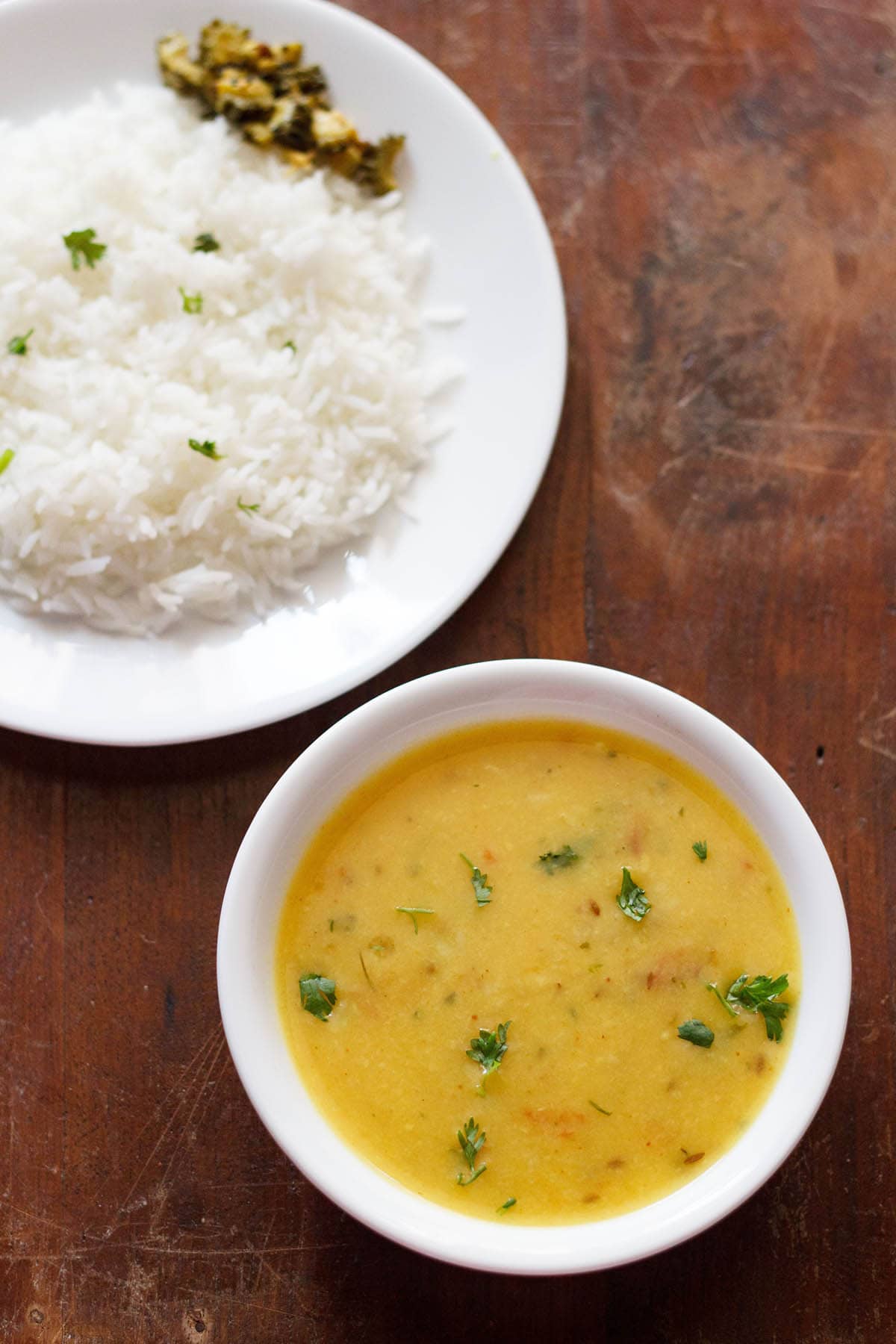
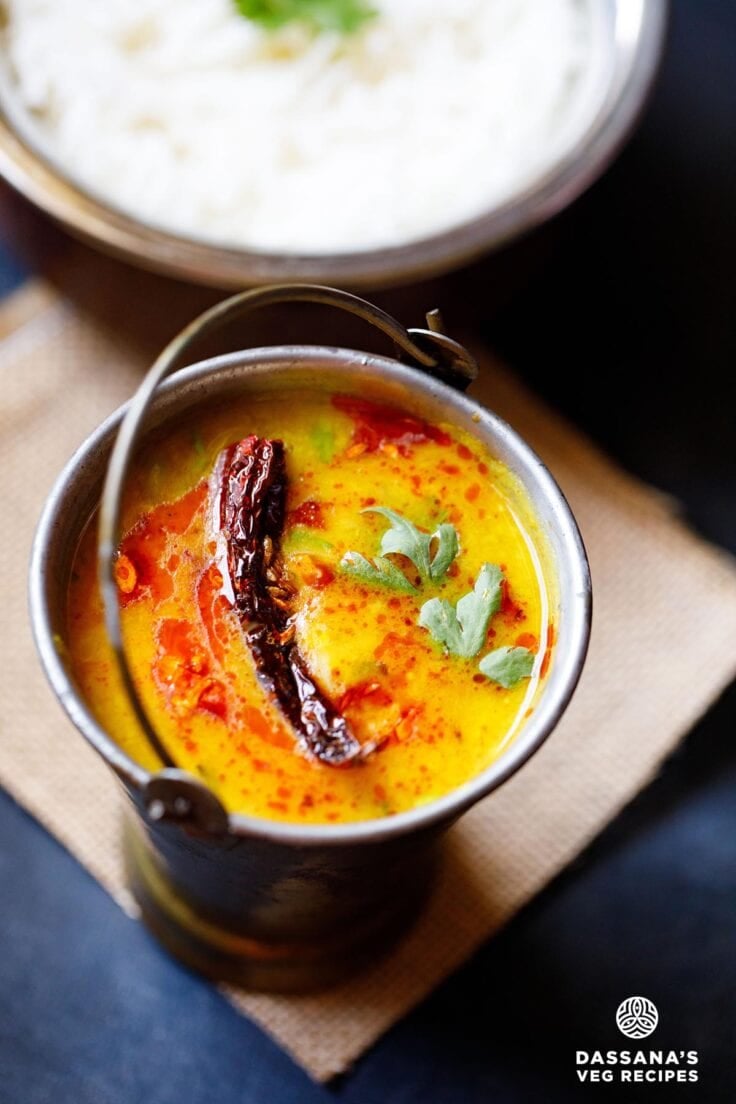
Moong Dal Recipe is a simple, healthy and protein-rich dish made with split and hulled yellow moong dal, also called dhuli moong dal. This post shows you how to make classic Moong Dal Tadka, where cooked lentils are finished with a flavorful tempering of spices in ghee or oil. I am also sharing an easy Moong Dal Fry variation made with an onion-tomato masala base. Both versions use yellow moong lentils and are easy to prepare with step-by-step photos.
About Yellow Moong Dal Recipe
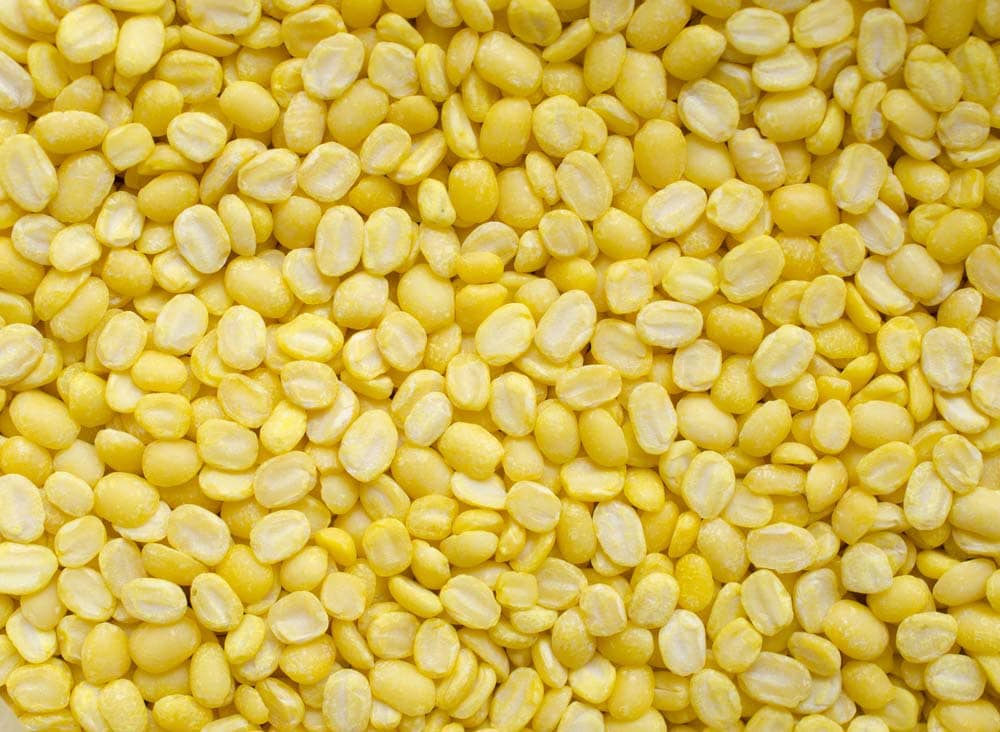
This moong dal recipe uses split and skinned yellow mung beans, not whole green moong (sabut moong).
Once the green husk is removed, the lentils become yellow in color and cook faster. They turn soft and creamy, making them perfect for everyday cooking.
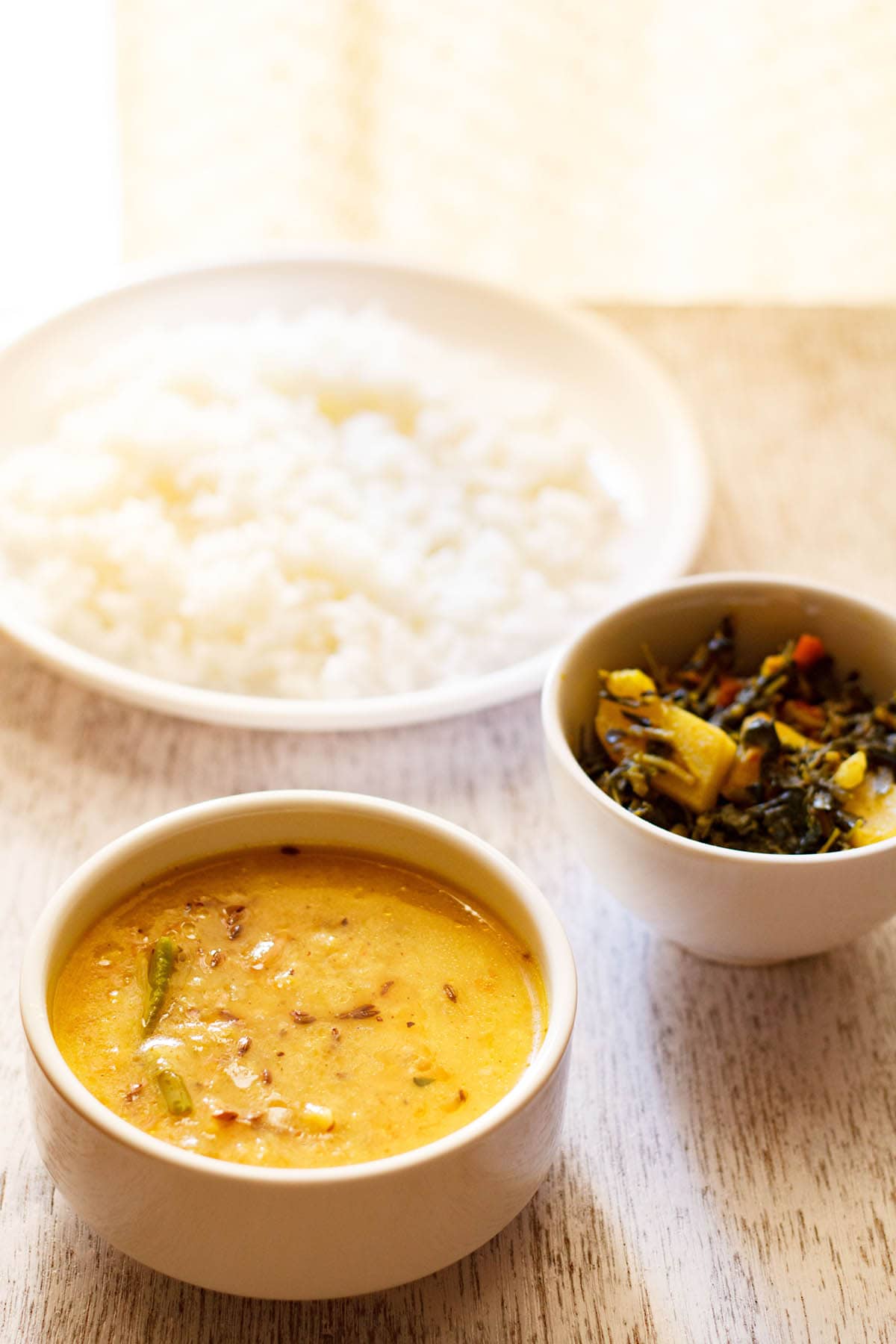
Table of Contents
Moong Dal Tadka is made by first pressure cooking or simmering the yellow moong dal with onions, tomatoes, spices and water until soft and mashable.
A tempering (tadka) of cumin, garlic, garam masala, red chilli powder and green chilies is then prepared separately in hot oil or ghee and poured over the cooked dal. This final tempering adds aroma and depth to the dish.
The consistency of moong dal tadka is slightly thin and pourable, somewhere between a curry and a soup, but still with body.
It pairs well with steamed basmati rice, jeera rice, roti or paratha. Add a side of papad and lemon or Mango Pickle or yogurt, for a complete meal.
You can also pair a side vegetable dish or raita with the yellow moong dal and rice or roti meal. I like to pair it with Aloo Methi.
If you are looking for a simple yellow moong dal recipe for everyday meals, this tadka version is the one I make most often at home.
Photo of hulled and split mung lentils below.
If you enjoy moong lentils, you can also try this recipe made with whole green moong (green gram) – Green Moong Dal
With moong lentils, I also make Moong Dal Khichdi, Moong Chilla, Moong Dal Halwa and Pesarattu made with whole green moong.
How to make Moong Dal Tadka (Stepwise)
Recipe 1
Preparation
1. First, rinse ½ a cup of moong dal (split husked mung lentils) in water a couple of times. Drain all the water and set aside.
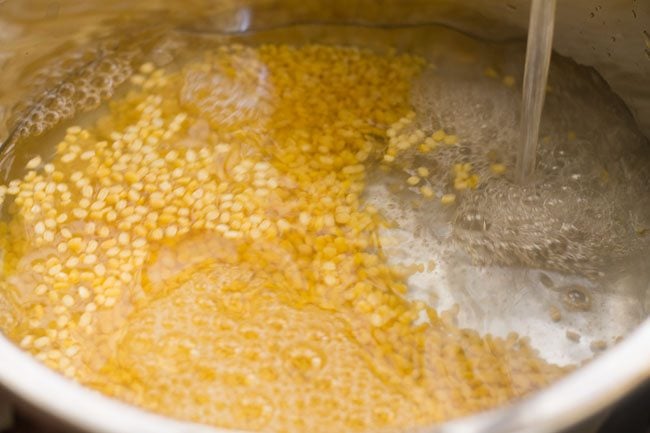
2. You will need to cook the moong lentils. In a 3 litre stove-top pressure cooker or in the inner pot of a 6 quart Instant Pot add the following ingredients together with the rinsed moong lentils:
- 1 medium sized finely chopped onion or ⅓ cup finely chopped onions
- 1 medium sized chopped tomato or ½ cup chopped tomatoes
- 1 inch of peeled and finely chopped ginger
- ⅓ teaspoon turmeric powder
- ¼ teaspoon of red chili powder or cayenne pepper
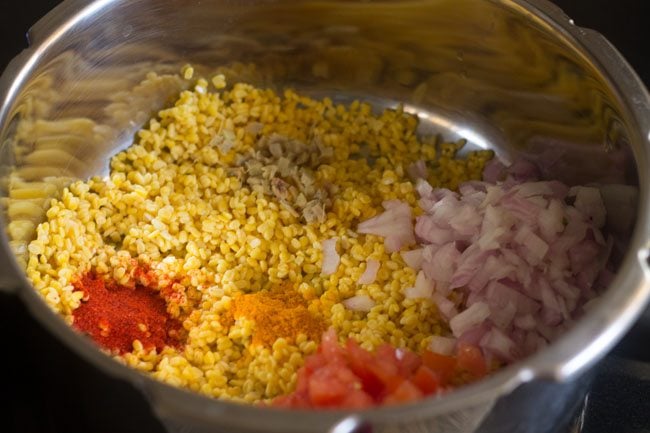
3. Add 1.5 cups of water, and stir well.
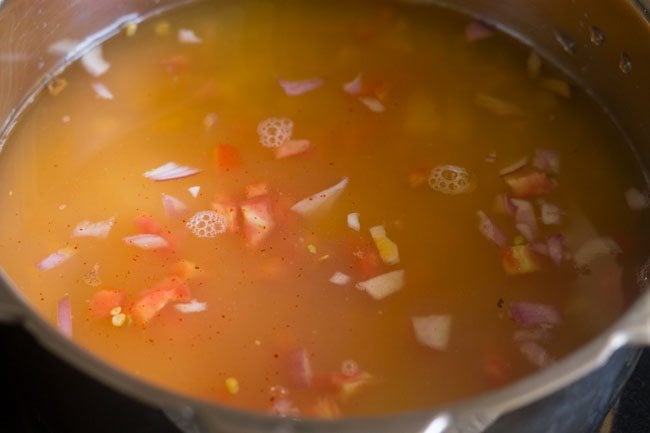
Pressure Cook Lentils
4. Pressure cook the lentils, aromatics, spices and herbs for 5 to 6 whistles on medium heat, until the lentils are cooked perfectly and softened.
Let the pressure fall naturally in the stove-top cooker and then only open the lid. Remove the lid and stir the dal.
For the Instant Pot, this will take approximately 8 to 10 minutes on manual pressure. Once you hear the beep sound when the cooking is complete, do a quick pressure release after 10 minutes.
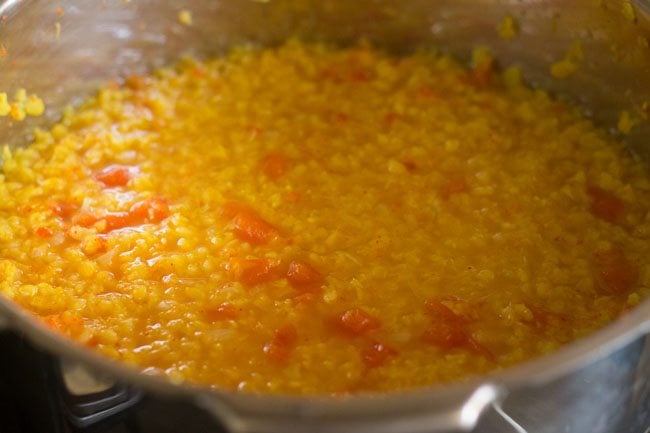
5. The dal should be loose with a medium flowing consistency. If the moong dal looks thick, then add some water. Start with half a cup and stir, and add more water as needed.
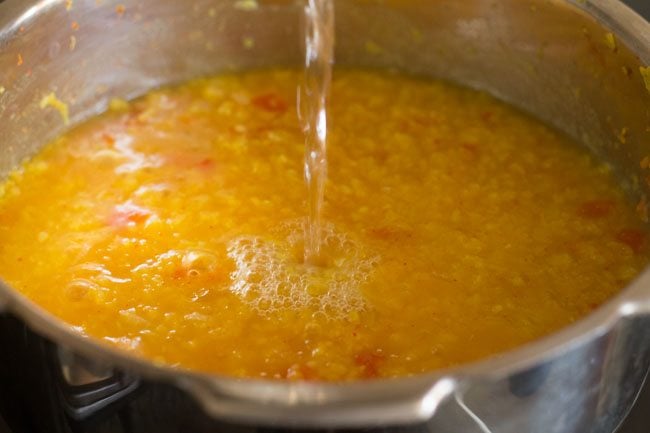
6. Simmer (or use the sauté function on the IP) the moong dal for 1 to 2 minutes or more until you get just the right consistency. It should have a consistency some where like that of a curry.
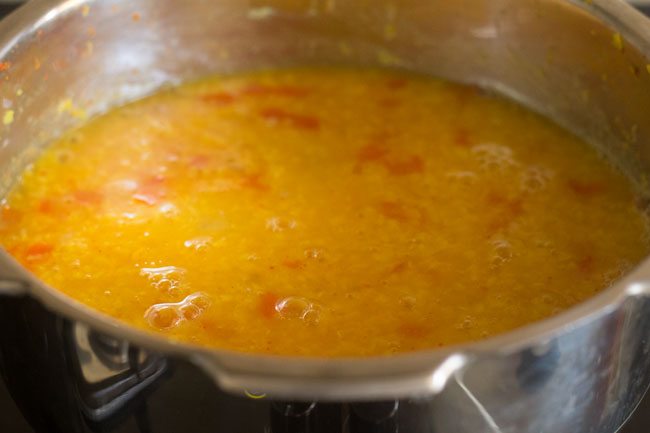
7. Add salt to taste and mix well. Set the dal aside.
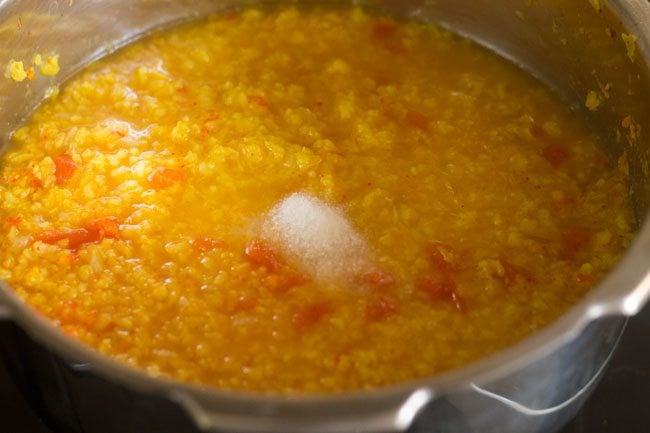
Make Tadka
8. Gather and measure all of your ingredients needed to temper the cooked moong dal. In a small pan on low-medium heat, melt 2 to 3 tablespoons of oil, ghee or butter.
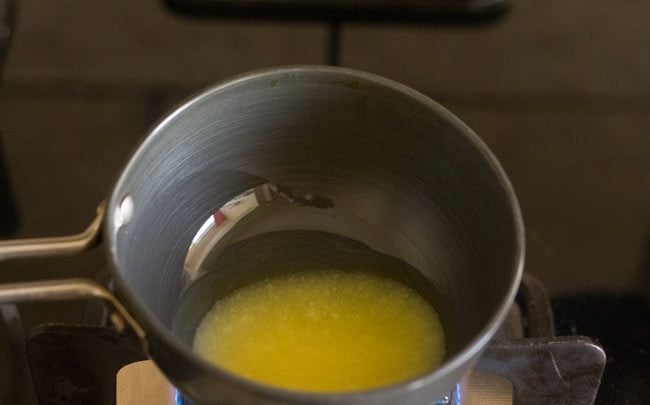
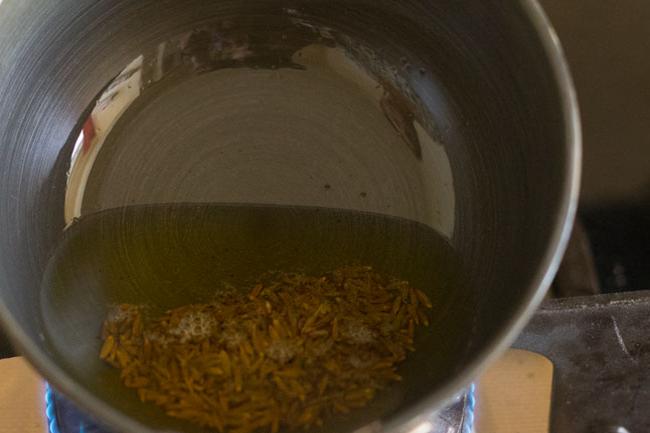
9. Fry 1 teaspoon of cumin seeds in the hot oil. They should change color and crackle, but not burn. Turn the heat down to low if needed.
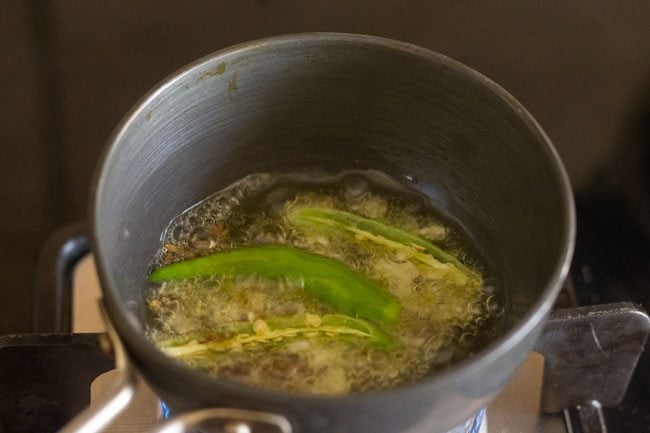
10. Next add 4 to 5 lightly crushed garlic cloves and 1 to 2 slit green chilies to the pot. Fry for a few seconds, but don’t brown the garlic. Turn off the stovetop heat immediately.
11. Once the heat is off, add ¼ to ½ teaspoon of garam masala powder, ¼ teaspoon of red chili powder and 1 pinch of asafoetida (hing).
Switching off the heat ensures that the spice powders don’t get burned.
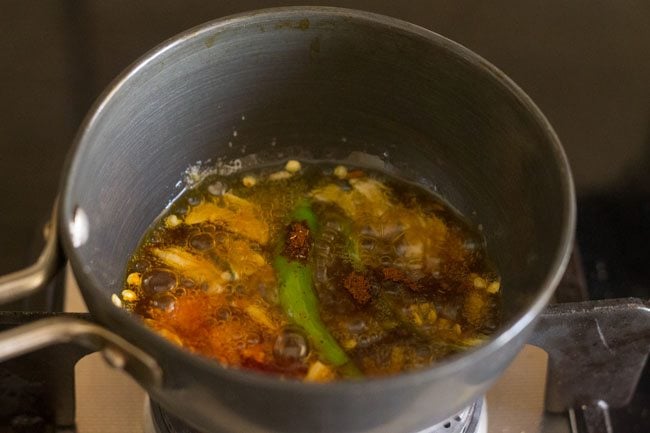
12. Quickly mix the spice powders well with a spoon. This is your tempering mixture to add flavor to the moong dal.
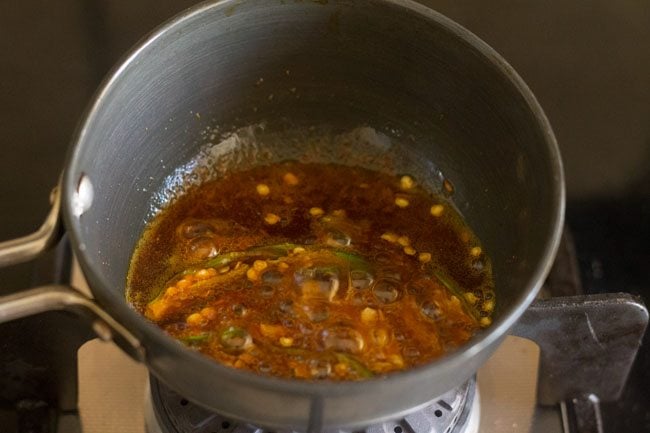
13. After stirring, immediately pour the tempering mixture into the pot with the cooked lentils. Stir the moong dal tadka well to combine.
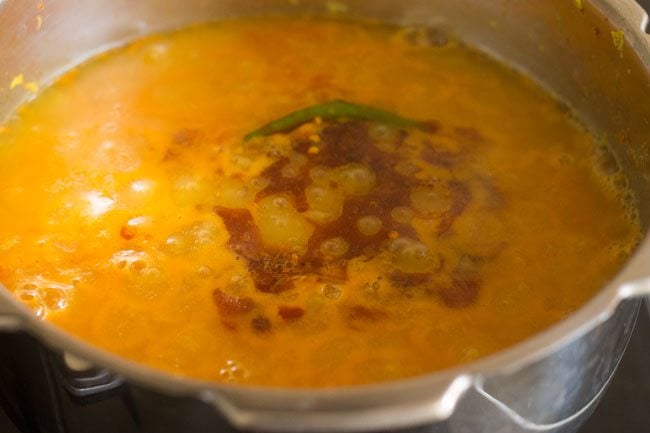
14. Serve Moong Dal Tadka hot with steamed rice or Roti. The moong dal tastes delicious as-is with no need to garnish.
But feel free to sprinkle with some chopped coriander leaves to add a pop of fresh flavor.
For a slight tang of bright acidity, you can also squeeze some lemon juice onto the dish before serving.
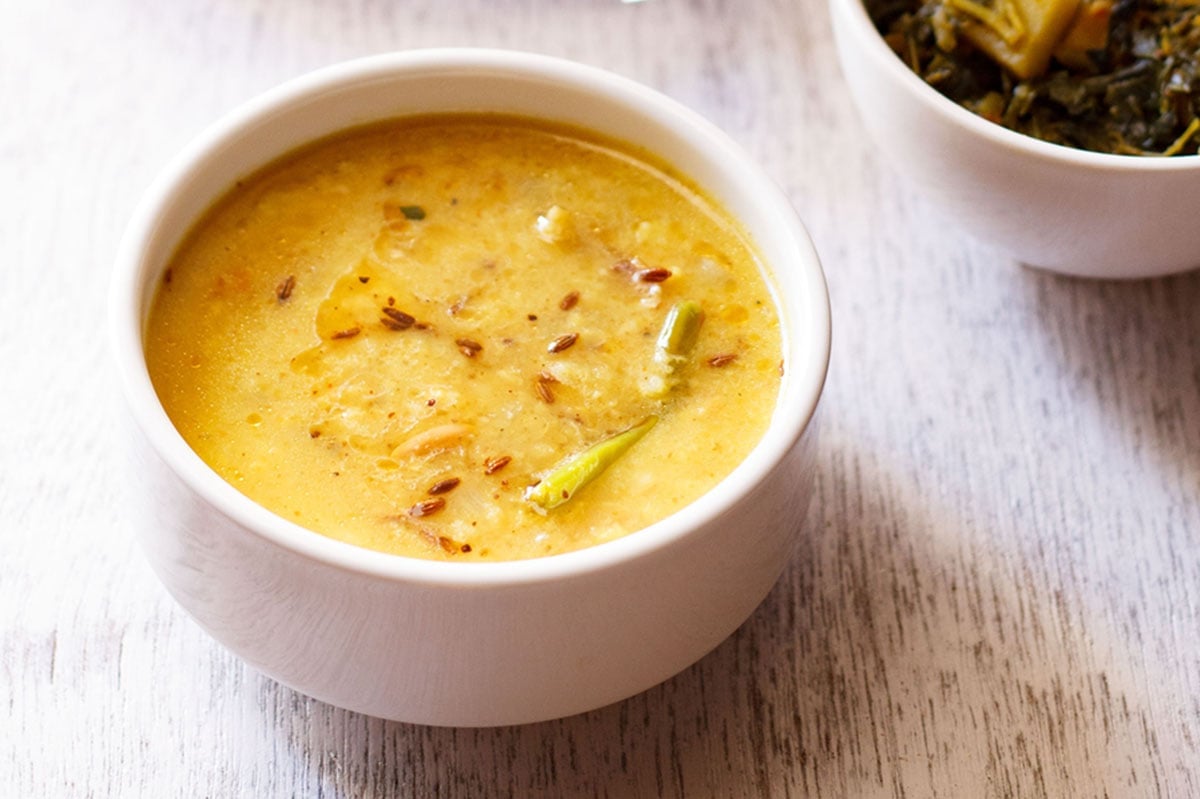
How To Make Moong Dal Fry (Stepwise)
Recipe 2
Moong Dal Fry uses the same yellow moong dal but follows a slightly different method. The lentils are cooked first, then added to a sautéed onion-tomato masala with ginger, garlic and spices, and simmered briefly.
Nothing is deep-fried here. The term “fry” refers to sautéing the aromatics before mixing them with the dal.
Compared to tadka dal, this version is slightly thicker and has a stronger onion-tomato flavor. Serve it with roti, paratha or steamed rice.
Ingredients
- ½ cup moong dal (split & hulled yellow mung lentils)
- 1½ cups water – for pressure cooking
- 1 pinch turmeric powder
- 1 cup water – to be added later when the dal is simmering or add as required
- 2 tablespoons oil
- ½ tablespoon butter
- 1 teaspoon cumin seeds
- ⅓ cup onions – finely chopped
- 1 inch ginger – finely chopped
- 3 to 4 garlic cloves – small to medium, finely chopped
- 1 green chili – slit or chopped or ½ teaspoon chopped
- 1 dry red chili – stem and seeds removed
- ½ cup tomatoes – finely chopped
- ¼ teaspoon red chili powder or cayenne pepper
- ¼ teaspoon garam masala
- ¼ teaspoon turmeric powder
- 1 pinch asafoetida (hing), optional
- ½ teaspoon dried fenugreek leaves (kasuri methi), crushed
- 1 tablespoon coriander leaves – chopped
- salt as required
- 4 to 5 drops lemon juice or as needed, optional
- 1 to 2 tablespoons coriander leaves – chopped, for garnish
Cook The Dal
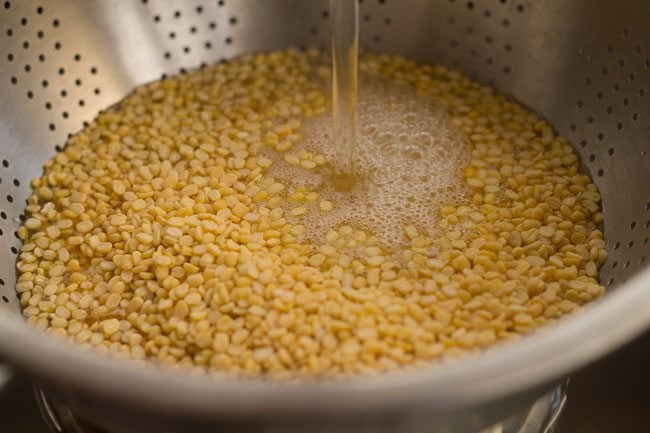
1. Firstly pick and rinse ½ cup moong dal (split and hulled mung lentils) for a few times with water. You can also rinse the yellow moong dal in a colander.
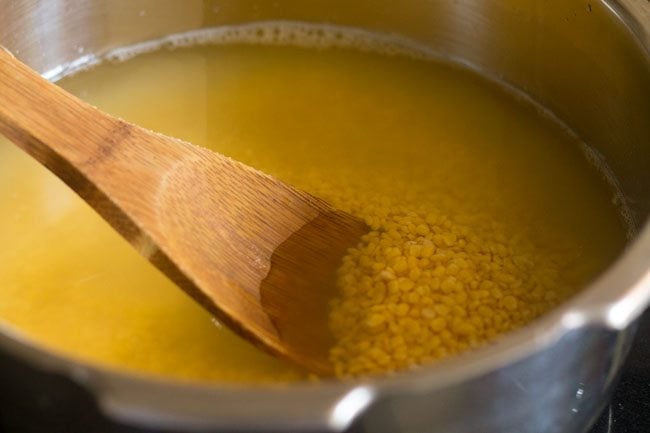
2. Then add the yellow mung lentils to a 3 litre stove-top pressure cooker together with 2.5 cups of water and a pinch of turmeric powder. Stir and mix very well.
3. Pressure cook the yellow moong dal for 5 to 6 whistles or till they are soft and mushy.
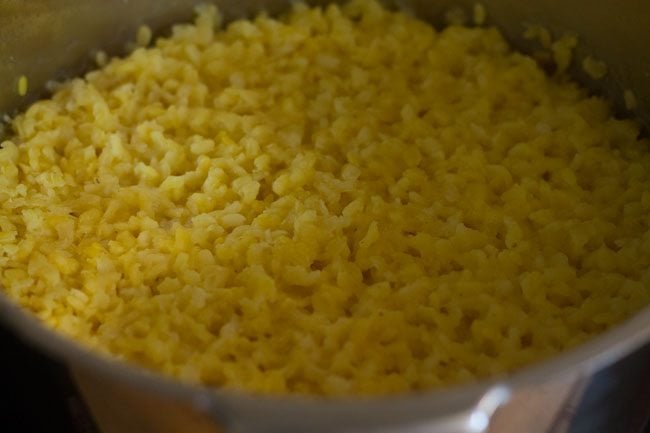
4. Mash the lentils with a spoon.
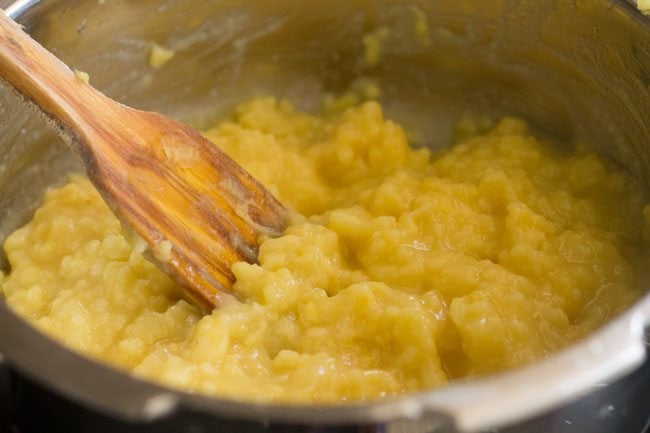
5. Add 1 cup water or as required, to get the desired consistency.
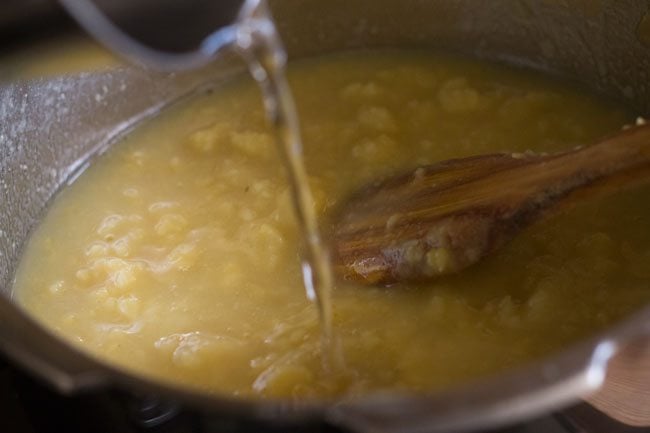
6. Add salt as required and mix again.
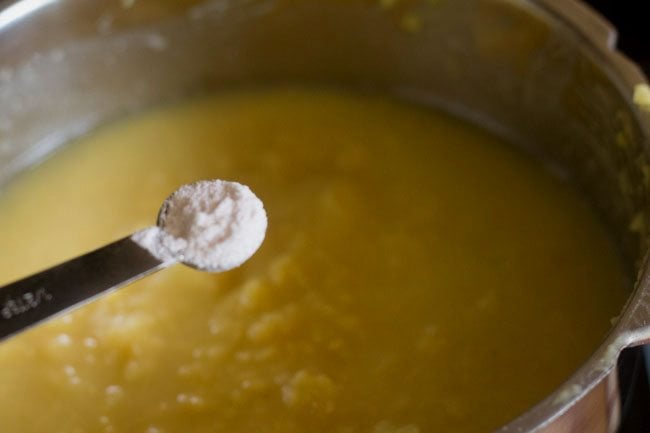
7. On a low heat, keep the cooked yellow moong dal to simmer. Remember to stir often so that the lentils does not get browned or burnt or stick to the bottom of the cooker.
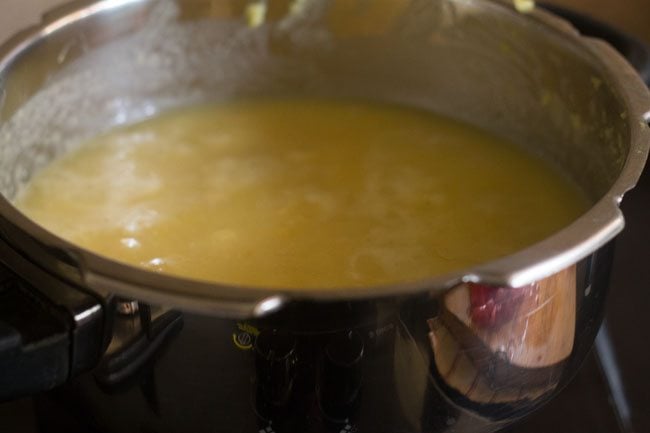
Prepare Onion Tomato Masala
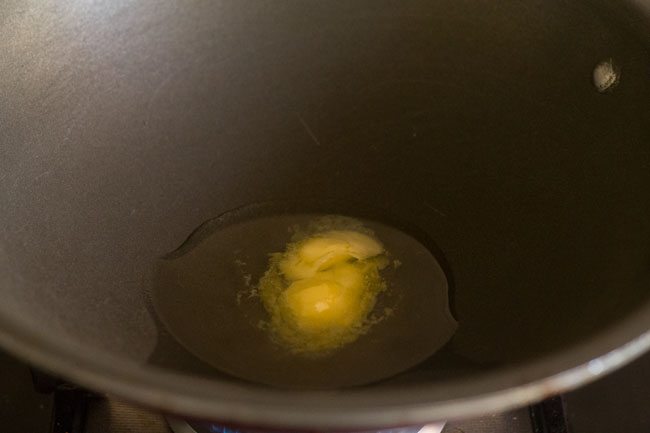
8. Meanwhile, measure and keep all the ingredients ready. In a kadai or pan, heat 2 tablespoons oil together with ½ tablespoon butter.
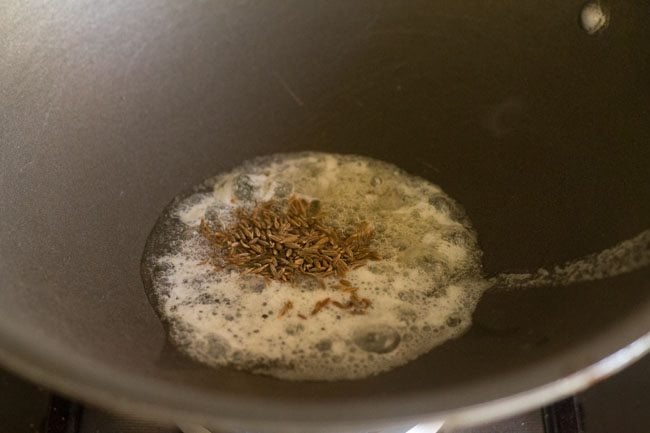
9. Crackle 1 teaspoon cumin seeds first.
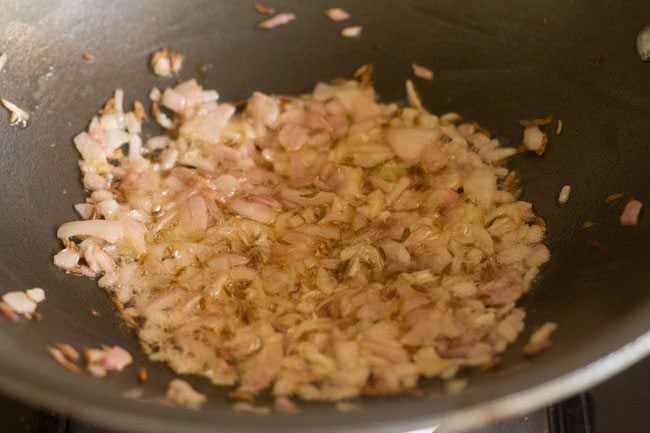
10. Then add 1 medium sized chopped onion (about ⅓ cup chopped onions). Sauté the onions till light brown. Stir often when sautéing onions.
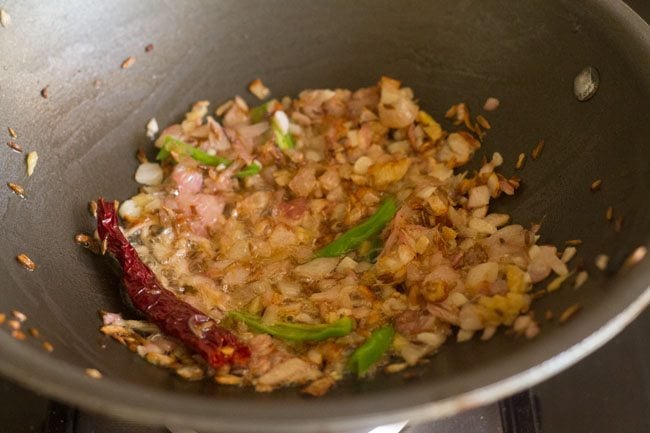
11. Then add 1 inch chopped ginger, 3 to 4 chopped small to medium garlic cloves, 1 green chili and 1 dry red chili (seeds removed). Sauté for half a minute.
12. Add 1 medium sized tomato which has been chopped (about ½ cup chopped tomatoes). Sauté stirring often until the tomatoes soften.
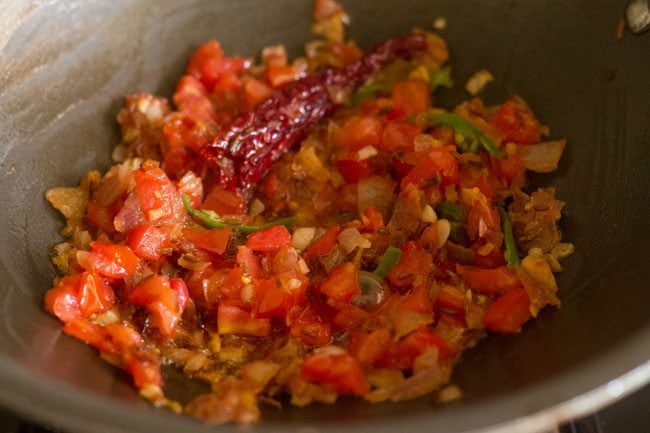
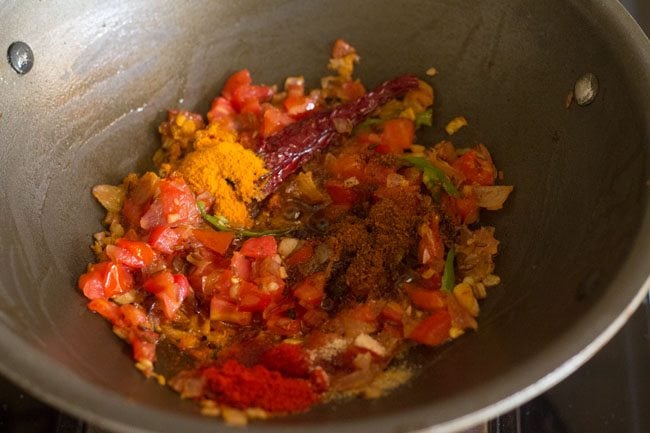
13. Then add the following spices and stir to combine:
- ¼ teaspoon red chili powder or cayenne pepper
- ¼ teaspoon garam masala powder
- ¼ teaspoon turmeric powder
- 1 pinch of asafoetida (hing)
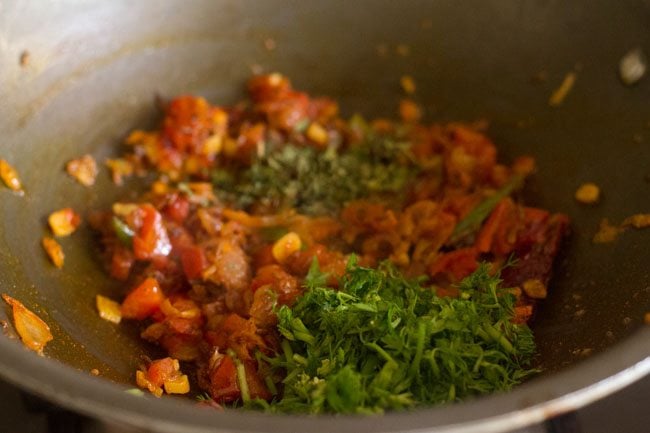
14. Next add ½ teaspoon crushed dried fenugreek leaves (kasuri methi) and 1 tablespoon chopped coriander leaves.
15. Stir and continue to sauté till oil starts to leave the sides of the masala. And later continue to sauté further for 1 to 2 minutes more after oil has started to leave the sides.
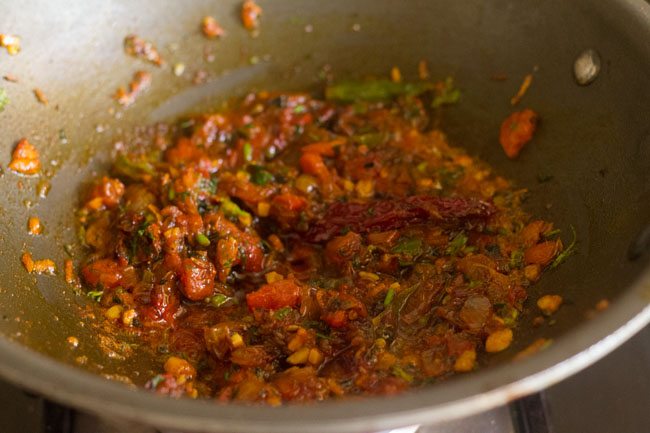
Combine & Simmer
16. Add this mixture to the simmering dal.
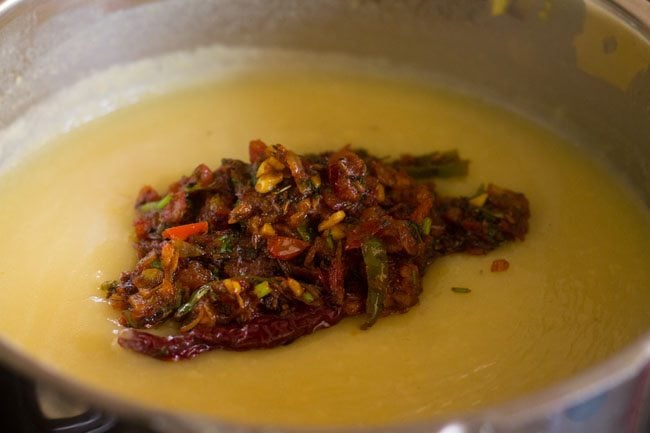
17. Stir and simmer the dal for 2 to 3 minutes or more. You have to simmer till the flavors have blended well in the moong dal and you get the desired consistency.
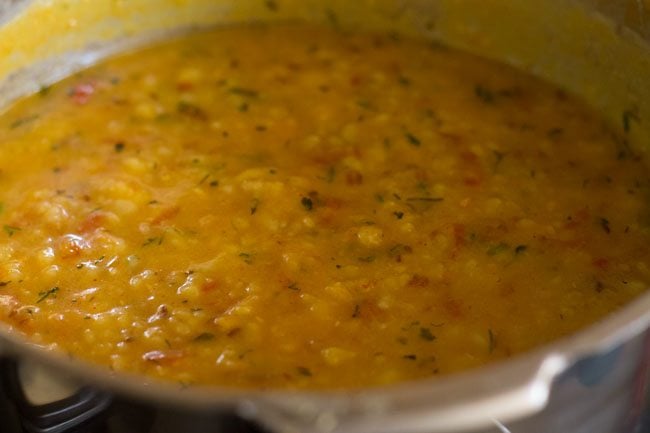
18. If you prefer you can add a few drops of lemon juice.
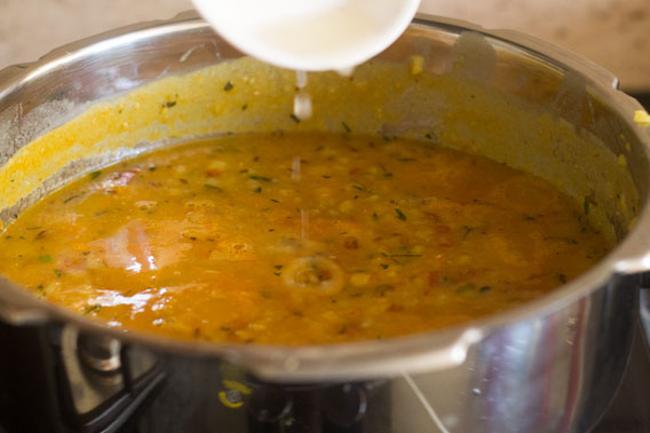
19. Mix well. Taste the dal and add salt if required. Turn off the heat. Garnish with coriander leaves.
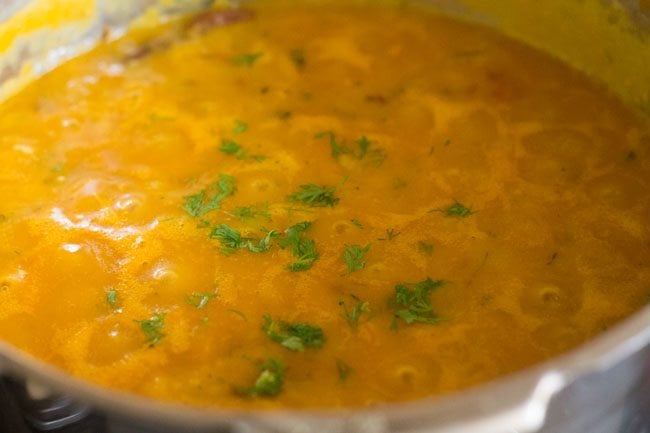
20. Serve Moong Dal Fry with steamed rice, Cumin rice or with Indian flatbreads like roti, paratha or Naan.
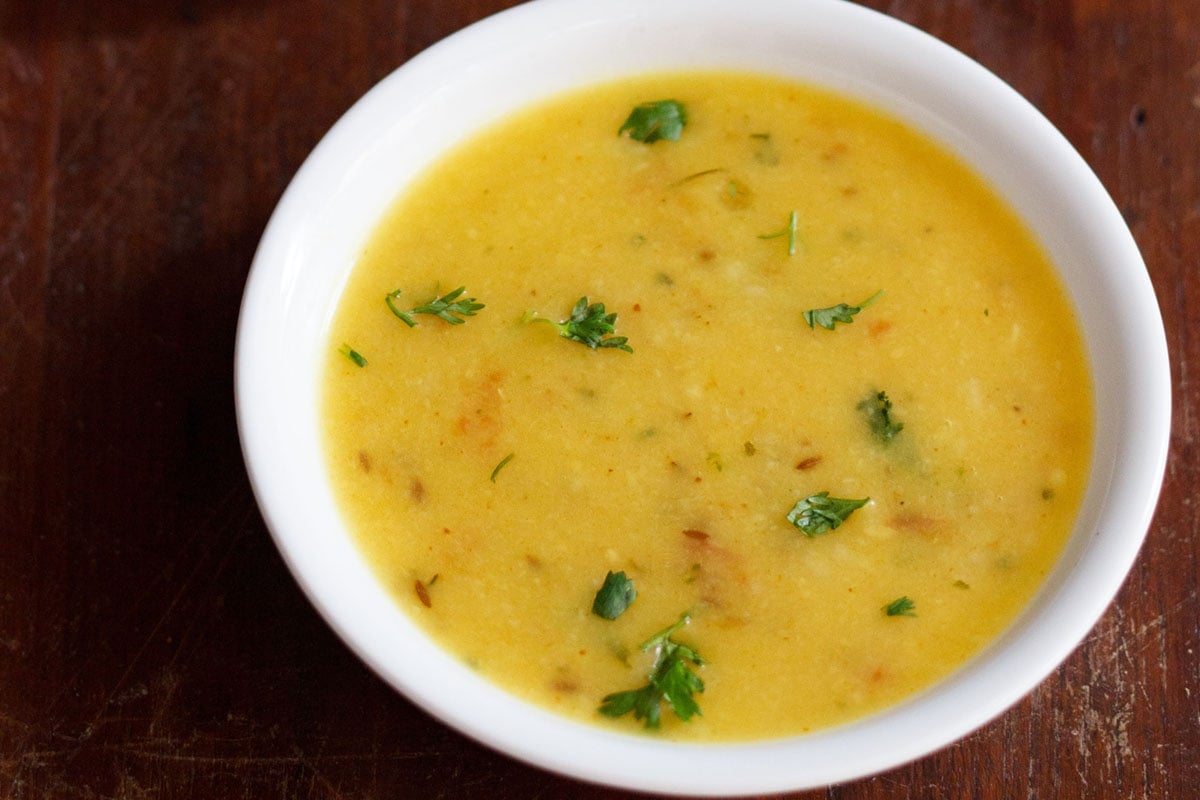
Tadka Vs Fry: What’s The Difference
Both recipes use split yellow moong dal, but the cooking method is different.
In moong dal tadka, the cooked lentils are finished with a separate tempering of spices poured on top. The flavor comes mainly from the bloomed spices in ghee or oil.
In moong dal fry, a sautéed onion-tomato masala is prepared first and then mixed with the cooked lentils. The dal is simmered together with the masala, giving a slightly richer and thicker result.
If you prefer a lighter dal, go with tadka. If you like a more robust and masala-forward taste, try the fry version.
Dassana’s Recipe Tips
- Use fresh, unpolished yellow moong dal for best flavor and texture.
- You can soak the lentils for 20 to 30 minutes to reduce cooking time, though it is optional.
- Cook the dal until soft and mashable. It should mash easily when pressed between your fingers. Avoid overcooking, as yellow moong dal can turn pasty and lumpy if cooked too much.
- Adjust the consistency by adding water as needed. For rice, keep it slightly thin. For roti, you can keep it a bit thicker.
- Adjust the spices like red chilli powder, ginger, garlic and green chilies to suit your taste.
- For a gluten-free moong dal recipe, skip the asafoetida or use a gluten-free version.
- To deepen the tadka flavor, add the tempering to the hot dal and immediately cover the pan for a few minutes. This helps the aroma infuse well.
Cooking Queries
How do I cook moong dal without a pressure cooker?
If you do not have a pressure cooker at home, then you can cook the lentils along with other ingredients in a pot or pan on a stovetop.
Make sure to cover the pot or pan. Also, add water as required. Before cooking the lentils, you can also soak them for about 30 minutes.
Can I use ginger-garlic paste instead of fresh ginger and garlic?
Yes, you can definitely do so.
Can I add kasuri methi to moong dal tadka?
Of course, you can add kasuri methi in this recipe. It will only make the dish even more fragrant and delicious.
Why isn’t salt added while pressure cooking dal?
If you add salt while pressure cooking any dal or lentil, it will not become soft and mushy. The grains will get cooked but will retain their individual shape.
This is good if you want a dal recipe where the grains are visible. But in this recipe, we require a mashable consistency. Hence, adding salt while pressure cooking the dal is not suggested.
How do I ensure the tadka flavors infuse into the dal?
To get the proper flavor of the tadka in the dal, add the tadka and immediately close the pan or cooker with lid for a few minutes. This way, aroma and flavor of the tadka will infuse well in the dal.
Explore More Lentil Recipes
Step by Step Photo Guide Above
Moong Dal Tadka (Yellow Moong Dal Recipe)
Ingredients
For Cooking Yellow Moong Dal
- ½ cup moong dal (split and hulled mung lentils)
- ⅓ cup onions – finely chopped
- ½ cup tomatoes – chopped
- 1 inch ginger – finely chopped or minced
- ¼ teaspoon red chili powder or ¼ teaspoon cayenne pepper
- ⅓ teaspoon turmeric powder (ground turmeric)
- 1.5 cups water – for pressure cooking
- salt as required
For Tempering (Tadka)
- 2 to 3 tablespoons ghee or oil or butter
- 1 teaspoon cumin seeds
- 4 to 5 garlic cloves – small to medium-sized, crushed lightly
- ¼ or ½ teaspoon garam masala
- ¼ teaspoon red chilli powder or ¼ teaspoon cayenne pepper
- 1 or 2 green chilli – slit or ½ teaspoon chopped
- 1 pinch asafoetida (hing), optional
Instructions
Cooking Lentils
- First rinse the moong lentils a couple of times in water. Drain the water and set the lentils aside.
- In a 3 litre stove-top pressure cooker take the rinsed lentils, chopped onions, chopped tomatoes and finely chopped ginger. Also add the turmeric powder, red chili powder and water to the cooker. Mix well.
- Pressure cook for 5 to 6 whistles on medium flame till the moong lentils are softened well. Once the pressure settles down, remove the lid and stir the dal.
- If the dal looks thick, then add some water and simmer for 1 to 2 minutes.
- Add salt. Mix very well and keep aside. Check the taste and if required you can add more salt.
Making Yellow Moong Dal Recipe
- In a small pan, heat oil or ghee or butter. First fry the cumin seeds.
- Next add the garlic and green chili and fry for some seconds. Don't brown the garlic. Switch off the flame.
- Now add the garam masala powder, red chili powder and asafoetida. Switching off the flame earlier ensures that the spice powders don't get burned.
- Quickly stir and immediately pour the tempering mixture in the dal.
- Stir the dal and serve hot moong dal with steamed rice or chapatis.
- The moong dal tadka tastes better as it is and there is no need to garnish or add coriander leaves to it. But if you want you can always garnish with some coriander leaves. For a slight tang you can also squeeze some lemon juice.
Video
Dassana’s Notes
- Soaking: You can soak the lentils for 20 to 30 minutes and this will speed up the cooking time.
- Green Chillies: You can use serrano peppers instead of the Indian green chillies. You can even replace the green chillies with dried red chillies.
- Consistency: You can have a thick or medium or thin consistency of the dal by adding less water or more water later.
- Asafoetida: If you do not have asafoetida, skip it. For a gluten-free moong dal skip adding asafoetida.
- Spicing: You can decrease or increase the herbs & spices like red chilli powder, green chillies, garlic, ginger, cumin seeds according to your preferences. But do not increase the amount of turmeric powder.
- To cook moong lentils in a pot or pan:
– Soak the lentils in water for about 30 to 40 minutes. Then drain them and add in a pot.
– Add about 2 cups of water. Cover and let the lentils cook with the onions, tomatoes, herbs and spices until the lentils have softened well.
– If the mung lentils begin to froth, then remove the scum and continue to cook without a lid or the lid partly covered.
– You can also add a few drops of oil to reduce the frothing.
- Note that the approximate nutrition info is for 1 serving of this yellow moong dal tadka recipe.
Nutrition
Moong Dal recipe from the archives was first published in May 2013.
This is so good Dassana! I have a bad habit of being a bit too heavy handed with spices when it comes to cooking Indian food, (and while I did put in a bit more cumin and garam masala I did my best to remain true to your recipe and it worked out very nicely) though even though this has a minimum amount of spice, the proportions are superb and the end result is a great dal, well done!
Thanks a lot Kevin and glad to read your comment. Happy that the recipe turned out good. Thanks for the rating too.
thanks, yum!
Welcome.
Just made the Dal Tadka! I used with garlic and chili powder. It is yummy! Thank you!
Lovely and thanks for this feedback. Most welcome.
This is the closest I’ve made to restaurant style Dal even when reducing the fat it was delicious. Thank you!
Great and thanks for the super feedback.
Made it vegan and came out good. Really appreciate the detailed explanations for each step. Thanks for the recipe ! ?
Great and thanks for letting me know. Thanks also for the rating on the recipe.
Love your recipes❤️..thank you for sharing them with us
Thanks a lot for the lovely feedback. Most welcome.
Excellent recipe????
My new favorite. Exactly perfect.
This came out delicious! I used ginger garlic paste instead of fresh ginger. The dal took 18 minutes to cook on the stove with no pressure cooker. I also used the type of split moong dal with skins on and it doesn’t change a thing. Thank you for the recipe!
thanks for sharing the feedback and review on moong dal recipe. ready ginger garlic paste can be used. this moong dal recipe can be easily made with split moong dal. the taste will be as good as this one. welcome and happy cooking.
how long does one cook the daal in the pressure cooker? 10 minuets? 15? You didn’t say….
you can cook dal in a pressure cooker for about 6 to 7 minutes on a medium flame.
Can I use ginger & garlic paste instead of using the ginger n garlic separately? Hope I can pressure cook it
yes you can use ginger-garlic paste together.
I like all recipe
Thanks Deepak
Dont have a pressure cooker, so using a pot. Dal comes out a bit hard. Even though i have soaked dal in water for many hours. Any idea ?
when cooking dal in a pan or pot, it does take time to cook. try soaking overnight or for atleast 4 to 5 hours. also use fresh dal. dals which are aged take a lot of time to cook and even after cooking them there is some hardness.
Thank you for this delicious recipe Dassana,it has become a favourite for my mum. God bless you : )
Welcome Tanusha. Thanks for your best wishes and positive feedback.
I used this dal only to make khichdi but this recipe is awesome n nw I cook it very often thanks a lottttttttttttt…..
Welcome Malkeet. Nice to know this.
Hi! What can I do if I don’t have a pressure cooker?
cook the lentils along with the other ingredients, covered in a pan or pot. add water as required. you can soak the lentils for 30 minutes before cooking them.
I used to hate moong dal, to me it always meant food for a sick tummy. But fortunately, I found this recipe and I can’t thank you enough for it, Dassana. I have started preparing it frequently, sick or not.
welcome nidhi. glad to know that you liked this recipe.
Hello,
Wondering what you mean by lightly crushing garlic and slot chillies.
Helen, crush them lightly in a mortar and pestle. don’t make a paste. just crush it lightly.
Thank you 🙂
welcome helen
Hi when I try making moong dal in pressure cooker it gets lumpy and gets thick in some time after I open the pressure cooker what to do?
radhika, if the moong dal gets cooked too much,, then it becomes lumpy. so cook for less time or less number of whistles. in case the dal becomes lumpy, then add some hot water and then break the lumps with a spoon or use a hand blender to do the same.
Thank you so much
I love all recipes with detailed instructions and pictures
I really got interested after going through your recipes
today I prepared dal tadka with allo fry it tasted yummy… my friend’s too liked it.
pleased to know this thankyou so much deepthi 🙂 for your positive feedback.
i never enjoyed dals as much I do today after following your recipes. Yes you have coming back for more and more every single time….. How do you do that !!!
Thank you thank you thank you!!
welcome welcome sheetal 🙂 and thankyou so much.
My pressure cooker doesn’t have a whistle. So how many minutes should I pressure cook for? And Should I soak the beans before hand?
no need to soak the beans. pressure cook for 10 to 12 minutes.
Thanks a lot!
Simply, delicious and awesome. Thanks for sharing.
Asghar Saudi Arabia
thankyou and welcome asghar 🙂
Your recipes are really simple and the outcome really tasty. It has become an habit to refer your receipies for the regular everyday cooking too.
very pleased to know this seema 🙂 thankyou for your positive and kind words.
very helpful!!!!!!!thnks
welcome vivek 🙂
Amazing and very easy to make ! Thank you so much 🙂
welcome always nida 🙂
Can I make Moong Dal without a pressure cooker?
Yes you could make moong dal without the pressure cooker but that would take a longer time to cook the lentils. Hope this help’s you.
Very awesome dish in a very less time.
It has become a daily routine for me to visit your website
thankyou sonia 🙂 pleased to know this.
Hi Dassana,
You are my life line. Every day I refer to your websites for recipes even though I know how to prefer a particular dish. I am a big foodie and love the way to describe each and every step and the quantities you mention are just perfect. Even my sister who prepare lovely food refers to your website. Thanks a ton for making life of many of us easier and tastier. God bless you
we are very pleased to know this nandini 🙂 thankyou for your kind and encouraging words god bless you and you sister.
Hi dasanna,
All your recipes are fantastic and easy to follow. ..I simply love to try them and almost all of them hit at my place. Can you please give us the recipe of green moong dal
thanks vidhya. nice to know this. i will try to add the recipe soon.
I hav tried it was easy and delicious loved it. Great work looking forward to trying more of your recipes.
thanks shilpa. glad to know this.
Hi Dassana, I like your website and the variety of the recipes. Actually, I m looking for a new way how to make yellow mung dal (the tiny yellow dal) in order to find out the more delicious one. I got confused here, is this a yellow mung dal? if not, is there a recipe in your blog to call for that dal please. thank you in advance
welcome redha. this is a yellow moong dal recipe only.
Can you please provide sukhi moong dal recipe… With or without capscicum. Thanks
welcome tassy. i have added it in the requested recipes list. will try to post it soon.
Thanks for sharing the recipe. It came out very well. I had it with parathas but would try it with white rice later. Best wishes, Asghar
welcome asghar. thanks for sharing positive feedback and your experience.
Wow, i am just reading your website but haven’t cooked…you make it look easy…and they do definitely look delicious…thanks for sharing your recipes…more power!
welcome mira. thanks for your encouraging feedback.
Thanks for such tasty! Recipe my husband and my in-law like it most
welcome and thanks for sharing your review.
I Come back to your recipes time and time again. I Always refer to this recipe as my Hug recipe as I always find it uplifting and so lovely to eat that it’s like I am being given a hug.
Nancy
thanks nancy for sharing this sweet feedback on moong dal tadka. glad to know this.
Dassana thank you for another great dal recipe.
welcome urszula
Hi! Just a quick question, when I’m cooking the daal in the pressure Cooker, should I put on high heat or medium heat, and how many whistles should I wait before turning off the heat? Thanks!
juvy, cook the dal on high heat. you can pressure cook the moong dal for 4-6 whistles or till the dal is cooked and soft. actual whistles depends upon the quality of dal.
Hi Dassana
I am an avid follower of ur recipes and must
say that I have tried many of them
and my family members just luv it
Thanks for ur recipes
God bless
welcome shreeja. glad to know this. thanks for sharing your sweet feedback and blessings.
I don’t have my mother or my mil to teach me cooking. I just read your blog and learnt cooking. Thanks a lot!!
welcome gayathri. its a very touching comment. please feel free to ask any query on recipes. i hope i am able to help you.
Made this for my friends on a Sunday night. My friend who literally hates dal because it is usually made bland loved it. Thanks a lot for the recipe.
I didn’t have sambhar powder that day – so this was my menu:
Dal
Rasam
Rice
Cabbage
Chips
It was warm and fulfilling meal. So thank you. Oh I used you rasam recipe as well.
thanks gayathri. i know many people do not like dal. but if made well, they will love it. your menu is good. agree a warm and fulfilling meal.
Hi, Can I ask a few stupid questions :
1. Often when I make dal, it becomes bitter, sometimes it doesn’t. In restaurants I almost never get a bitter taste, and sometimes I even seem to get a very mild sweet taste that doesn’t come from sugar. What is the secret to conquering the bitterness?
2. Some people put salt before cooking dal, some do after cooking. One view seems to be that putting salt before cooking makes it take longer to cook, but what difference does either approach make to the taste?
3. I often find it difficult to get the effect of the tadka seep into the dal. Are there tips I could use to this effect?
Thanks a lot in advance.
questions are not stupid. we always learn and keep on learning. my answers below:
1. the bitterness can be due to quality of water. i guess. in all my years of cooking dal, i have never got dal tasting bitter. so i assume it must be the water. dal if cooked properly gets a mild sweetness. this is true for most lentils. even if you add a small onion while cooking dal, then it makes the dal taste a bit sweet.
2. i usually do not add salt while cooking as then they don’t become smooth and mushy. when salt is added, they do cook, but have separate grains.
3. add the tadka and immediately close the pan or cooker with lid for a few minutes. the tadka aroma & flavor will infuse in the dal.
This was great! It has taken me a long time to realize that I love Moong dal but dislike brown lentils. I kept trying lentil recipes with brown lentils and thought they tasted terrible, and yet every time I visited my husband’s family I liked their dal. This is a nice basic recipe. I just sautéed everything and then added the dal and water so it was all in one pot. Yum! We served it with zucchini (recipe below), basmati rice, and a roti ( a browned tortilla with butter!)
We had zucchini on the side: (2 medium zucchini cut into half-moons, 1 teaspoon of garam masala, 1/2 teaspoon cumin powder, 1/2 teaspoon coriander powder, and 1 teaspoon of mustard seeds). Add 1 tablespoon of butter and 1 tablespoon vegetable oil to a pan, add the spices, then increase the heat until the oil/butter bubbles. Add squash and sauté for a few minutes. Sprinkle a pinch of salt and sugar on the squash and cover the pan. The squash will steam in its own juices. Cook until tender, then take off the lid and evaporate extra water if needed.
thanks a lot amber for this lovely feedback as well as for sharing the zucchini recipe. i have noted down your recipe. zucchini is not easy to get here, so i will make it with bottle gourd.
The bottle gourd squash would probably work well. I sometimes use yellow squash instead and the taste is very similar.
I love that zucchini recipe because it comes out a bit sweet and just so buttery, even though not much butter is added. Eating it with naan or roti is even better!
amber, i will see if i can get zucchini here and will try the recipe.
Kindly send ideas of Moongdal and allied food dishes
harini, please use google search button which is at top of the website. there are few moong dal recipes posted in the blog like halwa, dosa etc.
Hey.iam a big fan of your recipes. I have tried number of your recipes.thanks for sharing these recipes with us
thanks shweta.
Hi my new love :p
have been trying ur recipes day after day and they are coming out awesome. 🙂
Wanna ask that in the above dal recipe u have not added kasuri methi while in ur other dal recipes u have used it…..any particular reason for that? What is kasuri methi used for in general? I mean how does it affect the taste of any dish?
Thank you for ur marvellous blog n recipes .. 🙂 🙂
hi himani 🙂
there is no particular reason for not adding kasuri methi. you can add kasuri methi in this moong dal recipe too. kasuri methi is aromatic and gives a lovely aroma when added to food. mostly used in punjabi recipes and in restaurant style indian food.
This is the first time, I’ve tried your recipe. Substituted this recipe with whole moong dal, and different chillies. I think it may be the best tasting dal, I’ve ever had in my life. Thanks a million, Dassana. Very eager to try your chinese recipes next.
thanks ajit for this feedback. do try the chinese recipes. they are pretty simple to make, except for the extensive chopping.
I stumbled across your blog while searching for daal recipes, and over the last few weeks have been trying out your different recipes!
I must say Dassana, this website are great! It gives foodies like me a very easy way to satiate our cravings, and the the pictorial descriptions help reduce the doubts that a novice cook might have! It re-affirms the fact that Indian cooking not rocket science, when someone shows you so clearly how to do it!
Thanks, and great going!
Wishing you guys all the best and looking forward to more recipes:)
welcome arvind and big thanks for this positive feedback. reading such comments motivates me to post more recipes and i feel the effort in posting recipes is worth it. always nice to read that blog is helping people.
It is an amazing receipe.i made it for lunch with ghee rice, it went on well with it.
thanks sujatha
Made this tonight with matar pulao. Followed the recipe exactly (except added a bit more chillies and garlic), and skipped the pressure cooker because it scares me (did it stove-top and used an immersion blender to thicken/soften the dal once cooked) and it was absolutely fantastic. Tastes just like the dals I enjoyed while traveling in northern India earlier this year. None of the other recipes I tried taste this authentic or delish. I love all your recipes, and this is the best dal by far. Well, your makhani dal is really good too!. Many thanks! Liz
welcome liz. glad to know that you liked the moong dal. dal makhani is very popular in north india specially in punjab, delhi etc and in road side dhabas.
Long back I had tasted some dal (at tat age, cud not identify the lentil tat was used) with chapattis in a north Indian restaurant. I was longing to cook the same combination but cud not find the recipe with moong dal. When I googled, the most of the dal recipes said, “this could be had with plain rice”. I cud not find dal for chapattis. Yday I stumbled over ur site and was so excited to find it. Tried it yday night itself and it was a damn success. My husband loved it (me too) and wanted to have it for rice too….thanq so much. By luks itself All ur recipes are sumptuous. Will keep referring .
welcome bhuvana. good to know that you liked the recipe and your search was fruitful. keep visiting.
Made this today and it was so good whole family like it…really thank you so much for the wonderful recipe..
welcome nisana
Made this last night for dinner. It was wonderful, restaurant style! So easy too. Thank you so much for this great recipe. Going to try the tawa paneer next!
welcome janet. nice to know that you liked the dal recipe.
Made this dal yesterday absolutely loved it. Could you please post a recipe for Sabut Moongi and Moth dal I tried this combination when I visited India in 2009 but haven’t been able to find a good recipe. Your help would be much appreciated. Thanks x
will add these recipes khushi.
Thank you for such a lovely authentic recipe,could just imagine you doing it at home,after all the warnings I managed to slightly burn the spices although eatable it will not happen again,I will also be looking out for future recipes as this was super and seems to me original,although not sure about the pressure cooker bit thanks again Phil
thanks. i am sure next time you will be careful when frying the spices. try frying them on a low flame and they don’t get burnt.
This dal recipe is tip top. i love a bit of dal with my tea. imagine if rock were actually soft, but when you touched them they turned hard…that”s how i feel about dal.
Wowowo tried this dal just turned out yummmmm…. 😉 tanks for the recipe
welcome andy
Made ur tadka dal just now..n came out to be very very yummy…n ur veg biriyani is ultimate. .it comes out very tasty every time I make…thank u loads…
welcome srivi. nice to know that you liked moong dal tadka and biryani recipe.
Your pictures are beautiful and inspiring!
Question: how long do you cook the dal in the pressure cooker? I have seen some recipes that say several whistles but that is rather confusing. I tried this and while tasty, the consistency was nothing like your picture 🙁 I’m definitely going to try it again!
thanks erica. since moong dal gets cooked faster than the other dals, i usually cook for about 6-7 minutes. i am just thinking this aloud because i usually don’t measure time. i measure the number of whistles. to get a smooth and well cooked consistency, i cook the dal for about 5-6 whistles on medium to full flame. if you don’t get a smooth consistency after pressure cooking, then add some water if required and pressure cook the dal again for a couple of whistles. hope this helps.
Awesome recipe. I tried this today. My favorite recipe is Daal Chawal. Thankyou dassana
welcome vishal
y salt is not added during pressure cooking…though in many dals (eg dal tadka) v add it before ….vl it make much difference…?
wanted to know cuz its difficult to remember such minute details
if salt is when cooking dals or lentils, then they don’t become mushy and soft. they get cooked but retain their individual shape. this is good if one wants a dal recipe where the grains are visible. but for dal we need a mashable consistency, hence adding salt is not advised. salt is added once the dal is mashed or whisked.
Hi! Thank you so much for your amazing website, my husband and I are looking forward to trying many of these beautiful dishes. For this recipe, do you have a suggestion of how to make it without a pressure cooker? I appreciate your help!
welcome gita. here’s the answer to your query. soak the mung lentils for 45 mins to 1 hour. drain and keep aside. heat about 4-5 cups water in a pot, when the water begins to boil, lower the flame and add all the ingredients including the lentils. cook for 30 mins or more till the lentils have become soft and cooked thoroughly. add more water if required while cooking. they should have a creamy consistency but not become pasty and lumpy when mashed. if they become lumpy then add more water and break the lumps with a spoon and simmer for a few minutes. mung lentils when overcooked become pasty and lumpy. then continue with the rest of the recipe.
Thank you for your speedy reply and detailed information! I appreciate the time you take answering questions, I’m looking forward to making this recipe. I also just purchased a small grinder so I can grind spices for tea and other dishes. Many thanks!
you are welcome, gita
This was delicious! It was my first time making moong dal and I couldn’t be happier with the way it turned out. My husband and I devoured it! Thanks
thanks amna
Hi dassana. Is there a particular reason to not let garlIc brown? Does that change the taste?
yes it does change the taste and flavor. if the garlic gets too browned, it can give slight bitter tones in the oil, which won’t make much of a difference in the overall dal. a slight light browning is alright.
Made it yesterday. Everyone in my family loved it. Thank you so much for the awesome recipe
thanks richa
Making this today Dassana. You are still my go to recipe guide! Can’t wait to eat it! Tina x
thanks tina. hope the recipe was good.
This turned out really awesome! Made it with the Karela subzi and phulkas. Will definitely be making this again!
thanks nandita for the feedback.
I loved this. Made this today and it was so nice that my husband and I had it on its own, without any rice or chapati. Love…love …love it. Thanks again for yet another awesome recipe.
thanks neha for sharing the positive feedback on moong dal.