
Sabudana Kheer Recipe

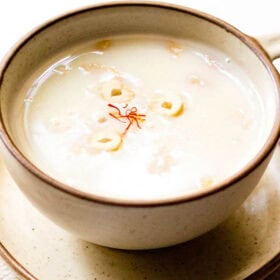
Sabudana Kheer is a creamy Indian pudding made with sabudana (tapioca pearls), milk, sugar, cardamom, saffron and nuts. Also known as Sago Kheer or Tapioca Pudding, it has soft, translucent pearls and a smooth consistency that thickens as it cools. It is often prepared for vrat, especially during Navratri, but can be served as a dessert anytime. This easy method cooks the sabudana first in water and requires no soaking.
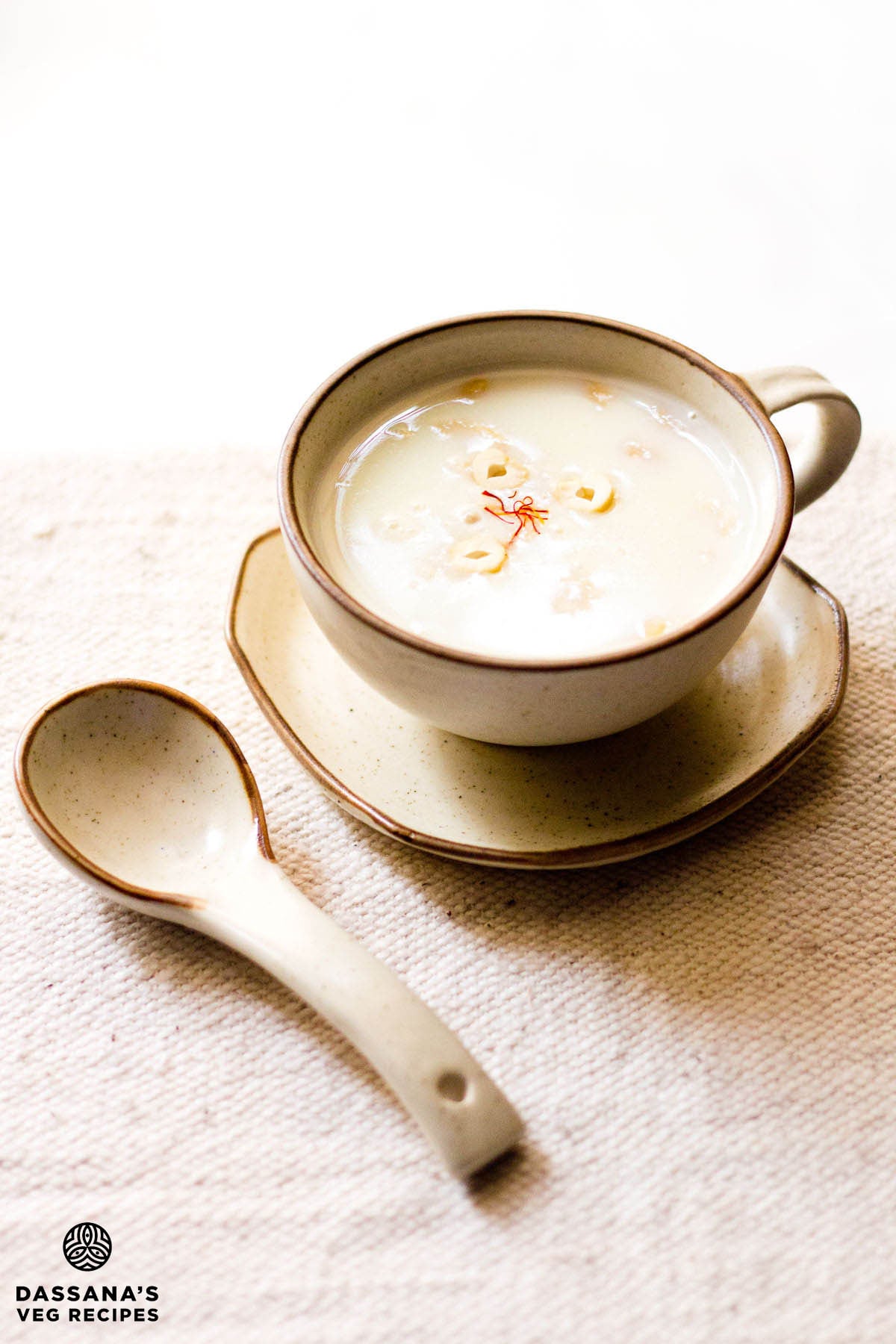
My Easy Sabudana Kheer Recipe
Sabudana Kheer is one of our favorite kheers, and I learned to make it from my mother. We often prepare it for vrat and during the Navratri Festival, though it is just as good served as an everyday dessert.
In India, sabudana generally refers to small tapioca pearls made from the starch of the cassava root. Also commonly called sago, these naturally gluten-free pearls are widely used during fasting to make various Sabudana Recipes such as Sabudana Khichdi, Sabudana Vada and Sabudana Tikki.
My method does not require soaking the sabudana for hours. I rinse the pearls well and cook them directly in fresh water before adding the milk. Sabudana cooks faster in water than in milk, making this method convenient when you have not planned ahead.
As the pearls cook, they begin to float, swell and turn translucent. Once fully cooked, they should be soft without a hard or chewy center. Some pearls may break down while simmering and release their starch, which naturally thickens the milk and gives the kheer its creamy consistency.
I hope you enjoy this simple family Sabudana Kheer recipe as much as we do.

How to make Sabudana Kheer (Stepwise)
1. Rinse ½ cup sabudana (sago or tapioca pearls) under running water a few times until the water runs clear. Drain well.
Transfer the rinsed sabudana to a thick-bottomed pan or saucepan. Add 2 cups fresh filtered water. There is no need to soak the sabudana before cooking.
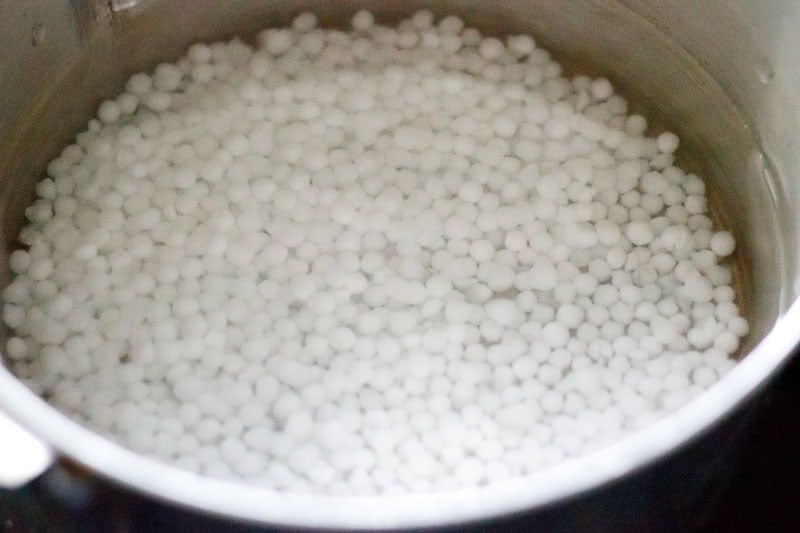
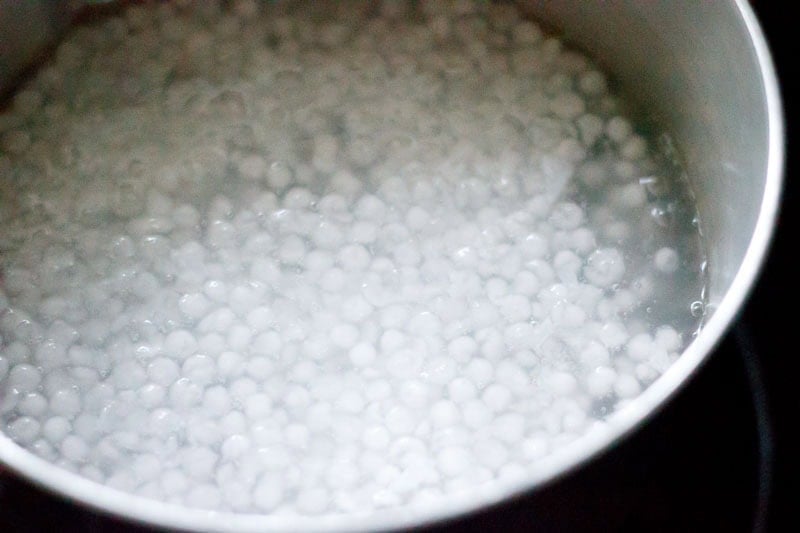
2. Place the pan on the stovetop and begin cooking the sabudana on low to medium heat. Stir at intervals so that the pearls do not stick to the bottom of the pan.
After about 5 to 6 minutes, the sabudana pearls will begin to float, swell and turn translucent. Floating means that the pearls have started cooking, but they will not be completely soft at this stage.
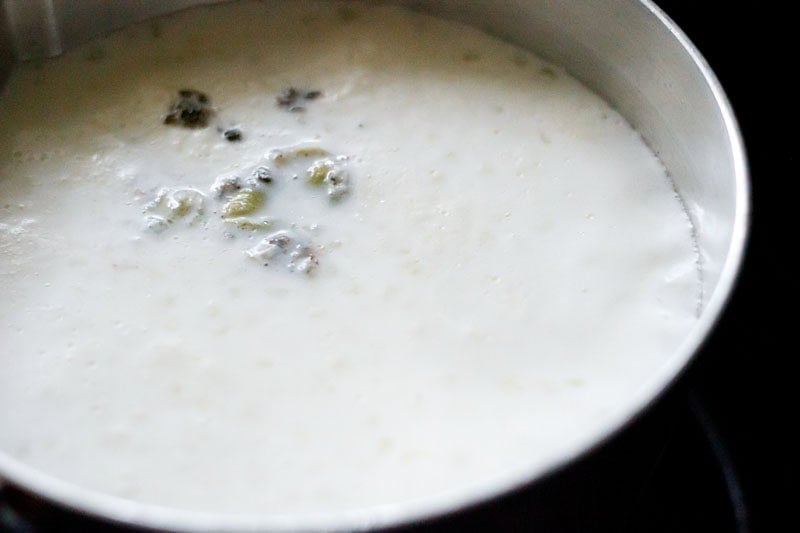
Meanwhile, in another pan heat 2 cups of whole milk until warm. Do not boil it.
3. Add the 2 cups of warm milk and ½ teaspoon green cardamom powder. Mix well.
4. Add 4 to 5 tablespoons raw sugar, adjusting the quantity according to your taste. You can use white granulated sugar instead of raw sugar.
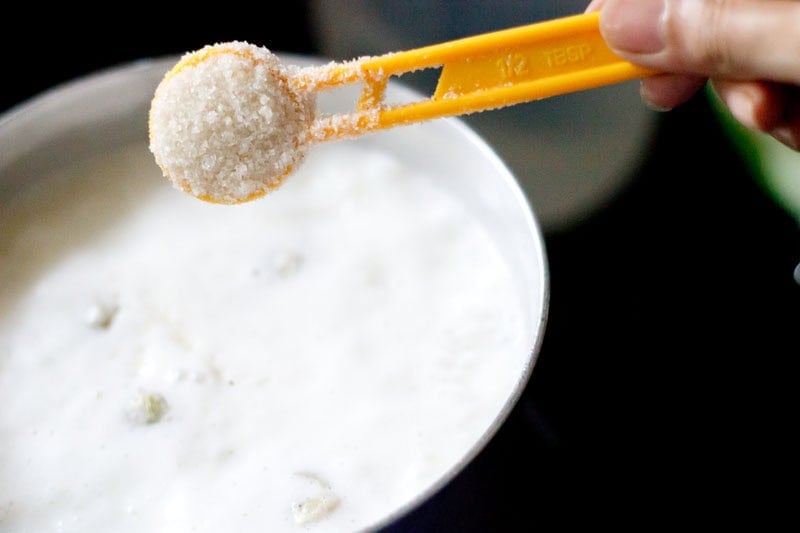
5. Mix well and simmer the kheer for about 20 to 25 minutes on low to medium heat, stirring often to prevent the sabudana and milk from sticking to the bottom of the pan.
Cooking time may vary depending on the size and quality of the sabudana. Taste a few pearls to check for doneness. They should be swollen, translucent and completely soft, without a hard, dense, chewy or opaque center.
If needed, continue simmering and add a little warm milk if the kheer becomes too thick before the tapioca pearls are fully cooked.
As the kheer simmers, the milk reduces and the sabudana releases starch. A few pearls may also break down, naturally giving the kheer a creamy consistency.
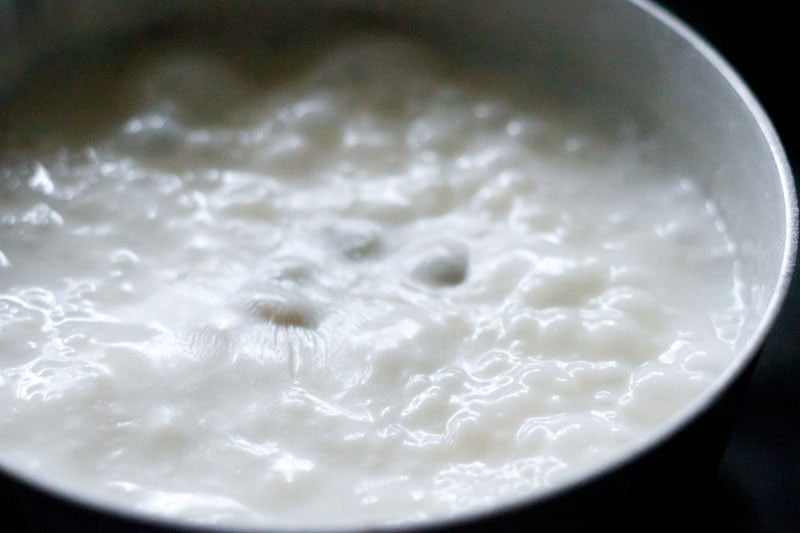
6. Keep the consistency slightly thinner than you want, especially if you plan to serve the kheer chilled. It will thicken further as it cools.
Turn off the heat and add the cashews and raisins. You can use other nuts and dried fruits of your choice. Taste the kheer and add more sugar if needed.
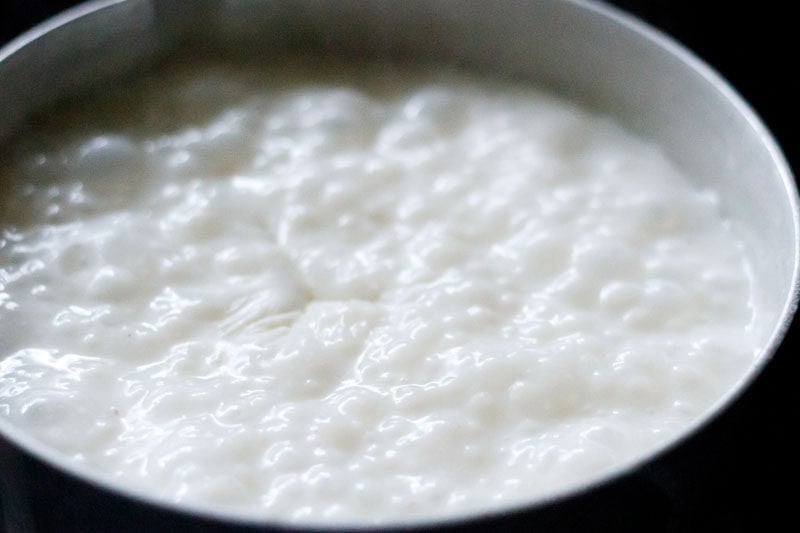
7. Serve Sabudana Kheer hot, warm or chilled. Garnish with a few saffron strands or chopped cashews, almonds or pistachios, if you like.
If the kheer becomes too thick after cooling, mix in a little milk until you get your preferred consistency.
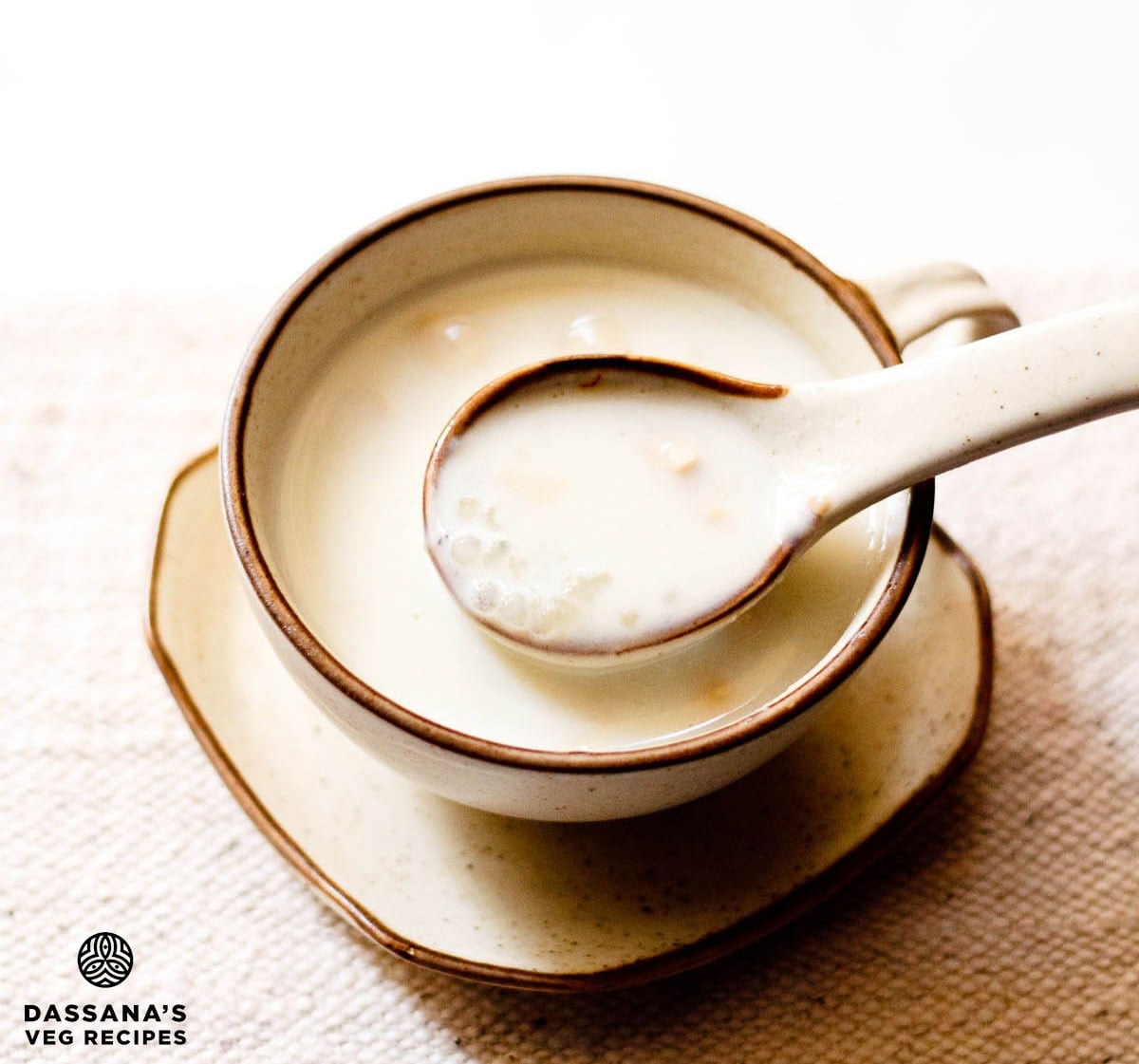
Serving Suggestions
Serve Sabudana Kheer hot, warm or chilled as a dessert. You can also include it as part of a vrat or satvik meal.
Garnish it with saffron strands or chopped nuts just before serving. Remember that chilled sago kheer will have a thicker consistency than warm kheer.
Storage
Allow the leftover Sabudana Kheer to cool and transfer it to a covered container. Refrigerate it and consume within 2 days.
The Sabudana Kheer will thicken considerably in the refrigerator. Add a little milk and mix well before serving or reheating. Avoid freezing, as freezing and thawing can change the texture of the milk and sabudana.
Helpful Tips
- No soaking needed: You do not need to soak the sabudana for this recipe. Rinse the pearls well and cook them directly in water. To reduce the cooking time, soak them in 2 cups of water for 2 to 3 hours, or in 2 cups of hot water for 30 minutes. Cook the soaked sabudana in the same water without draining it.
- Choose the right sabudana: Use regular-sized sabudana for making this kheer. Avoid nylon sabudana, whether small or large, as its texture and cooking time differ from regular tapioca pearls.
- Check for doneness: Fully cooked sabudana should look swollen and translucent. The pearls should be completely soft, without a dense, hard or chewy white center.
- Adjust the sweetener: Use raw sugar or white granulated sugar according to your preference. If using jaggery, palm jaggery, palm sugar or coconut sugar, first finish cooking the kheer and turn off the heat. Let it cool for 4 to 5 minutes before adding the grated or chopped sweetener. Do not boil the kheer after adding it, as the milk may curdle.
- Add your preferred flavorings: Green cardamom and saffron are my preferred flavorings for Sabudana Kheer. For a different flavor, you can use a small amount of rose water, kewra water, vanilla, cinnamon or orange extract.
- Choose the nuts and dried fruits: Add cashews, almonds, pistachios, walnuts, pine nuts or chironji. Raisins, chopped dates and dried figs can also be included. You can skip the nuts and dried fruits if you prefer.
- Make it plant-based: Cook the sabudana completely in water before adding almond milk or coconut milk. Add the plant-based milk and sugar, then heat gently without bringing the mixture to a boil. Finish with your preferred nuts or dried fruits.
Step by Step Photo Guide Above
Sabudana Kheer Recipe (No Soaking)
Ingredients
- ½ cup sabudana or sago (tapioca pearls), for a thicker kheer, you can add ⅔ cup of sabudana
- 2 cups water
- 2 cups whole milk
- 4 to 5 tablespoons raw sugar or white sugar, add according to taste
- ½ teaspoon green cardamom powder or 4 to 5 green cardamoms crushed in a mortar & pestle
- 2 tablespoons cashews – chopped or preferred nuts
- ½ tablespoon raisins
- 3 to 4 strands of saffron – for garnish, optional
Instructions
Preparing Sabudana
- Rinse the sabudana pearls under running water a few times until the water runs clear and most of the excess starch has been removed. Drain well.
- Transfer the rinsed sabudana to a thick-bottomed pan or saucepan. Add the water specified in the recipe. There is no need to soak the sabudana.
Making Sabudana Kheer
- Place the pan on the stovetop and begin cooking the sabudana in water on low to medium heat. Stir at intervals so that the pearls do not stick to the bottom of the pan.
- Meanwhile, warm the milk in another pan. The milk only needs to be warm, so do not boil it.
- After about 5 to 6 minutes, the sabudana pearls will begin to float, swell and turn translucent. This means they have started cooking, but they will not be completely soft at this stage.
- Add the warm milk and green cardamom powder. Mix well.
- Add the sugar and continue to simmer for about 20 to 25 minutes on low to medium heat. Stir often to prevent the milk and sabudana from sticking or scorching at the bottom.
- Cook the sabudana thoroughly. The pearls should look swollen and translucent and feel completely soft. They should not have a hard, dense or chewy center.If you notice a hard center or feel any resistance when biting into a pearl, continue simmering until fully cooked, adding some warm milk if required.
- Some of the sabudana pearls may break down while simmering and release their starch. This naturally thickens the milk and gives the kheer a creamy consistency.
- Keep the consistency slightly thinner if you plan to serve the kheer chilled, as it will thicken further after cooling. If it becomes too thick, add a little warm milk and simmer briefly.
- Turn off the heat and add the cashews and raisins. Taste and add more sugar if needed.
Serving & Storage
- Garnish with a few saffron strands or chopped nuts while serving.
- Serve Sabudana Kheer hot, warm or chilled.
- Refrigerate leftover kheer in a covered container for up to 2 days. It will thicken after cooling, so add a little milk and warm it gently, or mix in cold milk if serving chilled.
Dassana’s Notes
- Soaking: This recipe does not require soaking. To reduce the cooking time, soak the sabudana in 2 cups of water for 2 to 3 hours, or in 2 cups of hot water for 30 minutes. Cook it in the same water without draining.
- Sabudana variety: Use regular-sized sabudana. Avoid nylon sabudana, whether small or large, as its texture and cooking time are different.
- Doneness: Cooking time may vary depending on the size and quality of the sabudana. Taste a few pearls to check that they are swollen, translucent and completely soft, without a hard, dense, chewy or opaque center. Continue cooking if needed, adding a little warm milk if the kheer becomes too thick before the sabudana is fully cooked.
- Consistency: Sabudana Kheer thickens as it cools. Keep it slightly thinner if you plan to serve it chilled. If it becomes too thick, mix in a little milk to adjust the consistency.
- Using jaggery: After the kheer is fully cooked, turn off the heat and let it cool for 4 to 5 minutes. Add grated or chopped jaggery, palm jaggery, palm sugar or coconut sugar and mix well. Do not boil the kheer after adding these sweeteners, as the milk may curdle.
Nutrition
Sabudana Kheer recipe from the archives was first published on September 2013.

All the recipes turned out to be perfect. Always like your recipes.
Thank you so much for your kind words. Happy to know the recipes are turning out well for you.
Your recipe is so nice that the beginner can also do it easily and it was very yummicious. I always make and enjoy it.
So glad to know you find the recipe easy to follow and enjoy making it. Happy to hear the sabudana kheer turns out delicious for you every time.
Thank you for the recipe, I made it first time today ?, it’s so simple & healthy & the results was deliciously tasty, love it ? & enjoyed by everyone ?
So happy to hear that. Glad the recipe was easy to follow and turned out delicious. Thank you for the lovely feedback.
SO GOOD! Made two nights in a row. Yesterday was the first time I ever had such a treat, and I was blown away. So simple and easy to make too. Thank you for the recipe ?
Great and thanks for sharing such a wonderful feedback on the recipe.
delicious !! love tapioca simple yet delish recipes !!
Thanks 😉
Thanks for this recipe, very simple, I am just preparing it. All the best mam
welcome shareena. i hope you like the sabudana kheer recipe. thank you.
I would like to simply in one sentence that your blog is like an encyclopedia of recipes. Whenever I wish to try new dishes I search for it in your blog in I get it . Thanks so much.
thank you sujata. i still have to add a few popular indian recipes. when they are added, then the blog will be almost complete in covering mainstream indian recipes. i felt good to read your comment, though. thanks again and most welcome. wish you all the best.
Very good ma’am
Thanks
thanks and welcome.
Hi,
What can I substitute cashews & raisins with?
you can use nuts and dry fruits like almonds, pistachios, chironji or charoli seeds. you can skip adding any nuts or dry fruits altogether.
Nice method of recipe
Can i drink this sabudana in my snack time at my office, is it good if i drink daily without milk only sabudana, water and sugar ingrediants.
anything of too much is never good. so i would suggest to have sabudana once in a while.
Hi, do we need to soak sabudana for 3 to 4 hrs? Or just 15 mins boiling is enough???
Deepika, if you soak sabudana for 3 to 4 hours then cooking time will reduce. you can do either of them. both method will work.
Hey Dassana, I love your recipes..I made sabudana tikki,sabudana kheer,farali pattice and sabudana khichdi following your instructions and let me tell you everybody at home loved it!! Thank you so much..wish i could post the picture here.
Welcome Sumedha. Glad to know this. Thanks for sharing positive feedback on sabduana recipes.
When do i add the sugar
when to add sugar is already mentioned in the recipe card as well as in the step wise pics.
Thank u so much for the easiest recipe…
It’s easy and fast to cook.
thanks for the recepie,i’ll definitely try it this week.I have a question though – before step 3,do you strain the cooked sabudana in the second step?
the sabudana is not strained after they are cooked.
Thanku so much for all ur recepies
it has survive me after my marriage and also after I became a mother.
Great help for newly wed
pleased to know this vaishali and thankyou for your positive words 🙂
Love u so much……u make cooking food easy
I watch all u r recipe
They simple…n easy to make
welcome bhavani and thankyou 🙂
send me latest recipes
nitika, your email has been added in recipes email subscription list.
So important guidance, thankyou so much.
welcome selvibaskar
Thnxz for ur recipes ……
It really helped me a lot in my fast(vrat)
welcome sunny. glad to know this.
hi Dassana,
Can this kheer be stored and refrigerated? Looks tempting.. Will try.
thanks garima. for one day you can keep in fridge. consume the kheer within one day. it will thicken. but don’t freeze it.
Sure. By the way, it turned out great. We all loved it.
thanks garima. glad to know this.
Awesome…tasty Kheer…all loved it…
Thanks Dassana…
welcome.
Hi Dassana
I always try your recipes but never get a chance to comment, but today i have to coz being a maharashtrian this recipe i tried for my hubbys tiffin and it came out deliciously delicious.
Thank you so much and I remembered my mom would make this.
All the readers should try this.
Thanks and tk cre
Lv sunita
thanks sunita. good to see you back. you too take care 🙂
thanx.. helped a lot 🙂
welcome nidhi
I just tried this recipe and its sooo yummy! totally loved it, i added cinnamon too, but the cardamom its the star of it all. i have to make this my everyday breakfast! Thanx a lot!
thanks lin for your feedback. in most indian sweets as well as puddings, cinnamon is not added. but in western sweets & desserts, cinnamon is usually added. personally, i have tried cinnamon in rice pudding and i agree it tastes good. but i also agree that cardamom steals the flavor 🙂
Kheer is very very tasty……….
thanks manju
Looks so creamy and delicious.. Yummy!