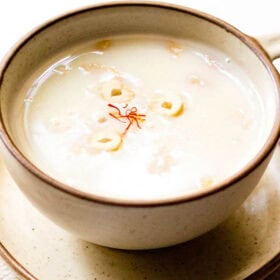
Sabudana Kheer Recipe (No Soaking)
Sabudana Kheer is a sweet Indian pudding made with sago or tapioca pearls cooked in water, milk and sugar until thick and creamy. It is lightly flavored with cardamom, saffron and often garnished with nuts. This sabudana kheer recipe is commonly prepared during fasting days such as Navratri. Serve warm or chilled as a comforting dessert.
Servings: 4
Calories: 220kcal
Ingredients
- ½ cup sabudana or sago (tapioca pearls), for a thicker kheer, you can add ⅔ cup of sabudana
- 2 cups water
- 2 cups whole milk
- 4 to 5 tablespoons raw sugar or white sugar, add according to taste
- ½ teaspoon green cardamom powder or 4 to 5 green cardamoms crushed in a mortar & pestle
- 2 tablespoons cashews – chopped or preferred nuts
- ½ tablespoon raisins
- 3 to 4 strands of saffron – for garnish, optional
Instructions
Preparing Sabudana
- Rinse the sabudana pearls under running water a few times until the water runs clear and most of the excess starch has been removed. Drain well.
- Transfer the rinsed sabudana to a thick-bottomed pan or saucepan. Add the water specified in the recipe. There is no need to soak the sabudana.
Making Sabudana Kheer
- Place the pan on the stovetop and begin cooking the sabudana in water on low to medium heat. Stir at intervals so that the pearls do not stick to the bottom of the pan.
- Meanwhile, warm the milk in another pan. The milk only needs to be warm, so do not boil it.
- After about 5 to 6 minutes, the sabudana pearls will begin to float, swell and turn translucent. This means they have started cooking, but they will not be completely soft at this stage.
- Add the warm milk and green cardamom powder. Mix well.
- Add the sugar and continue to simmer for about 20 to 25 minutes on low to medium heat. Stir often to prevent the milk and sabudana from sticking or scorching at the bottom.
- Cook the sabudana thoroughly. The pearls should look swollen and translucent and feel completely soft. They should not have a hard, dense or chewy center.If you notice a hard center or feel any resistance when biting into a pearl, continue simmering until fully cooked, adding some warm milk if required.
- Some of the sabudana pearls may break down while simmering and release their starch. This naturally thickens the milk and gives the kheer a creamy consistency.
- Keep the consistency slightly thinner if you plan to serve the kheer chilled, as it will thicken further after cooling. If it becomes too thick, add a little warm milk and simmer briefly.
- Turn off the heat and add the cashews and raisins. Taste and add more sugar if needed.
Serving & Storage
- Garnish with a few saffron strands or chopped nuts while serving.
- Serve Sabudana Kheer hot, warm or chilled.
- Refrigerate leftover kheer in a covered container for up to 2 days. It will thicken after cooling, so add a little milk and warm it gently, or mix in cold milk if serving chilled.
Notes
- Soaking: This recipe does not require soaking. To reduce the cooking time, soak the sabudana in 2 cups of water for 2 to 3 hours, or in 2 cups of hot water for 30 minutes. Cook it in the same water without draining.
- Sabudana variety: Use regular-sized sabudana. Avoid nylon sabudana, whether small or large, as its texture and cooking time are different.
- Doneness: Cooking time may vary depending on the size and quality of the sabudana. Taste a few pearls to check that they are swollen, translucent and completely soft, without a hard, dense, chewy or opaque center. Continue cooking if needed, adding a little warm milk if the kheer becomes too thick before the sabudana is fully cooked.
- Consistency: Sabudana Kheer thickens as it cools. Keep it slightly thinner if you plan to serve it chilled. If it becomes too thick, mix in a little milk to adjust the consistency.
- Using jaggery: After the kheer is fully cooked, turn off the heat and let it cool for 4 to 5 minutes. Add grated or chopped jaggery, palm jaggery, palm sugar or coconut sugar and mix well. Do not boil the kheer after adding these sweeteners, as the milk may curdle.
Nutrition
Calories: 220kcal | Carbohydrates: 36g | Protein: 5g | Fat: 6g | Saturated Fat: 3g | Polyunsaturated Fat: 1g | Monounsaturated Fat: 2g | Cholesterol: 15mg | Sodium: 80mg | Potassium: 249mg | Fiber: 2g | Sugar: 19g | Vitamin A: 202IU | Vitamin B1 (Thiamine): 0.1mg | Vitamin B2 (Riboflavin): 0.2mg | Vitamin B3 (Niacin): 0.2mg | Vitamin B6: 0.1mg | Vitamin B12: 1µg | Vitamin C: 1mg | Vitamin D: 1µg | Vitamin E: 0.1mg | Vitamin K: 2µg | Calcium: 160mg | Vitamin B9 (Folate): 2µg | Iron: 1mg | Magnesium: 34mg | Phosphorus: 157mg | Zinc: 1mg
