Shukto Recipe

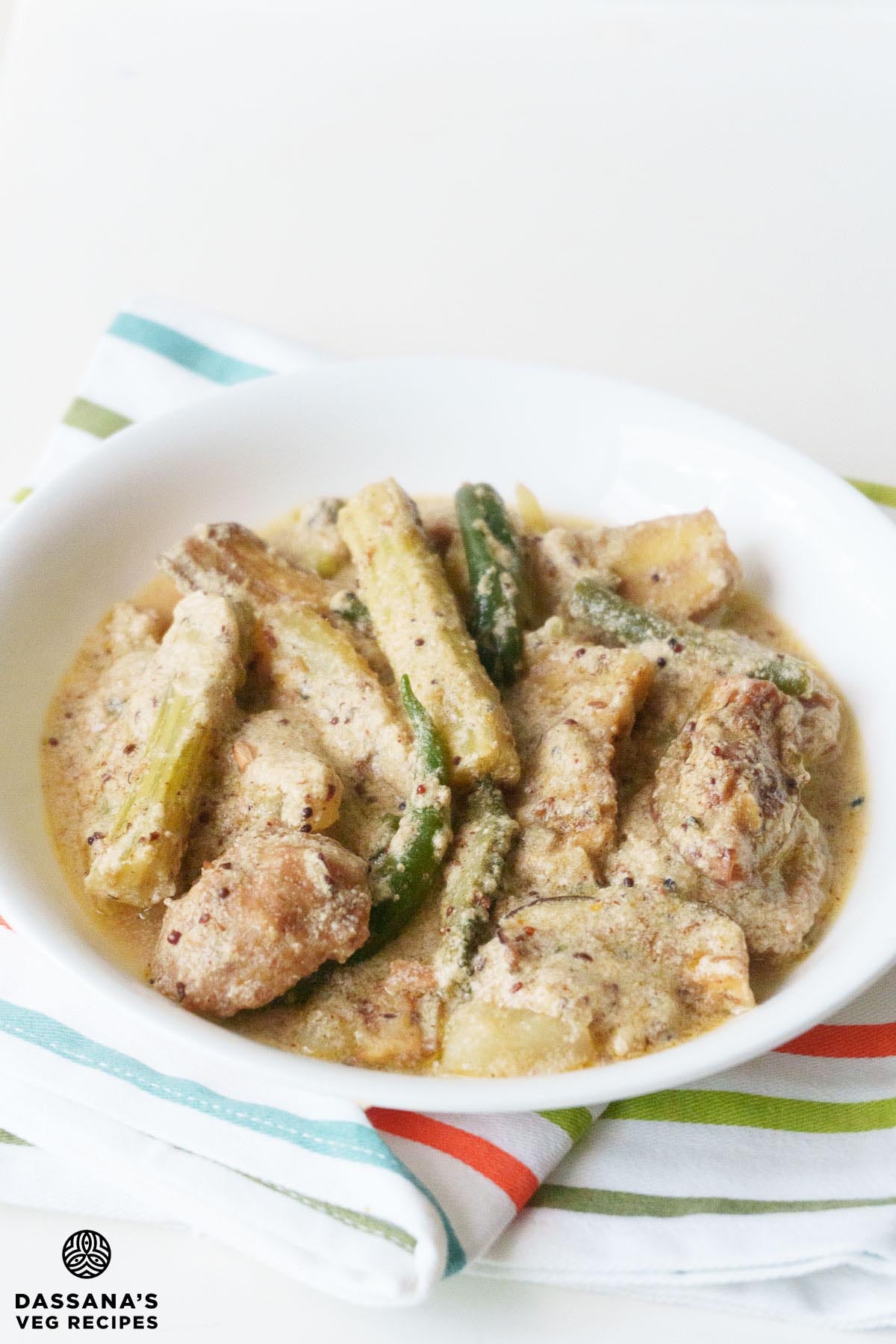
Shukto is a traditional Bengali mixed vegetable dish made with bitter gourd, raw plantain, potato, brinjal and other seasonal vegetables. It has a mildly bitter taste, balanced with a little sweetness, and is often prepared with mustard-poppy seed paste, milk and fragrant spices. Shukto is served with steamed rice at the beginning of a Bengali meal and is also prepared for festive occasions, including Durga Puja.
My Way Of Making Shukto
I have been making Shukto for many years now. It is one of those dishes that is both healthy and tasty. Although the recipe involves several steps, I have explained them in detail below so that you can easily make it at home.
What Does Shukto Mean? The name Shukto is associated with the Bengali word shukta, traditionally referring to bitter preparations. The dish itself has a mild bitterness that comes mainly from the bitter gourd.
Vegetables I Use: In my recipe, I have used bitter gourd, raw plantain, potato, sweet potato, brinjal, drumsticks and French beans, along with Bengali urad dal bori. I could not get broad beans, which are commonly used in Shukto, so I added French beans that I already had.
Frying and Sautéing: The vegetables are either fried or sautéed. I always fry the bitter gourd separately before adding it to the gravy, as this helps prevent the bitterness from becoming too strong. I also fry the brinjal, raw plantain and bori separately in mustard oil. This helps develop their individual flavors and keeps the vegetables from becoming too soft or breaking apart during cooking.
Gravy and Seasoning: The base gravy is made with a paste of poppy seeds, yellow mustard seeds and ginger. The poppy seed flavor is more noticeable, while the yellow mustard seeds add a subtle taste without much pungency. Whole milk, sugar and sweet potato help balance the bitterness, while the milk also gives the gravy a creamy consistency.
For seasoning, I use Panch Phoron and a separate roasted spice powder made with radhuni, cumin, fennel and black mustard seeds. Both contribute to the flavor, but adding the roasted ground spices and ghee towards the end makes a noticeable difference.
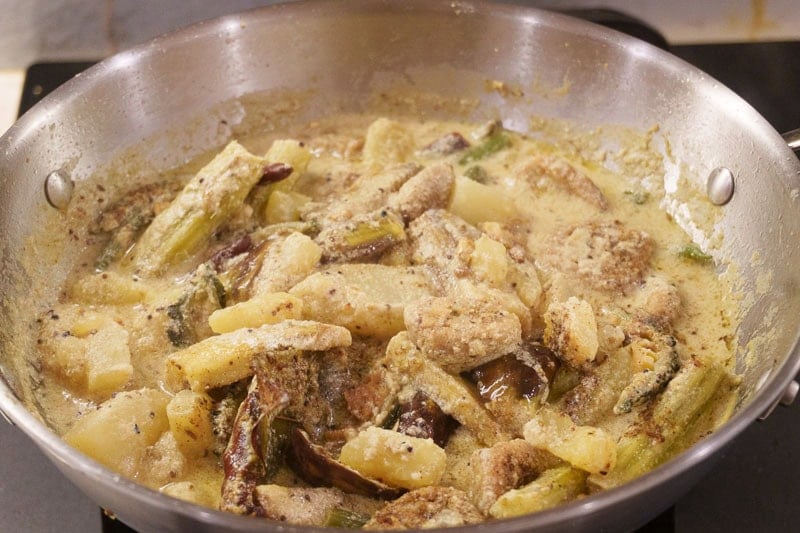
The finished Shukto has a creamy, medium-thick gravy with a mild bitterness and a little sweetness. It tastes especially good with plain steamed rice.
Shukto is enjoyed in Bengali households as part of everyday meals and is also served during festive occasions, including Durga Puja. You can prepare it for a traditional Bengali lunch or include it in a festive vegetarian meal.
This is how I make Shukto at home, and I hope you enjoy it too.

Ingredients You Need
Shukto combines a variety of vegetables with mustard-poppy seed paste and traditional Bengali spices. Here are the key ingredients:
- Bitter gourd (karela): Gives Shukto its characteristic mild bitterness. Choose small, firm bitter gourds with fresh green skin.
- Raw plantain (kachha kela): Also called raw banana in India. Use firm, unripe green plantains, which hold their shape during cooking.
- Potato and sweet potato: Potato adds body to the dish, while sweet potato contributes a little natural sweetness.
- Brinjal (eggplant): Small, tender brinjals work well. Choose ones with smooth, shiny skin and no soft spots.
- Drumsticks (moringa pods): Choose fresh, tender pods rather than mature, fibrous ones.
- French Beans: A nice alternative to broad beans, which are traditionally used in Shukto.
- Bengali bori: Sun-dried lentil dumplings, commonly made with urad dal. They become crisp when fried and soften after being added to the gravy.
- Poppy seeds and yellow mustard seeds: These are ground with ginger to make the gravy paste. Use yellow mustard seeds rather than the stronger black mustard seeds for the paste.
- Mustard oil: Gives Shukto its distinctive aroma and flavor. Use edible mustard oil suitable for cooking.
- Green Chillies: Whole green chillies, slit lengthwise, add a mild hint of heat to the gravy.
- Panch phoron: A Bengali five-spice blend used for tempering. You can use homemade or store-bought panch phoron.
- Radhuni: A traditional Bengali spice used in the roasted spice powder. It has a strong, distinctive aroma and should not be confused with carom seeds (ajwain).
- Milk, sugar and ghee: Use whole milk for the gravy. Sugar is added in a small quantity, while ghee provides a nice aroma. You can also use coconut milk instead of milk.
Other Vegetables You Can Add
Depending on the season, you can also use broad beans, raw papaya or white radish (mooli) in Shukto.
Cut these vegetables into similar-sized pieces and adjust their cooking times as needed. You do not need to include every vegetable traditionally used in Shukto. A balanced selection works well, with bitter gourd providing the characteristic bitter taste.
You May Also Like These Traditional Bengali Dishes
How to Make Shukto (Stepwise)
Prepare The Vegetables
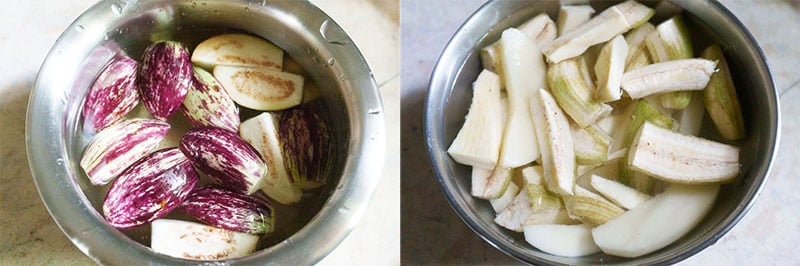
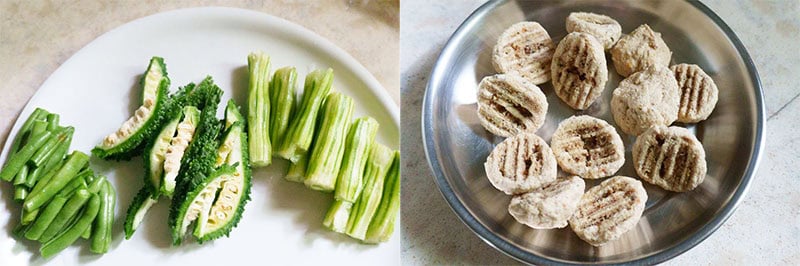
1. First, rinse all the vegetables thoroughly. Cut 3 small brinjals each lengthwise into 4 pieces. If using larger brinjals, cut them into similar-sized thick pieces. Keep them in a separate bowl of water so that they do not darken.
Peel the 3 small raw plantains and cut them lengthwise into thick batons, about 2½ to 3 inches long. Keep them immersed in a bowl of water to prevent discoloration.
Peel and cut 1 medium to large potato into thick wedges or batons. Similarly, peel and cut 1 small sweet potato into thick batons or wedges.
Keep the cut brinjals, plantains, potato and sweet potato in separate bowls of water to prevent discoloration.
Tip: Try to cut the vegetables into fairly thick pieces so that they retain their shape while cooking.
2. Rinse 2 to 3 small bitter gourds. Lightly peel them and then cut lengthwise into thick sticks, about 2½ inches long. Rub a little salt over them, keep aside briefly and then rinse.
Trim 8 to 10 French beans and cut them into approximately 2 to 2½ inch pieces. Rinse, lightly peel and cut 2 drumsticks into roughly 2½ to 3-inch pieces.
Keep 10 to 12 Bengali urad dal bori ready. You can use a few more if you prefer.
Make the Mustard-Poppy Seed Paste
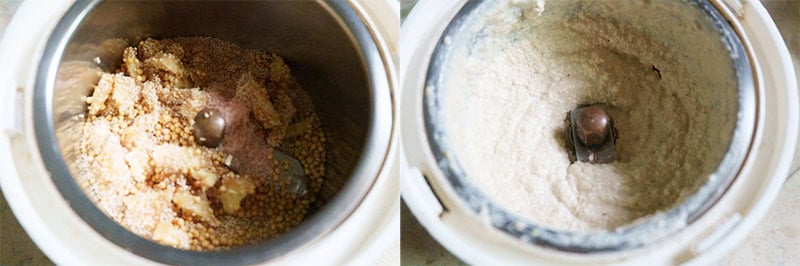
3. Add 2 tablespoons poppy seeds, 1 tablespoon yellow mustard seeds, 2 inches ginger (or 2 teaspoons chopped ginger) and 2 to 3 pinches salt to a small grinder.
Add 4 tablespoons water and grind to a fine paste. If required, add a little more water to help with grinding.
Note: I have not soaked the mustard seeds or poppy seeds before grinding. Keep the prepared paste aside.
Fry The Vegetables & Bori
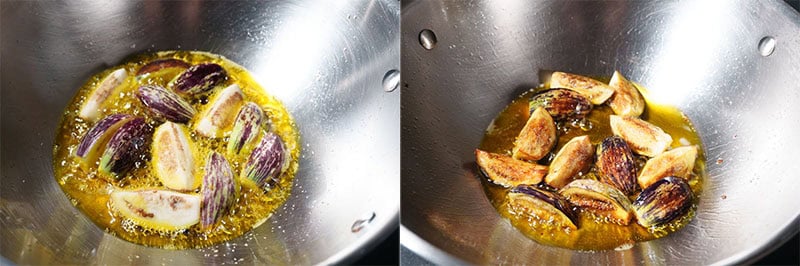
4. Drain the brinjal, raw plantain and rinsed bitter gourd well, then pat them dry with a clean kitchen towel before frying to prevent oil from spluttering.
Next, heat 4 tablespoons mustard oil in a kadai or a heavy-bottomed pan.
Add the brinjal pieces and fry them until cooked and lightly golden. Add 1 to 2 pinches salt while frying, if needed. Remove with a slotted spoon and keep aside.
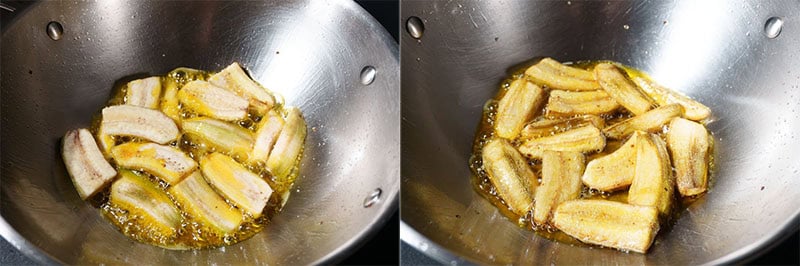
5. Next, add the raw plantain pieces to the same oil. Add one or two pinches of salt. Fry until they are cooked and lightly golden. Remove and keep aside.
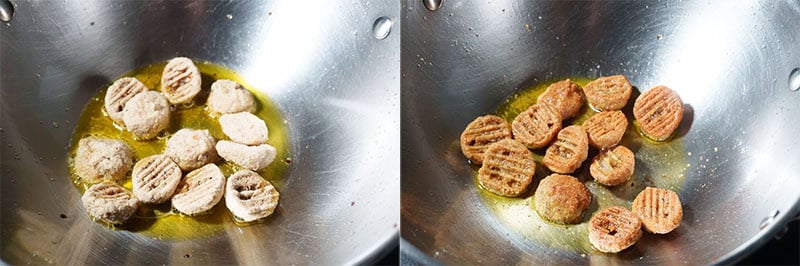
6. Add the Bengali bori and fry until golden and crisp. Remove and keep aside.
The bori absorbs quite a bit of oil, so you may need to add another 1 to 2 tablespoons mustard oil to the pan.
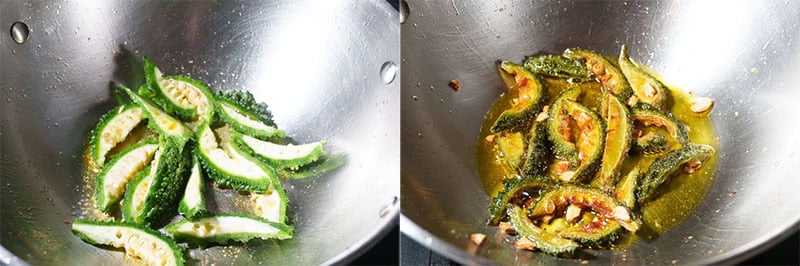
7. Add the bitter gourd pieces and fry until cooked and lightly golden. Remove and keep aside.
Note: While frying the vegetables, add only a pinch or two of salt as needed. Remember that some salt has already been used for the bitter gourd.
Sauté The Remaining Vegetables
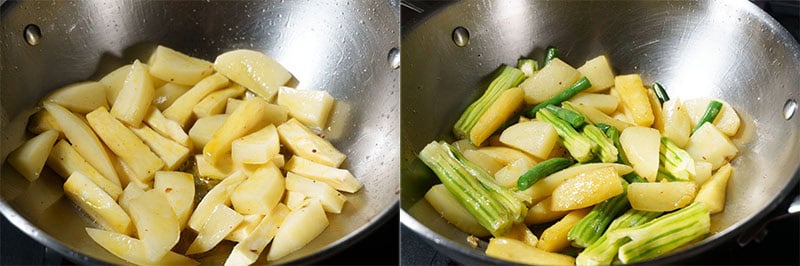
8. In the remaining oil, add the potato and sweet potato pieces. Sauté for about 6 to 7 minutes, stirring occasionally.
Add the chopped French beans and drumsticks. Mix well and continue sautéing for 4 to 5 minutes.
The vegetables do not need to be completely cooked at this stage, as they will finish cooking in the gravy.
Remove the sautéed vegetables and keep aside.
Make The Roasted Spice Powder
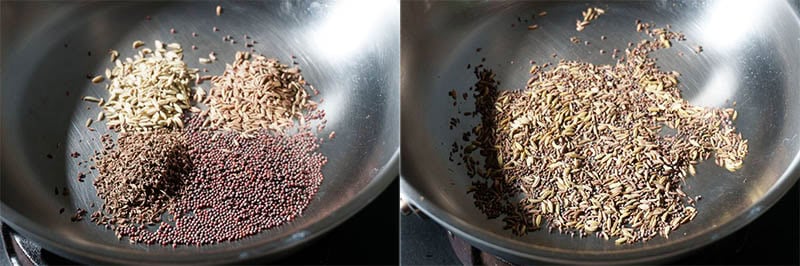
9. While the vegetables are cooking, heat a small pan on low heat.
Add 1 teaspoon each of radhuni, cumin seeds, fennel seeds and black mustard seeds.
Dry roast the spices on low heat for 3 to 4 minutes or until aromatic. Stir occasionally for even roasting. Some of the seeds may begin to splutter.
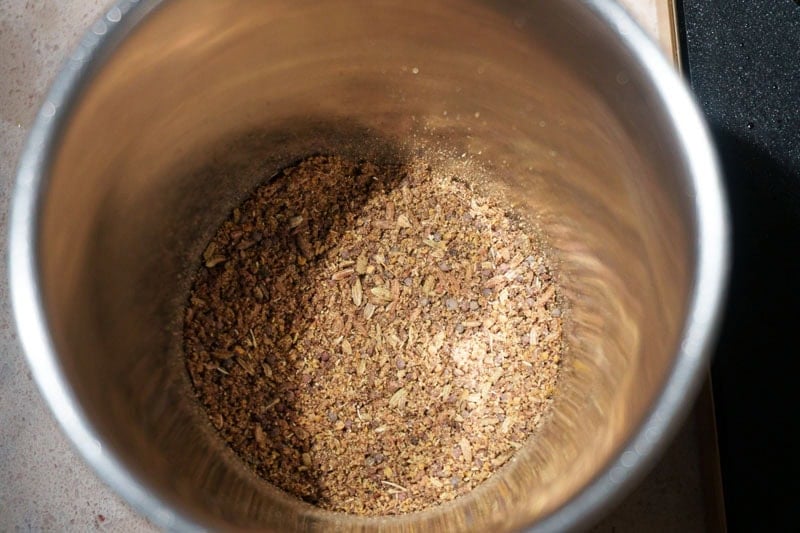
10. Transfer the roasted spices to a mortar and pestle. Crush them coarsely.
You can also use a small spice grinder or dry grinder. Avoid grinding them into an extremely fine powder.
Keep the roasted spice powder aside.
Make The Shukto Gravy
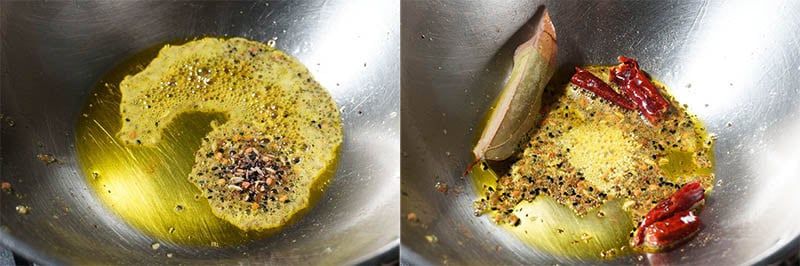
11. In the same pan, add about 1 tablespoon mustard oil, if needed. Once the oil is hot, add 1 teaspoon panch phoron and let the spices splutter.
Add 1 tejpatta (Indian bay leaf), 2 dried red chilies (halved & seeds removed) and 2 pinches asafoetida (hing).
Fry for a few seconds on low heat until the red chilies change color. Take care not to burn the spices.
12. Add the prepared mustard-poppy seed paste to the tempering. Mix well so that the paste combines evenly with the oil and spices.
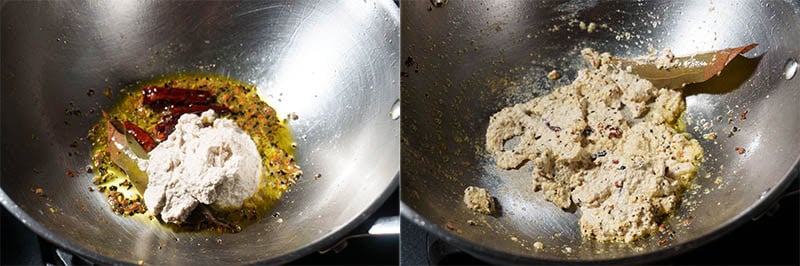
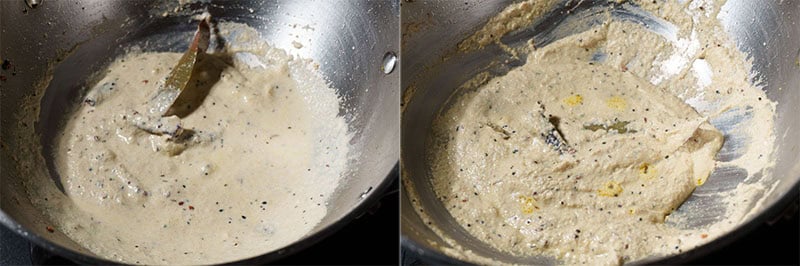
13. Add about 3 to 4 tablespoons water and mix it thoroughly with the paste. This prevents the paste from sticking to the pan or burning while it cooks.
Continue cooking on low to medium-low heat for about a minute or two, stirring as needed, until small specks of oil begin to appear on the surface.
14. Add the sautéed potato, sweet potato, drumsticks and French beans. Mix gently to combine them with the cooked mustard-poppy seed paste.
Pour in 2 cups water and add salt as required.
Important: Some salt was already added while frying the vegetables and grinding the mustard-poppy seed paste. Add salt carefully at this stage to avoid making the Shukto too salty.
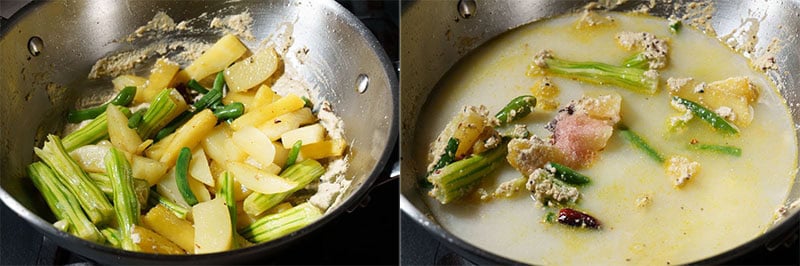
15. Mix everything well so that the vegetables are evenly distributed in the gravy.
Add 2 green chilies (whole with one slit), cover the pan with a lid and bring the gravy to a boil over medium heat. This might take about 5 to 6 minutes.
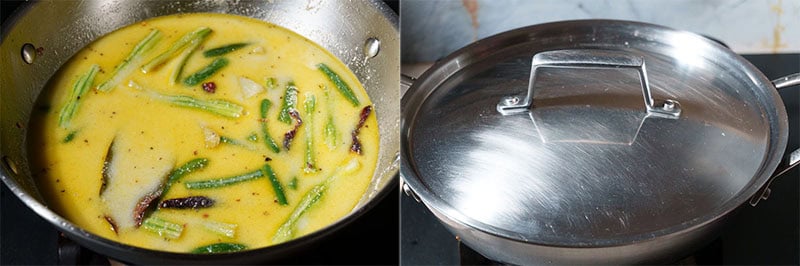
16. Once the gravy starts boiling, reduce the heat and simmer covered for 10 to 12 minutes or until the potatoes, sweet potatoes, drumsticks and French beans are cooked.
Remove the lid occasionally to check the vegetables and the consistency of the gravy. Once cooked, you will see a light layer of oil on the surface.
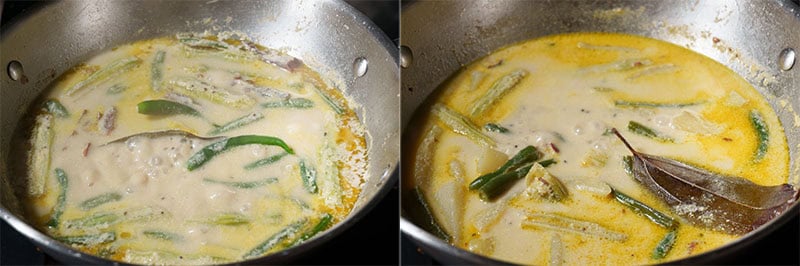
17. Add the separately fried bitter gourd, brinjal, raw plantain and bori.
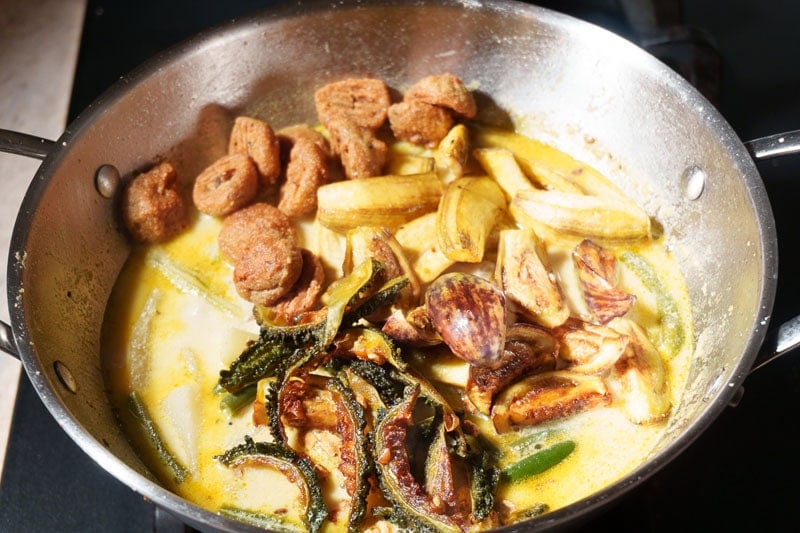
18. Mix gently so that the cooked vegetables do not break.
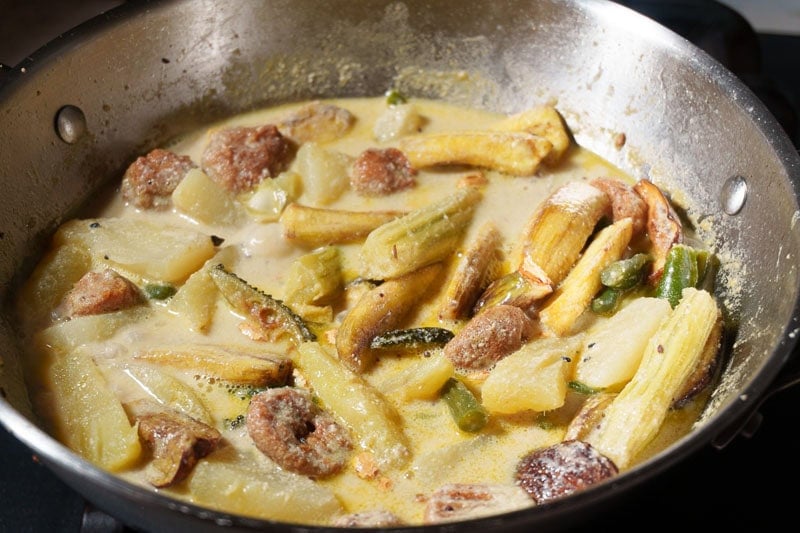
Finish Shukto
19. Once all the vegetables are cooked, reduce the heat to low.
Add ½ cup whole milk. Mix gently.
Tip: Use thick coconut milk or canned coconut milk instead of whole milk. Add a little water as needed to adjust the gravy’s consistency.
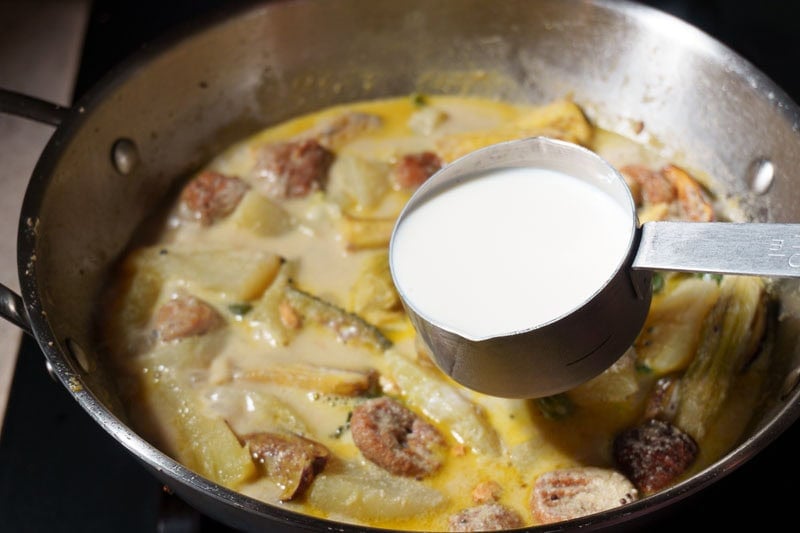
20. Next, add 1 teaspoon sugar and mix well.
Let the Shukto simmer for about 2 to 3 minutes. Avoid boiling vigorously after adding the milk.
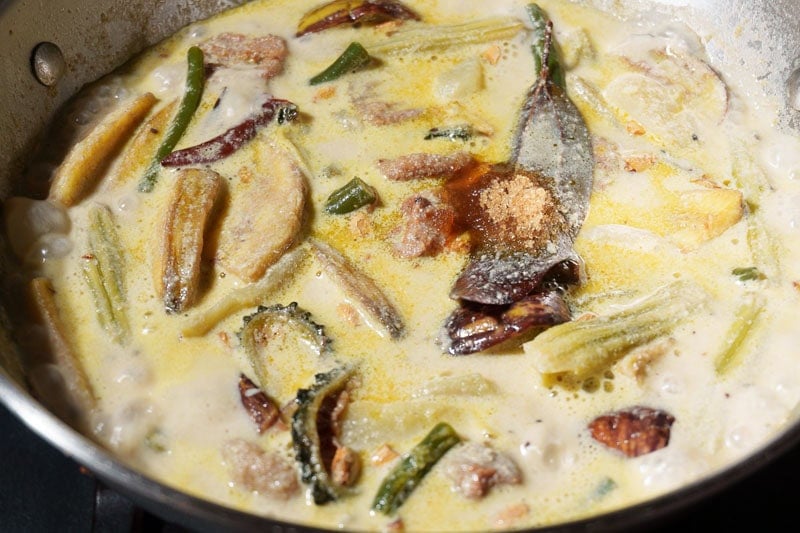
21. Lastly, add the freshly roasted spice powder and add 1 teaspoon ghee over the Shukto.
Do not stir immediately.
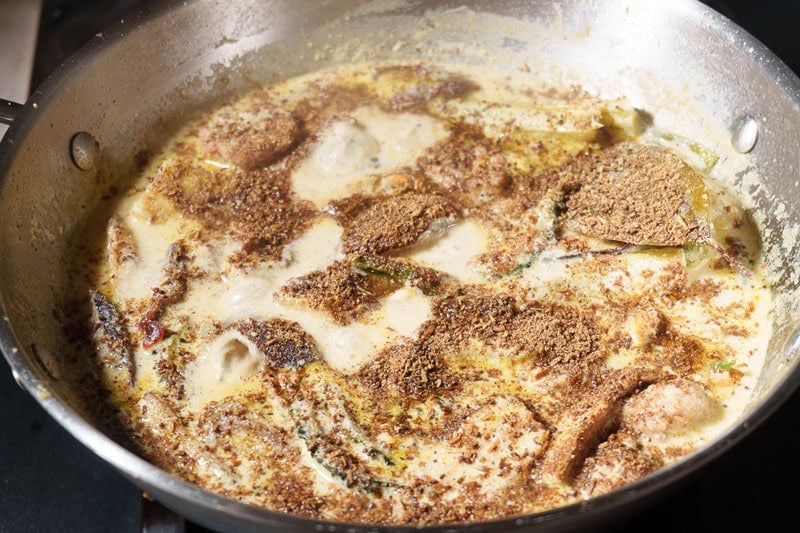
22. Turn off the heat, cover the pan and let the Shukto rest for about 5 minutes. This allows the aroma of the roasted spices and ghee to develop in the gravy.
After 5 minutes, gently mix the Shukto and serve.
Serving Suggestions
Shukto is traditionally served with steamed rice, usually at the beginning of a Bengali meal.
You can serve a small portion of Shukto with plain rice before moving on to dal, other vegetable dishes and the remaining courses.
I prefer serving Shukto hot to enjoy the flavors of the vegetables, the texture of the urad dal bori and the aroma of the freshly roasted spices.

Storage
Shukto tastes best when freshly prepared, particularly because the fried veggies and bori retain a better texture.
You can refrigerate leftovers in a covered container for about 1 day. The gravy will thicken as it cools.
Reheat gently in a pan over low heat, adding a little water to slightly thin the gravy. Stir carefully so that the vegetables do not break. Heat thoroughly before serving.
I do not recommend freezing Shukto, as the texture of the cooked vegetables, bori and milk-based gravy can change after thawing.
Helpful Tips
- Fry the bitter gourd separately: Always fry the bitter gourd before adding it to the gravy. This helps keep the bitterness mild rather than letting it become too pronounced throughout the dish.
- Salt the bitter gourd if needed: If your bitter gourd is particularly bitter, rub a little salt over the cut pieces, leave them aside for 10 to 15 minutes, and rinse before frying. This can help reduce some of the bitterness.
- Balance the flavors: The milk, sugar and sweet potato also help balance the bitter taste. Shukto should have a pleasant, mild bitterness rather than tasting overly bitter. Adjust the sugar slightly if needed, without making the dish too sweet.
- Choose the vegetables according to availability: Traditional Shukto often includes bitter gourd, raw plantain, potato, brinjal, drumsticks and broad beans. You can also use sweet potato, raw papaya or white radish. I used French beans because broad beans were unavailable.
- Cut the vegetables into thick pieces: Cut raw plantains into thick batons, brinjals lengthwise, potatoes into wedges and drumsticks into longer pieces. This helps the vegetables retain their shape during cooking.
- Fry the vegetables separately: I fry the bitter gourd, brinjal, raw plantain and bori in separate batches. They cook at different rates, and frying them individually helps develop their flavors without overcooking.
More Tips To Make Perfect Shukto
- Use mustard oil: I use mustard oil for frying the vegetables and tempering the gravy. Its characteristic aroma and flavor are an important part of this recipe.
- Be careful when adding salt: I add a few pinches of salt while frying some vegetables and also use salt in the mustard-poppy seed paste. Add salt carefully when making the gravy, as some of the ingredients are already seasoned.
- Cook the paste gently: Add a little water while cooking the mustard-poppy seed paste so that it does not stick to the pan. Cook until small specks of oil appear on the surface, but do not let the paste burn.
- Use both panch phoron and roasted spices: Panch phoron flavors the oil at the beginning, while the roasted spice powder is added at the end. Both contribute to the overall taste. I find that the freshly roasted and ground radhuni, cumin, fennel and black mustard seeds make a noticeable difference.
- Add milk on low heat: Whole milk gives the Shukto a creamy consistency and helps balance the bitterness. Keep the heat low and avoid boiling vigorously after adding the milk.
- Keep the gravy medium-thick: I prefer Shukto with a creamy, medium-thick gravy that goes well with steamed rice. If it becomes too thick, add a little hot water and adjust the consistency.
Step by Step Photo Guide Above

Shukto Recipe
Ingredients
Vegetables
- ¾ cup or 2 to 3 small-sized bitter gourds – cut into thick sticks or wedges
- 1 cup or 3 small-sized raw unripe plantains – cut into thick batons
- 1 cup or 1 medium to large potato – cut into wedges
- ¾ cup or 1 small-sized sweet potato – cut into thick batons or wedges
- 3 small-sized brinjals – cut lengthwise
- ½ cup or 8 to 10 French beans – cut into 2 to 2½ inch pieces
- 1 cup or 2 drumsticks – cut into 3-inch pieces
- 10 to 12 Bengali urad dal bori
For Mustard-Poppy Seed Paste
- 2 tablespoons poppy seeds
- 1 tablespoon yellow mustard seeds
- 2 teaspoons or 2 inches ginger – chopped
- 4 tablespoons water or add as needed
- 2 to 3 pinches salt
For Roasted Spice Powder
- 1 teaspoon radhuni (wild celery seeds)
- 1 teaspoon cumin seeds
- 1 teaspoon fennel seeds
- 1 teaspoon black mustard seeds
Other Ingredients
- 4 to 5 tablespoons mustard oil or add more if needed
- 1 teaspoon Panch Phoron
- 2 dried red chilies – halved and seeds removed
- 1 tejpatta (Indian bay leaf)
- 2 pinches asafoetida
- 2 green chilies – slit on one side and kept whole
- 3 to 4 tablespoons water – for mixing with poppy seeds paste
- 1 teaspoon sugar
- salt – add as required
- 2 cups water or add as needed
- ½ cup whole milk or thick coconut milk, read point no 9 in notes below
- 1 teaspoon ghee – add more if preferred
Instructions
Preparation
- Rinse all the vegetables. Lightly peel the plantains, drumsticks and the bitter gourd. Peel the potatoes and sweet potatoes.
- Chop the raw plantains and bitter gourds into thick batons lengthwise, potatoes into wedges, French beans into 2 to 2½-inch pieces and drumsticks into 2½ to 3-inch pieces.
- Cut the sweet potato into thick batons or wedges. Cut each of the 3 small brinjals lengthwise into 4 pieces.
- Keep the cut plantains, brinjals, potato and sweet potato separately in water to prevent discoloration. Rub a little salt over the bitter gourd and rinse.
- Grind the poppy seeds, yellow mustard seeds, ginger, salt and water to a fine paste. Keep aside.
Frying Vegetables
- Drain the brinjal, raw plantain and rinsed bitter gourd well. Pat them dry with a clean kitchen towel before frying to prevent oil from spluttering.
- Heat mustard oil in a kadai or heavy-bottomed pan. Fry the brinjal until cooked and lightly golden. Sprinkle one to two pinches of salt while frying. Remove and keep aside.
- Fry the raw plantain pieces until cooked and lightly golden. Add one to two pinches of salt while frying. Remove and keep aside.
- Fry the Bengali bori until golden and crisp. Remove and keep aside. Add more oil if needed.
- Fry the bitter gourd separately until cooked and lightly golden. Remove and keep aside.
- Add the potato and sweet potato to the remaining oil and sauté for 6 to 7 minutes.
- Add the French beans and drumsticks and continue sautéing for 4 to 5 minutes. Remove and keep aside.
Making Roasted Spice Powder
- Meanwhile, dry roast the radhuni, cumin, fennel and black mustard seeds on low heat for about 3 to 4 minutes or until aromatic.
- Coarsely crush the roasted spices using a mortar and pestle or spice grinder. Keep aside.
Making Shukto
- Add 1 tablespoon mustard oil to the same pan if needed. Add the panch phoron and let it splutter. Add the dried red chilies, tej patta and asafoetida.
- Fry for a few seconds on low heat until the red chilies change color. Ensure not to burn the spices.
- Add the mustard-poppy seed paste and mix well. Add 3 to 4 tablespoons water to prevent sticking and cook for 1 to 2 minutes or until small specks of oil appear on the surface.
- Add the sautéed potatoes, sweet potatoes, drumsticks and French beans. Mix well. Pour in the water, add the green chilies and season carefully with salt.
- Cover and bring to a boil over medium heat. This takes about 5 to 6 minutes. Reduce the heat and simmer, covered, for about 10 to 12 minutes or until the vegetables are tender.
- Add the separately fried bitter gourd, brinjal, raw plantain and bori. Mix gently.
Finishing Shukto
- Once the vegetables are cooked, lower the heat. Add the milk and sugar, mix gently and simmer for 2 to 3 minutes.
- Add the roasted spice powder and ghee. Do not stir immediately.
- Turn off the heat, cover and let the Shukto rest for about 5 minutes.
- Gently stir and serve warm with steamed rice.
Dassana’s Notes
- Use thickly cut vegetables so that they do not become mushy during cooking.
- Fry the bitter gourd separately to help keep the gravy mildly bitter rather than overly bitter.
- If the bitter gourd is particularly bitter, rub the cut pieces with salt, leave for 10 to 15 minutes and rinse before frying.
- Fry the brinjal, plantain and bori separately for better texture.
- Add salt carefully, as some salt has already been used while frying the vegetables and preparing the paste.
- Use mustard oil for its characteristic flavor and aroma.
- Roast the finishing spices on low heat until aromatic and crush them coarsely.
- Add milk on low heat and avoid vigorous boiling.
- Feel free to use thick coconut milk or canned coconut milk instead of whole milk. Add some more water if needed to adjust the consistency.
- The consistency of the gravy is medium-thick. For a medium or medium-thin gravy, add a little hot water as needed.
- Allow the Shukto to rest after adding the ghee and roasted spices before stirring and serving.