
Balushahi Recipe | Badusha Sweet

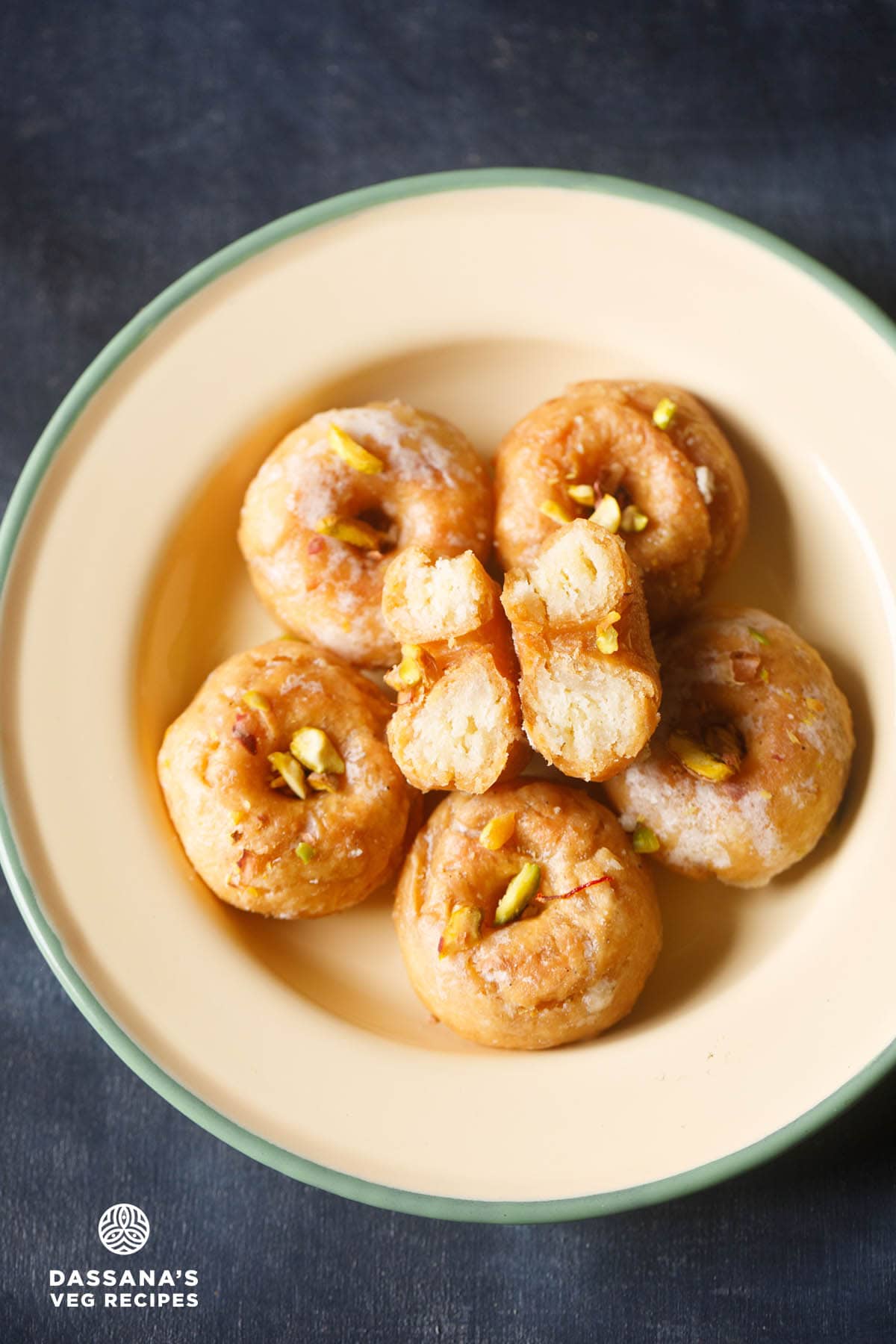
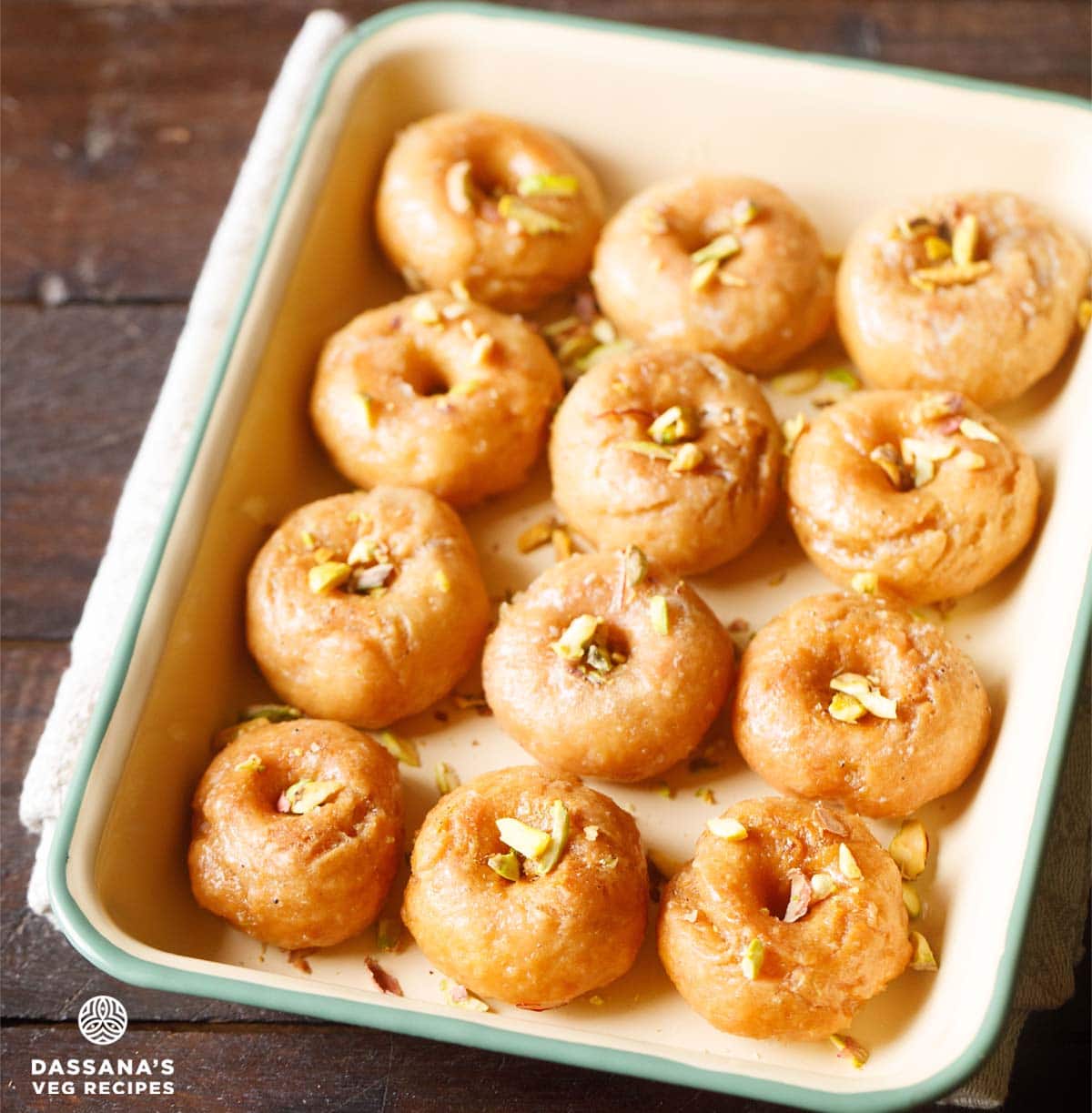
Balushahi, also known as Badusha in South India, is a traditional Indian sweet made with a leavened dough that is deep fried and soaked in sugar syrup. The sweet has a lightly crisp outer layer with a soft, slightly flaky center. It is flavored with cardamom and saffron, which give it its characteristic aroma and taste. Balushahi is commonly made during festivals like Diwali but can be prepared any time of the year.
About Balushahi (Badusha Sweet)
Balushahi is a classic Indian festival sweet and a family favorite, especially during Diwali. While it may resemble a glazed doughnut at first glance, the taste and texture are quite different.
Both are shaped with a central dent and deep fried, but Balushahi is soaked in a saffron and cardamom infused sugar syrup, which gives it a crisp sugar coating outside and moisture inside.
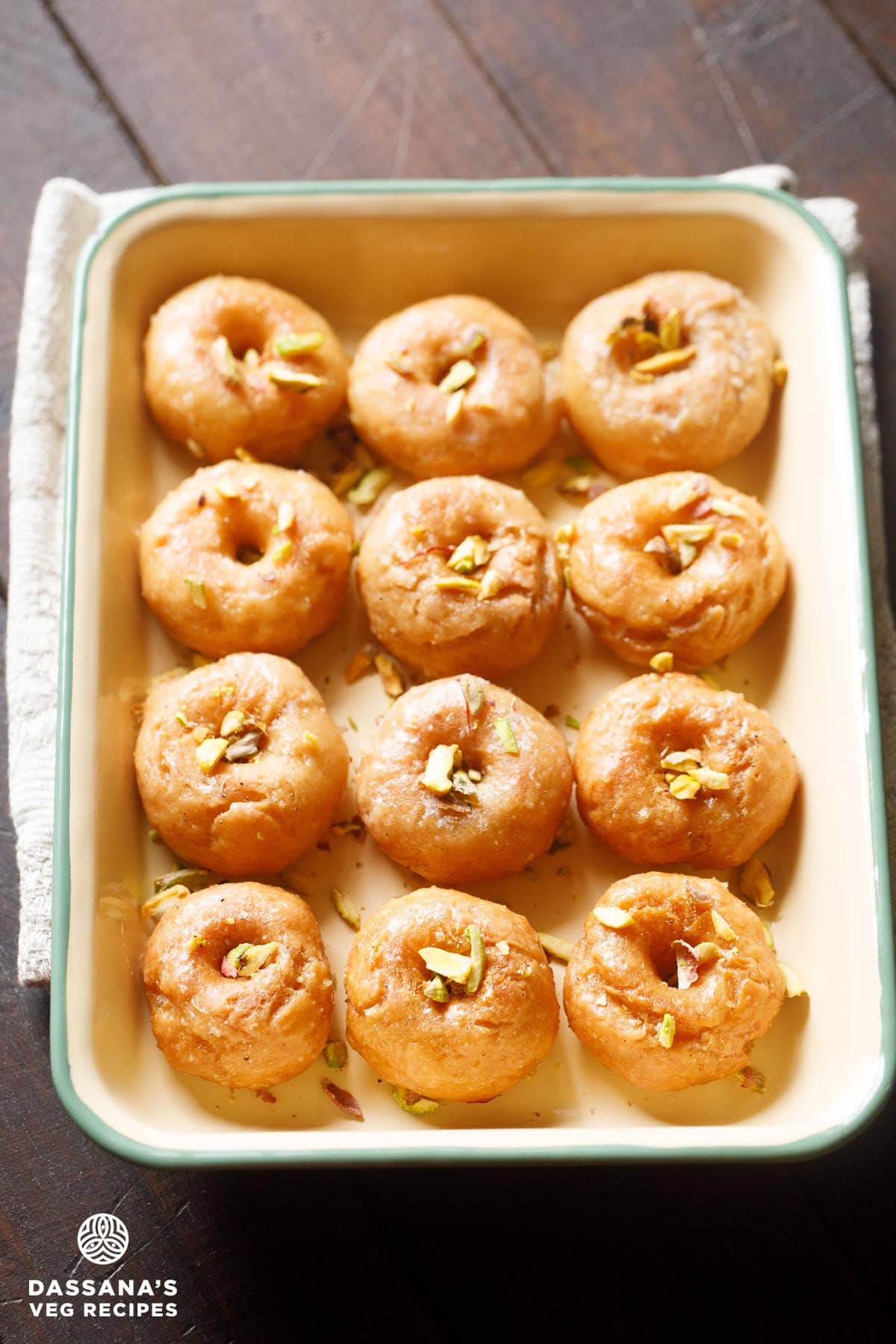
Table of Contents
Unlike Western doughnuts that are light and fluffy throughout, Balushahi has a firmer, crisp exterior with a soft and slightly flaky interior. The syrup not only sweetens the balushahi but also adds its signature texture.
Balushahi is made with a soft dough of all-purpose flour, ghee, yogurt, salt, and leavening ingredients like baking soda and baking powder.
The dough is rested for 15 minutes, shaped into doughnuts, and then fried on medium-low heat. The fried Balushahi are finally soaked in a cardamom and saffron scented sugar syrup.
There are many regional variations of Balushahi across India. In North India, it is less juicy and mildly sweet, while the South Indian version, known as Badusha, is richer, flakier, and noticeably sweeter.
Badusha is commonly made in Tamil Nadu, Karnataka, Kerala, Andhra Pradesh, and Telangana. Variations of this sweet are also found in Pakistan and Bangladesh.
Although Balushahi is easily available in sweet shops, I prefer making it at home, especially during festivals. It helps keep traditional recipes alive and also gives better control over the ingredients.
This is a tried-and-tested Balushahi recipe that gives results similar to halwai-style sweets, with a crisp outside and soft center.
For best results, the recipe should be followed as written. The sugar syrup needs to be cooked to a sticky half-string or one-string consistency and kept hot while soaking the fried balushahi.
The process is beginner-friendly but does require some time. One batch makes about 17 pieces, and the sweets keep well in an airtight container at room temperature for 5 to 6 days.
More Diwali Sweets Recipes To Try At Home
How to make Balushahi
If you are new to making this authentic Indian treat, fear not! I’ll guide you through every step of the way. Here’s how they’re made:
Cream Ghee
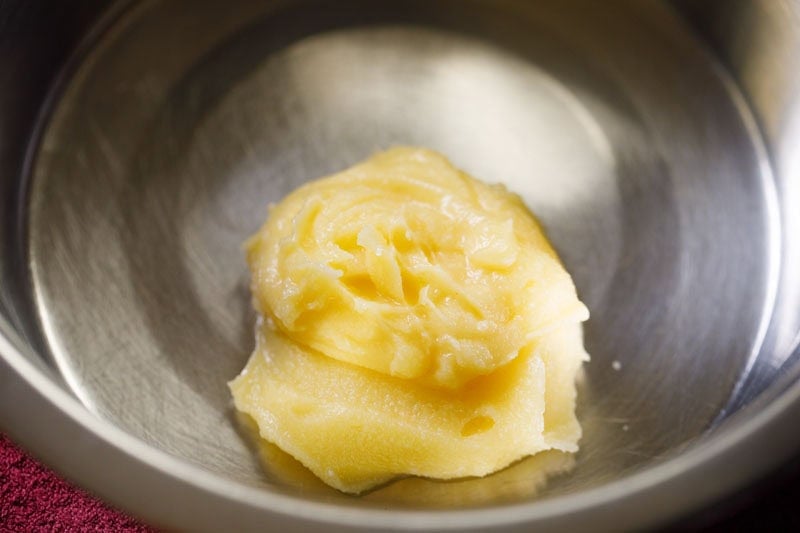
1. Take ¼ cup (60 grams) ghee in a bowl. Make sure the ghee is in a semi-solid state and not runny or melted or in a cold solid block.
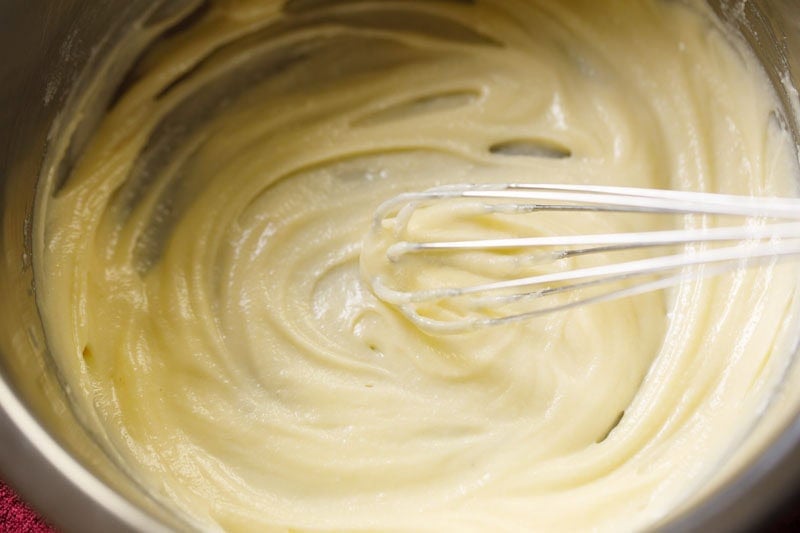
2. With a spoon, spatula or a small wired whisk, beat the ghee till it is smooth, light and fluffy. The color will also lighten.
3. Add ¼ cup (60 grams) cold or chilled fresh curd (dahi/yogurt).
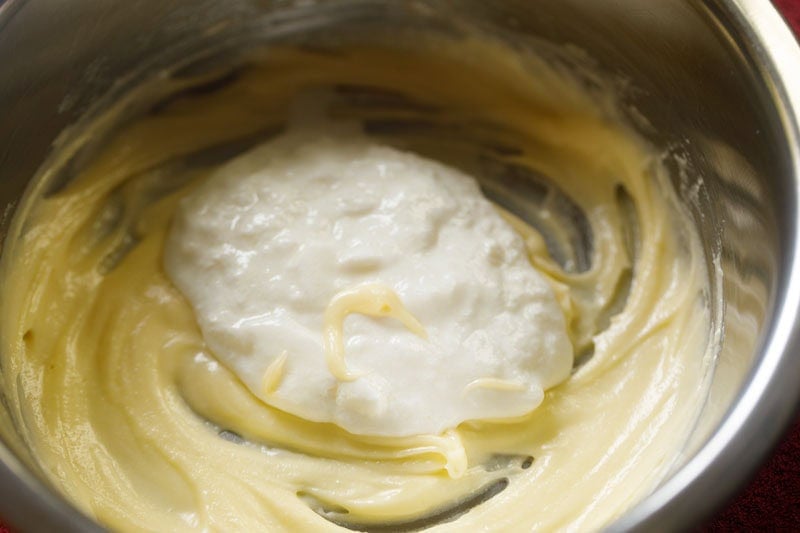
4. Again with a spoon, spatula or a small wired whisk, whip the curd with the creamed ghee. Cream till light and smooth.
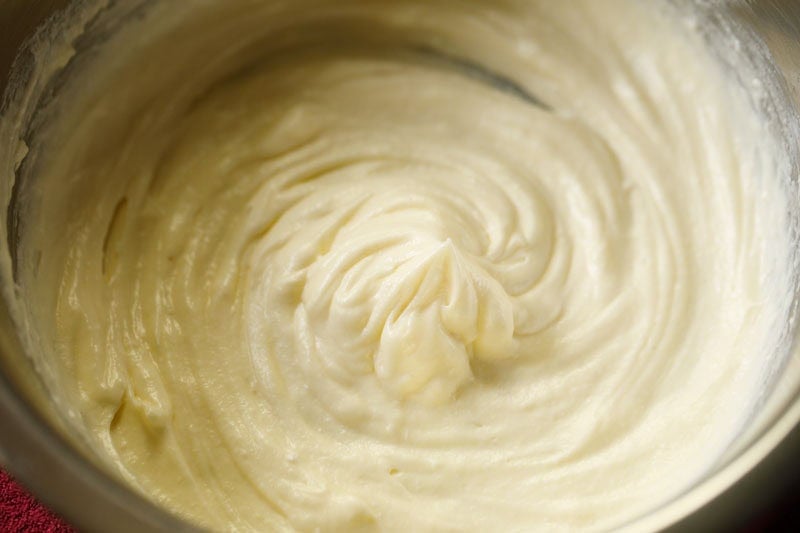
Make Dough
5. Now, take 2 cups (250 grams) all-purpose flour (maida) in a sieve. Place it on the bowl itself. You can also sift the flour separately on a plate or tray, but I prefer keeping dishes to a minimum.
Add 1 pinch salt, 1 pinch baking soda and ½ teaspoon baking powder.
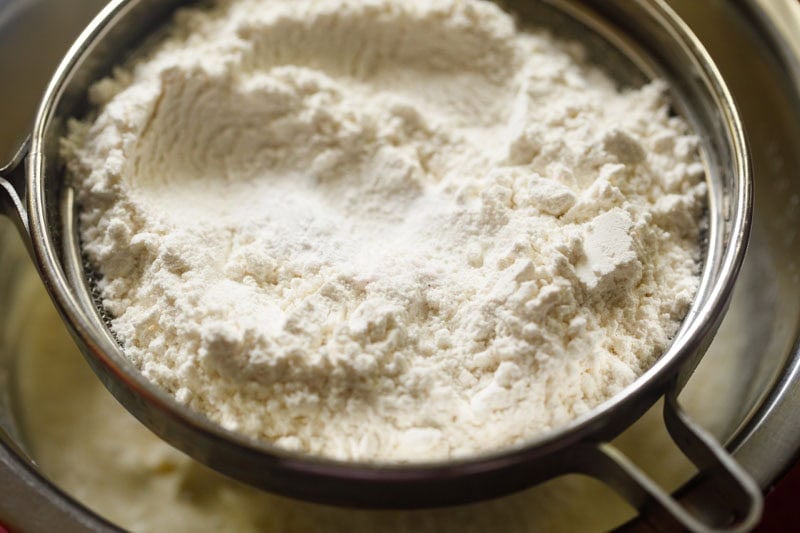
6. Sift directly in the creamed mixture.
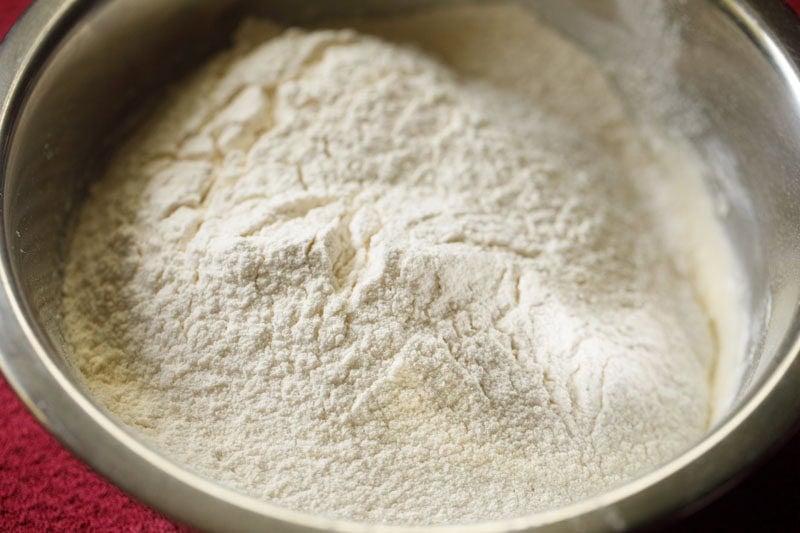
7. Mix the flour lightly with the creamed ghee and curd, using a spoon or spatula.
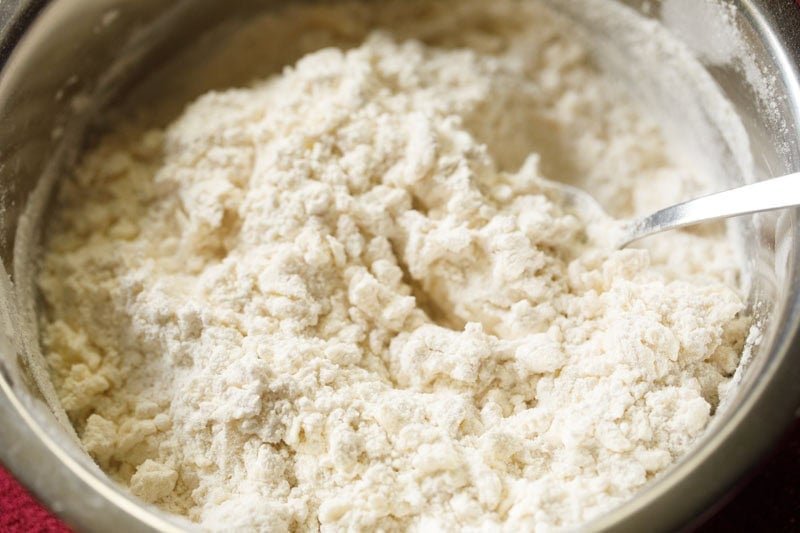
8. Sprinkle some cold water in parts and begin to mix it. Overall, you will use 8 to 9 tablespoons cold water.
Add 2 to 3 tablespoons water at a time and mix. If the curd used has more whey, then less water will be needed.
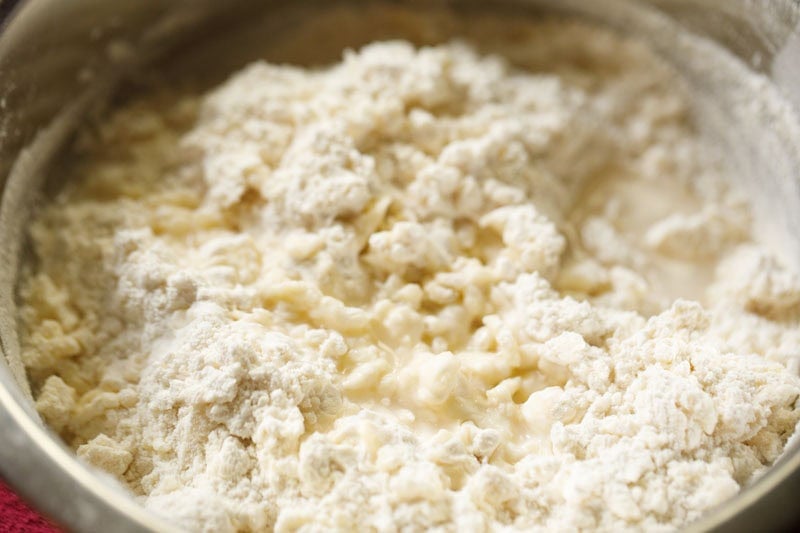
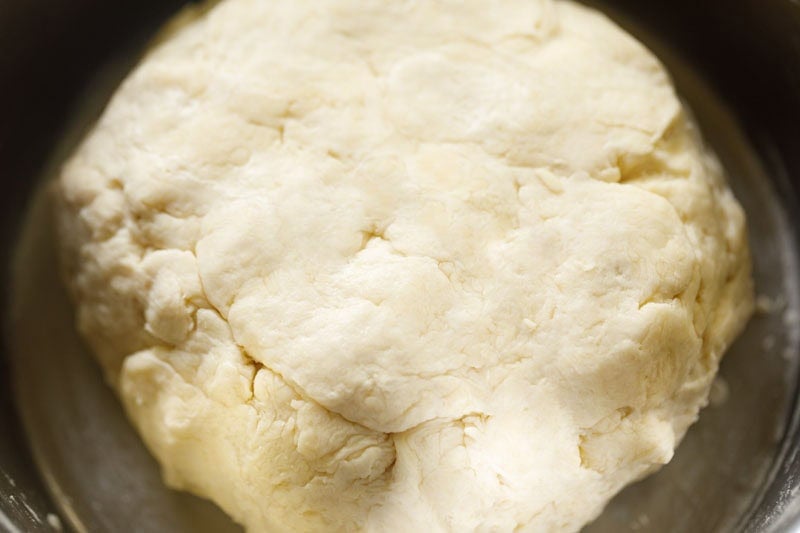
9. Mix and combine everything to form a soft dough. Do not knead. Just mix and bring everything together to a dough. Cover the dough and let it rest for 15 minutes.
If the dough becomes sticky, add 1 to 2 tablespoons of flour. Use very light pressure to form a dough. Do not knead heavily or, if some kneading is required, then knead very lightly.
Make Sugar Syrup
10. As the dough rests, make your sugar syrup. You can make sugar syrup simultaneously while you’re frying the balushahi, but it is easier for new cooks to work in stages.
Take 200 grams or 1 heaped cup sugar in a pan or bowl. Use a bowl or pan with plenty of surface area so that the Balushahi have enough space for soaking.
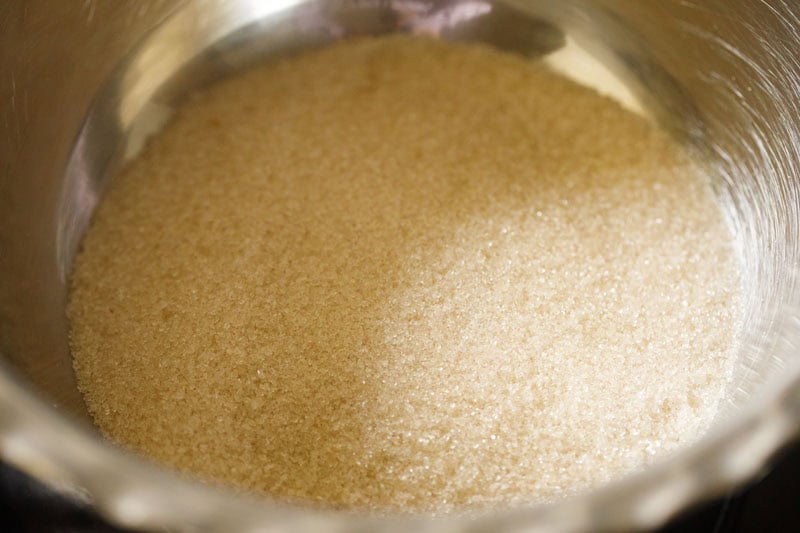
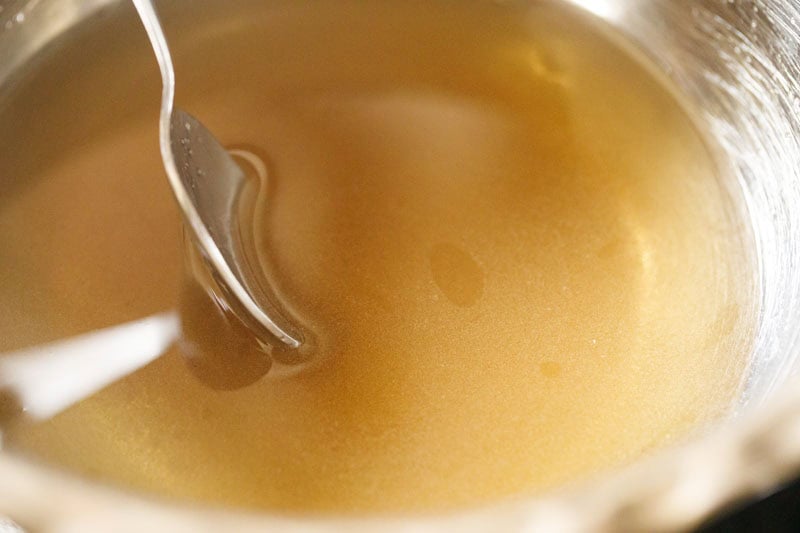
11. Add ½ cup water. Stir to mix. Place the pan on low heat.
Using a spoon, stir the sugar so that it dissolves. If there are impurities in the sugar syrup, then add 1 tablespoon milk. Remove the scum that forms at the top.
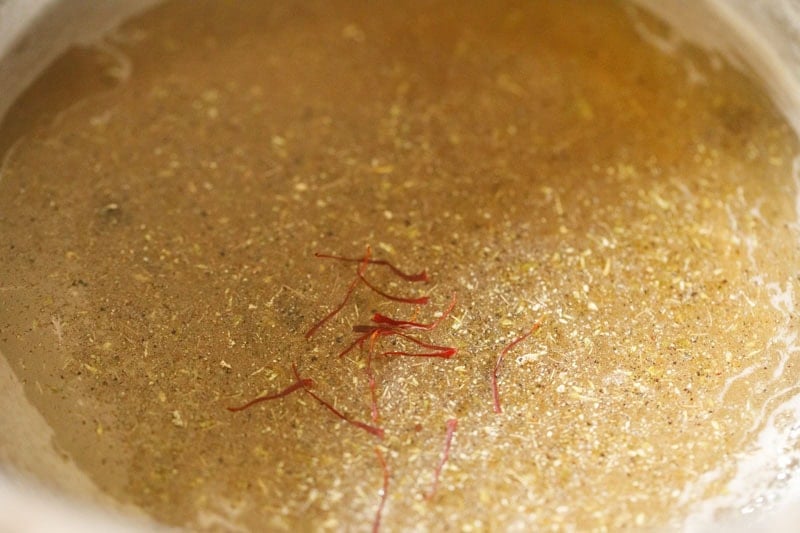
12. When all the sugar has dissolved, add ½ to 1 teaspoon cardamom powder.
Add 10 to 12 saffron strands. Stir again.
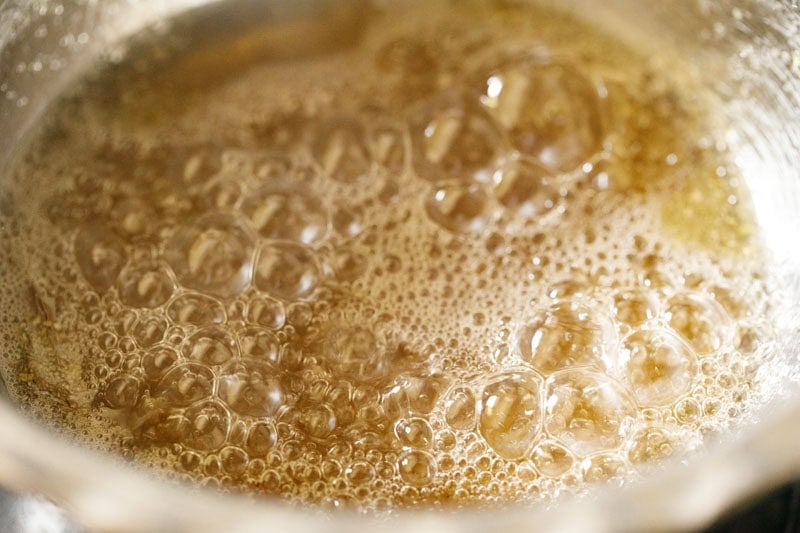
13. Simmer the sugar solution on low to medium-low heat. Stir occasionally. To avoid crystallization of sugar, you can add a few drops of lemon juice.
Simmer till the syrup becomes sticky. Stop when you get ½-string or 1-string consistency in the syrup.
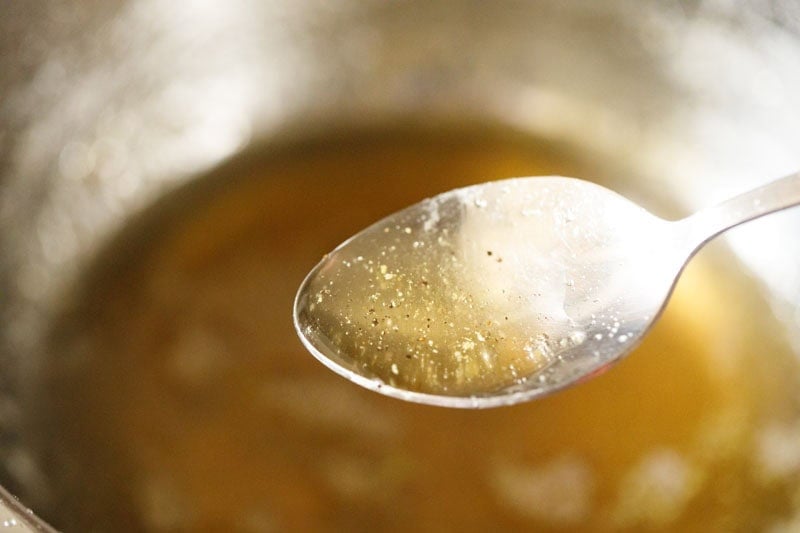
14. To check the consistency, cool some syrup in a spoon and touch it. It should feel sticky. When the syrup becomes sticky, then switch off the heat.
Shape & Fry
15. Before frying the balushahi, heat oil or ghee in a kadai or pan on medium heat. Use a kadai or wok with handles at the sides.
Pinch small to medium sized balls from the dough. Roll them gently and lightly between your palms.
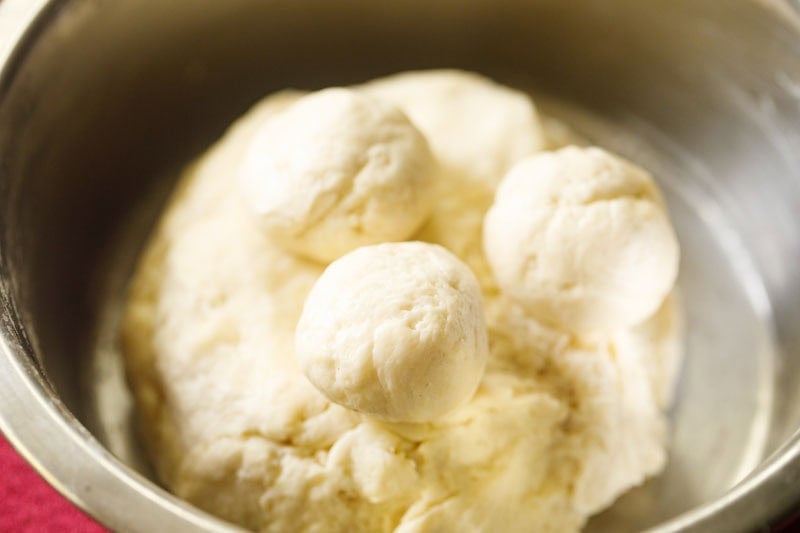
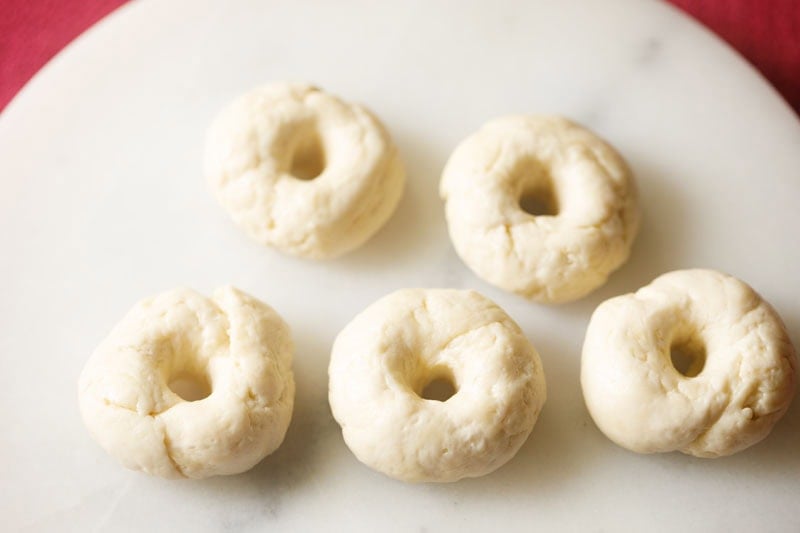
16. Then, make an indent or depression in them with your thumb or finger. You can flatten them slightly if you want. Cover remaining dough and keep aside.
Make 5 to 6 badusha depending on the size of the kadai/wok you will use for frying.
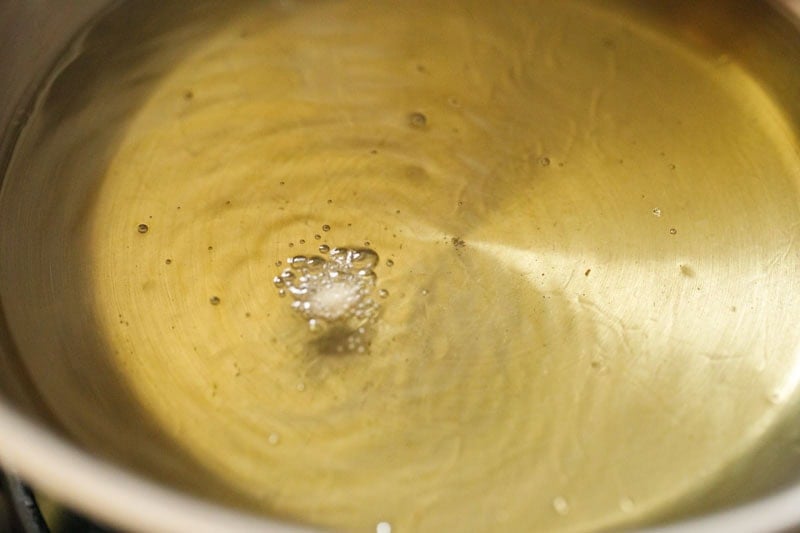
17. Test a tiny piece of the dough in the hot oil. It should come up gradually and steadily.
18. Remove the kadai from the stovetop and keep it on the kitchen tabletop. Gently begin to place the balushahis in the hot oil.
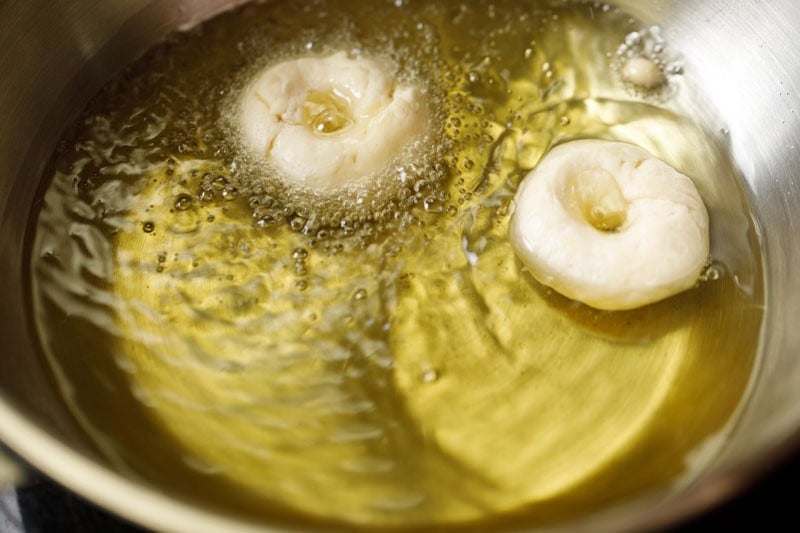
19. Be careful when you are adding badusha in hot oil. Add 5 to 7 pieces depending on the size of kadai. The pieces will expand in oil while frying. So, make sure not to over crowd the kadai or pan.
Return the kadai to the stovetop and place it on low to medium-low heat.
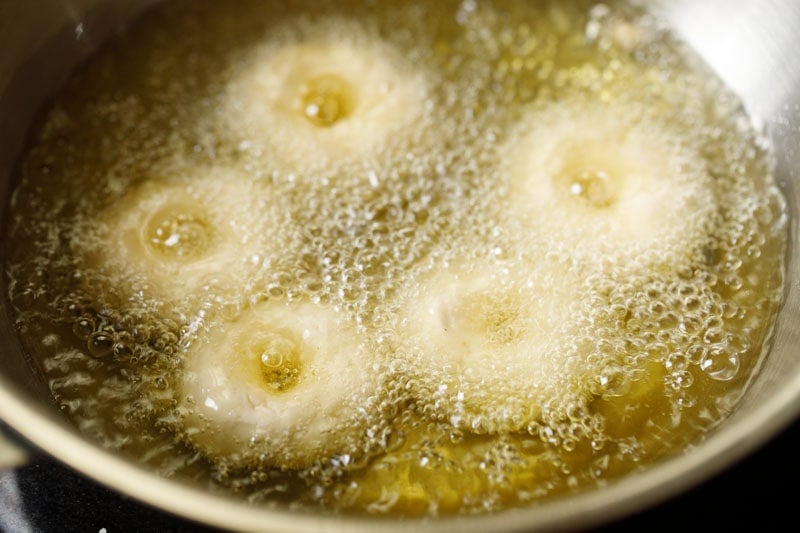
20. Begin to fry Badusha on low to medium-low heat.
When one side firms up and is light golden, turn over each Balushahi.
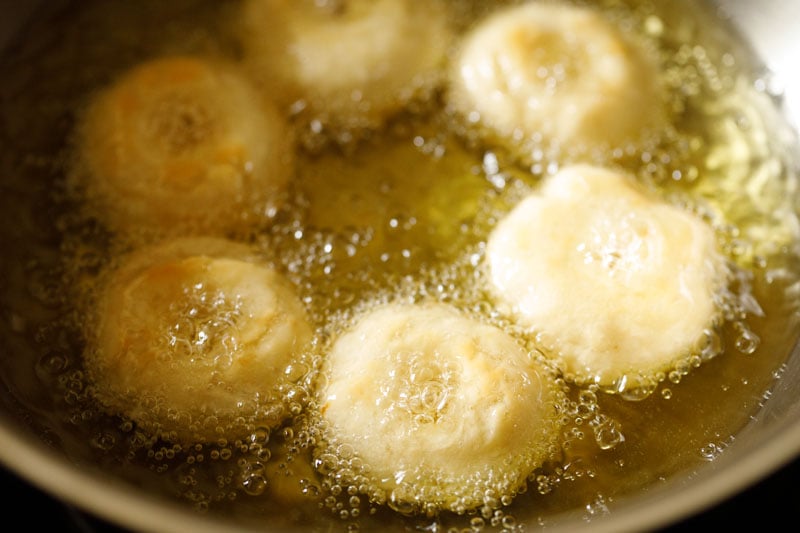
21. Keep on turning them at intervals and frying them on low to medium-low heat.
Frying balushahi on low heat takes about 12 to 15 minutes. This will depend on the size and thickness of the kadai and the intensity of the flame.
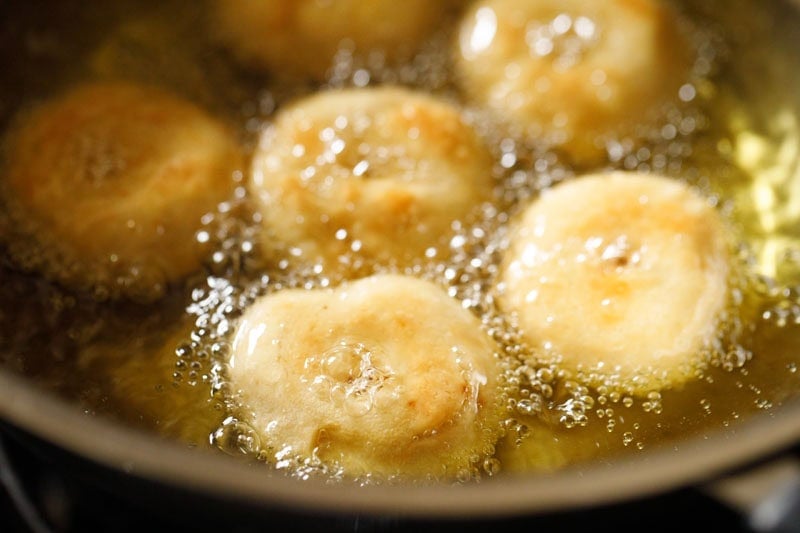
22. It took me 14 minutes to fry each batch of 6 Balushahi.
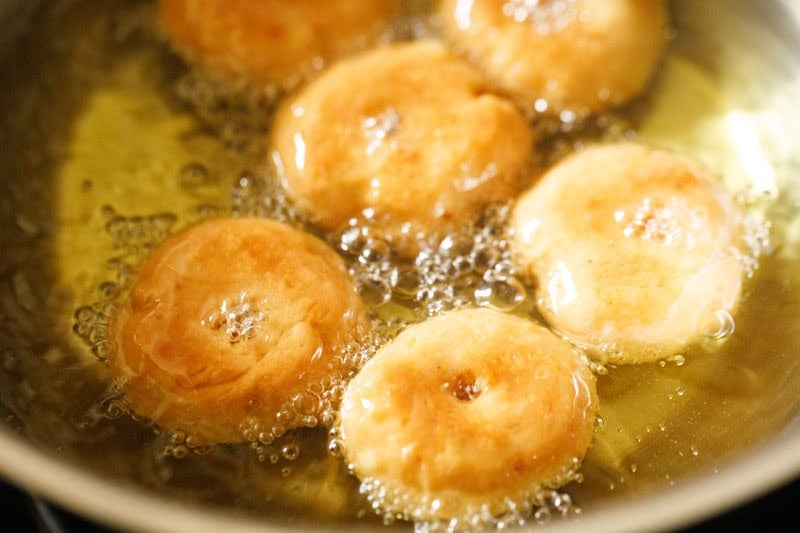
23. Fry Badusha till golden and crisp.
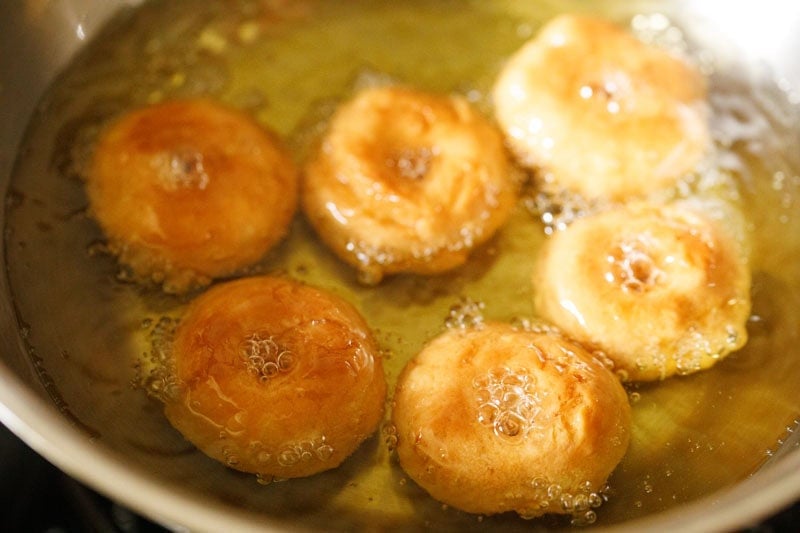
24. Using a slotted spoon, remove the fried pieces, draining the extra oil in the kadai/wok or pan.
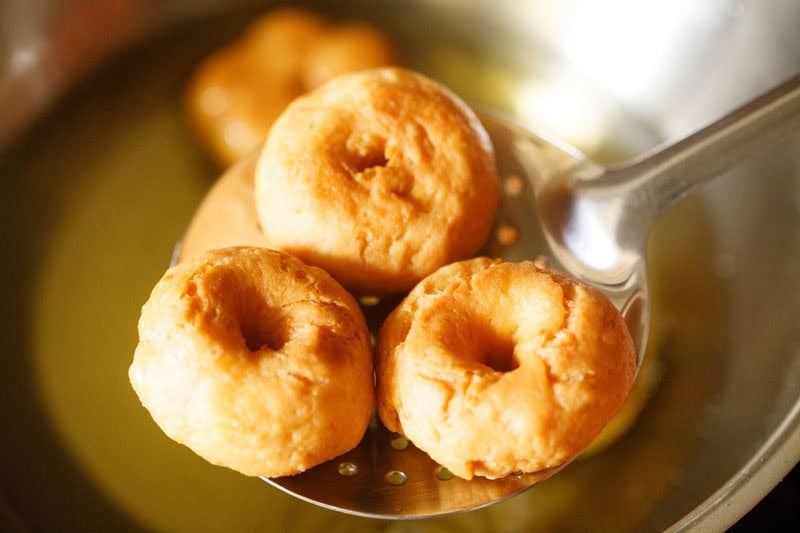
25. Place the fried balushahi on kitchen paper towels. While the first batch is frying, you can shape more balushahi from the dough and keep them ready for the next round.
Keep them covered with a kitchen napkin. Then, fry the second batch in the same way the first batch was fried.
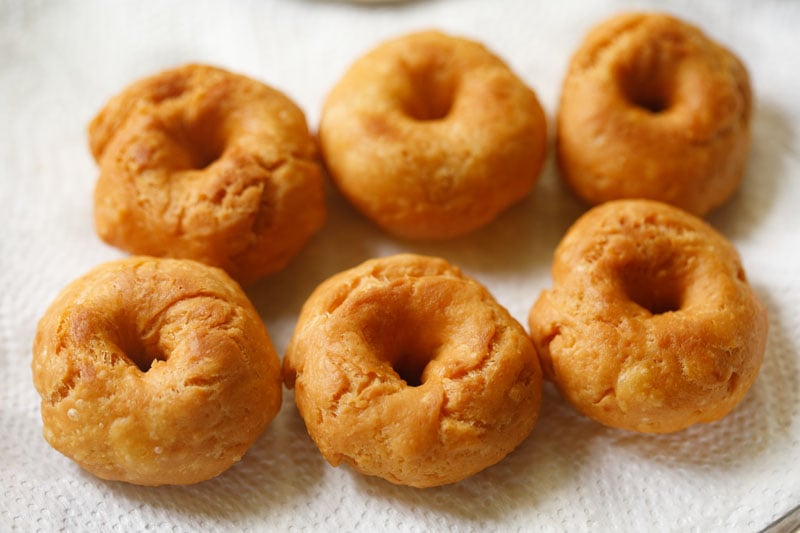
Make Balushahi
26. After a couple of minutes of draining on paper towels, when they are still hot, place the fried badusha in the hot or warm sugar syrup.
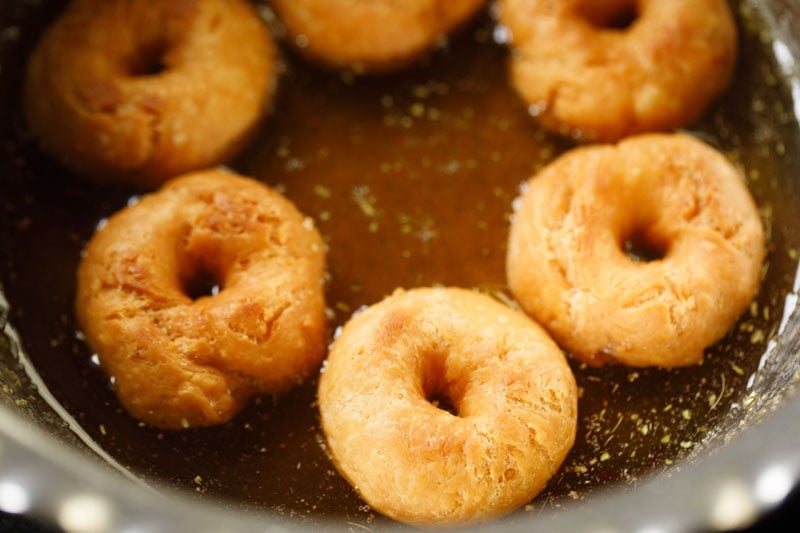
27. With spoon or tongs, turn over each Badusha, so that both sides are coated with sugar syrup. Let these soak in the sugar syrup for about 14 to 15 minutes.
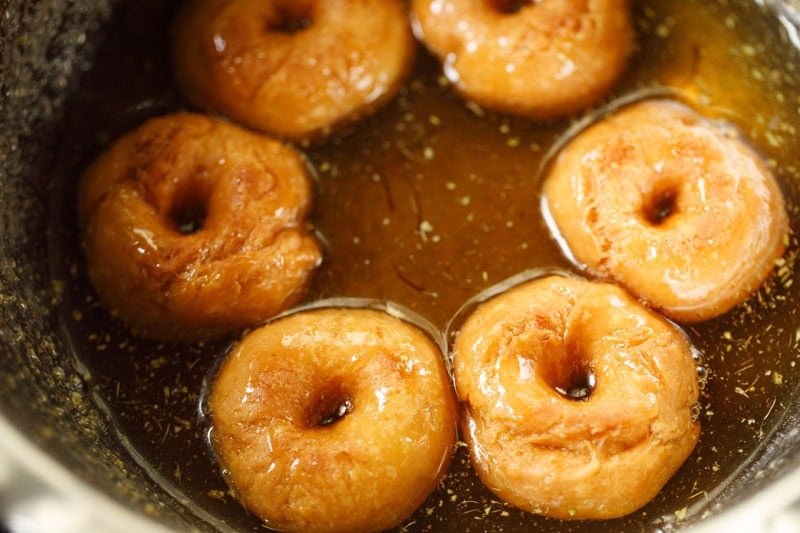
28. After 14 to 15 minutes, using tongs or spoon, lift each sweet and place it in a serving tray or bowl.
In the same sugar syrup, add the second batch. After the sweets cool completely, the sugar will crystallize on top.
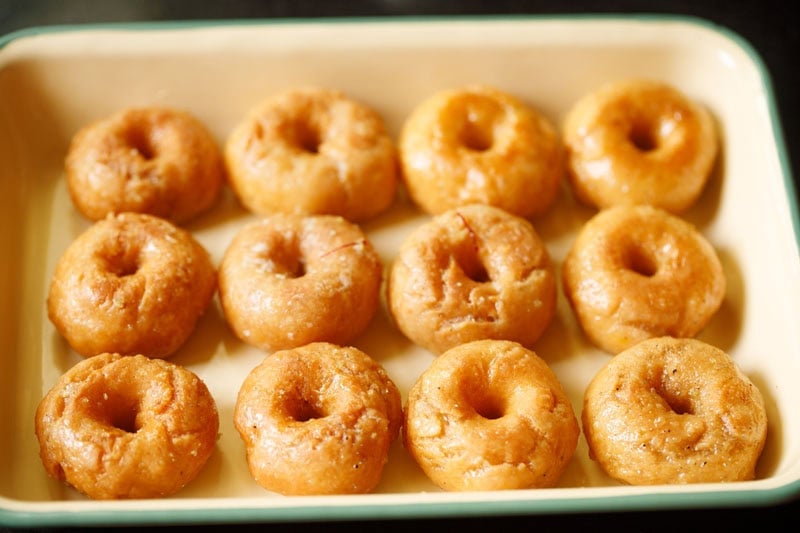
29. Sprinkle 1 to 2 tablespoons chopped pistachios all over. You can even sprinkle some saffron strands, rose petals and cardamom powder, if you want.
Gently press the pistachios so that they stick to the sugar syrup on the sweet.
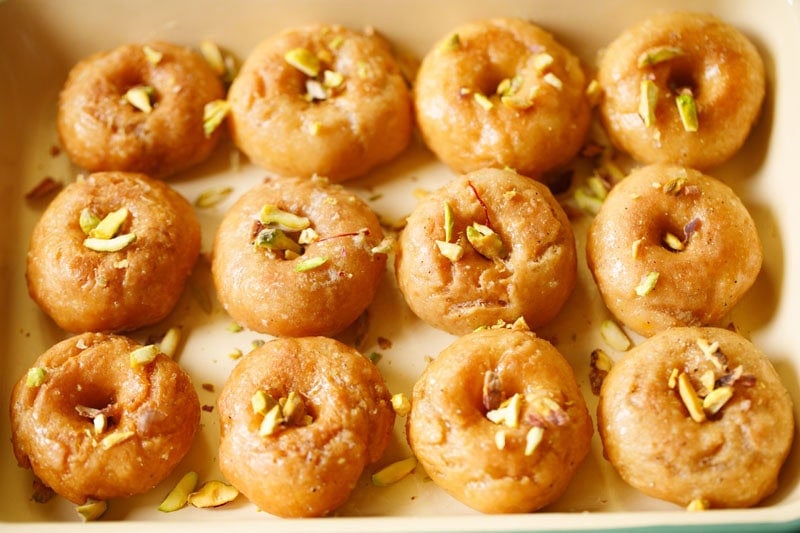
30. Fry the remaining badhusha in the same way and then soak them in the sugar syrup. If the sugar syrup crystallizes, then add 2 to 3 tablespoons of water and heat the syrup again on low heat.
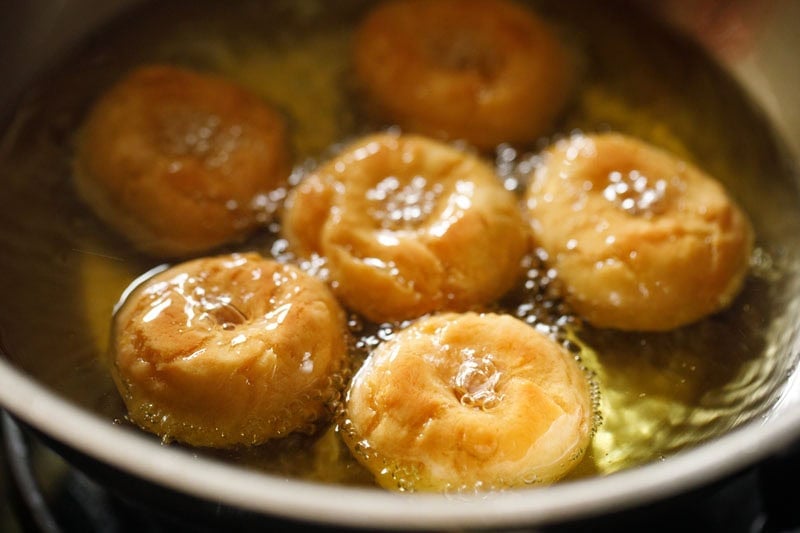
31. Serve Balushahi. Leftovers can be stored in an air-tight jar or container at room temperature for about 5 to 6 days.
Serving & Storage
Balushahi tastes best once the sugar syrup has fully set and coated the sweet. Serve it at room temperature. It works well as a festive sweet, with tea or coffee, or as part of a dessert spread during celebrations.
Store badusha in an airtight container at room temperature. It keeps well for about 5 to 6 days without refrigeration. Avoid refrigerating, as moisture can affect the texture and make the outer layer soft.
Troubleshooting Tips
- Consistency of Yogurt: The amount of liquid needed depends on how thick or thin your yogurt is. If the curd has more whey, add very little water while bringing the dough together. Always add liquid gradually.
- Handle the Dough Gently: Do not knead the dough like roti or bread dough. Use light hands and gently bring everything together to form a soft dough. Overworking the dough will affect the final texture of the Balushahi.
- Sticky Dough Fix: If the dough feels sticky, sprinkle in 1 to 2 tablespoons of all-purpose flour. Mix lightly until it just comes together. Avoid adding too much flour, as this can make the texture dense.
- Cleaning the Sugar Syrup: If you notice impurities in the sugar syrup, add 1 tablespoon of milk. The impurities will rise to the top as scum, which can be easily removed.
- Prevent Sugar Crystallization: Add a few drops of lemon juice to the sugar syrup while cooking. This helps prevent crystallization and keeps the syrup smooth.
- Correct Sugar Syrup Stage: Cook the sugar syrup until it reaches a sticky consistency with a half-string or one-string stage. This is important for getting the right coating and texture.
- Frying Time Matters: The frying time depends on the size and thickness of your kadai or pan, as well as the flame intensity. Always fry on low to medium-low heat so the Balushahi cooks evenly from inside.
- Garnishing Options: You can garnish the Balushahi with chopped nuts of your choice. Saffron strands, dried rose petals, or a light sprinkle of green cardamom powder also work well.
- Fixing Crystallized Syrup: If the sugar syrup starts crystallizing while frying multiple batches, add 2 to 3 tablespoons of water. Reheat it gently on low heat until the syrup becomes smooth again.
Cooking Queries
Can I use whole wheat flour (atta) instead of all-purpose (maida)?
Balushahi cannot be made successfully using only whole wheat flour, as it can turn chewy or hard. A better option is to use a mix of all-purpose flour and whole wheat flour in equal proportions. This keeps the texture closer to the traditional version while adding some whole wheat.
Do we have to use both baking powder and baking soda?
You can skip the baking soda if needed. In that case, add about 3 extra pinches of baking powder to compensate. This helps maintain the correct texture and rise.
Why did my balushahi become soggy?
This usually happens when the sugar syrup is too thin. The syrup should feel sticky and reach at least a half-string consistency, similar to Gulab Jamun syrup. If the syrup is watery, the Balushahi absorbs too much of it and becomes soft and gooey instead of staying crisp outside.
Step by Step Photo Guide Above
Balushahi Recipe | Badusha Sweet
Ingredients
For balushahi dough
- 2 cups or (250 grams) all-purpose flour (maida)
- ¼ cup or (60 grams) ghee – in a semi-solid state
- ¼ cup or (60 grams) curd or yogurt, chilled
- 8 to 9 tablespoons cold water – for kneading or as required
- 1 pinch salt
- 1 pinch baking soda
- ½ teaspoon baking powder
For sugar syrup
- 1 heaped cup or (200 grams) sugar
- ½ cup water
- ½ to 1 teaspoon cardamom powder or add as required
- 10 to 12 saffron strands
- 2 to 3 drops lemon juice – optional
Other ingredient
- oil or ghee for deep frying, as required
For garnish
- 1 to 2 tablespoons pistachios – chopped, or use almonds or preferred nuts
Instructions
Creaming ghee
- Take ghee in a bowl.
- With a spoon or spatula or a small wired whisk, beat the ghee till it is smooth, light and fluffy. Its color will also lighten.
- Add the chilled fresh curd (dahi).
- Again with a spoon or spatula or a small wired whisk, mix and whip the curd with the creamed ghee.
- Cream till light and smooth.
Making badusha dough
- Now using a sieve, take the all-purpose flour in it. Place it on the bowl itself. You can also sift the flour separately in a plate or tray.
- Add salt, baking soda and baking powder.
- Sift the dry ingredients directly in the creamed ghee and curd.
- Mix the flour lightly with the creamed ghee and curd using a spoon or spatula.
- Sprinkle some cold water in parts and begin to mix it. Overall you can use 8 to 9 tablespoons cold water. Add 2 to 3 tablespoons water at a time and mix.
- Mix and combine everything to form a soft dough. Do not knead. Just mix and bring everything together to a dough. In case the dough becomes sticky, then add 1 to 2 tablespoons flour. Use light pressure from hands and form a dough. At this point, do not knead heavily or if required then knead very lightly.
- Cover the dough and keep aside for 15 minutes.
Making sugar syrup
- Meanwhile make sugar syrup. While frying balushahi also you can make sugar syrup. Take sugar in a pan or bowl. Use a bowl or pan with more surface area so that the balushahi can get enough space for soaking.
- Add water and mix.
- Place the pan on a low heat.
- Using a spoon stir the sugar so that it dissolves. If there are impurities in the sugar syrup, then add 1 tablespoon milk. Remove the scum that forms at the top.
- When all the sugar has dissolved, add green cardamom powder. Then add saffron strands. Stir and mix again.
- Simmer the sugar solution on a low to medium-low heat. Do stir occasionally. To avoid crystallization of sugar, you can add some drops of lemon juice.
- Simmer till the syrup becomes sticky or you get ½ string consistency in the syrup. You can even cook it to 1 string consistency.
- The sugar syrup should be sticky. So cool syrup in a spoon and touch it and it should feels sticky. When the syrup becomes sticky, then switch off heat.
Frying balushahi
- Before frying balushahi you can begin to heat oil in a kadai or pan on a medium heat. You can also use ghee instead of oil to fry balushahi.Do use a kadai with handles at the sides.
- Pinch small to medium-sized balls from the dough. Roll them gently and lightly between your palms.
- Then make an indent or depression in them with your thumb or finger. You can flatten them slightly if you want. Make 5 to 6 badhusha depending on the size of kadai.Cover the remaining dough and keep aside.
- Check a tiny piece of the badhusha dough in the medium hot oil. It should come up gradually and steadily.
- Now lift the kadai from stove top and keep it on the kitchen table top. Gently begin to place balushahi in the hot oil.
- Be careful when you are keeping the balushahi in hot oil. Add 5 to 6 or 7 balushahi depending on the size of kadai. The badusha will expand in oil while frying, so make sure not to over crowd the kadai or pan.
- Now lift the kadai and place it again on a low heat.
- Begin to fry badusha on a low heat.
- When one side firms up and is light golden, turn over each badusha.
- Keep on turning them over at intervals and frying them on a low heat.
- Frying balushahi on a low flame takes about 12 to 15 minutes. This will depend on the size, thickness of kadai and the intensity of flame. It took me 14 minutes to fry each batch of 6 balushahi.
- Fry till golden and crisp.
- Using a slotted spoon remove them draining the extra oil.
- Place them on kitchen paper towels. When the first batch is getting fried, you can make balushahi from the dough and keep them ready to fry in the second round. Keep the shaped and prepared balushahi covered with a kitchen napkin. Then fry the second batch of balushahi in the same way.
Making balushahi
- After a couple of minutes, when fried balushahi are still hot, place them in the hot or warm sugar syrup.
- With spoon or tongs turn over each badusha, so that both sides are coated with sugar syrup. Let these badusha soak in the sugar syrup for about 14 to 15 minutes.
- After 14 to 15 minutes, using tongs or spoon, lift each balushahi and place it in a serving tray or bowl. In the same sugar syrup, now add the second batch of balushahi.
- Sprinkle 1 to 2 tablespoons of pistachios all over. You can even sprinkle some saffron strand, rose petals and cardamom powder if you want. Press the pistachios, so that they stick to the sugar syrup on the badusha.
- Fry the remaining badusha and then soak them in the sugar syrup. In case if sugar syrup crystallizes then add 2 to 3 tablespoons water and warm or heat the syrup again on a low flame.
- Serve Balushahi as a sweet. Leftovers can be easily stored in an air-tight jar or container at room temperature for about 5 to 6 days.
Dassana’s Notes
- Remember not to knead the dough. Gently mix with a spoon and form to a evenly mixed dough.
- Ensure that the ghee is grainy and in a semi-solid state. It should not be melted, runny or cold and solidified.
- Follow the frying method as mentioned in the recipe.
- The recipe can be scaled to make a smaller portion or a big batch of balushahi.
- The approximate nutrition info is for one balushahi made from the recipe.
Nutrition
Balushahi recipe from the archives was first published on June 2018.
Really superb mam. I tried it came very nicely. Texture & taste are good.
Thank you very much mam. Take care. Good day and good luck.
Thank you so much for the kind feedback. I’m glad the balushahi turned out well and that you liked the texture and taste. Happy cooking!
Hi I love your recipes and every time I make I get compliments from friends. Thanks to you.
My question is can we use butter instead of ghee? If so please mention the quantity I can replace with ghee in this recipe.
Hi Suneetha, thank you so much for your kind words. I am glad the recipes work well for you.
For balushahi, ghee gives the right texture and flavor. I have not tested this recipe with butter, so I am not sure how it will turn out. I would recommend sticking to ghee for best results.
Tried this recipe today and the Balushahi’s turned out just perfect! Just the right amount of crunchy, sweet, flavourful, overall just a superb treat!
Thank you for sharing your feedback. Happy to hear the Balushahi turned out so well for you.
It’s easy n tasty too. The family members love it. Thank you for the recipe.
So glad to hear that your family enjoyed it. Happy that the recipe turned out well for you. Thanks for sharing your feedback.
I tried it. It came out like store -bought ones, nice and flaky.
One tip I followed was that I kept the prepared sugar syrup in a hot water bath to ensure that the syrup seeps through, to the centre.
Lovely! Thanks for letting me know. Great tip. I do the same when making Indian sweets like boondi ladoo.
Amazing recipe. I realised that sugar syrup consistency is very important after reading other reviews and your reply to that challenge.
I am making these and have lost count how of many times and functions I made these for. Bless you loads
Great! Thanks for sharing your honest feedback. Agree, the sugar syrup consistency is very important here. Thanks for the rating too.
Very well explained. Will definitely try this recipe!
Thanks and I hope you like the recipe.
Hi i made your recipe and they came out awesome. All your recipes are so good. Thanks for the recipe. Can you please give recipe for khaja
Thank you Sridevi. I have noted down your recipe request and will add in some time.
Tried the same… Awesome taste
Thanks for the feedback and rating.
Hi. I tried the recipe. It turned out very well. Thanks for sharing. Much appreciated
Great to know and thanks for sharing the feedback. Welcome.
Hello Maam
I am a great fan of your recipes ..i am planning to make badushas..i just wanted to know if we can make it using whole wheat flour too..also should we use both baking soda and baking powder??
nandhini, you can make badusha with whole wheat flour. you can skip baking soda. just add 3 pinches more of baking powder if not using baking soda.
Mam phle apka cooking app tha bt ab app ni show hota h apka app install krna cahti hu
rachna, we had the app earlier, but we removed it more than a year back. now all the recipes are listed on the website.
Hello Ma’am, i have tried ur recipe of balu shahi nd it turned out to be really good. The taste was so good.. its texture, the size everything was good. BUT the balu shahis, later on would become gooey. It didn’t remain the same crispy which it was earlier. I have followed each nd every step which u mentioned here. Can u plz tell me where i would have gone wrong?
thanks sakshi for the feedback. from your comment it looks like the balushahi texture itself was good when fried. problem has happened with the sugar syrup. looks like 1/2 string consistency was not formed. it must have been a liquidy sugar solution. stickiness should be felt. the sugar syrup should not feel watery. looks like the sugar syrup was not sticky or with 1/2 string consistency and thus the balushahi has absorbed the sugar syrup making it soft and gooey. must be like gulab jamun texture. thats what i am guessing. i hope these tips help you.