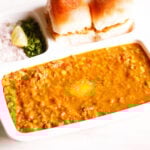
Pav Bhaji Recipe (Mumbai Style)
Pav Bhaji is a Mumbai street food made with a spiced mashed vegetable curry served with butter-toasted pav buns. It is garnished with chopped onions, lemon wedges, and fresh coriander. This recipe follows the traditional stovetop method used for making street-style pav bhaji at home.
Servings: 5
Calories: 531kcal
Ingredients
For Bhaji (Vegetable Gravy)
- 3 medium-sized or (250 grams) potatoes
- 1 to 1.25 cups or (120 to 130) grams cauliflower - chopped
- 1 cup carrot - chopped
- 1 cup green peas - fresh or frozen
- ⅓ cup french beans - chopped or 12 to 14 french beans, optional
- 2.25 to 2.5 cups water - for pressure cooking veggies
Other Ingredients
- 3 tablespoons butter - salted or unsalted
- 1 teaspoon cumin seeds
- ½ cup or 1 medium onion - finely chopped
- 2 teaspoons ginger garlic paste or 1.5 inch ginger & 5 to 6 medium garlic cloves crushed in a mortar
- 1 teaspoon green chilies - chopped or serrano peppers
- ½ cup capsicum - finely chopped, (green bell pepper)
- 2 cups tomatoes - finely chopped (tightly packed)
- 1 teaspoon turmeric powder (ground turmeric)
- 1 teaspoon kashmiri chilli powder or freshly ground 3 to 4 soaked dry kashmiri red chilies
- 2 to 3 tablespoons Pav Bhaji Masala - add as required
- 1.5 to 2 cups water or the stock in which the veggies were cooked, add as needed
- salt as required
Accompaniments
- 12 pav (dinner rolls) or as required
- 3 to 4 tablespoons butter - for roasting pav
- 1 lemon or lime, chopped in wedges
- 1 onion - medium to large, finely chopped
- 3 to 4 tablespoons coriander leaves - chopped, for garnish
- 2 to 3 tablespoons butter - for topping, add more for a richer taste
Instructions
Cooking Vegetables
- Rinse, peel and chop the veggies. You will need 1 cup chopped cauliflower, 1 cup chopped carrot, 3 medium sized potatoes (chopped) and ⅓ cup chopped french beans. You can also add veggies of your choice.
- Add all the above chopped veggies in a 2 litre pressure cooker. Also add 1 cup green peas (fresh or frozen).
- Add 2.25 to 2.5 cups water.
- Pressure cook the veggies for 5 to 6 whistles or for about 12 minutes on medium flame.
- When the pressure settles down on its own, open the cooker and check if the veggies are cooked well. You can even steam or cook the veggies in a pan. The vegetables have be to cooked completely.
Sautéing Onions
- Heat a pan or kadai. You can also use a large tawa. Add 2 to 3 tablespoons butter. You can use amul butter or any brand of butter. Butter can be salted or unsalted.
- As soon as the butter melts, add 1 teaspoon cumin seeds.
- Let the cumin seeds crackle and change their color.
- Then add ½ cup finely chopped onions.
- Mix onions with the butter and saute on a low to medium flame till the onions translucent.
- Then add 2 teaspoons ginger-garlic paste. You can also crush 1.5 inch ginger and 5 to 6 medium garlic cloves in a mortar-pestle.
- Mix and saute till the raw aroma of both ginger and garlic goes away.
- Then add chopped green chilies. Mix well.
Sautéing Tomatoes
- Now add 2 cups finely chopped tomatoes. Mix very well.
- Then begin to sauté tomatoes on a low to medium heat.
- Sauté till the tomatoes become soft and mushy and you see butter releasing from the sides. This takes about 6 to 7 minutes on a low to medium flame. If the tomatoes start sticking to the pan, then sprinkle some water and mix well.
- When the tomatoes have softened, then add ½ cup finely chopped capsicum (green bell pepper). Sauté for 2 to 3 minutes. If the mixture starts sticking to the pan, then you can sprinkle some water. You don’t need to cook the capsicum till very soft. A little crunch is alright.
Sautéing Ground Spices
- Add 1 teaspoon turmeric powder and 1 teaspoon kashmiri red chilli powder.
- Then add 2 to 3 tablespoons pav bhaji masala. mix very well.
Adding Cooked Vegetables
- Add the cooked veggies. Add all of the stock or water from the pressure cooker in which the veggies were cooked. Mix very well.
- Then season with salt as per taste.
- With a potato masher, begin to mash the veggies directly in the pan.
- You can mash the veggies less or more according to the consistency you want. For a smooth mixture mash more. For a chunky bhaji, mash less.
Making Pav Bhaji
- Keep on stirring occasionally and let the bhaji simmer for 8 to 10 minutes.
- If the bhaji looks dry and then add some more water. The consistency is neither very thick nor thin.
- Do stir often so that the bhaji does not stick to the pan. When the pav bhaji simmers to the desired consistency, check the taste. Add salt, pav bhaji masala, red chili powder or butter if required.
- When the bhaji is simmering, you can pan-fry or toast the pav so that you serve the pav with hot bhaji.
- Once the bhaji is done, opt to add 2 tablespoons of chopped coriander leaves if you prefer.
Toasting Pav (Dinner Rolls)
- First slice each pav and set aside.
- Heat a skillet or a shallow frying pan. Keep the flame to a low and then add butter.
- When the butter begins to melt, add a bit of pav bhaji masala. You can skip this masala if you want.
- Mix the pav bhaji masala very well with a spoon or spatula.
- Then place the pav on the butter.
- Rotate the pav all over the melted butter so that the pav absorbs the butter.
- Now turn over the pav and rotate them on the tawa so that the second side absorbs the butter. Add more butter if required.
- You can turn over and toast them more if required. Then remove in a plate and keep aside.
Serving Suggestions
- Take the bhaji in a serving plate or a bowl. Top it up with one to two cubes of butter. You can add more butter, if you like.
- Place a side of finely chopped onions, lemon wedges and finely chopped coriander leaves. Or you can sprinkle onions, coriander leaves and lemon juice directly on the bhaji.
- Serve bhaji with the lightly pan fried and buttered pav. Pav Bhaji is topped with chopped onions, coriander leaves and the lime or lemon juice is squeezed on the bhaji while eating.
Storage & Leftovers
- Refrigerate only the bhaji (vegetable gravy without any toppings of onions, coriander and lemon juice) in the refrigerator for 1 to 2 days.
- Reheat in a small pan. If the bhaji looks thick, mix in some water to loosen it a bit and reheat.
Video
Notes
- Which vegetables to add? Common vegetables used in pav bhaji include potatoes, cauliflower, peas, carrots, capsicum, and french beans. Street-style Mumbai pav bhaji usually skips carrots, but you can add them at home. Keep cauliflower in lesser proportion than the other vegetables. Avoid using okra, eggplant, radish, corn, yam, or leafy greens. While not traditional, veggies like cabbage, broccoli, zucchini, or pumpkin can also be used for variation.
- Cooking veggies: In the recipe I have used a pressure cooker for cooking the vegetables. You can also steam or cook them in a pan on the stove-top.
- Taste and Flavor: Depending on the quantity of these vegetables, the final taste and color of the bhaji will be different. Example, if you add more carrots, the bhaji will have a mild sweeter taste. However, do add capsicum (green bell pepper) as it gives a really good taste to the bhaji.
- Spicing: The spice powders can be easily adjusted to suit your taste. So add them less or more according to your preferences.
- Vegan option: If you don’t want to add butter, then you can also make the recipe with a neutral tasting oil or a vegan butter.
- Gluten-free options: Make the bhaji as is following the recipe and serve with gluten-free dinner rolls or bread.
- Pav Bhaji Masala: Use good quality pav bhaji masala or make it at home following my recipe of Pav Bhaji Masala
- Do not have pav bhaji masala? Not to worry. Try this option and it works so well, that no one will know the difference. Swap this masala with 2 teaspoons garam masala and 1 teaspoon amchur (dry mango powder).
Nutrition
Calories: 531kcal | Carbohydrates: 88g | Protein: 16g | Fat: 14g | Saturated Fat: 6g | Trans Fat: 1g | Cholesterol: 18mg | Sodium: 896mg | Potassium: 1166mg | Fiber: 13g | Sugar: 10g | Vitamin A: 5459IU | Vitamin B1 (Thiamine): 1mg | Vitamin B2 (Riboflavin): 1mg | Vitamin B3 (Niacin): 7mg | Vitamin B6: 1mg | Vitamin B12: 1µg | Vitamin C: 84mg | Vitamin D: 1µg | Vitamin E: 1mg | Vitamin K: 28µg | Calcium: 255mg | Vitamin B9 (Folate): 141µg | Iron: 6mg | Magnesium: 102mg | Phosphorus: 270mg | Zinc: 2mg
