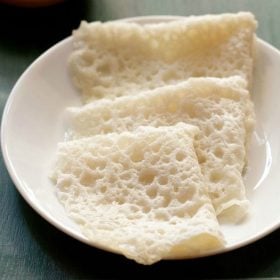
Neer Dosa (Mangalorean Rice Crepes)
Neer Dosa are soft, thin and lacy crepes made with a simple batter of rice, water and salt. This quick recipe does not need fermentation and yields light, gluten-free and vegan crepes that are easy to make.
Servings: 18 Neer Dosa
Calories: 55kcal
Ingredients
- 1 cup or (200 grams) rice – surti kolam or parmal rice or sona masuri
- water as required for soaking rice
- ¼ to ⅓ cup water to grind or blend
- 1.5 to 2 cups water to be added later
- salt as required
- oil as required
Instructions
Making neer dosa batter
- Rinse the rice grains a few times. Soak them in enough water for 4 to 5 hours or overnight.
- Later drain the soaked rice and add them in a blender or a mixer-grinder.
- Add water for grinding or blending the rice. Do not add a lot of water as then you won't be able to grind the rice finely.
- Grind to a smooth and fine batter and then transfer the batter to another bowl or pan.
- Add water again to get a thin, flowing, runny and watery consistency. I added 2 cups of water.
- The addition of water depends on the quality and kind of rice. So add water as needed.
- Then add salt as required and mix well.
Making neer dosa
- Heat a cast iron pan or a non stick pan on medium to medium-high heat. Drizzle ½ teaspoon of oil.
- Just spread the oil all over with a spoon or small piece of cotton kitchen napkin or with half of an onion.
- Stir the batter in the bowl with the ladle. Then fill the ladle with the batter.
- Pour the batter moving outwards to inside like the way we do for rava dosa.
- Fill in the large gaps too with some of the batter.
- Cover with a lid and cook the dosa till the batter firms up. Don't brown it or flip it. The edges will also separate when the dosa is cooked. You can drizzle a bit of oil on the top of neer dosa if you prefer.
- Make a triangular fold on the tawa itself.
- Then remove the dosa and place it in a plate. Make neer dosa this way and place them separately without them touching each other in a plate.
- Serve neer dosa hot or warm with coconut chutney, veg sagu, veg korma.
Notes
- Batter consistency: The batter should be thin, watery and easy to pour. If thick, add water. If too thin, add a little rice flour.
- Heat the pan well: Cook on a medium to medium-high heat. A well-heated tawa helps get the lacy texture.
- Use a seasoned pan: A well-seasoned cast iron tawa works best. You can also use a non-stick pan.
- Stir the batter: Stir before making each dosa as the rice settles at the bottom.
- Adding coconut: Add 2 to 3 tablespoons grated coconut while grinding for extra flavor.
- Rice options: Use sona masuri, surti kolam, ponni or basmati rice.
- Storage: Do not stack while hot as they may stick. Once cooled, stack or place parchment between each dosa.
- Serving: Neer dosa tastes best hot, but remains soft even after cooling.
Nutrition
Calories: 55kcal | Carbohydrates: 8g | Protein: 1g | Fat: 2g | Saturated Fat: 1g | Polyunsaturated Fat: 1g | Monounsaturated Fat: 2g | Sodium: 68mg | Potassium: 12mg | Fiber: 1g | Sugar: 1g | Vitamin B1 (Thiamine): 1mg | Vitamin B2 (Riboflavin): 1mg | Vitamin B3 (Niacin): 1mg | Vitamin B6: 1mg | Vitamin E: 1mg | Vitamin K: 1µg | Calcium: 4mg | Vitamin B9 (Folate): 1µg | Iron: 1mg | Magnesium: 3mg | Phosphorus: 12mg | Zinc: 1mg
