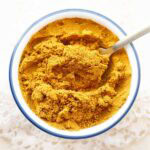
Homemade Sabji Masala Recipe
This North Indian-style Sabji Masala is made with a mix of roasted coriander, cumin, fennel, and aromatic spices. It adds gentle warmth and color to vegetables and paneer dishes. The flavor is full-bodied yet not overpowering. Ideal for everyday Indian cooking. Use it as an alternative to garam masala when you want balanced flavor without intense heat or aroma.
Servings: 1 small jar
Calories: 264kcal
Ingredients
Whole Spices (To Roast)
- 4 tablespoons (20 grams) coriander seeds
- 2 tablespoons (14 grams) cumin seeds
- 1 teaspoon (3 grams) black peppercorns
- 1 tablespoon (7 grams) fennel seeds
- 6 cloves
- 4 green cardamoms
- 2 black cardamoms
- 2 inches cinnamon stick
- 2 tej patta (Indian bay leaf)
- 1 blade mace (javitri), optional
- 5 grams or 3 kashmiri red chillies
- 1 teaspoon (2 grams) caraway seeds (shahi jeera)
- ½ teaspoon (2 grams) mustard seeds – optional for slight pungency
- ½ teaspoon nutmeg – crushed
Powdered Spices (To Mix)
- 1 teaspoon dry ginger powder (saunth powder)
- 2 teaspoons (4 grams) dry mango powder (amchur)
- 1 teaspoon (3 grams) turmeric powder
- ¼ teaspoon asafoetida (hing)
- 1 teaspoon garlic powder – or use dried garlic flakes while roasting, optional
- 1 teaspoon (7 grams) pink salt or edible rock salt or regular salt – optional
Instructions
Roast The Spices
- Dry roast all the whole spices listed above over low to medium-low heat in a heavy kadai or a frying pan for 3 to 4 minutes until aromatic. Do not brown the spices.
- Remove pan from stovetop and place on the kitchen countertop.
- Add all the ground spices listed above including salt. Mix well. The ground spices will cook with the residue heat of the pan.
Make Sabji Masala
- Cool the spices at room temperature.
- Then grind them into a fine powder using a spice grinder or high-speed blender or a sturdy mixer-grinder.
Storage Suggestions
- Store Sabji Masala in a glass jar in a cool, dark place. Use within 1 month for best aroma and flavor.
- In a humid weather, it's best to store the Sabji Masala in the refrigerator.
- Always use a clean, dry spoon to take the masala. If moisture gets in, the masala can clump and lose flavor faster.
How to Use
- Add 1 to 2 teaspoons per sabzi dish (serving 4 to 5 people), preferably, after sautéing onions & tomatoes or during the final cooking stage.
- Best used in vegetable dishes like aloo gobi, bhindi masala, capsicum sabji, baingan bharta or curries like matar paneer, vegetable curry, arbi masala.
Notes
- Use fresh, high-quality spices: Always ensure that your spices are within their shelf life. Old or expired spices lose aroma and flavor.
- Check for insects or moulds: Before roasting, inspect whole spices like coriander, fennel, and cardamoms for any infestation or moisture damage.
- Roast gently: Dry-roast whole spices on low to medium-low heat only until fragrant as over-roasting makes them bitter.
- Cool before grinding: Let the roasted spices cool fully to prevent clumping and preserve natural oils.
- Grind in small batches: Make sure to grind in small portions, if you have a small grinder. Grinding too much at once can heat the masala and dull its aroma.
- Use a clean, dry grinder jar: Any moisture will spoil the spice mix faster.
- Store properly: Keep in an airtight glass jar in a cool, dark cupboard, away from sunlight, heat, or humidity.
- Keep away from the stove: Exposure to heat or steam can reduce its shelf life.
- Label and date the jar: Helps track freshness; ideally use within 1 month.
- Salt addition: Salt is optional, but if added, reduce the salt in your curry or sabzi when using this masala blend.
- Garlic Powder: It adds a mild savory flavor but is optional. Skip it for a simpler, no garlic version.
- Note that the approximate nutrition info is for the entire Sabji Masala made from this recipe.
Nutrition
Calories: 264kcal | Carbohydrates: 49g | Protein: 9g | Fat: 10g | Saturated Fat: 1g | Polyunsaturated Fat: 1g | Monounsaturated Fat: 6g | Sodium: 2369mg | Potassium: 961mg | Fiber: 20g | Sugar: 3g | Vitamin A: 267IU | Vitamin B1 (Thiamine): 0.2mg | Vitamin B2 (Riboflavin): 0.2mg | Vitamin B3 (Niacin): 2mg | Vitamin B6: 0.3mg | Vitamin C: 18mg | Vitamin E: 1mg | Vitamin K: 11µg | Calcium: 455mg | Vitamin B9 (Folate): 10µg | Iron: 17mg | Magnesium: 198mg | Phosphorus: 252mg | Zinc: 3mg
