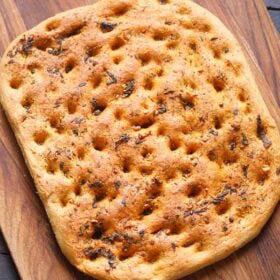
Focaccia Bread Recipe
This whole wheat focaccia recipe makes soft and flavorful Italian flatbread with olive oil, garlic, basil and herbs. The bread has a light airy crumb with crisp golden edges and plenty of herby flavor from the infused oil. You can make it with instant yeast or active dry yeast and serve it warm with soups, pasta or dips.
Servings: 2 Focaccia Bread
Calories: 1301kcal
Ingredients
For Focaccia Dough
- 4 cups or (480 grams) whole wheat flour (whole meal flour), can use all-purpose flour or bread flour
- 1½ to 2 cups water or as needed
- 3 tablespoons extra virgin olive oil
- 1 teaspoon sugar
- 2 teaspoons instant yeast or rapid rise yeast, can use 2¼ teaspoon dry active yeast
- 1 teaspoon salt
For Herb Oil
- ¼ cup extra virgin olive oil – warmed
- 1 teaspoon or 4 medium garlic cloves – finely chopped or minced
- 2 tablespoon basil – chopped
- ½ teaspoon dried parsley
- ½ teaspoon dried thyme
- ½ teaspoon red chili powder or paprika or cayenne
- ¼ teaspoon crushed black pepper or ground black pepper
- ¼ teaspoon salt
Instructions
Prepare Focaccia Dough
- In a stand mixer bowl or a large mixing bowl, take instant yeast and sugar.
- Add water at room temperature and mix well.
- If using active dry yeast, use warm water instead of room temperature water. Let the yeast mixture sit for 10 to 15 minutes until frothy and bubbly.
- Add the whole wheat flour and salt.
- Using a stand mixer fitted with a dough hook, begin to knead the dough. Knead until the dough becomes smooth, elastic, soft and sticky.
- You can also knead the dough by hand or use a food processor.
- Add olive oil and continue kneading until the oil is absorbed well. The dough should look smooth, supple and slightly sticky.
- If kneading by hand, add a bit of flour if the dough feels too sticky. If the dough looks dry, add a few tablespoons of water and continue to knead.
- Lightly spread some olive oil all over the dough. Cover the bowl with a kitchen towel, lid or plastic wrap and let the dough rise.
- Allow the dough to leaven for about 40 to 50 minutes or until doubled in size.
- If using active dry yeast, the dough will take 1½ to 2 hours or more to rise.
Prepare Herb Garlic Oil
- Rinse and dry the fresh basil leaves thoroughly. Chop them.
- Warm the olive oil in a small pan or in a heat-safe bowl. The oil should be warm and not hot.
- Add the finely chopped garlic, chopped basil leaves, dried parsley, dried thyme, red chilli powder or paprika or cayenne, freshly crushed black pepper and salt.
- Mix everything very well. Let the herbs and garlic steep in the warm oil for at least 20 to 30 minutes so the oil gets infused with the flavors.
Assemble
- Once the dough has doubled, gently remove it from the bowl and flatten it lightly on your work surface.
- Divide the dough into 2 equal portions to make 2 focaccia loaves.
- Grease a baking tray or pan with olive oil. I used a 9×11-inch pan for this recipe.
- Since I used a large pan, the focaccia slices are not very thick. If you prefer a thicker and taller focaccia, use a slightly smaller pan or tray.
- Place one portion of dough on the greased pan and flatten it slightly with your hands.
- Drizzle either ¼ or ½ of the prepared herb garlic oil over the dough.
- Using your fingertips, gently indent or dimple the dough all over, keeping about ½ inch space between the dimples.
- As you dimple, continue to gently stretch and flatten the dough so it fits the pan evenly.
- Cover the pan with a kitchen towel or lid and allow the dough to rise again for 30 to 40 minutes.
Bake Focaccia
- Preheat the oven for at least 20 minutes at 200 degrees Celsius (390 degrees Fahrenheit).
- After the second rise, the dough will again increase in volume. Lightly dimple once again if needed.
- If you had added only ¼ of the herb oil earlier, drizzle another ¼ portion now. If you already used ½ of the herb oil earlier, then skip adding more oil at this stage.
- Use the remaining herb oil for the second focaccia loaf. Sprinkle a few pinches of salt evenly on top.
- Bake in the preheated oven for 30 to 45 minutes or until the top looks golden and the edges are lightly crisp.
- To check the doneness, tap the bread lightly from the bottom or sides. It should sound hollow and feel firm once baked properly.
- Using oven mitts or oven gloves, carefully remove the focaccia from the pan and place it on a wired rack to cool.
- Slice and serve focaccia bread warm or at room temperature.
Serving Suggestions
- Focaccia bread pairs very well with creamy soups. The bread is also great alongside pasta dishes, salads and baked casseroles.
- You can serve focaccia with olive oil and balsamic vinegar as a simple appetizer or side. It also tastes good with pesto, hummus, cheese dips or herbed butter.
- This bread works nicely for sandwiches too. You can fill it with grilled vegetables, cheese, roasted mushrooms or pesto for a simple meal or snack.
Storage
- Store the focaccia in an airtight box or bread bag at room temperature for 1 day. If you want to keep it longer, refrigerate for up to 4 to 5 days.
- Before serving, lightly warm the bread in an oven or skillet so it softens again.
- You can also freeze the focaccia for about 1 month. Wrap the bread well before freezing. Thaw at room temperature and warm before serving.
Video
Notes
- The focaccia dough should feel soft, supple, elastic and slightly sticky. Avoid making a stiff or dry dough as this can make the bread dense.
- The amount of water needed will vary depending on the type and quality of flour used. If using all-purpose flour or bread flour, add slightly less water as these flours absorb less moisture than whole wheat flour.
- You can use your choice of herbs for the herb oil. Basil, oregano, sage, thyme, rosemary, mint and coriander all work well. Fresh herbs give the best flavor, but dried herbs can also be used.
- I have used instant yeast or rapid rise yeast in this recipe. You can also use 2¼ teaspoons active dry yeast or about 1 tablespoon fresh yeast.
- If using active dry yeast or fresh yeast, dissolve it in warm water with sugar first. Let the mixture sit for 10 to 15 minutes until frothy and bubbly before adding the flour.
- The dough rising time will vary depending on the room temperature. In a warm climate, the dough will rise faster, while in cooler weather it may take more time.
- I used a 9×11-inch pan for baking. Since the pan is large, the focaccia slices are not very thick. For a thicker focaccia, use a slightly smaller pan or tray.
- Bake the focaccia until the top looks golden and the edges feel lightly crisp. To check doneness, tap the bread lightly from the bottom. It should sound hollow once baked properly.
- Focaccia tastes best when served warm or on the same day. Reheat lightly before serving if refrigerated.
- The approximate nutrition information is for 1 focaccia bread out of the 2 focaccia loaves made from this recipe.
Nutrition
Calories: 1301kcal | Carbohydrates: 183g | Protein: 37g | Fat: 55g | Saturated Fat: 8g | Polyunsaturated Fat: 8g | Monounsaturated Fat: 36g | Sodium: 1477mg | Potassium: 1038mg | Fiber: 29g | Sugar: 3g | Vitamin A: 287IU | Vitamin B1 (Thiamine): 3mg | Vitamin B2 (Riboflavin): 1mg | Vitamin B3 (Niacin): 17mg | Vitamin B6: 1mg | Vitamin B12: 0.01µg | Vitamin C: 3mg | Vitamin E: 9mg | Vitamin K: 47µg | Calcium: 112mg | Vitamin B9 (Folate): 389µg | Iron: 10mg | Magnesium: 341mg | Phosphorus: 948mg | Zinc: 7mg
