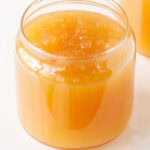
Apple Jam Recipe
Apple jam is a classic fruit preserve made by slowly cooking apples with sugar and a little fruit acid until thick and spreadable. It is traditionally prepared on the stovetop, allowing the fruit to release its natural pectin and develop flavor as it cooks. This homemade version is free from artificial pectin and preservatives. Apple jam can be enjoyed as a spread or used in baking and desserts.
Servings: 3 cups
Calories: 565kcal
Ingredients
- 1 kilogram or (about 5 large) apples – such as Red Delicious
- 1½ cups or (300 grams) sugar or add as needed
- ½ cup or (120 ml) water
- 1 tablespoon lemon juice
- 1 two-inch piece cinnamon stick – use true cinnamon and not cassia, optional
- 1 teaspoon vanilla extract – optional
Instructions
Making Apple Jam
- Rinse the apples well. Peel them for a smooth jam. Core and chop into small pieces or cubes.
- Add the chopped apples and water to a heavy-bottomed, wide pan.
- Cover the pan and cook on low to medium heat for 10 to 12 minutes, stirring a few times, until the apples start softening.
- Remove the lid and cook for another 5 to 6 minutes or until the apples are completely soft and mash easily.
- Turn off the heat. Mash the apples using a potato masher or spoon.
- Add the sugar and mix well. Keep the heat low to medium-low.
- Add the cinnamon stick and stir.
- Cook the jam uncovered for 25 to 30 minutes, stirring often, until it thickens and looks glossy.
- Add lemon juice and vanilla extract. Mix well and cook for 2 to 3 minutes more, or as needed, until the jam is done.
- Check the jam for doneness (see tests below).
- Pour the hot jam into clean, dry, sterilized glass jars. Close the lids and let cool naturally. Remove the cinnamon stick while bottling the jam.Note: Use good-quality, heat-safe glass jars. Thin or cold jars may crack when hot jam is poured in.
Jam Doneness Test
- Use one or more of these tests to check the jam doneness:1) Plate test: Place a small spoon of jam on a cold plate. Let it cool for 20 to 30 seconds, then tilt the plate slightly. The jam is done if it sets and does not spread. When you run a finger through the jam, it should separate clearly and the plate underneath should be visible.2) Spoon test: Lift jam with a spoon and let it fall. The jam is ready if it falls slowly in slightly thick sheets, not in a thin stream.3) Pan test: Draw a line through the jam with a spoon in the pan. If you can see the bottom of the pan, the jam is ready.4) Visual cues: Even if you see some moisture bubbling, the jam can still be done. If it looks thick, glossy, and passes the plate test, it is ready.
Serving & Storage
- Serve apple jam as a spread on toast, bread, or paratha. It also works well as a filling for cakes, cookies, and pastries, or stirred into porridge or yogurt.
- After pouring the hot jam into clean, dry, sterilized jars, seal and let it cool at room temperature.
- Store in the refrigerator and use within 3 to 4 weeks. Always use a clean, dry spoon.
Notes
- Use sweet or sweet-tart apples such as Red Delicious, Gala, Fuji, or Golden Delicious. Avoid very bland or mealy apples.
- Use a heavy-bottomed, wide pan for even cooking and faster thickening.
- Cook the jam on low heat to medium-low heat after adding sugar to prevent burning.
- Apples vary in sweetness. You can slightly reduce sugar next time if using very sweet apples, but avoid reducing it too much or the jam may not set well.
- Cooking time may vary depending on the sweetness, juiciness, and freshness of the apples and the amount of sugar used. Always check doneness using the plate test
- Lemon juice helps with setting and balances sweetness. Do not skip it.
- Spices are optional. Cinnamon pairs well with apples, and vanilla adds a soft aroma.
- Always pour jam into clean dry jars while hot for better shelf life.
Nutrition
Calories: 565kcal | Carbohydrates: 147g | Protein: 1g | Fat: 1g | Saturated Fat: 0.1g | Polyunsaturated Fat: 0.2g | Monounsaturated Fat: 0.02g | Sodium: 7mg | Potassium: 369mg | Fiber: 8g | Sugar: 135g | Vitamin A: 182IU | Vitamin B1 (Thiamine): 0.1mg | Vitamin B2 (Riboflavin): 0.1mg | Vitamin B3 (Niacin): 0.3mg | Vitamin B6: 0.1mg | Vitamin C: 17mg | Vitamin E: 1mg | Vitamin K: 8µg | Calcium: 29mg | Vitamin B9 (Folate): 11µg | Iron: 1mg | Magnesium: 18mg | Phosphorus: 38mg | Zinc: 0.2mg
