
I share our favorite South Indian Sambar Recipe which I have perfected over the years with video and step-by-step photos. Make this flavorsome, hearty and healthy South Indian vegetable-lentil stew with this easy method. Enjoy the sambar with snacks like Idli, Dosa, Medu Vada, uttapam or simply pair it with rice for a comforting, nutritious and filling meal.
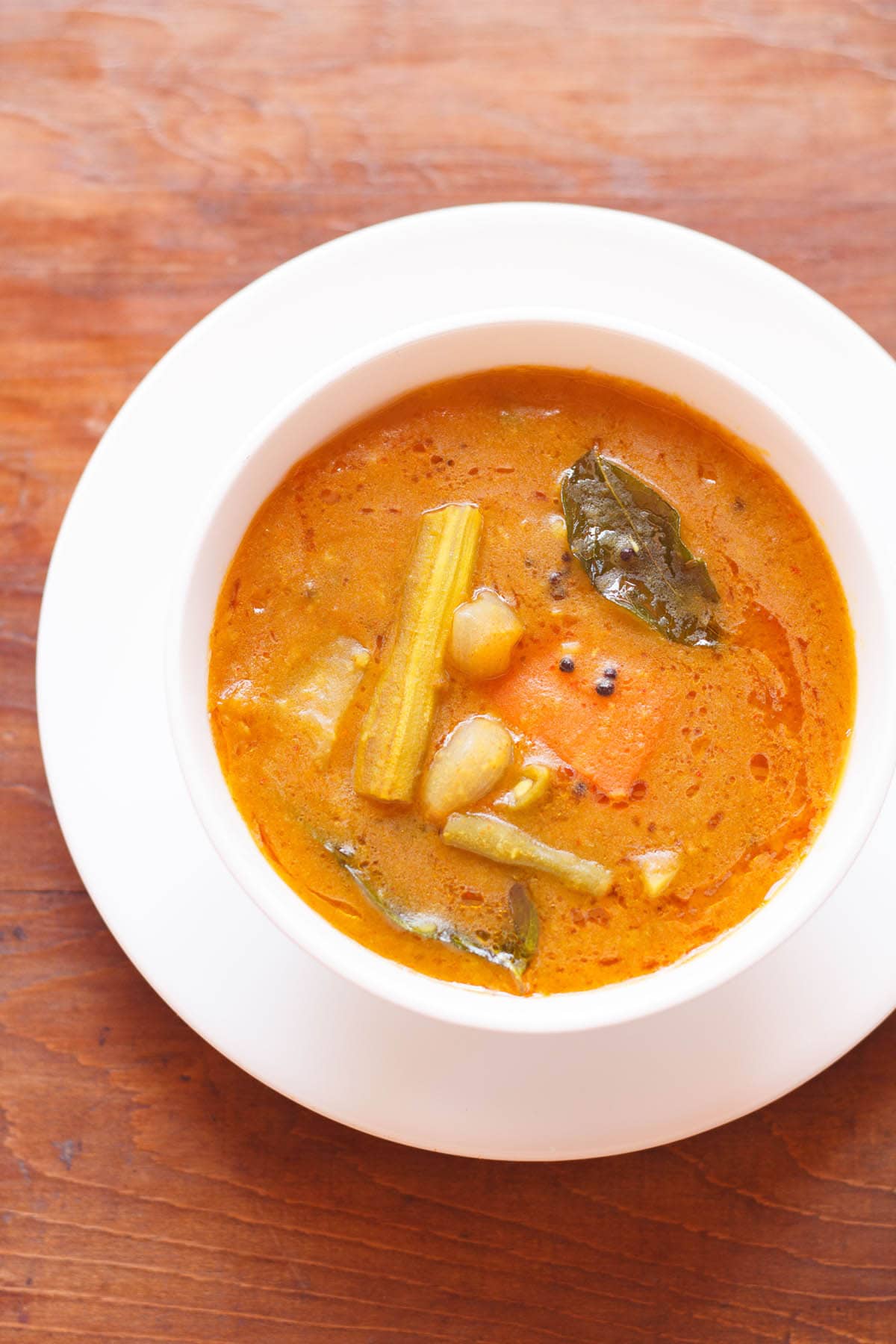
What is Sambar
Sambar is a South Indian lentil and vegetable stew made with pigeon pea lentils, tamarind and a unique spice blend called sambar powder. It is a staple dish in South Indian homes and is also equally popular and loved by many.
A basic sambar recipe will have a mix or one or two types of vegetables along with lentils, tamarind, sambar powder and a few spices.
A good sambar powder always yields a good and tasty sambar. so when you make it, try to have a good aromatic sambar powder.
You can also use your favorite brand of sambar powder. I make Sambar Powder at home and I feel homemade sambar powder gives the best and perfect taste in sambar.
If you live outside India and are new to Indian cuisine, then you can find Sambar powder online on amazon or you even find it in an Indian grocery store.
It is healthy as well as nutritious being rich in protein and also other nutrients like vitamins, minerals etc as its made from both lentils and vegetables. Sambar served with rice or idli makes up for a complete meal.
I usually make sambar with this recipe as it is a foolproof method – where both the lentils and vegetables are cooked to perfection. So you do not get half cooked lentils or mushy pasty vegetables. It is also an easy method of making sambar recipe.
I usually add a mix of vegetables from the list mentioned below or just one vegetable in the sambhar. In this sambar recipe, I have added drumstick, okra, pumpkin, carrots, brinjals, french beans and small onions (shallots or pearl onions).
How is it made
A basic South Indian sambar recipe is made by cooking vegetables and lentils separately. The lentils are cooked till it is mushy and then mashed.
Cooked vegetables, mashed dal, tamarind pulp and sambar powder are mixed together and then simmered for some minutes.
Later a tempering is done of oil (or ghee) with mustard seeds, curry leaves, asafoetida (hing) and dry red chilies. This tempering or tadka is added to sambar.
Together with the basic method of making this dish, there are many other regional variations. Sometimes a ground paste of coconut with spices is added.
The kind of spices and their proportions vary with the regional variations. So no two sambar recipes will taste the same as the ingredients and vegetables used differ and vary.
The vegetables can be steamed or boiled in water. According to my experience, when the vegetables are cooked or boiled in water, the broth or stew becomes very flavorful.
The sambar made this way has better flavors as compared to the sambar made with steamed vegetables.
My recipe follows the method of cooking vegetables in water, that makes for a flavorful stew. So when all the elements of the dish come together, what you get is a really delicious complexly flavored sambar recipe.
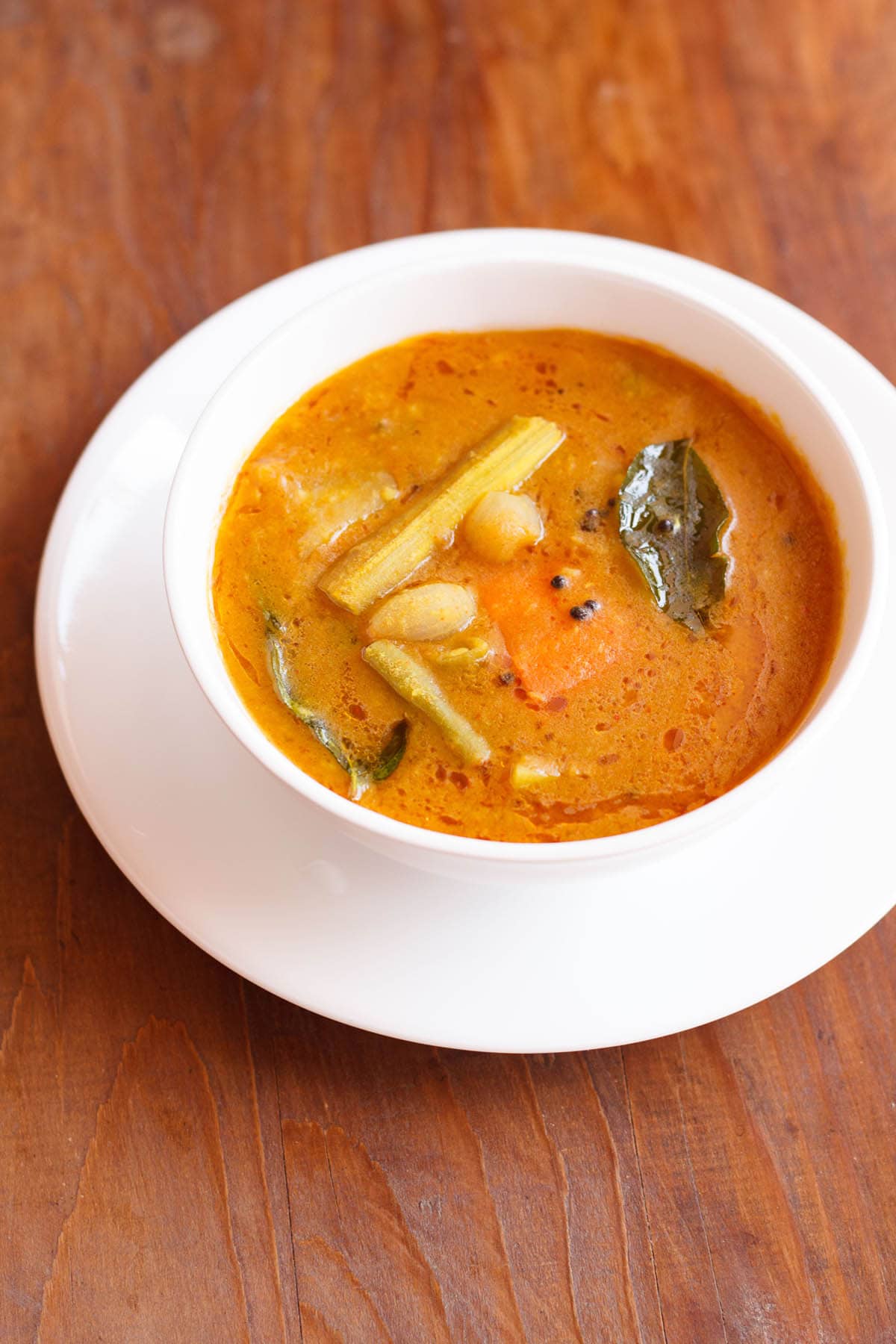
How to make Sambar Recipe
This recipe includes a series of preparations, that are all assembled later together. So you need to make the tamarind pulp, cook vegetables and lentils. Lets begin.
Preparation and Cooking Lentils
1. Before we begin making sambar, it always helps to soak tamarind in water earlier. So soak 1 tablespoon tamarind in ⅓ cup hot water for 20 to 30 minutes.
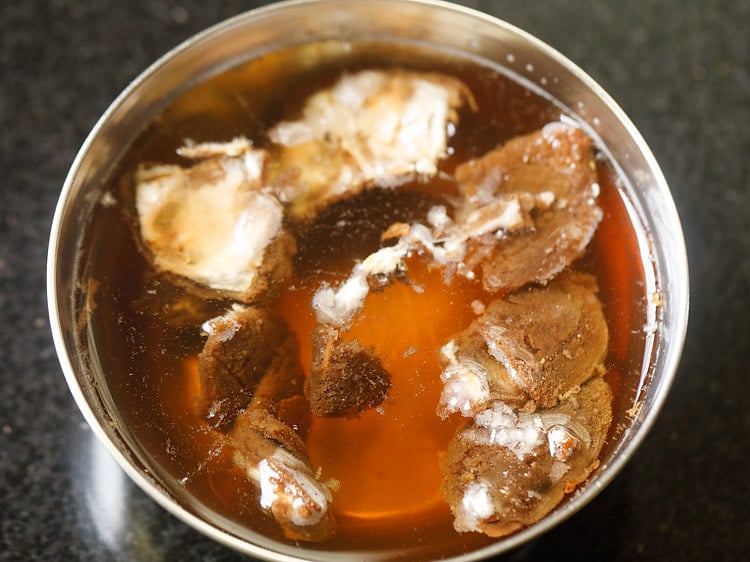
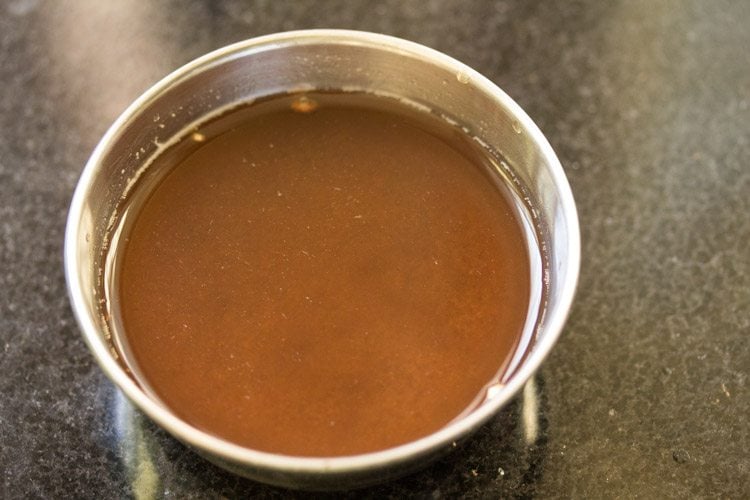
2. Once the tamarind gets soft, then squeeze the tamarind in the water itself. Discard the strained tamarind and keep the tamarind pulp aside.
3. Rinse ½ cup tuvar dal (100 grams) a couple of times in fresh and clean water. You can use a strainer to rinse the lentils.
For quick cooking of the lentils you can opt to soak them for an hour prior to cooking.
I recommend to make your sambar recipe with unpolished tuvar dal for a really good taste and more nutrition.
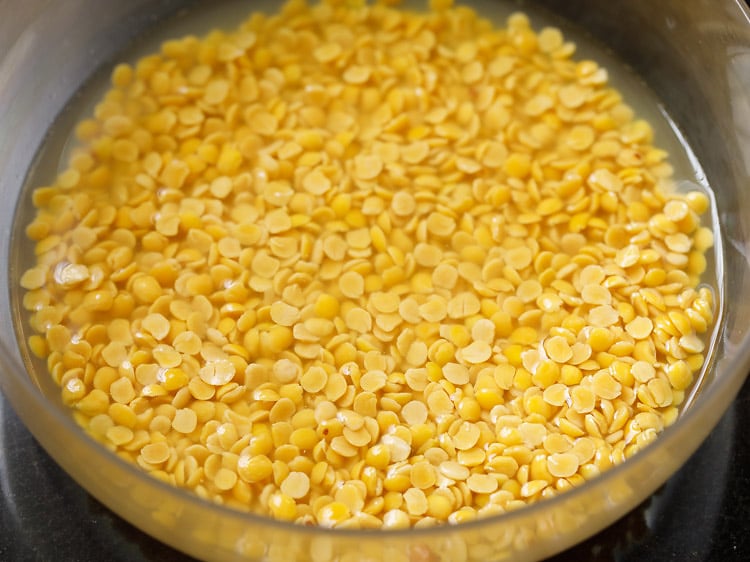
4. Drain all the water and add the dal in a 2 litre stovetop pressure cooker. Also add ¼ teaspoon turmeric powder.
Note: You can also cook the lentils in a pan or instant pot. Add water as needed while cooking the lentils.
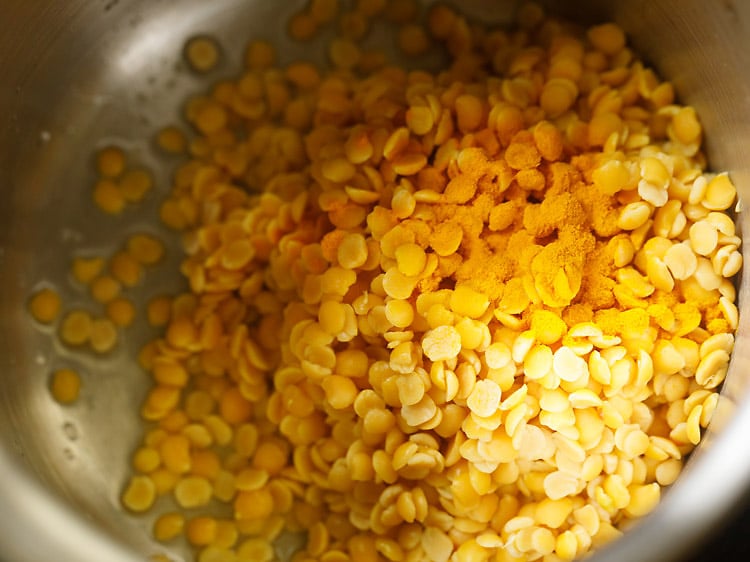
5. Add 1.5 to 1.75 cups of water and mix to combine.
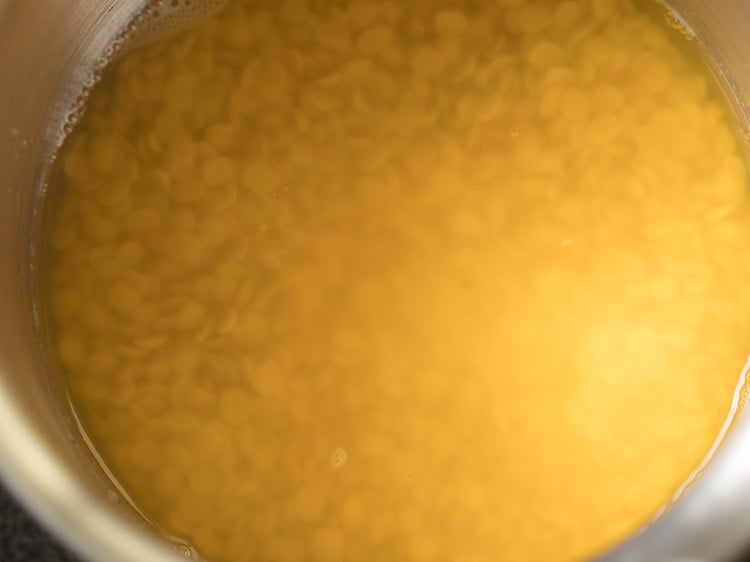
6. Cover and pressure cook dal for 7 to 8 whistles or 9 to 10 minutes on medium heat.
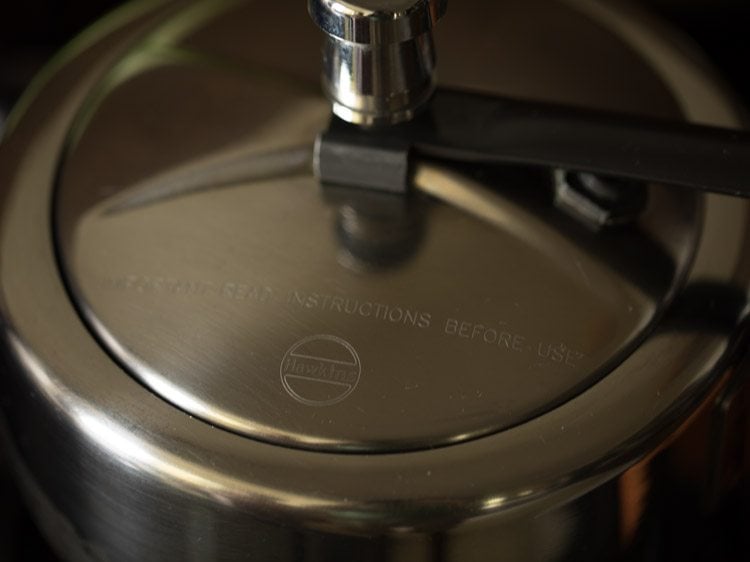
7. When the pressure settles down on its own, open the lid and check the dal. The dal should be completely cooked and mushy.
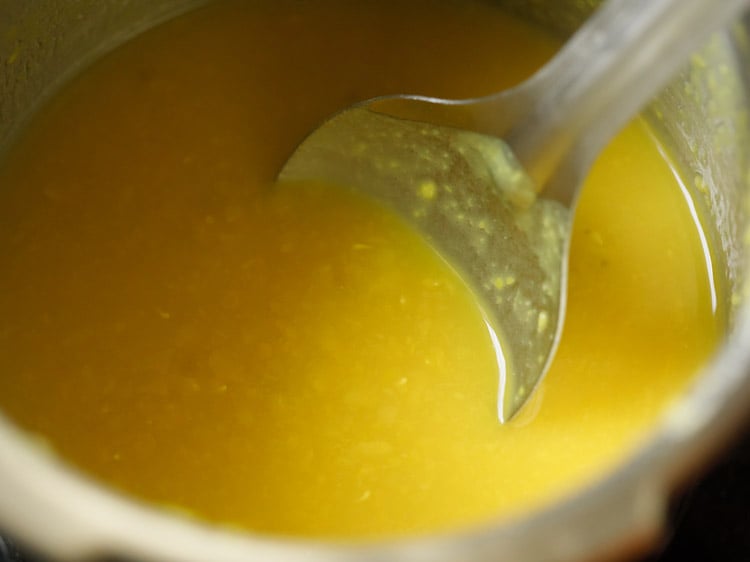
Mash the dal with a spoon or wired whisk. Cover and keep aside. You can see the consistency of dal in the picture below.
Cook Vegetables
8. When the dal is pressure cooking – rinse, peel and chop the vegetables. When making sambar, chop the vegetables which get cooked faster in large sizes like pumpkin, brinjals (small aubergines) okra, drumsticks etc.
Vegetables which take more time to cook are to be chopped in small sizes like carrots, potatoes, etc. I have chopped the pumpkin in large cubes and the carrots and potatoes in small cubes.
Chop the brinjals before you add them in the pan or else they darken. You will need 1 to 1.5 cup of chopped vegetables.
Note: For best taste and health reasons, I always make sambar with fresh vegetables. However you can use frozen vegetables also.
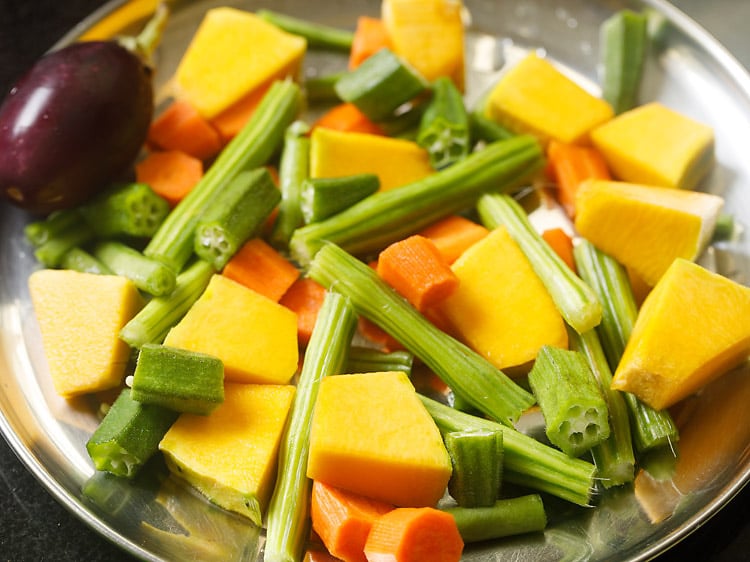
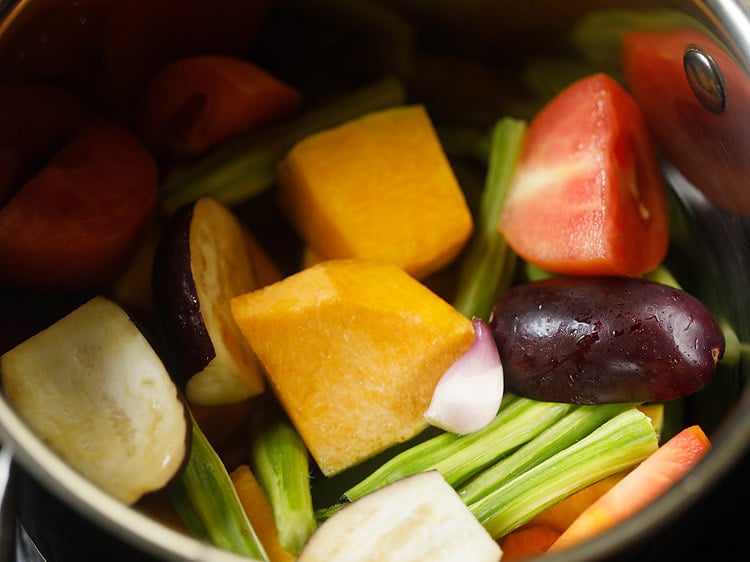
9. Take 1 to 1.5 cups chopped vegetables in a pan or pot. Also add 6 to 7 pearl onions or 1 small to medium onion (thickly sliced) and 1 small to medium tomato (quartered).
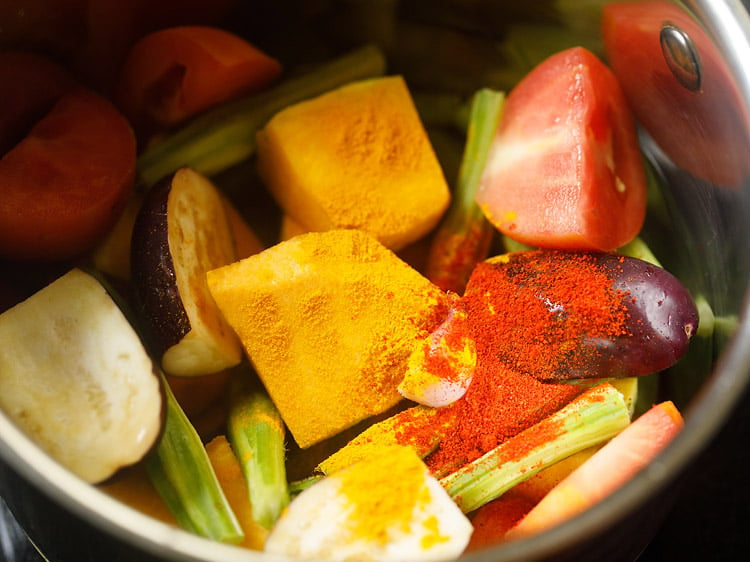
10. Sprinkle ¼ teaspoon turmeric powder, ¼ teaspoon kashmiri red chilli powder and salt as per taste.
Adding kashmiri red chili powder is optional and can be skipped. I add it for a nice bright color in the sambar.
11. Add 1.5 to 2 cups water and stir. Add enough water so that they cover the vegetables.
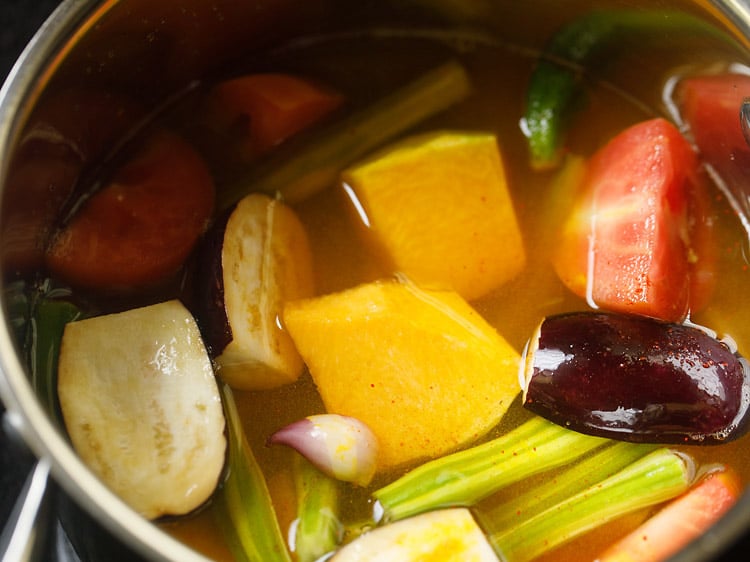
12. Keep the pan on a stove top and begin to cook vegetables on a medium-low to medium heat. In between do check when the vegetables are cooking.
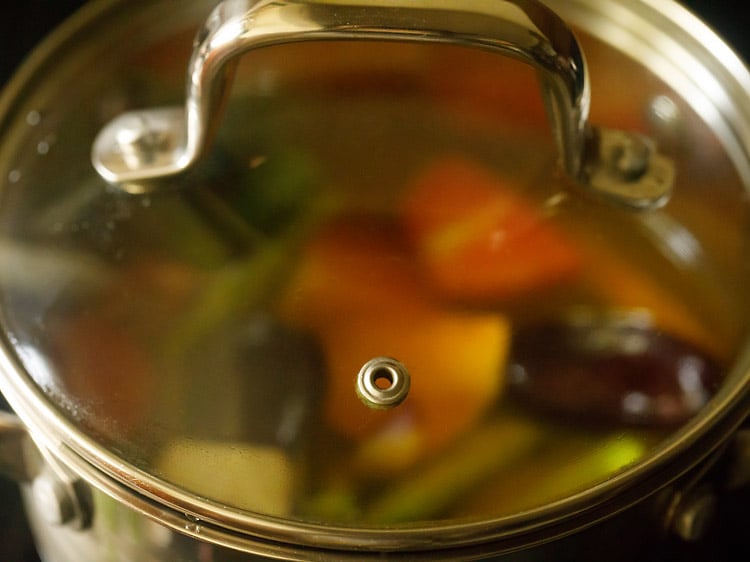
13. Cook till the vegetables are almost done. Ensure that you don’t overcook the vegetables.
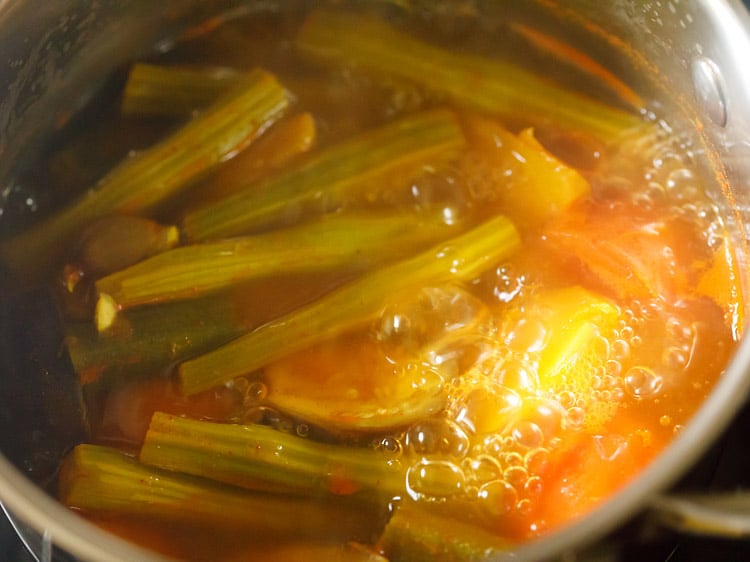
Make Sambar
14. Add the prepared tamarind pulp to the cooked vegetables. If you don’t have dried tamarind then use packaged or bottled tamarind paste.
You can add about ½ to 1 tablespoon of the tamarind paste or add as according to your taste.
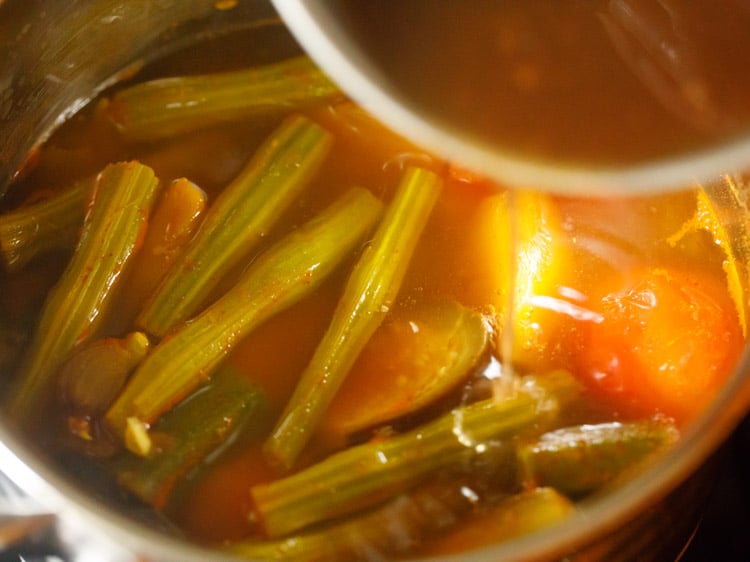
15. Mix well.
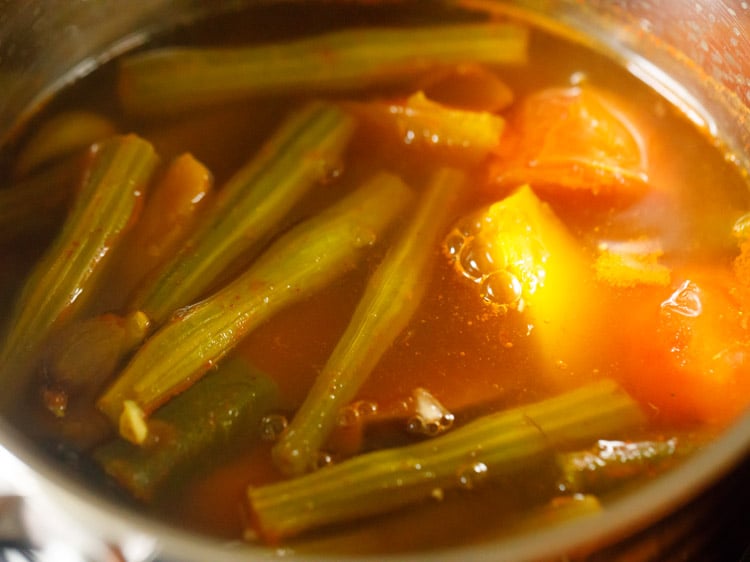
16. Next add 1 to 1.5 tablespoons Sambar Powder. At this step you can also add ½ to 1 teaspoon of jaggery powder. Adding jaggery is optional.
The flavor of your sambar mostly depends upon the sambar powder that you will be using.
So either make your own homemade sambar powder or use a trusted brand. You can buy packaged sambar powder easily online.
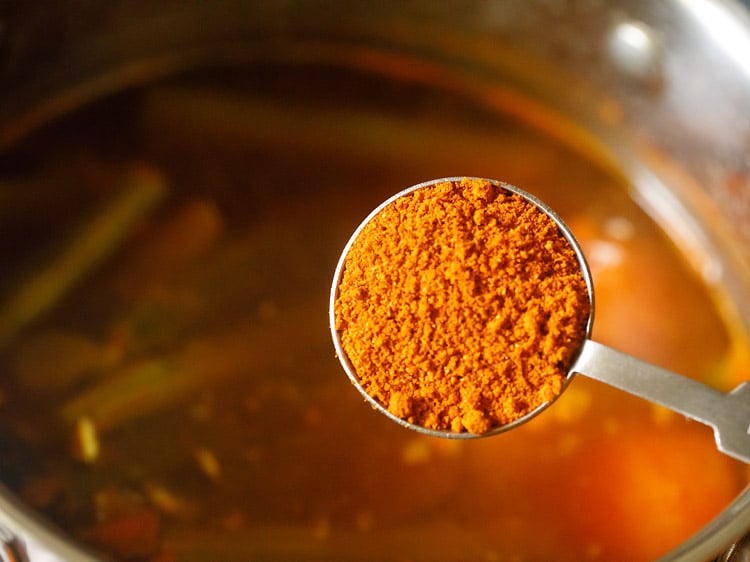
17. Stir and mix well again.
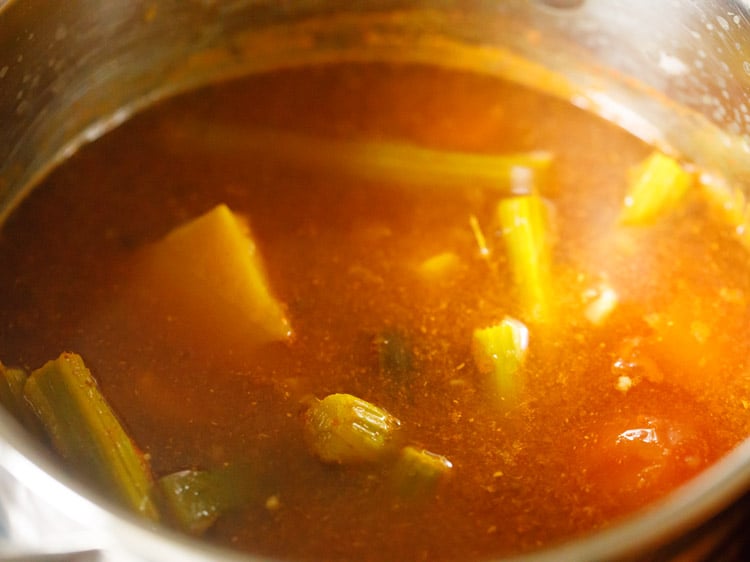
18. Add the mashed dal.
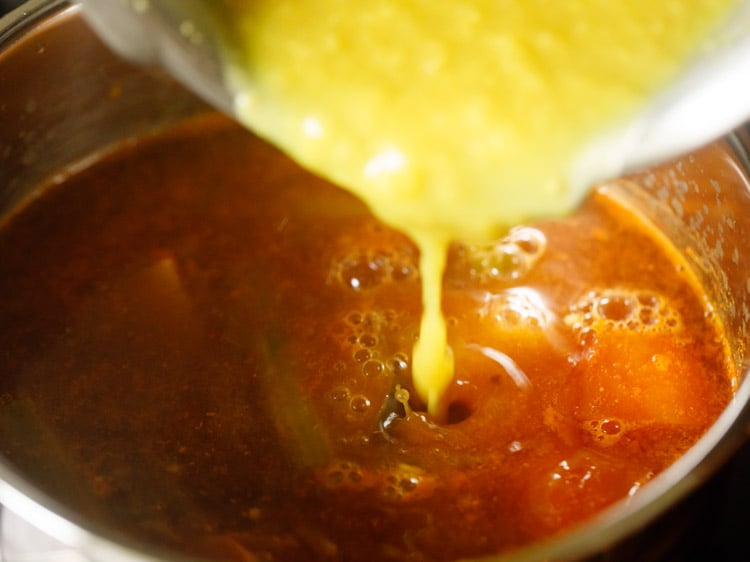
19. Stir and mix very well. If the consistency looks very thick, you can add some water.
You can easily adjust the quantity of water and make medium to thin consistency of sambar. But keep in mind not to add too much of water as this will dilute the flavors.
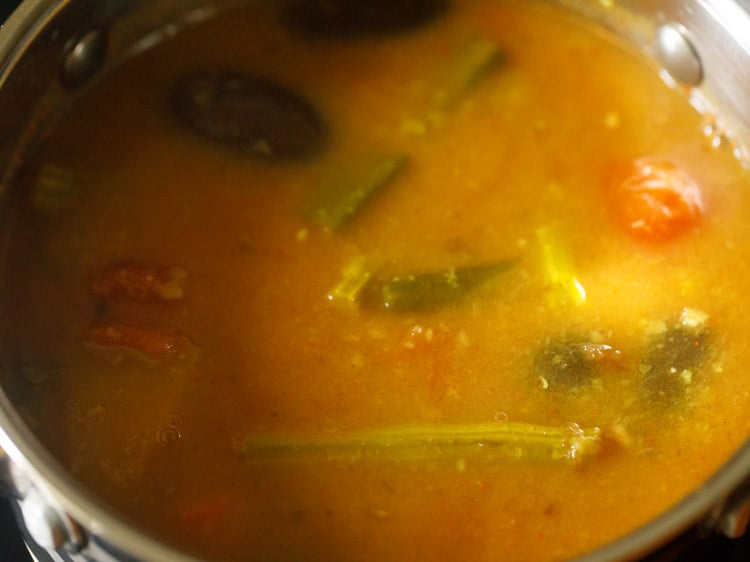
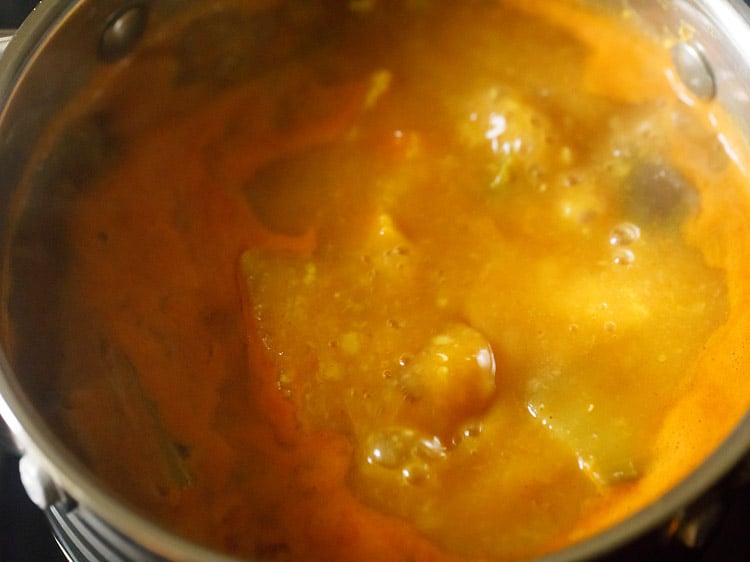
20. Simmer on a medium-low heat till it comes to a boil. Stir at intervals. You will see a frothy layer on top when the sambar begins boiling.
At this step switch off the heat. Cover and keep aside. Check the taste and add salt if needed.
Temper
21. In a small pan or tadka pan, heat 2 tablespoons gingelly oil (oil made from raw sesame seeds).
You can even use sunflower oil, ghee or coconut oil instead. Add ½ teaspoon mustard seeds.
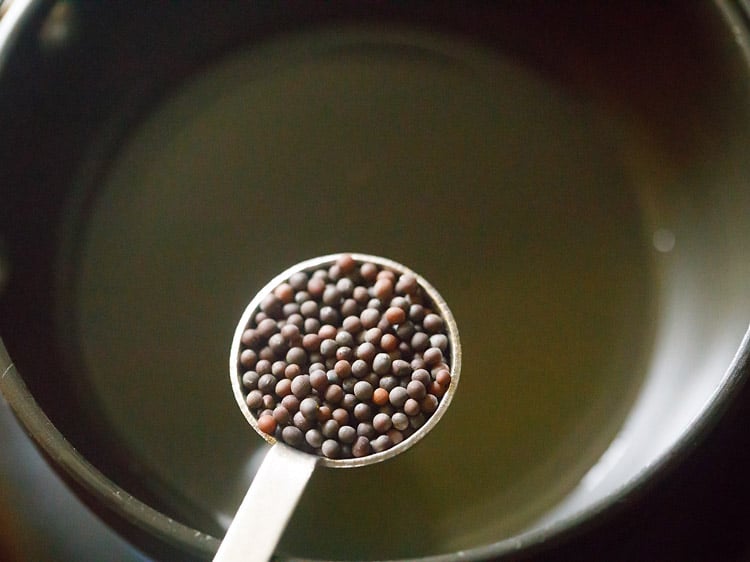
22. Let the mustard seeds crackle on low heat.
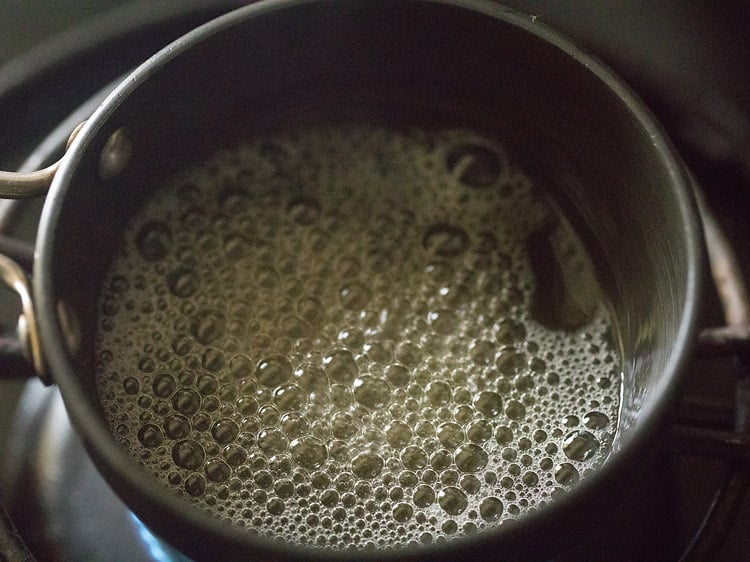
23. Then add 1 to 2 dry red chillies (halved and seeds removed).
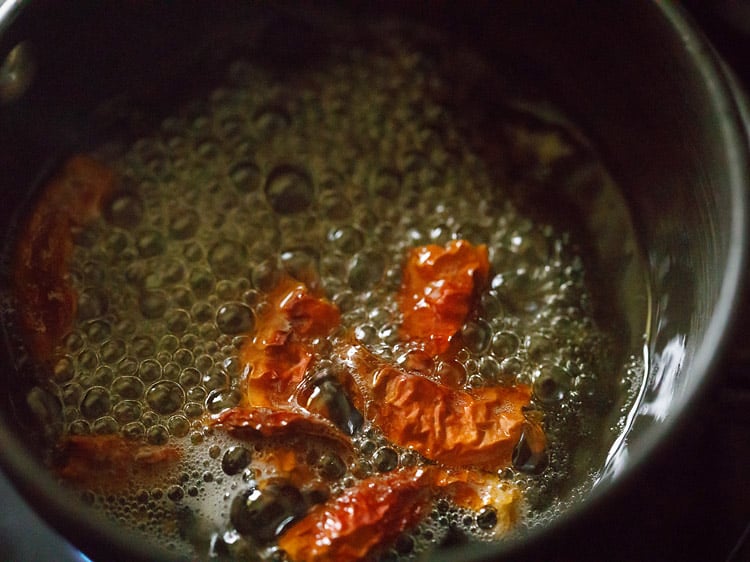
24. Immediately add 10 to 12 curry leaves, 5 to 6 fenugreek seeds (methi seeds) and 2 pinches of asafoetida (hing). Be careful while adding curry leaves as the oil splutters a lot.
Note: To make sambar gluten-free, omit the asafetida and ensure that your sambar powder does not have asafetida or use gluten-free asafetida.
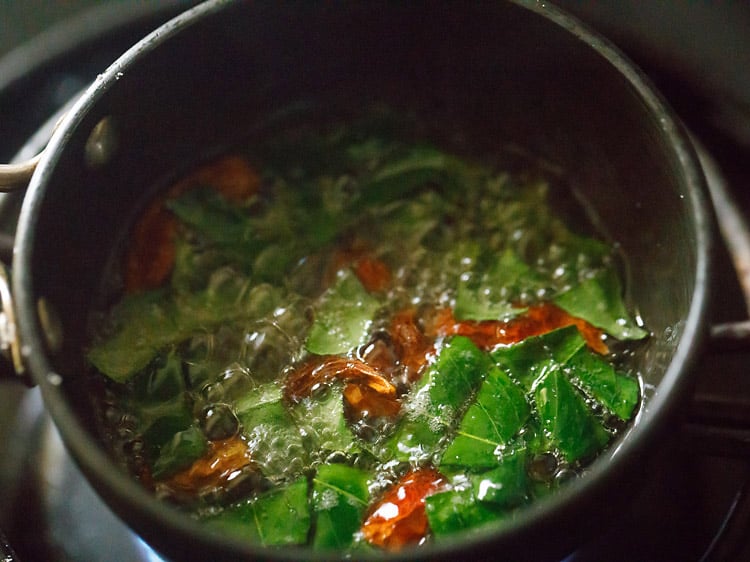
25. Fry them till the red chilies change color and curry leaves become crisp on low heat. Take care that you don’t burn the spices.
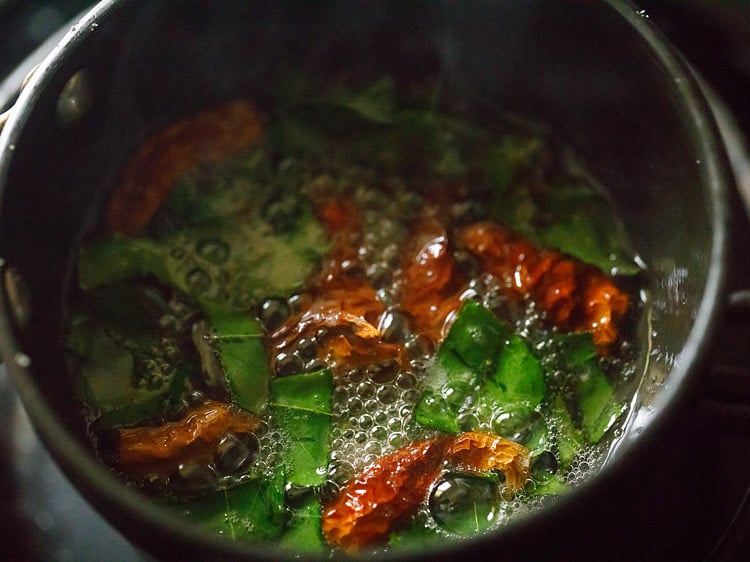
26. Immediately add this tempering mixture in the hot sambar.
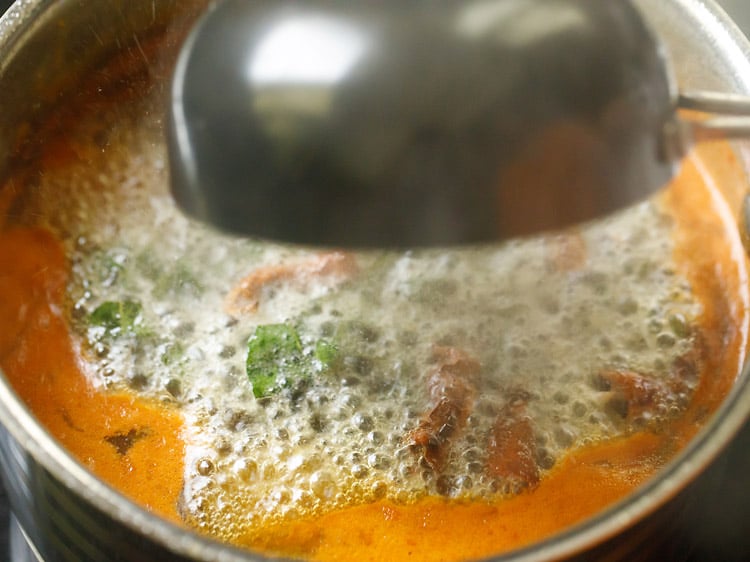
27. Cover the pan with its lid for 4 to 5 minutes, so that the aroma and flavors from the tempering mixture get infused with the sambar.
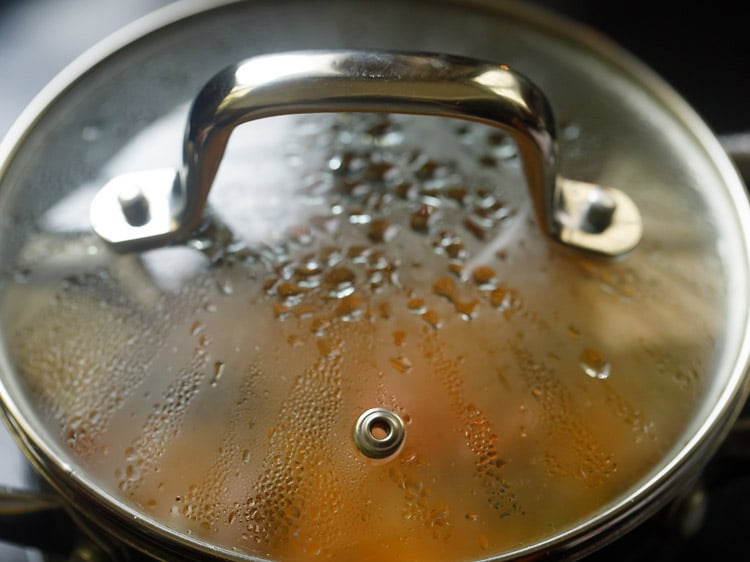
28. Serve sambar hot or warm. Garnish with some coriander leaves if you prefer. Usually, it is is cooked a two-three hours earlier as its taste becomes better with time.
However, we prefer sambar to be served as soon as it is made. It can also be served with steamed rice, idli, dosa, medu vada or uttapam.
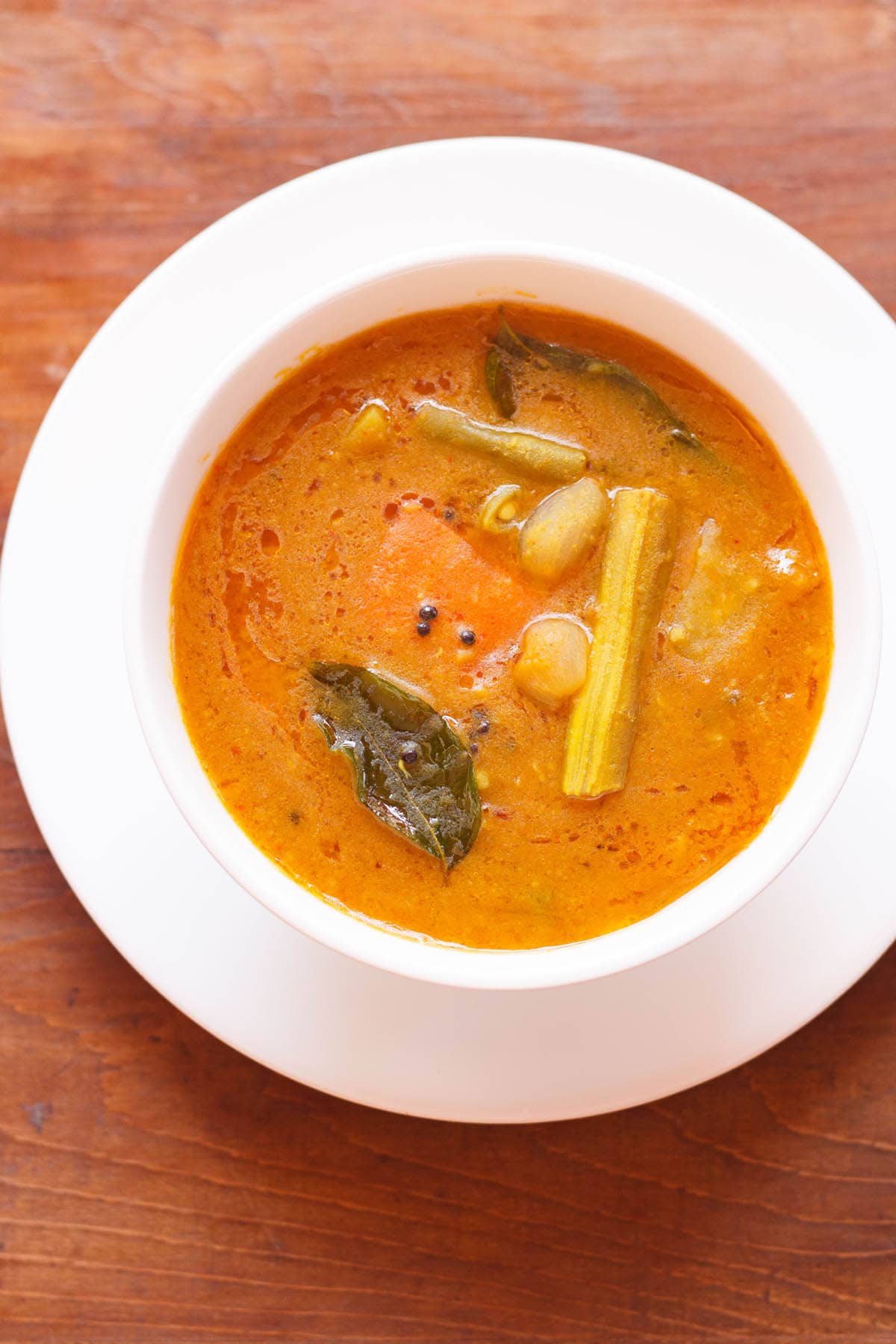
Serving Suggestions
Sambar is served with steamed rice, idli, dosa or medu vadai or uttapam. You can vary the consistency of sambhar and serve it with whatever dish you are making like idli or dosa or rice.
A slightly thin sambhar is served with idli, dosa and medu vada. Medium to thick consistency sambar is served with steamed rice.
Storage and Leftovers
Store sambar in the refrigerator for a day only. The consistency will thicken after refrigeration. Add some water and mix to get your desired consistency and reheat in a pan.
Sambar Variations
There are many variations for making sambhar. Each South Indian state has some variations like adding a specific oil or adding a few more ingredients or spices in the sambar powder.
- In Tamil Nadu sesame oil which is also called as gingelly is used. Gingelly oil is made from raw sesame seeds and is very different in flavors and taste from the asian toasted sesame oil. In Kerala, coconut oil is used often.
- Some sambar recipe variations have making a ground sambar masala paste with or without coconut. In some variations the coconut is roasted till it is golden and then ground to a paste. So depending on the ingredients used, the sambar recipe will have a different taste and flavor.
- In Karnataka, a bit of jaggery is added in the sambar powder. This gives the sambar a faint sweet taste which some people like.
- Mostly pigeon pea lentils (arhar dal, tur dal, tuvar dal) are used when making sambar recipe. But in some variations red lentils (masoor dal) and yellow moong lentils (mung dal) can also be used. A combination of these three lentils can also be added. I mostly make with arhar dal and moong dal.
Which lentils to include
Traditionally sambar is always made with tur dal (arhar dal or pigeon pea lentils). Even moong dal (yellow mung lentils) or masoor dal (orange lentils) can be used to make sambhar.
A mix of tur dal and masoor dal can also be used. On occasions, I also make sambar recipe with only mung dal.
You can also use a combination of tuvar dal and moong dal. In some variations, black eyed beans and whole moong beans are also included.
Choice of Vegetables
Sambar can be made with just one vegetable or a mix of vegetables. The vegetables that can be used alone or in combination are listed below. From the below list you can have a combination of vegetables.
If using greens like spinach or amaranth, then just add them exclusively and do not mix with other vegetables. You can also add your choice of veggies to the sambar recipe.
- Yellow Pumpkin
- Carrot
- Ash Gourd/White Pumpkin
- Drumstick (Moringa Pods)
- Pearl Onions or Shallots or Onions
- Radish
- Tomato
- Okra (Lady Fingers)
- Potatoes
- Eggplants (Brinjals)
- Snake Gourd
- Spinach
- Amaranth Leaves
- Bottle Gourd
- Banana Stem
- Plantain (Unripe Green Bananas)
- Green Beans (French Beans)
- Broad Beans
- Long Beans
- Ivy Gourd
- Field Marrow (Mangalore Cucumber)
Expert Tips
Sambar can be made really flavorful and tasty if you follow some of my handy tips listed below.
- Sambar Powder: The main flavor and aroma of sambar come from using a good and fresh sambar powder. So always use a homemade sambar powder or you can use your favorite brand of sambar powder.
- Type of vegetables: Another flavor and taste elements in the sambar recipe come from the addition of vegetables. So depending on the type of vegetables used, the sambhar will taste different. Personally I prefer a mix of drumsticks, brinjals, pumpkin or ash gourd, pearl onions (shallots), carrots and okra.
- Quality of lentils: Always use a good quality and fresh tuvar dal. The fresher the dal is the better it tastes and cooks faster. For quicker cooking you can soak the lentils for an hour before cooking. For best taste and nutrition use unpolished lentils.
- Tamarind: For tamarind, it is better to use fresh dried tamarind. If you use aged tamarind, then it will be darker in color and more sour. So add a bit less tamarind than what is mentioned in this recipe.
- Cooking vegetables: Always cook the vegetables till they are done but whole. They should not break or become a mush in the sambar. So when cooking, add vegetables which cook slower first and cook them for some minutes. Then add vegetables which cook faster.
More Helpful Tips
- Oils: Both gingelly oil (raw sesame oil) and edible coconut oil give a really good taste in sambaar. If you do not have these oils, then you can even use sunflower oil or peanut oil. For a richer taste you can opt to use ghee.
- Frying spices: While doing the tempering or tadka, always fry on a low flame and stir regularly. The spices and herbs fry fast, so you have to be attentive. If the tempering gets burned, then discard it and make a new tempering. Never add a burnt tempering in sambar as it will spoil the entire taste.
- Consistency: By adding less or more water, you can change the consistency of sambar. But do not add too much water and make it thin as then the flavors and taste gets diluted. For serving with rice you can make a thick sambhar and for serving with idli or dosa, you can make a medium consistency sambar.
- Balancing sourness: In case if you find the taste of sambar more sour, then you can always balance the sour taste by adding a bit of jaggery.
More Sambar Varieties To Try!
Tamil Nadu Food
Tamil Nadu Food
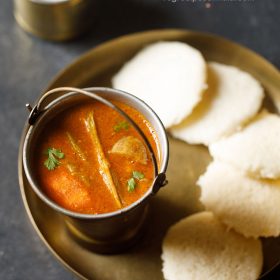
South Indian Food
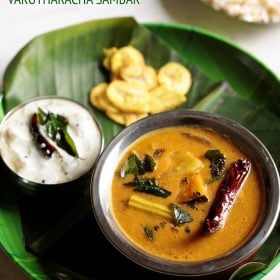
Kerala Recipes
Please be sure to rate the recipe in the recipe card or leave a comment below if you have made it. For more vegetarian inspirations, Sign Up for my emails or follow me on Instagram, Youtube, Facebook, Pinterest or Twitter.
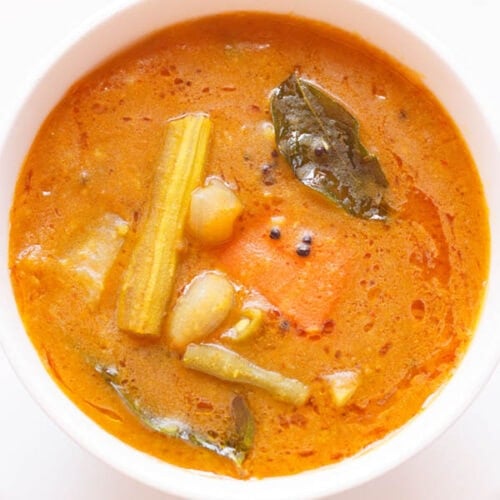
Traditional Sambar Recipe
Ingredients
For tamarind pulp
- 1 tablespoon tamarind
- ⅓ cup hot water
For cooking dal
- ½ cup tur dal or arhar dal (pigeon pea lentils) – 100 grams
- ¼ teaspoon turmeric powder (ground turmeric)
- 1.5 to 1.75 cups water or add as required
For cooking vegetables
- 1 to 1.5 cups chopped vegetables like okra, french beans, potatoes, small round brinjals, pumpkin
- 1 to 2 drumsticks – scraped and chopped in 3 to 4 inches sticks.
- 6 to 7 pearl onions (sambar onions) or 1 small to medium onion, thickly sliced
- 1 tomato – small to medium, quartered or diced
- ¼ teaspoon turmeric powder (ground turmeric)
- ½ teaspoon kashmiri red chilli powder – optional
- salt as required
- 1.5 to 2 cups water or add as required
Important ingredient
- 1 to 1.5 tablespoons Sambar Powder
For tempering
- 2 tablespoons sesame oil (gingelly oil), can also use coconut oil or sunflower oil or ghee
- ½ teaspoon mustard seeds
- 1 to 2 dry red chillies – halved and seeds removed
- 10 to 12 curry leaves
- 2 pinch asafoetida (hing)
- 5 to 6 fenugreek seeds (methi seeds) – optional
For garnish
- 1 tablespoon chopped coriander leaves (cilantro) – optional
Instructions
Making tamarind pulp
- Soak the tamarind in hot water for 20 to 30 minutes.
- Once the tamarind gets soft, then squeeze the tamarind in the water itself. Discard the strained tamarind and keep the tamarind pulp aside.
Cooking lentils
- Rinse tuvar dal a couple of times in water.
- Drain all the water and add the dal in a 2 litre pressure cooker. Also add ¼ teaspoon turmeric powder.
- Add 1.5 to 1.75 cups water and mix. Cover and pressure cook dal for 7 to 8 whistles or 9 to 10 minutes on medium heat.
- When the pressure settles down on its own, open the lid and check the dal. The dal should be completely cooked and mushy.
- Mash the dal with a spoon or wired whisk. Cover and keep aside. You can see the consistency of dal in the pic below.
Cooking vegetables
- When the dal is pressure cooking – rinse, peel and chop the vegetables.
- Take the chopped vegetables in a pan or pot. Also add 6 to 7 pearl onions or 1 small to medium onion (thickly sliced) and 1 small to medium tomato (quartered).
- Sprinkle turmeric powder, kashmiri red chilli powder and salt as per taste. Adding kashmiri red chili powder is optional and can be skipped.
- Add 1.5 to 2 cups water and stir.
- Keep the pan on a stove top and begin to cook vegetables on a medium-low to medium flame. In between do check when the vegetables are cooking.
- Cook till the vegetables are almost done. Ensure that you don’t over cook the vegetables.
Making sambar
- Once the vegetables are almost cooked, then add the tamarind pulp and 1 to 1.5 tablespoons sambar powder. Mix well.
- Add the mashed dal. Mix again very well.
- Simmer on a medium-low heat till the sambar comes to a boil.
- You will see a frothy layer on top when the sambar begins boiling. At this step switch off the heat. Cover and set aside.
Tempering
- In a small pan or tadka pan, heat 2 tablespoons gingelly oil. Add ½ tsp mustard seeds.
- Let the mustard seeds crackle.
- Then add 1 to 2 dry red chillies (halved and seeds removed).
- Immediately add 10 to 12 curry leaves, 5 to 6 fenugreek seeds (methi seeds) and 2 pinches of asafoetida (hing). Be careful as the oil splutters while adding curry leaves.
- Fry them till the red chilies change color and curry leaves become crisp.
- Immediately add this tempering mixture in the hot sambar.
- Cover the pan with its lid for 4 to 5 minutes, so that the aroma and flavors from the tempering mixture gets infused with the sambar.
- Serve sambar hot. You can garnish it with a few coriander leaves if you prefer. It can also be served with steamed rice, idli, dosa, medu vada or uttapam.
Serving Suggestions
- Serve sambar with steamed rice, idli, dosa or medu vadai or uttapam.
- Vary the consistency of sambar keeping in mind the dish you want to serve it with. Example – a medium to slightly thin sambar is served with idli, dosa and medu vada. Sambar with a medium to thick consistency is served with steamed rice.
Storage and Leftovers
- Store any leftovers in the refrigerator for a day only. Note that the consistency will thicken after refrigeration. Add some water and mix to get your desired consistency while reheating in a pan.
Video
Notes
- Sambar Powder: The sambar powder can make or break your sambar. Use the best sambar powder. It can be homemade or from your favorite brand. Sambar powder is easily available online.
- Vegetables: The mix of various vegetables add plenty of their unique flavor and taste to sambar. Thus depending on the type of vegetables used, your sambar recipe will taste different every time. I prefer to add a mix of drumsticks, brinjals, pumpkin or ash gourd, pearl onions (shallots), carrots and okra. Feel free to mix and match the veggies from the list mentioned in the post.
- Lentils: Try to use fresh and preferably unpolished tuvar dal for best flavor and health reasons. The fresher the dal is the better it tastes and cooks faster. For faster cooking, you can opt to soak the lentils in water for 30 to 60 minutes.
- Cooking Lentils: The lentils can be cooked in an Instant Pot or pan on the stove top. Add water as needed. The lentils should be softened and mushy.
- Tamarind: I suggest to use fresh tamarind. If you use aged tamarind, then it will be darker in color and more sour. So add a bit less of the dark tamarind than what is mentioned in this recipe.
- Cooking Vegetables: Always cook the vegetables till they are done but whole. They should not break or become a mush in the sambar. So when cooking, add vegetables which cook slower first and cook them for some minutes. Then add vegetables which cook faster. Note that The vegetables can also be steamed in a steamer or pressure cooker or Instant pot.
- Oils: Both gingelly oil (raw sesame oil) and edible coconut oil give a really good taste in sambar. If you do not have these oils, then you can use sunflower oil or peanut oil or even ghee
- Frying spices: While doing the tempering or tadka, always fry on a low heat and stir regularly. The spices and herbs cook fast, so you have to be attentive. If they get burned, then discard them and make a new tempering. Never add a burnt tempering in sambar as it will ruin the taste.
- Consistency: Change the consistency of your sambar by adding less or more water. However, do not add too much water and make it thin as then the flavors get diluted. For serving with rice you can make a thick sambhar and for serving with idli or dosa, you can make a medium consistency sambar.
- Balancing sourness: In case if you find the taste of sambar more sour, then you can always balance the sour taste by adding a bit of jaggery.
- Variations: A few crushed garlic cloves can also be added to the tempering. This imparts a different flavor in sambar. A bit of jaggery can also be added to give a slight sweeter taste.
Nutrition Info (Approximate Values)
This Sambar Recipe from the blog archives was first published in July 2009. It has been republished and updated on June 2022.









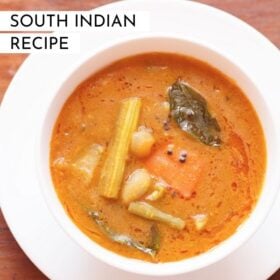
I made this this evening. For some reason it tasted very tart and a bit overly tangy. I added a little bit of jaggery to mellow it out a bit.
I might use less tamarind next time. Plus it wasn’t that beautiful copper red colour like yours, but brown. Interesting.
The tartness is due to the tamarind quality and it also affects the color. I hope you have made the sambar using dried tamarind fruit and not tamarind sauce or paste. If using a tamarind sauce or paste, you might just need about ½ to 1 teaspoon.
Another clear explained and tasty one for my recipe book…God bless you, Dassana. Namaste !
Thanks a lot.
Loved the recipe. Since I am used to some sweet taste, I add jaggery. The taste was phenomenal and we all enjoyed the sambar with piping hot steamed rice. Delicious!
Thanks for this lovely feedback.