
Idli Recipe & Homemade Idli Batter With Tips & Tricks
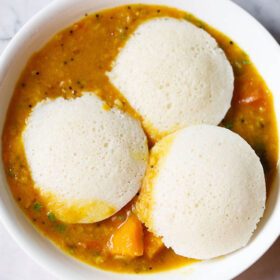
Idli is a traditional South Indian steamed food made from fermented rice and urad dal batter. The batter is ground and fermented before steaming. Idlis are soft and mildly flavored. They are commonly eaten for breakfast with sambar and coconut chutney.
Idli is one of the healthiest and most popular breakfast dishes. Here I share my foolproof recipe with video, step-by-step photos, and helpful tips and techniques for consistently good results. This idli recipe is one of the earliest on the blog and has been tried and tested with great results by many of our readers.
About Soft Idli Recipe Made the Traditional Way
Idli isn’t just food; it’s a memory. Growing up, Sundays at home meant the comforting rhythm of idli-making. My mom would soak rice and urad dal during the day, and by night, the familiar whirr of our old Sumeet mixer would fill the kitchen as she ground the batter.
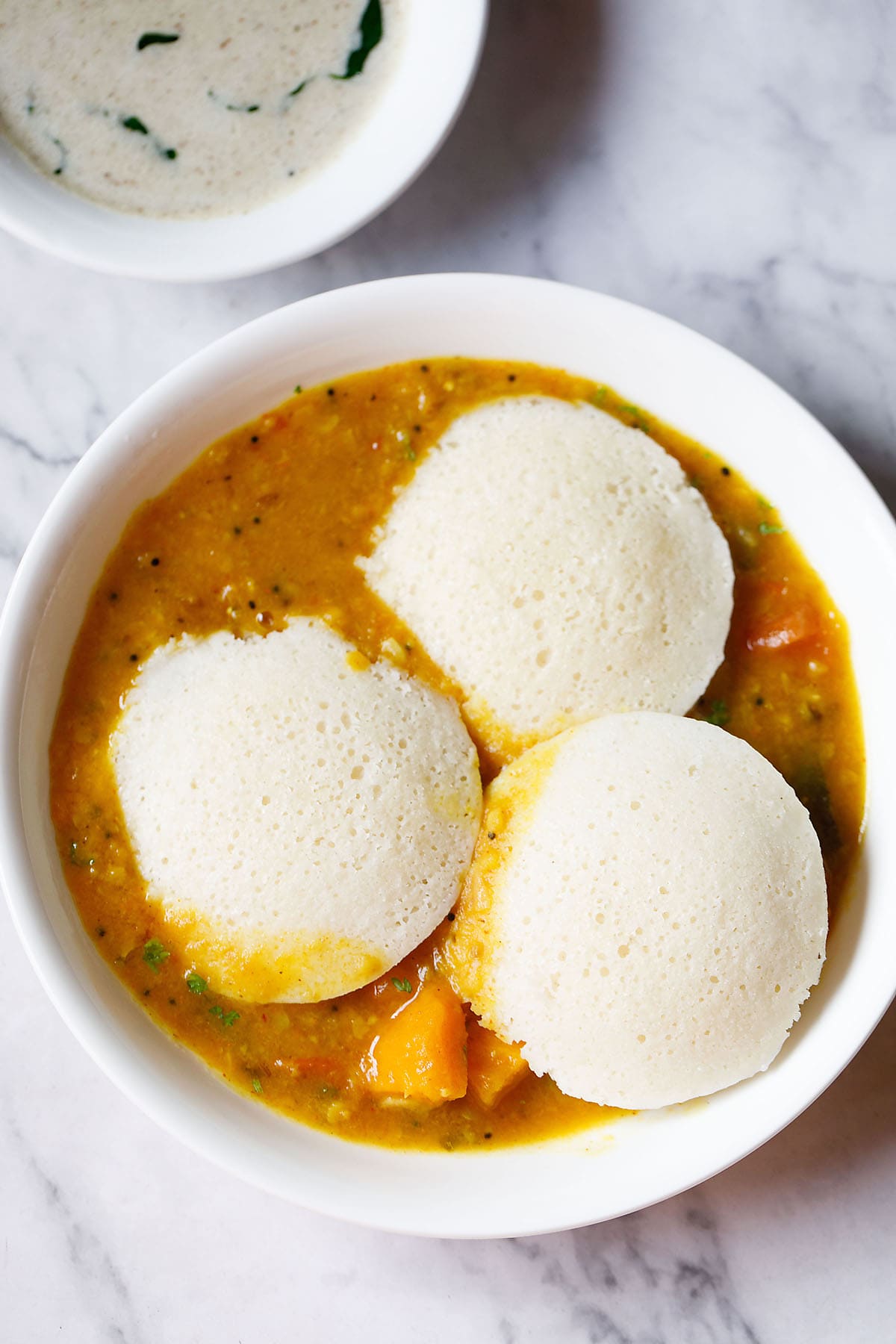
I still remember that earthy aroma of freshly ground urad dal; so distinct, so comforting. Even today, when I prepare the batter, I’m instantly transported back to those evenings, watching her pour the thick batter into a large bowl, gently mixing in salt, and setting it aside to ferment overnight.
Sunday breakfast was always a celebration of soft, steaming hot idlis; sometimes followed by crisp dosas from the same batter. Any leftovers would magically turn into delicious uttapams or paniyarams the next day.
Table of Contents
It was simple, soulful food made with love; a rhythm I continue in my own kitchen today. Along with those memories, this recipe brings together time-tested technique and careful fermentation so your idlis turn out soft and fluffy every time.
Idli is my comfort food – simple, nourishing, and timeless. Naturally vegan, gluten-free, and light on the stomach, it’s also one of the healthiest breakfast options around. This classic South Indian dish has found fans not just across India, but around the world.
Idli is a soft, steamed savory cake made from a naturally fermented batter of parboiled rice and urad dal (hulled black gram). It’s a staple South Indian breakfast known for being light, nutritious, vegan, and gluten-free.
The process involves soaking rice, fenugreek seeds and lentils, grinding them into a fine, thick batter, fermenting it overnight or for 8 to 9 hours, and then steaming the batter in idli moulds. The result is a fluffy, spongy, and mildly tangy idli that pairs beautifully with Coconut Chutney and Sambar.
This post walks you through the traditional way of making these steamed cakes with rice; so you can recreate the same soft idli I grew up eating.
Overview of the Idli Making Process
Traditional idli making involves four steps: soaking, grinding, fermenting, and steaming. Shortcuts exist, but nothing beats the soft texture and mild tang of naturally fermented batter.
There are two time-tested methods — one with idli rice, the other with idli rava. Both follow the same basic process.
1. Idli with Idli Rice: Uses parboiled idli rice and hulled urad dal (whole or split). Fresh dal ferments well and gives a softer texture. Some use raw short-grain rice like sona masuri also works. Grind the batter fine, mix with salt, and ferment.
2. Idli with Idli Rava (Rice Rava): Quicker method. Idli rava is coarsely ground parboiled rice. Soak separately, grind only the urad dal, then mix and ferment. Texture remains soft and light.
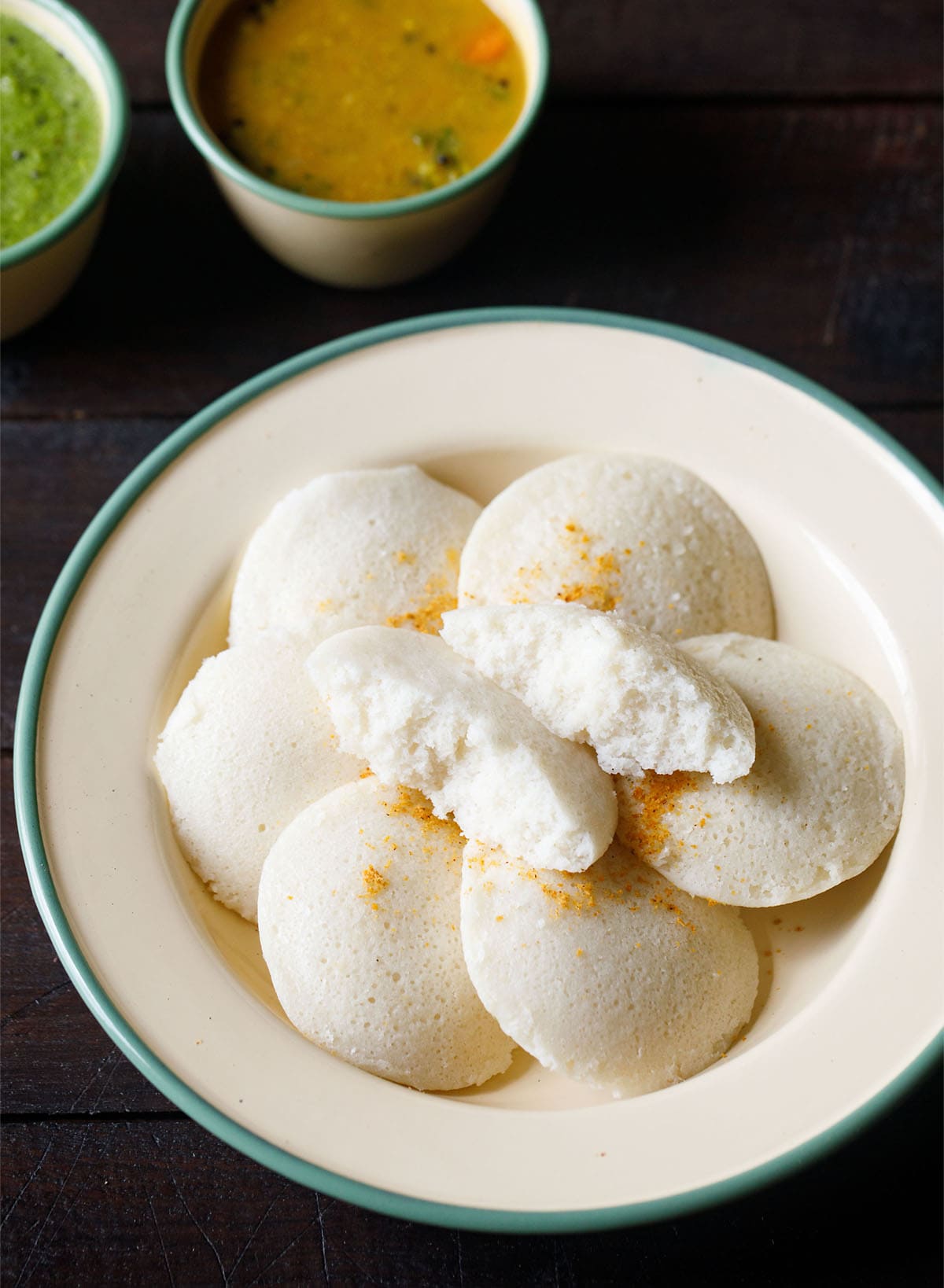
Foundations of a Good Idli Batter
A well-made batter is the key to soft, spongy, and light idli. These seven essentials cover the process and practical tips that truly make a difference.
1. Use Fresh Ingredients: Always use fresh urad dal. Aged dal doesn’t ferment well and affects texture. Choose quality parboiled idli rice or a mix of raw and parboiled rice.
2. Soak Properly: Rinse rice and dal thoroughly and soak them separately for 4 to 5 hours. Use clean water and discard soaking water before grinding.
3. Grind to the Right Consistency: Grind urad dal until fluffy and smooth. Rice should be slightly grainy.
- For stone grinder: 1 cup water per ½ cup dal, 1.5 to 2 cups for 2 cups rice
- For mixie: ½ cup water for ½ cup dal, ¾ to 1 cup for 2 cups rice
Add water gradually. Batter should be light but not runny.
4. Mix and Handle the Batter Well: Mix both batters thoroughly with clean hands or a ladle. This spreads the natural microbes that support fermentation.
5. Ferment in a Warm Spot: Keep the batter loosely covered in a warm place for 8 to 12 hours. It should double or triple in volume and have a mild sour aroma.
6. Salt Usage: Use rock salt or sea salt, not iodised salt. In warm climates, add salt before fermentation. In cold climates, add salt after fermentation to avoid slowing the process.
7. Steam Gently and Don’t Overcook: Grease the moulds and steam for 12 to 15 minutes in a steamer or cooker without the whistle. Let them sit for 2 to 3 minutes before unmoulding. Over-steaming can dry them out. Check doneness with a toothpick, it should come out clean.
How to Make Idli at Home (Stepwise)
Making idli at home from scratch may seem like a long process, but once you understand the steps, it becomes second nature.
Below, I’ve shared the detailed step-by-step method with photos to help you see the texture, proportion, and consistency clearly at each stage — from soaking to steaming.
Soak the Rice, Lentils & Poha
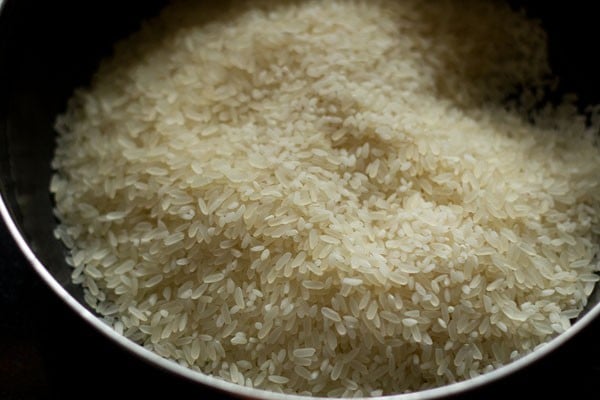
1. In a bowl or pan take 1 cup parboiled rice and 1 cup regular rice. Here I have used the Indian variety of sona masuri rice along with parboiled rice.
Instead of this proportion, you can also use overall 2 cups of idli rice OR 2 cups of parboiled rice (as shown in the video above).
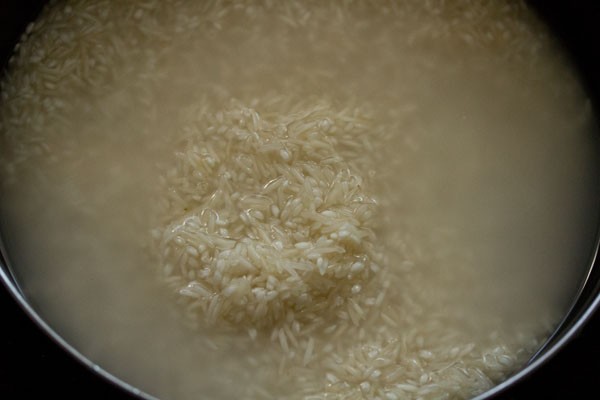
2. Pick and then rinse both the rice varieties a couple of times in fresh water. Drain all the water and keep it aside.
3. Take ¼ cup thick poha (flattened rice or parched rice) in a bowl. Poha helps in making the idli soft and fluffy. If you don’t have poha then you can skip it.
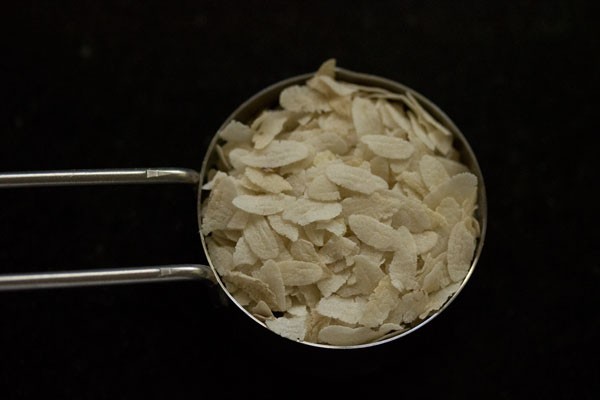
4. Rinse the poha once or twice with fresh water.
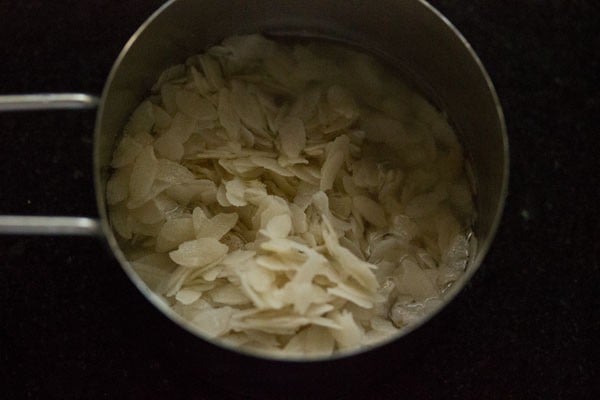
5. Then add the poha to the rice. Add 2 cups of water. Mix very well and keep aside covered to soak for 4 to 5 hours.
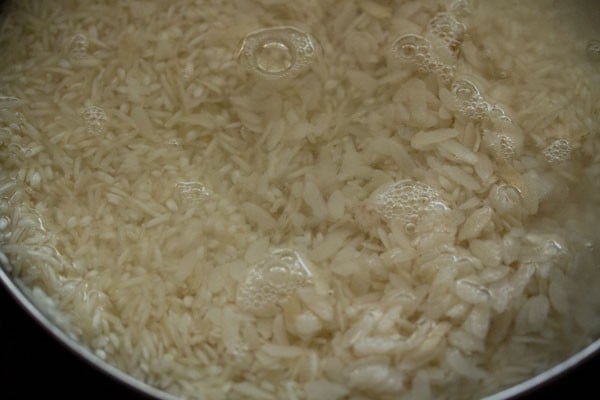
6. In a separate bowl take ½ cup urad dal (husked black gram) along with ¼ teaspoon fenugreek seeds.
Omit the fenugreek seeds if you don’t have them.
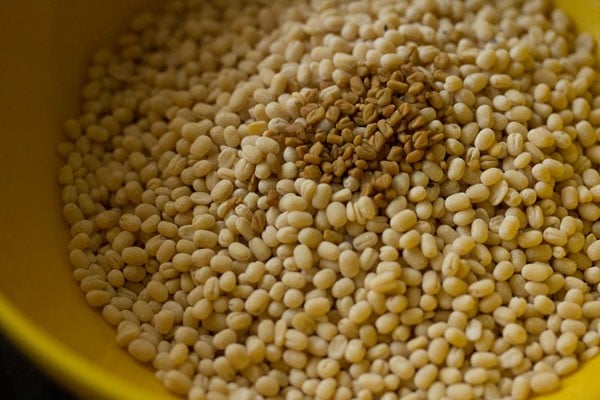
7. Rinse a couple of times in fresh water.
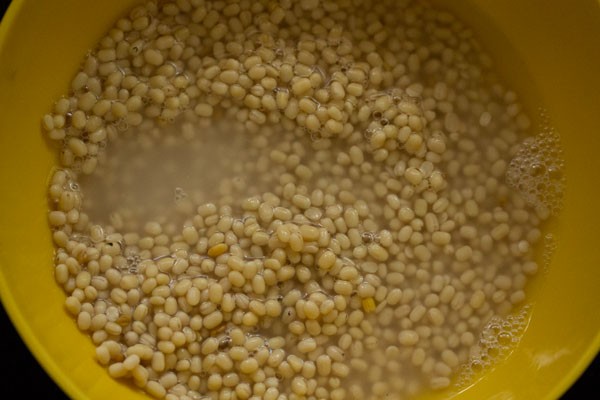
8. Add 1 cup water. Cover and soak for 4 to 5 hours.
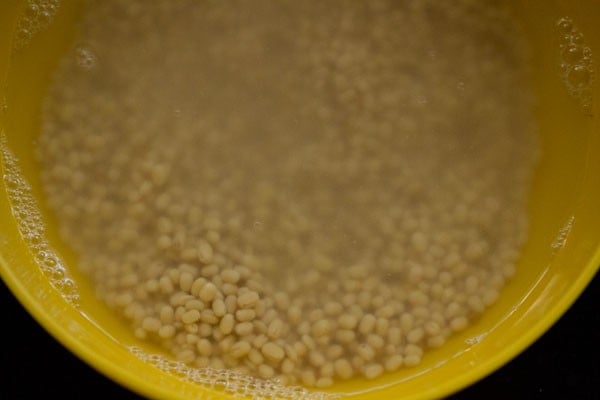
9. Before grinding, drain the water from urad dal, but don’t throw away the water. Reserve the soaked water as we will be using this water for grinding or you can use fresh water for grinding.
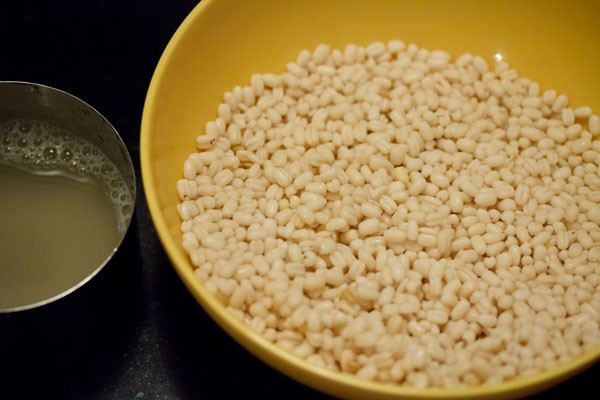
Grind Rice and Urad Dal Separately
10. In a wet grinder jar, add the urad dal. Initially add ¼ cup of the reserved water or fresh water.
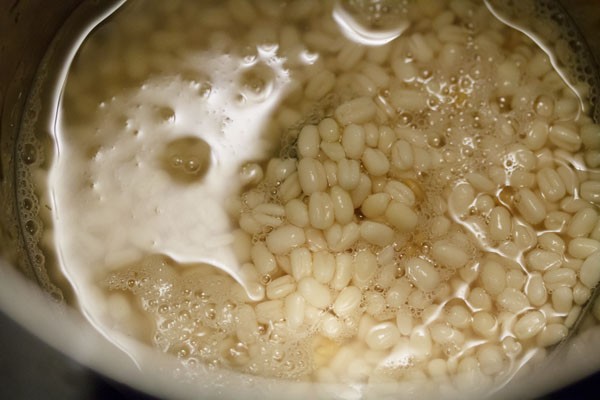
11. And grind the urad dal for some seconds. Then add ¼ cup of the reserved soaked water or fresh water and continue to grind. The batter should be light and fluffy when completely ground.
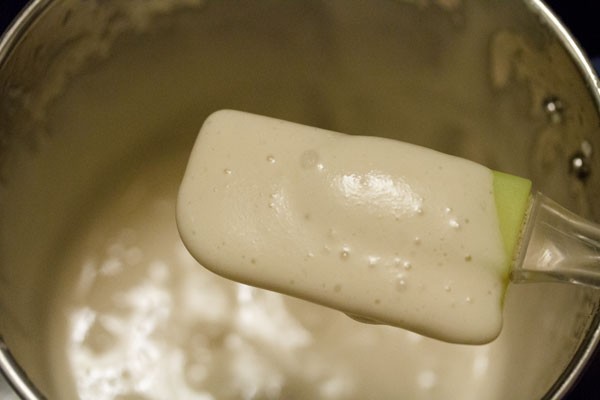
12: Pour the urad dal batter in a deep pan or bowl.
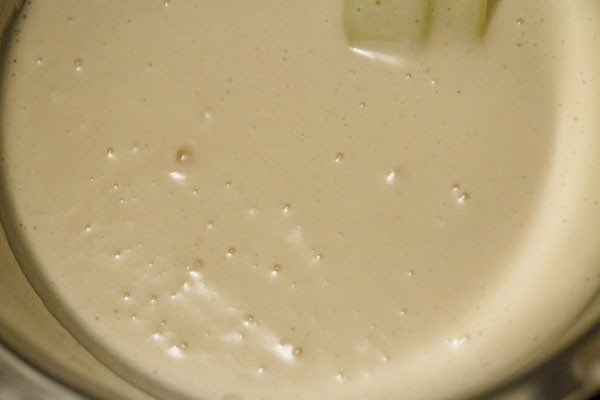
13: Drain the water from the rice and poha. Add them in the wet grinder jar or in a powerful blender. I usually grind in two batches.
Depending on the capacity of your mixer-grinder or blender you can grind in two to three batches. If the mixie gets heated up while grinding, then stop and let it cool. Then continue with the grinding.
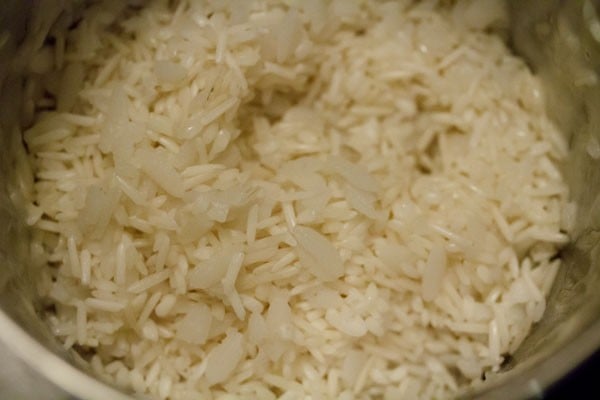
14: Use the reserved urad dal strained water or regular fresh water to grind the rice and poha too. Add water in parts and grind.
The rice can have a fine rava like consistency in the batter. A smooth batter is also fine. I usually add a total of ¾ cup of water while grinding rice. The rice batter should not be too thick or thin.
You can add about ¾ to 1 cup of water depending upon the quality of rice.
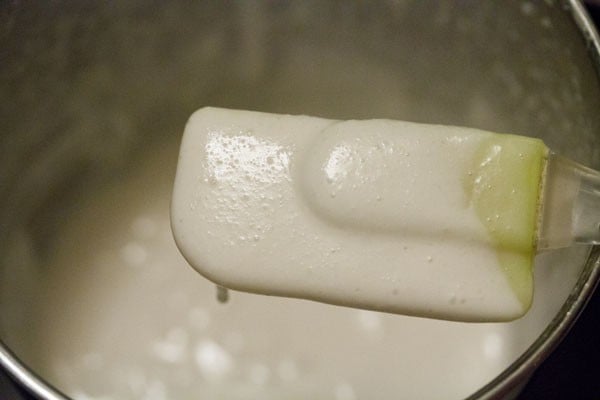
15: Now pour the rice batter in the bowl containing the urad dal batter.
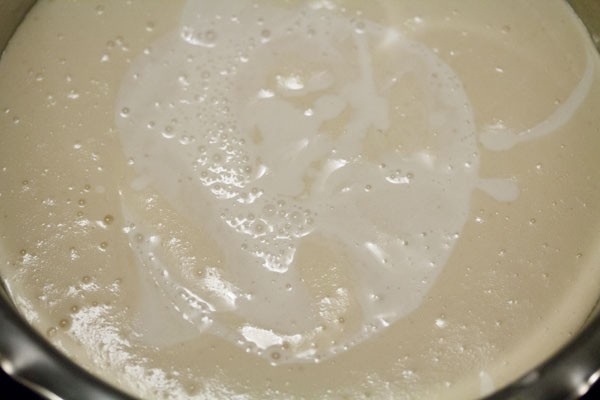
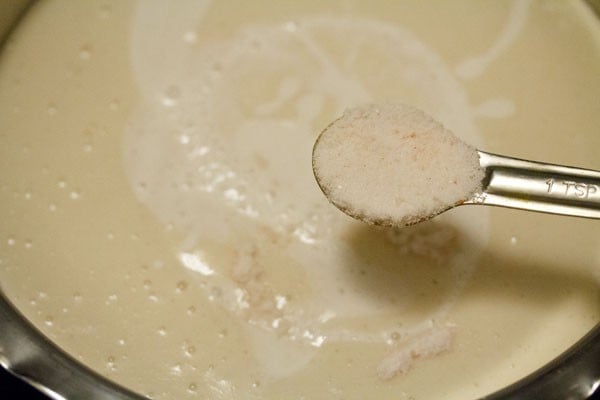
16. Add 1 teaspoon of edible rock salt or pink salt. Mix very well with a spoon or spatula. If you live in a cool or cold region, then do not add salt. Add salt later once the fermentation is done.
If you live in a hot or warm climate, then add salt as it does not allow the batter to get over fermented in the time duration of 6 to 8 hours.
Note that salt retards the fermentation process.
Let the Batter Ferment Naturally
17. Cover the bowl or container with a lid and keep the batter in a warm place. It should be left undisturbed for 8 to 9 hours. Don’t use an air-tight lid. In colder climate, keep the batter for a longer time – from 12 to 24 hours.
I have mentioned various tips below for the idli batter to ferment well. So do read this section below after step by step photos.
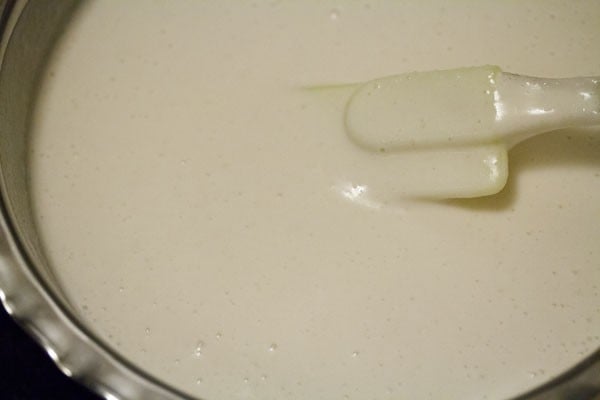
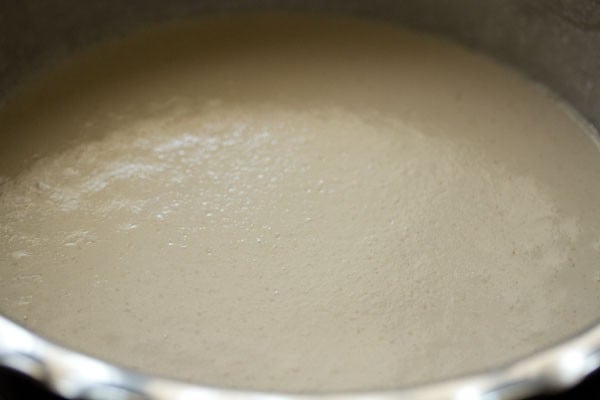
18. The batter the next morning. It will ferment and increase in volume. A well fermented batter will have a nice sour aroma with many tiny air pockets in the batter.
As soon as the batter is fermented you can begin with steaming or keep the batter in the fridge if making later.
If you allow the fermented batter to remain at room temperature, it will ferment more and will become very sour with time.
Make Idli
19. Grease or brush the moulds with oil all over evenly. Gently and lightly swirl the batter. Don’t overdo. Now with a spoon pour portions of the batter in the greased moulds.
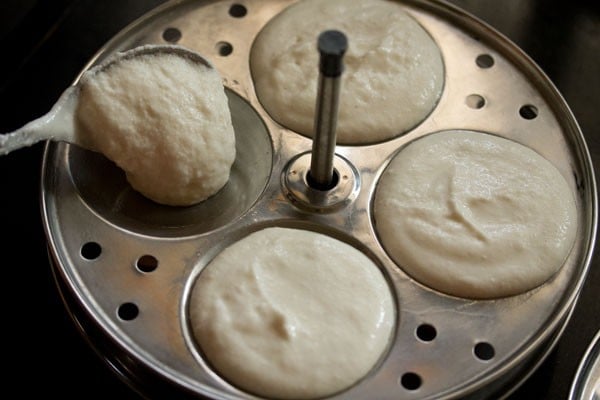
20. Take your idli steamer or pressure cooker or electric cooker or Instant pot. Add some 2 to 2.5 cups water and heat the water until it comes to a light boil. Keep the mould in the steamer or pressure cooker. Steam for 12 to 15 minutes.
Timing will vary depending on the kind of equipment you have used. If using a pressure cooker, then cover the pressure cooker with its lid. Remove the vent weight/whistle from the lid. Steam for approx 12 to 15 minutes.
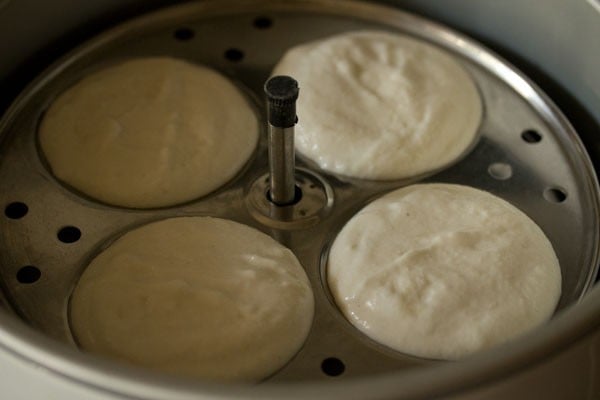
21. Check for doneness by carefully inserting a bamboo skewer or knife. If it does not come out clean, then keep again for a few more minutes.
When done remove the mould from the cooker. Don’t overcook as then they become dry.
Dip a spoon or butter knife in water and slid them through the cooked idlis. Remove and place the them in a warm container like a casserole.
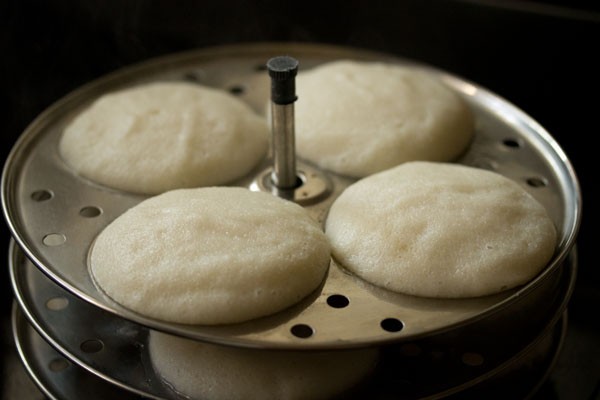
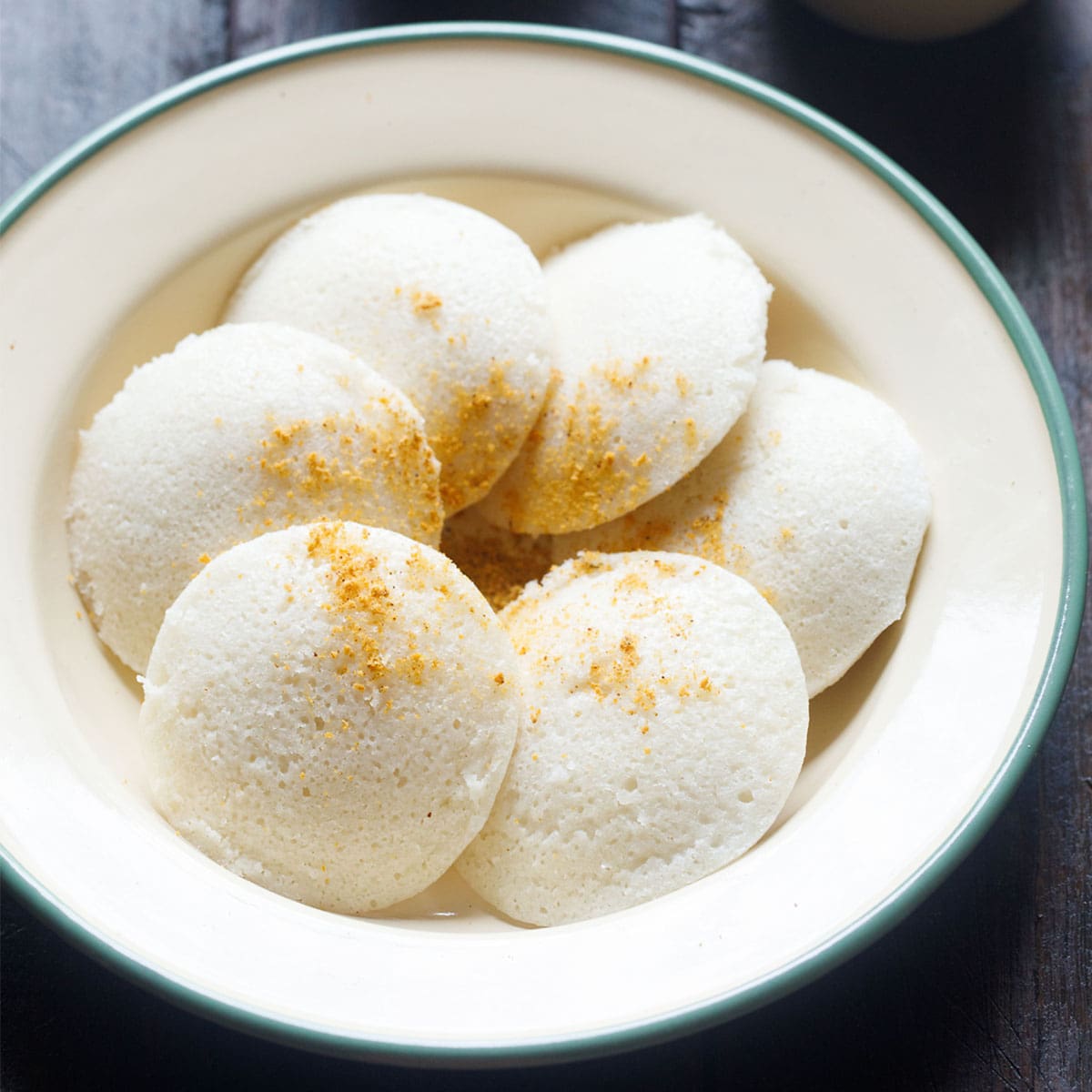
22. Serve Idli hot or warm with sambar and coconut chutney.
Serving Suggestions
Idli pairs best with coconut chutney and sambar, a classic combination that enhances its soft, delicate flavor. Traditionally, these are dipped in hot sambar and eaten with chutney on the side.
You can explore:
- Tiffin Sambar (thick, hotel-style)
- Homestyle Sambar (thinner, lighter)
- Onion Chutney, Tomato Chutney, or Peanut Chutney
Idli Podi is another flavorful choice; a dry lentil-spice mix often served with ghee or sesame oil. In some homes, they are also enjoyed with tempered curd, making a simple and comforting meal.
Storing Idli & Batter
Leftover idlis stay fresh in the fridge for up to 2 days. Store in an airtight box and reheat by steaming or sprinkling water before microwaving.
The batter lasts 3 to 4 days in the refrigerator. Keep it covered. Bring to room temperature before using and stir gently before pouring as this keeps the air bubbles intact.
To store longer, freeze the batter for up to 1 month in freezer-safe containers. Leave space for expansion. Thaw overnight in the fridge.
Note: frozen batter may give a slightly denser texture.
Variations With Idli Batter
Once you’ve mastered the basic idli batter, you can try healthier variations. Add soaked moong dal for protein, or thick poha for softer texture.
Use Ragi, Millet, or oats for more fiber. Make Quick Oats Idli for busy mornings. Sama Chawal Idli with barnyard millet is great for fasting or gluten-free diets.
You may also enjoy exploring these unique regional and creative takes:
- Kanchipuram Idli – Spiced and steamed in banana leaves, this Tamil Nadu-style variant is flavored with cumin, pepper, ginger, and ghee.
- Thatte Idli – A large, flat idli from Karnataka that’s soft, spongy, and perfect for dunking in sambar.
- Leftover Rice Idli – A great way to use cooked rice, these are soft, fluffy, and need fermentation.
- Kotte Kadubu – A traditional Karnataka recipe where idlis are steamed in jackfruit leaves for a distinct flavor and aroma.
Ultimately, don’t be afraid to experiment. Try different proportions, additions, and techniques to discover what gives you the best texture, taste, and fermentation in your own kitchen.
Dassana’s Recipe Tips
Idli was a Sunday ritual while growing up; always served with chutney and sambar. Over time, I’ve learned a few things that make a real difference:
- Adding Poha: Add a handful of thick poha or cooked rice to the batter for a softer texture. This step is optional but makes a noticeable difference.
- Steaming in Muslin: Opt to steam them on a damp muslin cloth for a smooth, soft surface.
- Fermentation: Ensure the batter ferments well, with a pleasant, mildly sour aroma and visible rise.
- Rice Type: Use idli rice or an equal mix of parboiled rice (idli rice) and raw rice for best results.
- Lentil Freshness: Always use fresh urad dal; aged lentils can lead to a denser texture.
- Water Proportion: The amount of water should be perfect in your batter. Neither less nor more. Aim for the correct balance.
- Multipurpose Batter: The batter is versatile – make idli on day one, and Dosa, Uttapam, or Appe on the following day.
How to Fix Idli Batter That Won’t Ferment
Fermentation is a key factor in getting a soft, light and fluffy texture. For proper fermentation of idli batter a warm temperature is apt. In cold climates, fermentation does not happen well.
I get a lot of queries on how to ferment the batter in winters. So I have summarized my experiences in the following points below:
- Warmth is Key: Keep the batter in a warm spot to help it ferment well. You can place it near a heater, inside a pre-warmed (but switched-off) oven, or use the Instant Pot on the yogurt mode set to the ‘less’ setting. All of these methods create a gentle, consistent warmth that supports natural fermentation.
- Avoid Salt in Cold Weather: Salt slows fermentation in winter. Add it only after the batter has risen.
- Add Sugar or Fenugreek: A pinch of sugar or a few methi seeds (soaked with urad dal) helps activate natural yeast and bacteria.
- If No Rise After 12 to 14 Hours: Stir in ¼ to ½ teaspoon instant yeast (dissolved in water). Use the batter immediately. Don’t refrigerate.
- Final Resort, Use Baking Soda: If fermentation still fails, add ¼ to ½ teaspoon baking soda before steaming. Use this sparingly.
- Check Urad Dal Batter: It should be ground till very fluffy and light. Poor grinding = poor rise.
- Water Matters: Too little water makes dense batter. Add just enough for a smooth, thick flow.
- Instant Pot Method: Place a trivet in the steel insert, set the batter bowl over it, and ferment using the yogurt setting. Use a glass lid or keep the vent open. In warm weather, 7 to 8 hours works. In winter, it may take longer.
Idli Batter vs Dosa Batter – Key Differences
Though the ingredients are similar, the two batters behave differently:
- Idli Batter: Thicker, holds shape in moulds. Usually a 4:1 rice to dal ratio.
- Dosa Batter: Slightly thinner for easy spreading. A 3:1 ratio works well.
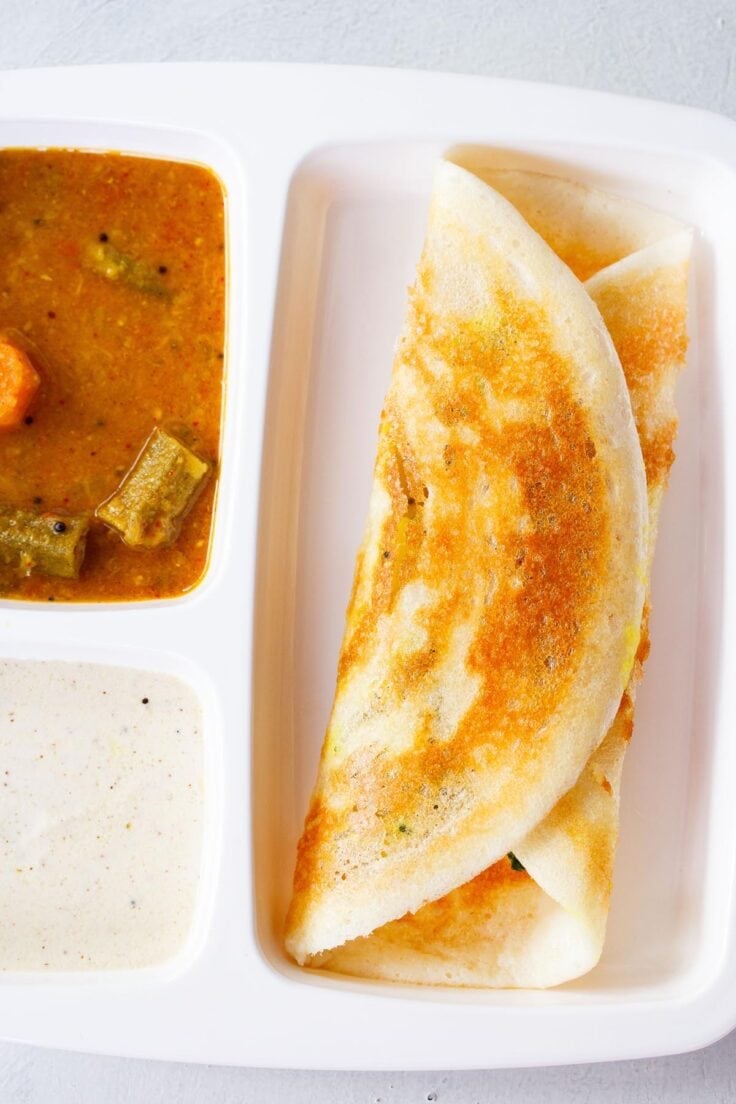
You can use idli batter to make dosa by thinning it slightly after fermentation. For dosa, you can also tweak the batter by using sona masuri or parmal rice instead of idli rice, or substitute with idli rava for a quicker method and a slightly different texture.
Leftover Idli Ideas
Leftovers are perfect for quick snacks or lunchbox recipes. Here are some creative and tasty ways to use them:
- Fried Idli: Deep or shallow fried till golden. Served with chutney or ketchup.
- Masala Idli: Sautéed idli cubes in a spiced onion-tomato masala.
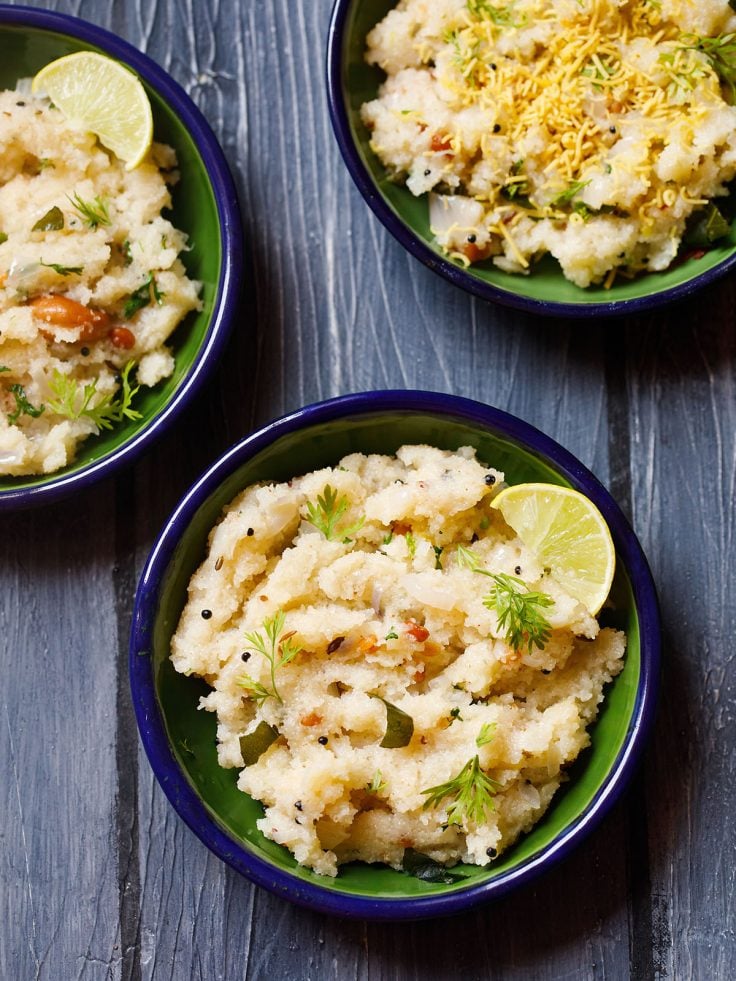
- Idli Upma: Crumbled idlis stir-fried with mustard seeds, green chilies, and onions.
- Chilli Idli: Indo-Chinese style with capsicum, soy sauce, and spices.
- Podi Idli: Tossed warm idlis in idli podi with sesame oil or ghee.
- Idli Manchurian: Crisp-fried idlis coated in Manchurian sauce.
Your Questions Answered
How do I know if my idli batter has fermented well?
Well-fermented batter should double in volume, have a mild sour aroma, and show small air bubbles throughout. It will feel lighter when stirred and look slightly risen and airy on top.
Why are my idlis dense and flat even after fermentation?
This usually happens when the urad dal isn’t ground fluffy enough or the batter is too thick. Make sure you grind the urad dal till very light and airy. Also, don’t skimp on soaking time or warmth during fermentation.
Can I skip poha in the batter?
Yes, you can make without poha (flattened rice). However, poha or a bit of cooked rice helps in giving them a more softer texture. If you skip it, make sure your fermentation is strong and batter consistency is perfect.
What should I do if the batter hasn’t fermented at all?
If the batter hasn’t fermented after 12 to 14 hours, and the temperature is cold, you can stir in a small amount of instant yeast or baking soda just before steaming. But only do this if absolutely necessary, and use the batter immediately.
Step by Step Photo Guide Above
Ingredients
- 1 cup regular rice + 1 cup parboiled rice or 2 cups idli rice or 2 cups parboiled rice
- ½ cup (120 grams) urad dal – whole or split (husked black gram)
- ¼ cup (20 grams) thick poha (flattened rice)
- ¼ teaspoon fenugreek seeds (methi seeds)
- 2 cups water – for soaking rice
- 1 cup water – for soaking urad dal
- ½ cup water – for grinding urad dal or add as required
- ¾ to 1 cup water – for grinding rice or add as required
- 1 teaspoon rock salt (edible and food grade) or sea salt
- oil – as required to apply to the idli moulds
- 2 to 2.5 cups water – for steaming
Instructions
Soaking rice and lentils
- Pick and rinse both the regular rice and parboiled rice.
- Rinse the poha and add to the rice.
- Add water. Mix well. Cover and keep the rice and poha to soak for 4 to 5 hours.
- In a separate bowl, rinse the urad dal and methi seeds a couple of times.
- Soak the urad dal with methi seeds separately in water for 4 to 5 hours.
Making idli batter
- Drain the soaked urad dal. Reserve the water.
- First, grind the urad dal and methi seeds with ¼ cup of the reserved water for some seconds. Then add another ¼ cup and continue grinding until the batter is smooth, fluffy, and light.
- Transfer the urad dal batter to a bowl.
- Drain and grind the soaked rice and poha with water in batches to a smooth, slightly grainy consistency.
- Mix both the batters together in a large bowl or pan. Add salt and mix well using clean hands or a spatula.
- Cover and let the batter ferment in a warm place for 8 to 12 hours or until it doubles in volume.
Making idli
- Before you begin steaming, heat 2 to 2.5 cups water in an idli steamer, or a pot or pressure cooker until the water comes to a light boil or simmer.
- Grease or brush the idli moulds lightly with oil.
- Gently stir the fermented batter. Pour it into the moulds.
- Once the water in the idli steamer, pot or pressure cooker comes to a light boil, place the idli mould stand.
- Steam in a steamer or pressure cooker (without the vent weight/whistle) for 12 to 15 minutes, or until the batter is cooked firm.
- To check doneness, insert a toothpick and it should come out clean. The surface should look set and feel springy.
- Let the idlis rest for 2 to 3 minutes, then gently remove with a spoon.
Serving & Storage
- Serve the steaming hot idli with coconut chutney and sambar.
- Store leftover idli batter in the fridge for 3 to 4 days. Idlis can be refrigerated for up to 2 days and reheated by steaming or microwaving with a sprinkle of water.
Video
Dassana’s Notes
- For regular rice variety – you can use sona masuri rice or parmal rice or basmati rice.
- Note that the approximate nutrition info is for 1 medium-sized idli served as is without chutney or sambar.
-
Fermentation is one of the main factors to get soft, light and fluffy idli. Fermentations tips for winters listed below.
- Warmth: Place the batter bowl in a warm place – e.g near a heater or in a warm place in your kitchen.
- Oven: Preheat your oven at a low temperature (80 to 90 degrees celsius) for about 10 to 15 minutes. Then switch off the oven, keep the batter bowl inside and close the door.
- Lights in the oven: If your oven has lights, then keep the lights on and place the batter inside.
- Sugar: Adding a bit of sugar does help in fermenting the batter. In this recipe you can easily add upto 1 teaspoon sugar and don’t worry – these steamed cakes won’t be sweet.
- Salt: During winters, skip adding salt to the idly batter as salt retards the fermentation process. Rock salt and sea salt are good options to add in the batter.
- Fermentation time in cold winters: In winters, keep the batter for a longer time to ferment, like 14 to 24 hours or more. Do remember that even if you do not see the batter doubled or tripled, you should see tiny bubbles in the batter. You should also get the typical faint sour fermented aroma from the batter.
- Instant Yeast: You can even add ¼ to ½ tsp of instant yeast (dissolved in 2 to 3 teaspoons of water) 30 to 45 minutes before you steam. But do this method when the batter has not fermented well. The negatives of this method is that you have to use all the batter at once. Even refrigerating this batter makes it very yeasty and sour.
- Baking Soda: You can also add ¼ to ½ baking soda and then ferment the batter in cold seasons.
- Fenugreek seeds: Addition of fenugreek seeds (methi seeds) also helps in fermentation.
- Urad dal batter consistency: Urad dal has to be ground really well. Urad dal batter has to be soft, light and fluffy. So I suggest to grind both urad dal and rice separately to get soft and fluffy texture. A well ground urad dal batter also helps in fermentation. Also use urad dal which is fresh and within its shelf-life. Aged urad dal does not ferment well and makes the idli dense.
- Amount of water: Do remember to add the right amount of water in the batter. If the water is less, then the texture will become dense.
- Fermenting idli batter in Instant Pot: Press the yogurt option and use the less mode. Place a small trivet in the IP steel insert. Keep the bowl with the batter on the trivet. Keep the vent position to venting or you can use the Instant Pot glass lid. Set the time for 7 to 8 hours. On warmer days, the batter will ferment quickly. On colder days, it may take a few more hours for the batter to ferment in the Instant Pot.
Nutrition
Idli Recipe from the archives was first published on April 2012.
I notice that grinding urad dal in a mixie yields significantly batter volume than a wet grinder. Do I need to increase the proportion of urad dal to compensate for this?
Hi Anu, that’s interesting. My experience has actually been the opposite. I usually find that a stone wet grinder yields a fluffier urad dal batter with more volume than a mixie.
That said, if your mixie is already giving you more batter volume, I would not increase the proportion of urad dal. I would stick to the same ratio and judge the batter by how well it ferments and the texture of the idli.
If the idlis are turning out soft and fluffy, there is no need to make any changes.
Hope this helps.
Hi Dassana, for making idlis in the electric rice cooker, should we heat/bring the water to a boil first or directly place the stand into it and press the ‘cook’ option.
Hi Shirin, yes you’re right. It works better if the water is heated first.
A light simmer is fine. Once it starts gently simmering, place the idli stand and cook. This helps the idlis steam well and turn soft.
Cant forward by WhatsApp. Reply.
Thanks for letting me know. I will look into this issue.
Took some experimentation with exact mixtures but I managed to make a higher protein idli with a mix of 60% urad dal, 10% chana dal, 20% toor dal, and 10% moong dal. I use the same amount of idli rice as total dal and add fenugreek seeds to the dal before soaking.
That sounds great. Nice mix of dals and adding chana, toor, and moong dal definitely boosts protein and gives a different flavor. Thanks for sharing your version.
Thank you for sharing this recipe. The idlis came out so soft and fluffy, and your fermentation tips were spot on. I’ll definitely be trying more recipes from your blog.
Glad to know this. Happy the tips helped.
The recipe is clear and the steps seem to be easy to follow. However I’m not very good at bread making and my bread dough always turns out wrong as my kitchen temperature is maybe too cold – usually around 19*C.
Please could you add the video as watching it might give me more confidence to attempt this recipe? Thank you from a fan of your website living in the UK.
Thank you so much for your kind words and support.
Bread-making can definitely be a challenge in cooler temperatures. One method I learned during my pastry training at Le Cordon Bleu is to place a bowl of hot water in a switched-off oven and keep the dough or batter inside (covered). It creates a warm space for proofing. Once the water cools, you can replace it with fresh hot water to maintain the warmth.
The recipe video plays just after the first image in the post, but you can also watch it here on Dassana’s Veg Recipes YouTube Channel.
Hope this helps, and happy cooking & baking.
Can I add an urad, chana dal, mustard seeds and kadi patta tempering to batter before making idli?
Yes, you can add the tempering. It gives a nice flavor and taste. But for soft, plain idli, the batter is usually kept simple without it.
Hi, I’ve been following your recipes and appreciate all the wonderful guidance and tips you share.
I have a few questions as I’m still learning the process and sometimes failing miserably.
Is the batter used for Idli and Dosa the same? I’ve heard to use the fermented batter for Idli on day one and for Dosa from day two onwards.
– The ratio is 1:4 (1 cup urad dal to 4 cups idli rice).
– Don’t add poha; use half a cup of cooked rice while grinding.
– Grind urad dal and methi seeds first to a slightly coarse texture, then add rice and grind it all together.
Despite following these steps, I’m facing several issues:
– My Idlis never come out soft or fluffy. They are edible but not very soft (though not chewy).
– My Dosas never turn out crisp.
– For fermentation, I use oven lights. It does ferment, but I’m never satisfied with the result. It rises but never doubles!
– The batter is supposed to be smooth and milky white, but mine always has a grainy texture and is slightly coarse and brownish.
– I use a Preethi mixer (I don’t have a grinder). It heats up quickly, and I have to wait 30 minutes for it to cool down. Making the batter in the mixer is a one-hour task, which is exhausting.
– The last three times, my batter did not rise at all. There was no fermentation, and once it developed dark spots, I had to throw it away.
Please help me out. I’m feeling frustrated and tired.
Have a nice day!
Hi! Thank you so much for your kind words and detailed message. I’ll reply to each of your points to help you troubleshoot:
1. Idli and Dosa batter – Yes, the same batter can be used. Day 1 for idli (when it’s fresh and thick), and day 2 onward for dosa (after it turns slightly thinner and tangier).
2. Ratio – 1:4 is correct. You can even use 1:3 depending on the rice quality.
3. Poha vs Cooked Rice – Both work. Cooked rice is fine if it’s blending well and helping fermentation.
4. Grinding Method – Try to grind urad dal and methi seeds to a light, fluffy consistency (not coarse). Rice can be slightly grainy but not too coarse.
5. Idli not soft – This is often due to poor urad dal grinding, weak fermentation, or old dal. Use fresh, good-quality urad dal and grind till fluffy. Transfer the urad dal batter to a bowl and grind rice separately. Later mix both the batters in the same bowl. Add the right amount of water to the batter to get soft idli but do not make the batter runny or thin.
6. Dosa not crisp – Batter might be too thick or under-fermented. Add a bit of water to thin it and ensure good fermentation.
7. Fermentation issues – Try placing the batter in a warm spot covered with a cloth or in a pre-warmed oven. You can also wrap the bowl with a thick towel.
8. Grainy, brown batter – Overheating the mixer could be the cause. Try adding ice-cold water during grinding and rest the mixer between batches.
9. No fermentation + dark spots – This could be due to contamination or poor-quality/aged urad dal. Ensure all utensils are thoroughly clean, use filtered water, and always use fresh, good-quality dal and rice; avoid old or long-stored ingredients.
Please don’t lose heart. Fermentation is tricky but i assure you with practice you will master the art of making idli and dosa. With a few tweaks, you’ll get there!
Wishing you better results next time. Feel free to share how it goes.
Thank you so much for the detailed explanation and words of encouragement.
You’re very welcome! I’m so glad the explanation helped.
Such a detailed and helpful guide! Your tips on fermentation and grinding are very clear. Thanks for sharing!
Thank you so much. I’m really happy to know you found the post and tips helpful. Your feedback means a lot.
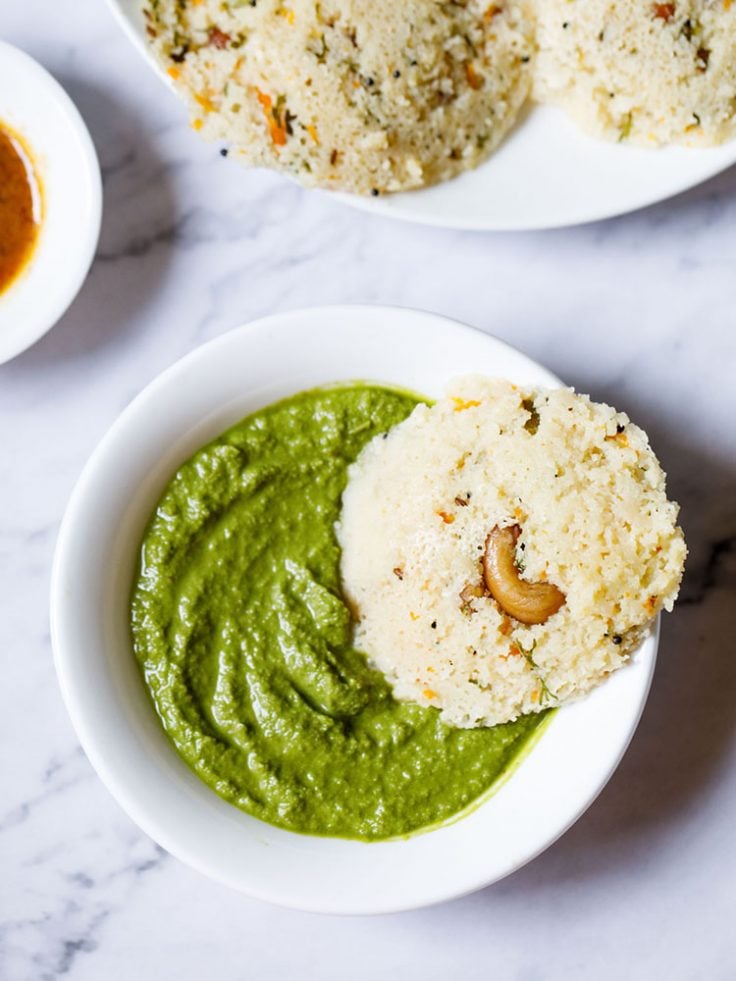
Here’s a fool-proof recipe to make a fresh batch of idli batter and then steam it to make yum, fluffy idlis at home. Ever since I’ve come across this recipe, idli has become all the more regular at my home.
Can I use split white urad dal? I have store bought poha and I don’t if it of required thickness or not, or how to check its thickness?
Yes you can use split urad dal. You can use the poha that you have.
Great recipe… easy to follow and read.
This is as good and easy recipe you can find anywhere. Very detailed, well explained and yet easy to follow.
Such a wonderful recipe with detailed description. I would definitely try.
Fabulous recipe, Love From Smritee ❤❤
Thanks a ton.
Hello Dassana, I have a question on fermentation of the batter. I normally use oven with the light on for over 12 hrs. Batter ferments ok but not really very bubbly and frothy. I live in northern US where it is still cold.
I have a dehydrator for dehydrating foods. The minimum temperature setting on it is 40C. Do you think 40C temperature for the fermentation of the batter is ok or too much?
I want to try this dehydrator for fermentation and would like to hear your opinion on this. Thanks. Keep up the great work you are doing.
Hi Rom, sorry could not reply earlier as I was travelling.
I am not sure how the dehydrator would work in fermenting the batter. I hope it does not remove a lot of moisture/water from the batter. But you can try with a small portion of the batter with about 30 to 35 degrees Celsius temperature.
If you use a room heater, you can keep the batter near it. This would help.
Another option is the instant pot which helps to ferment the batter perfectly. Now I use the instant pot in cold seasons, but earlier I would preheat the oven at 80 degrees Celsius for 10 minutes. Then place the batter in it. I did not have the option of keeping lights on in the oven, so I would turn off the oven, close the door with the batter bowl inside.
I hope these suggestions help.
Dassana, thanks very much for your response. Yes, there is a high probability that the food dehydrator will dehydrate the batter.
As the name indicates, it is a dehydrator. I think I will try the preheated oven. We don’t use room heater here. Only central heating system.
Since it gets bitterly cold during winter months, room heaters will not provide the necessary warmth. Keep up the great work you are doing. Thanks again.
Hi, I love to make this recipe as I have tried this at my Indian friend’s house. But I only have rice and fenugreek seeds for this where I live now.
Do you think it will work without other important ingredients Or do any suggestions you have?
The urad dal is needed and the recipe may not work without the lentils. There is a regional goan variation made with rice only (which is called sanna) but it has some other ingredients added to it – like coconut, yeast or palm wine which is called toddy. You can check the recipe of sanna online and that will help.
Fantastic!
idli delicious !!!
i felt so good after having idli as a breakfast. we do have fermented rice cake in korea but idli is much softer and lighter. thank you for the great recipe.
Thanks and welcome. Thanks also for sharing about the fermented rice cake.
If we are using idli rava instead of idli rice, does the proportion remain the same?
You can use 2 cups of idli rava for ½ cup urad dal. Another proportion that you can use is 2 cups of idli rava for 1 cup of urad dal.
sounds delicious! going to try cooking it!
One of my favourite items in Indian food! Thanks a lot!
Hi, should I add or skip salt in colder places to speed up the fermentation process? Because some say salt helps in fermentation in colder weather.
Salt retards fermentation and slows it. What has worked for me is to add salt during hot weathers and skip it in colder seasons. Hope this helps.
Hi- I love your recipe, but can you clarify one thing- is this really the correct temperature? I am thinking this is close to 200 deg F and will the batter not get caked in that kind of heat? besides in one of your comments you have called out 50-60 deg C- which one is correct?
“””Oven: Preheat your oven at a low temperature (80 to 90 degrees celsius) for about 10 to 15 minutes. Then switch off the oven, keep the batter bowl inside and close the door””
Hi Jayanthi, 80 to 90 degrees celsius will just make the oven warm or lightly hot. 80 to 90 degrees celsius is 176 degrees to 194 degrees Fahrenheit. Moreover the oven is being switched off. It it is just made warm for some minutes and then switched off. So the batter will not cook in it. For baking a much higher heat is used like 350 degrees to 400 degrees Fahrenheit.
You can use either depending on the coolness or coldness in your city. In places where it cool or cold or even snows, you can keep the batter at a temperature of 30 to 36 degrees celsius in the oven depending on the lowest temperature. Now I use Instant Pot for fermenting, but earlier I would keep the batter in the oven. I hope this helps.
Ms.Dassana Amit,
Very useful for me being a pure vegetarian. You have sent all vegetarian recipes.
I tried few items and came out beautifully. Very good information and coverage of various types of vegetarian recipes.
I have forwarded to my friends in US, and Singapore. Their reply was very nice and useful. Also forwarded to lot of friends within India.
Once again thanks for all the pains taken as well as your precious time sending to me.
Regards
Panchoo
Thanks a lot and glad to know that the recipe emails have been helpful and useful. Also good to know that the recipes you tried from the blog worked greatly. Thanks for sharing the emails with your friends. Nice to know. Welcome and thanks again.
IN CAPITAL LETTERS: AS A SINGLE OF 68 YEARS- YESTERDAY I FOLLOWED THE IDDLY PROCESS AND GLAD THAT I SUCCEEDED AFTER SO MANY YEARS OF LIVING. I AM TYPING IN CAPITAL LETTERS TO MAKE MY APPLAUSE LOUD (MAY BE I AM SHOUTING IN JOY)
I can understand and Thank you so much. Your comment says it all. Thanks again.
Hi Dassana,
I have tried this measurement with mixer grinder for few times now. Thanks a ton. It turned out to the best that I could make. Now I bought a wet grinder. Will the same measurement work for soaking and grinding? Also, the amount of the water used to soak matters?
You mentioned, don’t use air tight container for fermentation. Did you really mean don’t use or “use”? I have been thinking all these days that we have to use air tight container for fermentation. I live in Bangalore and these days it is really cold.
Regards,
Jayasuda.
hi jayasuda, firstly thank you for the review and rating on idli recipe. glad to know. your queries answered below.
1. for a wet grinder, you will need to add some more water while grinding. the urad dal really becomes fluffy and light like whipped cream in a wet stone grinder. for 1/2 (half) cup of urad dal, i add 1.5 cups water. for 2 cups rice, i add 2.5 cups water. but add water in parts when grinding urad dal, so that it becomes nicely fluffy and increases in volume.
2. yes, the amount of water does help in fermentations also yields soft idli. a lid has to be used, but it should not be air-tight. a simple plain lid just covering the bowl is fine.
3. to ferment in a cold climate, you can preheat the oven for 20 minutes at a temperature of 50 to 60 degrees celsius. switch off the oven. then keep the bowl inside. if your oven has a lamp, then keep it on and place batter bowl inside. do not preheat if the oven has a lamp. if the oven has a ferment function, then use that. hope this helps.
regards
dassana
Good information &it is so useful to Food business starters ..
Hi,
Can we make idli and dosa batter with Basmati rice? That’s the only variety i have with me and I don’t have an indian store in the vicinity.
with basmati rice, you can try. but it can be tricky to get the right texture depending on the type of basmati rice. still, you can give a try. just grind the urad dal very well till the batter becomes fluffy and light. half the work is done when the urad dal is ground really well. hope this helps.
Madam are u taking cooking class.
If yes then please share me details
I am interested in class
hi nilesh, i am not taking any cooking class. all the recipes that i know of i have shared on the website.
Hi…
I had a couple of questions:
1. If I use 2:1 ratio of rice:urad dal, how much poha and fenugreek seeds should I use?
2. A friend told me the more urad dal I use, the more softer the idli will be. Is it true?
you can use the same amount of poha and fenugreek seeds for the ratio you have mentioned. more urad dal gives a different taste in the idli. the taste of urad dal is felt distinctly in idli. but the idlis are softer with more urad dal if they are ground to a smooth fluffy batter. hope this helps.
Thank you!
Sometimes I tend to use 3:1 ratio of rice:urad dal. How much poha and fenugreek seeds should I use for this proportion?
Also, can I use poni raw rice for idily? Is poni raw rice and basmati rice the same? I don’t know the difference between them that’s why I am asking.
welcome shinu. for 3:1 ratio of rice and urad dal add about 20 methi seeds and 1/4th cup thick poha.
you can easily use poni rice for idli. both raw and parboiled ponni rice will work. basmati rice is different than ponni rice. ponni is a medium grained rice whereas basmati is long-grained aromatic rice. you can ask any recipe doubt or query you have. no problem ????
Hi, I followed your recipe and idli’s turned out nice and soft; however they hd a strong Urad Dal taste. What can I do if the remainder batter? Should I reduce the Urad Dal quantity next time? I used a wet grinder could it be due to time for which I let Urad Dal grind (about 20 mins)?
ami, could be due to the quality, freshness of the urad dal. i have also used wet grinder for this proportion of urad dal and i did not get any strong taste coming from the dal. generally, the taste of urad dal is not felt, unless their proportion is more. the rice and urad dal proportions in this idli recipe is a balanced one and does not give the typical urad dal taste & flavor. you can try changing the brand and buy fresh urad dal which is still within its shelf period. you can even reduce the quantity of urad dal next time if using the same brand. hope these suggestions help.
Thank you!! I think it may be because the Urad Dal I used is old. Your recipe did yield the fluffiest idli’s I have ever been able to make. Will try with a new Urad Dal batch.
thanks for letting me know ami. with fresh urad dal the taste will be better.
Hi, I tried the poha idli it came out good but quite soft..I made the regular idli and I did ferment it well I used 2 cups of idli rice but it was too dense more like a bread..and on the second day it was even harder, what do you think is wrong?
Below is the recipe I usually make this and it comes out fine, but wanted to ty yours, pls tell me what you think went wrong as would like to try it again, thanks.
Idli recipe
Soak overnight
1 cup idli rice
1/4 cup dal
Next day
1/2 cup poha soak 1 hour before grinding
Grind all together with water add salt and keep outside for it to rise then keep in fridge and next day take out and keep before steaming.
thanks nikita. poha idli is soft. hardness or denseness is due to less water. sometimes event though the batter is fermented well, less water in the idli batter can make the idli dense. addition of water also depends on the type and quality of rice used. the batter has to be thick but of a pouring consistency. in your recipe you have used more amount of poha which will help in making soft idlis. also, proportion of rice and urad dal does not make difference if denseness or hardness or softness is considered. but taste wise there will be a difference. one more point is to note is that grind the urad dal really well. a smooth and fluffy urad dal batter helps in fermenting the batter well and also making the idlis soft.
????????idli was sooo soft
thanks kavya for this super feedback and the rating.
Hello,
Love to visit this site every now and then. I love the way you explain every step and methodically share them in picture form.
I’ve made rave idly, beetroot rasam, tamarind rasam and will explore more.
BTW, your Goan recipes are pretty authentic – this is coming for a Goan.
Sincere thanks!!
Regards,
Suyash
thanks suyash for the feedback on the recipe presentation and the reviews on the recipes. my mother is from goa, hence the authenticity. thanks again and happy cooking.
Hello mam, can we use regular salt in the place of rock salt ?
you can, but if living in cold place then avoid using iodized salt.
Hello! I am so homesick for India after watching your video! I have been so blessed for the opportunities to make 2 spiritual pilgrimages to Southern and Northern India. I would LOVE to be able to replicate idli but I have none of the equipment needed. Would you be able to recommend where I could purchase all the needed equipment and approximate cost of each of the pieces?
Thank you very much for your information and suggestions
I am a vegan chef and look forward to participating more on your site and recommending my students to you as well.
Namaste!
Lila
namaste, i can understand lila. to make the idli batter, you can easily buy a mixer-grinder from amazon.com. it will also help you to make various chutneys that you can savour with idli or dosa. you can even buy a table top stone grinder which is exclusively meant for making idli or dosa batter or medu vada batter. you can check on amazon. you will get plenty of options there with customer reviews and prices. i am using preethi 750 watts blue leaf mixer-grinder. wish you all the best.
Can I add 1 cup idli rice and 1 cup millets? i add millets to dosas and they turn out pretty well.. Not sure about idlis..
you can add. it will work. but also add some urad dal to give some fluffiness in the idlis.
Hello mam, plz help its been two days my idli batter z nt showing any sign of fermentation. I am living in delhi so its pretty cold here. Yesterday i kept the batter in hot water bowl for a while bt today i checked its still not fermented. Plz help mam i really wanna make idli.
charu, keep the batter near a heater or keep in the sunlight, if you get any. you can also cover the batter with a warm kitchen towel. don’t worry. sometimes it does take 3 days for the batter to ferment. hope these tips help.
Can i add baking soda or eno salt?
if the batter ferments well then there is no need to add baking soda or eno. if the batter has not fermented well, then you can add eno or baking soda.
Hi,
Does it make any difference if we use split urad dal in place of whole urad dal for given measurements.Do we need to make double the amount of split urad dal.
Thanks and regards
Welcome Yashwin. Use the same amount. You can use split urad dal. I also use it at times to make idli or dosa.
thanks alllottttttt ma’am
ur gr8
thanks alllottttttt
Welcome Divyanshi. Thanks for your kind words.
thanks a lot for suggesting such a wonderful recipe of idli
Welcome Divyanshi
your recipe gave melt in mouth idli’s with out use of fruit salt or soda bi carb which is great. thanks a lot. small tips u write like using reserved water and salt in hot/ warm weather make big difference to end result. looking forward to trying more of your recipes.
Welcome Meenal. Thanks for your positive feedback on Idli Recipe. Glad to know that tips are helpful.
These days, when I make the batter, it blows a lot. After keeping in fridge, still it keeps on fermenting.Is it because I am using poha (flattened rice at good quantity) What does poha help in making soft idlis and how much should be added
The proportion I am using is 3.5 glass rice, 3/4 glass dal and one glass poha
Please help!!!!
its not due to poha. poha just helps in making the idlis soft. for the proportion you are using 1 glass poha is fine. but you can still add less poha like half a glass of poha. as soon as the batter is fermented keep in fridge. this way the batter won’t get over fermented.
This recipe turns out super tasty dosas too . It has turned dosas into my fave breakfast option ☺️☺️ Thanks a ton Dassana
Welcome Neelu. Yes, this recipe gives good dosas also.
Help, please. My idlis didn’t get fluffy and the didn’t rise when steaming. I thought my batter was well fermented. I used 1 cup of Indian long grained rice and 1 cup of parboiled rice. What can I do better? The cabbage chutney and the beetroot chutney from this site were excellent with the idlis. Thank you!
sari, if the idlis do not rise, then it could be more water is needed in the batter or could be due to the batter not getting fermented. the batter should have a pleasant sour aroma and you should see tiny bubbles in it. also it should double or triple depending on how warm are the temperature conditions in your city. if you see that the batter has not risen or no sour aroma, then keep it for some more time. it does get fermented eventually. in winters, i have even kept the idli batter to ferment for 22 hours. you can even keep the batter in a warm place eg near a heater or in a lit oven.
thanks for the feedback on the cabbage chutney and beetroot chutney recipes.
I did see tiny bubbels and the the batter smelled sour, but still my idli’s didn’t get fluffy. After reading your reply, I let the rest of the batter ferment for three days and the idli’s turned out soft and fluffy!
welcome sari. at times the batter does smell sour, but it is faintly or less sour as compared when the batter ferments well. glad that the idlis turned out soft and fluffy.
Hi,can I use just regular basmati rice(2cups) instead of using parboiled rice+ regular rice
Megha, with basmati rice depending upon its type the idlis can become dense or sticky. So I would not suggest only to use basmati rice. Instead you can use sona masuri or parmal rice.
Hi Dassana!
Let me just say- there is not a single recipe of yours that didn’t turn out exquisite. I totally love your recipes
About the idlis I wanted to ask if I can store the batter for couple of days in refrigerator.
Look forward for your reply!
Ayesha
Thanks Ayesha for your positive feedback on recipes. Yes you can store idli batter in fridge for few days. It stays good for about a week.
Hello Dassana,
Please help with 3 queries :
1. what is parboiled rice ? Is it easily available in India ? If yes then by what name ?
2.Urad dal is urad dhuli ?
3.poha thick in case if any other like regular poha is available in market and specifically its not mentioned thick poha can we use it or by anyother name if it is popular in Indian stores ?
Thanks
Megha.
1. parboiled rice is easily available in shops as well as online. its called as ukda or sela chawal.
2. you can use urad dhuli dal.
3. you can use any variety of poha. i have used thick poha.
Hello can i freeze the batter for later use?
Geeta, i have never freezed. so i don’t know the results after freezing the batter.
Thank you so much for your recipe. I did Idlis first time and turned out to be really good.
Also I would like to add note, for places like London, time for fermentation would be around 36 hours (in around march April, without help of oven)
Welcome Manasi. Thanks for sharing this timing. It help definitely help readers from london.
Thanks for the recipe…idlis came out perfect,soft & delicious! Excellent recipe????
thanks rima for this feedback. nice to know.
How many idlis can be made if I follow these measurements??
20 to 25 idlis.
First time making idlis from scratch.. Turned out soft and fluffy! Thanks so much!
Welcome Rheena. Glad to know this.
Hi ur recepies are no wonder mouth watering I am making idli for first time was wondering that for how much time I have to boil rice for the parboiled rice and also what difference it makes TIA
thanks pranjali. parboiled rice is commercially made and you have to buy it from shops.
Hello mam!!
Firstly would like to thank u from bottom of my heart for such detailed n step by step recipes.i tried many n all came out well.also I make tiffins following ur recipes.though my idlis come out soft but in a few minutes Dey devolop a dry layer on top n r no more soft.i follow exactly wt u specified except fr salt..I use regular ashirwad salt 1tsp n baking soda 1/4th tsp.plz correct me
thanks a lot tasneem. its best to use salt which is not iodized. even sea salt which is not iodized works. i am not exactly sure why the dry layer. only one thing i can guess is that the idlis have been steamed too much. if they are steamed too much, then they become dense and dry from top.
Hi Dassana,
This may sound as silly query but I am dying to ask this. I am a huge fan of idli but really afraid to try. So for starters, I tried rava idli. Now the question is, my idli stand has 2-3 holes in between (where we put batter) and batter came out of it 🙁
Did I buy wrong stand? Or am I missing anything? Could you help? I am willing to try this recipe also but first needs to confirm about stand.
It is a steel stand which came with idli and dhokla plates.
Garima, it does not leak. because the idli batter is thick. Give it a try.
Hello Dassana,
Let me begin by saying that your recipes are great! I have never found a single recipe that hasn’t worked till now. I have tried your idli recipe a number of times and the idlis are perfect. I have some idli rawa at home and was wondering if it can be used. If yes, can you advise how long should it be soaked for and should it be grounded as well?
thanks manasi. glad to know and also thanks for the feedback on the idli recipe. you can use idli rava. usually i soak idli rava for 4 to 5 hours. but drain it very well. you have the option of keeping the soaked rava as it is and mixing with urad dal batter or grinding it. usually i grind the idli rava. but you can even choose not to grind it.
Thank you so much for your prompt reply! I will try and let you know how the idlis turned out. Have a great day ahead!!
welcome manasi. do let me know.
Hello Dassana,
I tried the recipe with idli rawa and double the amount of urad dal (took 1 cup) and it was fabulous!! I didn’t grind the idli rawa and forgot to put poha – realised it very late but still it was awesome!! Thank you once again!! 🙂
thats great manasi. thanks for letting me know about it.
This is the second time I am following this IDli recipe, your site makes life soo much easier, thanks so much.
I have not added methi though, hope the idlis will still turn out great, right now they are in the soaking stage !! Hopefully the hot weather here will help!
thanks vaijayanti for this feedback and nice to know. of course the hot weather does help in good fermentation.
Mam can we make parboiled rice at home?…if yes, can u plz tell me d procedure…n thanx 4 d wonderful recipes.
welcome ruby. parboiled rice is commercially made. they cannot be made at home.
Meri idli upper part ke center mein soft rhe jati hai,extra time bhi steam kiya.
lagta hai ke idli batter patla hain. agar idli batter sahi consistency ka ho, toh center soft nahi rahta.
Hey,
I did not have parboiled rice so i followed your other recipe of 1 cup basmati rice, 1 cup rich poha, 3 tbsp urad dal,1/4th tbsp methi seeds. Washed and Soaked them together for 5 hours. Ground them and used the same water that i used to soak for grinding. I did not have Rock salt so i added 1 tbsp normal non iodised salt.
Now it’s been sitting out since 20 hours, but i don’t see any fermentation. Also, the batter had become more watery than it was yesterday.
What went wrong and can it be corrected?
do you live in a cold place? if yes than it can take 24 to 48 hours too. i am not sure why the batter has become watery. but the batter should not smell foul. if it does not have the sour aroma, that means it has not fermented. then keep for some more hours. preferably keep in a warm place or near a heater or in an oven, where the lights are on. or you can warm the oven at a low temperature for some minutes. the switch the oven off and then keep the batter inside.
Hi Dassana are u a South Indian this recipie is great
thanks sneha. my father is from south india.
Can you please send me the idli recipy for diabetic person.
asir, i will try to add.
Hi,
Can I make dosas with the same batter?
yes you can make dosa with the same batter. if the batter is too thick to spread, then you can add a few tablespoons of water and mix it very well with the batter.
thanks for receipe .
some questions:-
aapne baking soda use nahi kiya??
kya idli fulengi soda ke bina??
idli ko slow flame par banana hai ya high flame par?
chitra, baking soda is not at all required. if the batter gets fermented well, then the idlis turn out soft and fluffy. cook on a medium to high flame.
I don’t have a idli steamer and my pressure cooker also doesn’t have much height. Can I try making this is in electric rice cooker?
rashmi, yes you can make. i use my electric rice cooker to make idlis. add some water and keep the idli mould.
I wouldn’t under the rice please tell me wat rice.I am using for idli pulung a arise.so wat rice I have to buy.
Hi,Can you please suggest the measurement for making idli for one serving or(1person) 10idlis only….
Thank you
this idli recipe yields about 20 to 24 medium sized idlis. so you can proportionately reduce the ingredients by half. then the recipe yield will be about 10 to 12 idlis.
Thanks for yor lovely recipe. I have been using it since last 2 yrs very successfully and also made dosa out of it by changing the urad dal quantity a bit. The first time I made idlis I was cooking for 25 people. It was a dinner and my guests were all non Indian. I was nervous but your step by step process made it successful. Every one loved the food and took second and third helping! The layout and photographs are very nice and your personal observations and stories make it a delight to read every time.
very pleased to know this madhu 🙂 thankyou so much glad your guest’s loved the idlis. god bless you and your words touched my heart thanks again.
I had prepared a paste of rice, soda, salt and forgot to mixed poha n I remembered after 24 hours what should I do now can I mix poha paste now plz reply soon..
forget poha. just make idlis with the batter that was ground intially. if you have soaked the poha, then just make some cutlets with it. drain the poha very well. mash and add some boiled mashed potatoes, spices etc. or you can add some milk, sugar or jaggery and mix with the strained poha.
Hi, i have tried your recipies and each time they turned out just fantastic !! Thankyou soo much.
This time for idlis i have two constraints… One, we have only basmati rice ( and poha in stock) and Second, we live in a very cold place. Please suggest what best i can do.
thanks neha. you can try this recipe for poha idli – 1 cup regular rice or parboiled rice, 1 cup thick poha, 3 tbsp whole urad dal,and 1/4 tsp fenugreek seeds. rinse for a couple of times. then soak everything and then grind to a thick batter.
cold is also an issue where i live. what i do is i keep the batter for a longer time – 14 to 15 hours. i also preheat the oven at a low temperature for some minutes. switch off the oven and then keep the batter bowl inside with a lid. alternatively you can also keep the batter near a heater (if using one) or in a warm place. you can also keep the batter in a large casserole. other than this, 1/4 to 1/2 tsp of baking soda or instant yeast can be added to the batter before you prepare the idlis. after adding baking soda, you can immediately make the idlis. after adding instant yeast (dissolve instant yeast in 1 to 2 tsp water), keep the batter for 30 to 40 minutes. the batter will have bubbles. then make idlis. but with instant yeast, all the batter has to be used up immediately as if you keep in the fridge, the batter becomes too yeasty.
VERY NICE RECIPE I VERY LIKE
thankyou krutika 🙂
Hi
1.will idli be soft if we use only idli rice and poha(i mean without urad dal)
2.if so wat s d ratio
idli will be soft if you use idli rice and poha, but you do need to add a bit of urad dal. here’s how i make poha idli.
ratio – 1 cup idli dosa rice or parboiled rice, 1 cup thick poha and 3 tbsp whole urad dal and 1/4 tsp methi seeds.
rinse and then soak all of them together. poha you can rinse separately and then soak with the rice and urad dal.
grind in parts. a fine granular consistency of rice is fine in the batter. add rock salt and ferment.
before steaming, you can add 1/8 to 1/4 tsp baking soda. adding baking soda is optional.
with poha, the idlis become very soft and fluffy.
Hello Dassana
Why you have not mentioned baking soda ?
khanita for these soft idlis recipe there is no need to add baking soda. hope this help’s you.
I made the idli with the help of your article yesterday and everyone from my family like this very much.
This recipe is first I have ever made in my life . So the feeling that I have is just amazing .thanks mam for the fabulous and easy step by step procedure to mark idli .
very pleased to know this vikram thankyou for your kind and positive words 🙂 you are always welcome always.
Hi madam thanks for your efforts.I have a doubt can I use a blender for dosa batter instead of grinder as we don’t have it plz reply
sri you cannot use a blender as the batter won’t grind even and smooth as in the grinder hope this help’s you.
Hi dassana, I am a big fan of your recipes..tried dal makhani first time ..And it was awesome first experience …Now love to try idlis…before starting.. I want to clear one doubt ..In ingredients you have written skined whole or split urad dal..but in pictures it is looking like unskinned urad dal ( dhooli urad dal) is used…will you please clarify..eagerly waiting for your reply
Then in advance…
thanks megha. the urad dal is the skinned one. you can use whole or split. in the pics its skinned urad dal.
Hi Dasanna
It’s been sometime since I tried the Idlis using Poha, I am sorry I have forgotten to let you know how good they turned out. They were really soft, fluffy and tasty. You are making everyone’s lives so much easier – getting it right the first time! Thankyou very much again! God Bless you!
no problem tasneem. thank you much 🙂
Hi, I used normal rice nd Same quantity of other ingredients but it did nt ferment d way showed in pics.d idlis were nt so soft bt d dosas turned out to be awesome…pls guide where I went wrong.did nt use par boiled rice.
hi riddhima, since you mention the fermented batter did not look like the way in the pics, it implies that the batter was not fermented well. if the batter fermented well, then the idlis will become soft. one of the main factors of fermentation is temperature. the temperature has to be warm outside. if its cold or on the cooler side, than the batter does not ferment well. in this case, if you have an OTG. then you can keep the lights in your oven on and keep the batter inside. also you can keep the batter bowl in a warm place. you can also wrap the bowl in a warm cloth and keep.
Hi
Can I use 2 cups of basmati rice as I don’t have par boiled rice? How important it is to add parboiled rice? Love all your step by step detailed recipes. Appreciate your efforts.
thanks. parboiled rice gives a softness and fluffiness to the idlis. you can make with basmati rice or regular rice, but then depending on the type and quality of rice, the idlis can become soft or little soft. in case if using basmati rice, then grind the urad dal very well till the batter becomes light and fluffy.
Hi didi..thanks fr ur post…I hv one doubt that if we r nt using parboiled rice..can we use 1/2 cup of urad dal for 2 cups of raw rice?? Plz replyy
yes you can use 1/2 cup of urad dal for 2 cups of raw rice. grind the urad dal very well. the urad dal batter should be light and fluffy.
Hi,
Thanks for the detailed recipe of Idli. Before I start, I would like to confirm you one point. In the INGREDIENTS section you mentioned to use parboiled rice but in the INSTRUCTIONS section there is no use of parboiled rice. Please confirm where to use parboiled rice.
Thanks
welcome. i have mentioned ‘both the rice’ in the instruction part. which means rinse and soak both the rice together. but i will write in detail. thanks.
I tried this recipe and idlis turned out so good. Still some batter is left. I am going to make dosa out of it. Thank you so much. Lots of love.. 🙂
glad to know this jalpa 🙂 and you are welcome.
Nice recepe
thankyou goutam.
I love all of ur recipes..they are just awesome
thankyou vaishali 🙂
I was trying to get my idlis right since a very long time, but i finally got them right with your recipe..It feels so great :). Thanks a lot dasanna!
welcome karuna. glad to know this.
I Like Our Process For Idli Making
First time ….I made idli in home after seeing aal the recipes on this website….nd it was really like south indian taste….everybody liked ….
thanks khushI
I have liked your recipe for idli. Some people suggest to add cooked rice in the batter.
At which stage cooked rice are to be added and it’s proportion ?
thanks anil. add it while grinding the rice. add 1/4 cup for this recipe proportion.
Hi
After making idli from ur given recipe my husbands reaction intact whole family said awesome. Idlis were really soft
Thank u
welcome sunita. glad to know this. thanks for sharing this awesome feedback.
You rock!! Years of cooking n First time ever I made idlis w/o eno…n first time I am ever writing on someone’s blog like this…they turned out amazingly superb n I just can’t express enough of thankful I am to you. They were soft, fluffy n like melt in your mouth type. All day ever since my first trial in the morning (I try one mould before I make them all) I coulndt wait to get on this blog n thank you seriously. I totally mean it. everyone loved it!!!
Of course being the cold weather I live in. I couldn’t get the batter fermented next day…I had in oven with light on…so it fermented the 2nd day after I did the grinding process…n it looked like just the pic above. N seriously your pics n details are amazingly super n life saver!!!
This is my forever recipe. Of course left little batter for dosa. Can’t wait to see n share the results. I have put in refrigerator now but let me know if I need to do anything different. Def can’t wait to try more of your recipes now on. Thanks a zillion ;). -Sweta
Ps…tried giving you 5 stars but didn’t let me. You deserve more then that!
welcome sweta. glad to know this. thanks for sharing this awesome feedback on idli recipe. you can use this left over batter in 3-4 days time. no change required. sometimes the software does not allow to give 5 star rating.
Love the concept of this blog! You should start something on Pinterest as well! Anyway thanks for sharing..
thanks tejal
nice
I have tried a lot of recipes from your blog and each one of them is superb. I had failed at making soft idlis but this recipe is a keeper. The best idlis I have ever made. Thanks for such a detailed explanation . Keep up the food work.
welcome gaga. glad to know this. thanks for sharing positive feedback on idli recipe.
hey !!
I am in shortage of methi seeds. Can I make idli batter without addition of methi seeds ? Or is there any substitute ?
TIA 🙂
kanan, you can make without methi seeds.
its really very fantastic, I am always confuse about how to make soft idli, now I got the idea, thank you, I am going to open a small scale south Indian food store. can you help me for it? I want some more verities in Idli
welcome anil. glad to know this. i have already posted few varieties like rava idli, idli made with cooked rice. will try to add ragi idli and poha idli recipe soon.
Hi dassana ur recipes are really awesome,i wanna thanku for idli n all ur recipes really amazing with pictures n is easy to cook. Now I feel myself incomplete without vegrecipesofIndia..thanku n all d best n keep posting.
welcome vaanya. thanks for sharing this sweet feedback.
There are about atleast 32 varsities of idli preparation in Karnataka.
If you want I will get you recipe, try and post. you are doing wonderful presentation, which I can’t do here in my place.
“Learn and teach all” is my motto
thanks madhusudhan for the kind gesture. you can send me the recipe at this email id vegrecipesofindia@gmail.com
Dear Dassanna
Once again thanking for ur recipes
We have been making idli s with our own home made batter for long….but it never doubled in volume and the batter was not that fluffy. Now that I m regular at ur site I have been making the best idlis and dosa s we have ever had…..Thank u very much
Ur scientific explanation for the fermentation made me realise my earlier mistake. …bcos I used to give a final rinse to the urd dal before grinding and was not using the soaked water while grinding…
And that addition of poha did wonders….
thanks a lot dr dhanya. you can try using whole husked urad dal. they are better than using the split ones. also the urad dal has to be ground really well. the batter should be fluffy and light. gives a good texture to the idlis.
Thanks a lot madam ,
I have read this batter recipe , comments & your suggestions many times and got thorough with it now. (Actually planning to start a business).
So i would also like to know :
1. If the rice is grinded in its dry form and then the water is added , will there be any difference to it.
2. Is there any preservative to preserve batter for around 7-8 days and more.
Thanks a lot for sharing the recipe
your queries answered:
1: if the rice is ground first than the idli texture and taste will be like idlis made with idli rava. if you make a rice flour, then also the texture will be different.
2: i do not know about preservatives, as i make the idli batter for home use.
welcome.
Thanks a lot for info.
welcome ani
trying ur recipes…..jst hope 4 a betr result
can u tell me how much water u used approximately to grind and quantity of salt used?
ravi, you have to use approximation. add the water in parts while grinding.
Hi, I tried your recipe twice and got nice dosas, the batter fermented and everything.
I cannot make idlis though. I have an idli stand that I put in my pressure cooker, with the lid closed but not at pressure. My idlis do not cook at all they end up flat and gooey and basically raw. I tried steaming them for longer but it made no difference I don’t see that anyone else is having this problem. Do you know what I could be doing wrong?
possibly, the batter is thin, thats why the idlis are not able to hold up the shape when steaming. with a thin batter, dosas can be made, but difficult with the idlis.
thank you for your reply! i only have a blender, no grinder.. i think i will have to try one day when i have something that can make thicker batter!
welcome asli
If 1 cup is 251 ml how much will it be for 5 persons measurement pls..
BhanuPratap, i didnt understood your question. could you rephrase it.
If you are making Idilies for 5 persons, Rice can be 2 cups and other ingrediants accordingly. That’s it, so simlpe friend. Just let me know how did it work out.
Well we are 5 persons in our family. So kindly I want to how much amount of each ingredients are needed pls help me with that for idli only.
jaydeep, this idli recipe will serve 5 people easily.
I tried this recipe. It has twice as much rice as I usually add. I live at a higher elevation in Las Vegas, Nevada, so fermentation takes longer. I left the batter to raise for 1 1/2 days and it did finally raise. I was amazed at how fluffy it was…maybe too much so. When they were steamed they became flat, but soft. My husband is Gujarati and he likes a sour taste. They did not have that. He is right now in the kitchen making dosa with the batter to see how that turns out.
usually the rice is more than what i have used in this recipe. i think the batter was thin. then the idlis become flat. idlis have a faint sour taste. and taste varies from person to person 🙂 idlis won’t taste sour like the white dhokla, which is a popular gujarati snack. but the texture is similar. i hope the dosas turned out good.
Hello Dassana ji. Your recipes are very inspirational. I always get motivated after reading them. Today I made idllis and for the first time in my life, they turned out to be so well. Thank you so much. Not only idlis, I have tried many of them in last month and my confidene in cooking is increasing. They are a big relief for learners like me. Please keep posting.
welcome sneha. glad to know that website is helping you in cooking. thanks for sharing positive feedback on recipes.
Thanks dear for the lovely idli recipe I tried for the first time it’s really yummy.i am your great fan and I am from goa.
welcome purity. glad to know this. thanks for sharing your kind words.
Dear Amith,
Thank you for the wonderful recipe. I made this is in Clemson, South Carolina US. The idli’s turned out exactly the same way as you described and they were the softest idlys i have ever eaten.
The only problem i had was it was difficult to remove it from the idli tray as the idlis were too soft and tender which is i know not the reason to complain 🙂 and the idlis were sticking to the tray and hence i was not getting the perfect idlis which is again not a reason to complain because the idlis were sooo awesome.
By the way i am making idli’s for the first time in my life that too from scratch making the batter and made the best idlis which was loved by all my friends. It is always difficult to impress your roomies when you are cooking..!! 🙂
A PERFECT RECIPE !!!
thanks sumanth for this generous feedback. grease the idli moulds very well with oil (any oil) then this problem will not be there. any solution is to dip a spoon in water at room temperature and slide the spoon below the idlis. i prefer the first method. happy cooking.
Hello, Thanks for easy to follow recipe. I tried it, but I used Idly rice since I already bought 10 lb Idly rice bag without looking at the recipe. My batter was too thick and I kept it in pre heat oven overnight but it didn’t fermented at all. It was same as I left. I live it for few more hours but still same. Idlies were soft. but not spongy/fluffy. I am in USA, where weather is really cold. Do you think it’s a good idea to leave oven on on 120 for whole night, instead of just preheating on 200 and turn it off. or may be my batter was too thick or the Idly rice that I am using are not good? please help. Thanks,
welcome sofiya. in cold temperatures you can easily keep the batter for about 12-16 hours or more. don’t keep the oven on. you just need to warm up the oven and then switch it off. the amount of water is important. so if the batter is very thick then fermentation will not take place properly.
Hi, I like your recipes n also I followed them. I have onr question, Why we can’t use airtight lid on container for fermentation process ?
thanks jasmine. so that some air flows through.
Hi sofia,
The batter has to be thicker thn dosa but not too dense.Try to keep them out the day before at 2-3 pm(18 hours) and next day it will be soft and yummy.
thanks sathyapriya for the tip.
Very good recipe with lots of illustrations. I live in USA (been living here for nearly 35+ years) and I use yeast to ferment idli batter. I have been doing this for many many years and every time the idlis come out very fluffy and ultra soft. I also use cream of rice (Idli ravva) instead of raw rice and other ingredients. There are two distinct advantages in using Idli ravva – First of all majority of the particles in the cream of rice are fairly uniform in size. This helps in proper dispersion of the rice ravva into urad dal batter. The second advantage is that, there is no need to grind rice. Just grind urad dal with water containing a small amount of yeast. Then add cream of rice (after washing a couple of times to remove the fines). Keep the batter mixture in the oven (off) over night and next morning you have your batter ready. Then use your standard procedure to cook idlis however you make. This recipe works well for those who are living in North America or Europe. Neither the batter nor the idlis have any foul smell.
thanks rom for sharing your experience and suggestions. it will help other readers too. i know this method and this is in fact a quicker method than soaking rice. i also do this way at times.
Hi can u mention the amount of yeast to be used and also the timing when I need to mix it with batter??
For 1 glass of urad dal, I use 1.5 glass of cream of rice and one wrist full of flattened rice, yeast amount plz??
As u already mention to add the yeast in water and then use it to grind the urad Dal in mixy, so u r saying to add the yeast while grinding right?
Thanks in advance
at times, when the batter does not ferment well in cold seasons here, i do add about 1/2 tsp of instant yeast to the proportions of rice and dal mentioned in this recipe. so you can add up to 1 to 1.5 tsp of yeast. i add yeast once the batter is fermented. before 30 to 45 minutes before you make idli or dosa, add the instant yeast. stir well and cover the batter and allow for the yeast to double up in the batter.
The recipes are very well described and estimated queries were already answered in the recipes. Good website.
thanks gaurav
Hi dassana,
First of all i’d like to appreciate you for the wonderful help you are providing to all.Hats off to you…:)
Now coming to my story,,
For 1.5 cup of idli rice,i use 1/2 cup of urad dal .I am here stuck in delhi winter trying to make idlis…I soaked rice overnight and urad dal for 1 hour before grinding(i read somewhere too much time soaking ,will not give volume when ground).grinded at 11 a.m and had to make idlis at 8.15 p.m.I had placed my batter container insider a vessel containing warm water but after some time water became cool.My batter fermented but didn’t double in volume maybe 1/2 in volume.But when i scooped the batter there were lots of air pockets.My idlis were not flat but it was a little hard and not fluffy and soft.Where did i go wrong? Is it because it didn’t ferment well ?If so, give me tips on how to get it fermented faster in this cold winter( I have no oven neither is there a warm spot).Or is it because i have to add more water( But batter consistency i felt was correct though)?
thanks jessi. ideally the batter should double or triple up. if this does not happen that means the batter has not fermented well. cold temperatures give a lot of issue. you can use this technique to keep the batter in a large casserole. cover and then wrap the casserole with a towel or a warm woolen cloth. place in a warm place or corner of your home. another method is to keep the batter in a bowl or pan. place this pan in the atta ka dabba. cover the batter with a lid. then close the lid of the dabba and allow the batter to ferment. what i do is i preheat the oven for about 15 minutes at a low temperature. then switch it off and place the container in the oven. close the oven door. if you have light in your oven, then keep the lights on and place the batter in the oven with the lights on. the warmth coming from the lights helps. here you don’t need to preheat the oven.
Please note,i prepared batter at night for idli. While i am starting to make at morning very bad smale is coming from there. Can You suggest what can i have do for that? Pl mail me the solution I he above mail id.
bad odour does not come. either the batter has got over fermented or has got spoiled due to some reasons like hygiene, water etc, which i cannot pinpoint.
Hi,
I tried to make idli for the first time, left it overnight yesterday. The batter did not ferment ,What do I do now?
keep for a few hours more.
thanks for the recipe. I am making it for first time. I have got the readymade batter from the market. I am not sure if i need to ferment that. Do i need to add baking powder as well? wish me luck. thanks.
if the batter is not smelling slightly sour, then you need to keep it for a couple of hours outside at room temperature. if its smelling sour, then no need. generally ready made idli or dosa batter are not completely fermented. also no need to add baking powder. all the best.
Hi,your recipes are very tasty .but I have one doubt actually I want to know cup means how much ml cup that is 200ml or 250ml please can mention cup measure
Whatever I am trying is very taste ,keep it up
thanks radhika. 1 cup = 250 ml.
Thanks.
welcome radhika
Hi, can i now how many days we use the idly batter if we keep in fridge,
about 6 to 7 days easily
Hii…my in laws love having idlis atleast 2-3 times a week…so this batter I can keep in fridge for 6 days?
Should I keep it in an airtight container?
And will these idlis be soft even if I make them after 6-7 days?
poorvaa, the batter will become slightly sour in 6 days. so the idlis might not come out well. store the batter in air tight container. i usually finish the batter in 2-3 days and its stays good. for more than 3 days you have to try and check how it works out. as it depends upon external temperature condition also.
U can also add hand full of saabudan to get more fluffiness
i know. thanks for the tip.
good
Idlis turned out well..nice recipe. I always had a problem with flat idlis
thanks maithili. glad to know that this idli recipe worked for you.
Hi, my idlys are not getting cooked properly whether i cook for 10 or 15 min, in middle its left little uncooked..ehst should i do i used normal rice tht we use at home and urad daal..
if the center is uncooked, the continue steaming for some more minutes. if you use normal rice, then depending on the quality of rice, the idlis may or may not turn out soft.
I learn so many things. Thanks
welcome umesh
Hi Dasanna! I live in cold climate, My batter doesnt seem to ferment after 12 hours. idlys are sticky and hard even though i left it in the oven in a steel container.
do i cover it or not?
my recipe is 1 cup idly rava + 1 cup cooked rice + 1/2 cup split urad dal+ 1/4 tsp fenugreek seeds.
are there any tips you can give to improve the fluffiness, thank you!
you need to cover the batter. but not air tight. just cover with a lid. the stickiness and hardness is due to the lack of fermentation. i think the recipe is fine. do you preheat the oven before you keep the batter. preheat the oven for some minutes. switch off the oven. then keep the batter inside covered with a lid.
I preferred adding cooking rice to the batter.. But with that batter, dosas sticks to the pan..
Will dosas stick to the pan if added poha?
People here suggest me to grind rice coarsely for idli.. Will it help to get soft idli?
if your pan is well seasoned, then no dosa can stick on it. if you use the pan regularly for making dosa, then there is no problem for stickiness. if you use a tava or pan on which chapatis or phulkas are made for making dosa, then the dosa wills stick. whether you add rice or poha, does not matter. the problem is not the dosa batter but the pan/tava. you can grind rice to such a texture, where you can feel small tiny particles. but the consistency of the rice particles in the batter should be like fine rava/sooji. don’t keep the particles coarse. you will feel a grainy texture in the idlis.
Thanks for the recipe. I am not an expert cook but with the methods you suggested the idlis turned out to be soft,spongy and delicious.Thanks Madam !! 🙂
welcome rahul. nice to know that you are able to make soft idlis using recipe instructions.
Dear Mam,
I just have a small query. Although the idlis turn out to be soft and rise well,I still have difficulty in getting them out in round edges.Somehow ,the edges of idlis are not round.Do i have to leave the idlis in the stand after steaming for few minutes before taking them out from the mould.please help..
keep for some minutes and then you remove them. probably the batter has some extra water and this is not giving the shape. try reducing a bit of water. also make sure that the steam droplets do not fall on the idli. they also make them moist.
Hi … do we need to stir the batter before putting them into the idli moulds
archana, no need to stir the batter.
Hi, I thought of using idli rava for making idli instead of rice & by mistake I soaked idli rava and urad dal together. I think there must be a remedy 🙂 Any clue what do I do now?
Thank You.
drain the water completely and grind both of them together. you may not need to add any water while grinding as idli rava absorbs quite an amount of water. cover and let the batter ferment. then you can make idlis or dosa with this batter.
Can I make idlis using 1cup normal rice + 1/2 cup urad dal + 1/4 tbsp. fenu greek & 1cup normal rice + 1/4 poha?
What is the difference between the idli made with Idli rava & idli made with rice?
you mean two cups 2 normal rice. urad dal is fine. 1/4 tbsp is too much. it is 1/4 tsp. you can but depending on the quality of rice, the idlis may or may not come out good. i would suggest you to use short grained rice if making the idlis. idli rava is made with parboiled rice or idli rice. since the rava is not ground to a batter, these idlis have a different texture than the regular idlis. in tamil nadu idlis are made with rice and urad dal.
I am a big fan of south Indian cuisine and my taste buds keeps craving for it every now and than. Whenever I have to cook something the only thing that comes in my mind is to check your website for the delicious recipes. They are so easy to understand along with the beautiful, mouth watering pictures. Thanks a lot ! 🙂
Recently I tried medu vada and idli. The medu vada turned out really well… with perfect crispness (though the shapes were horrible but could manage the hole in the middle 😀 )and taste. But the idlis were bit disappointing. The batter fermented really well.. double the size but the idlis did not puff up well. They were sticky and dense.
I have one more query :do we use the same consistency as of the idli batter to make dosa? Thank you 🙂
thanks nuti. the amount of water to be added in the batter also makes a difference. since in your case, the batter fermented well, then it must be less amount of water. the batter has to be thick but still a bit flowing. i make idlis every weekend and never have any issue. stickiness can also be due to the quality of rice. for making dosa, you can use the same consistency of the batter. you can also add some water to make it loosen up a bit, so that you can spread the dosa easily.
Dear Dassana,
Your recipes are very inspirational and I admire your sincerity and effort in describing every step so clearly.
I have couple of questions :
1) the poha we are adding , is it white or brown ? Any difference ?
2) if we are adding cooked rice instead of poha, is it raw or parboiled one ?
3) if I’m using table top wet grinder is there any change in proportion of rice and urud dal ?
Thank you !
welcome sini.
1. poha can be white or brown. i have used thick white poha. not much difference except the nutritive values.
2. its cooked rice.. the rice which has been steamed or cooked.
3. no change (while using using table top wet grinder).
i hope it helps.
I have gone through my favourite south indian recipe idli . i came to know to know that how to prepare . thank you so much . it is very helpful to the youngsters i have a small doubt in some of the places we wont get whole urad dal if it is broken what is the measurement. please guide me.
revathisrinivas, use the same proportion as mentioned in the recipe for broken/split urad dal.
I have gone through my favourite south indian recipe idli . i came to know to know that how to prepare . thank you so much . it is very helpful to the youngsters
welcome revathisrinivas. glad to know that the idli post was helpful to you.
I have bought premade batter. What can I do in the steaming process to ensure soft idlis.
you can make straight away. replying late as we had some server issues. generally pre made batter are not sour. so you can keep them at room temperature for some hours to get that light sourness.
Hi.. I made this batter yesterday.. For some reason it didn’t ferment at all. I used the same ratios as you did. Used basmati and idli rice. Kept in the oven overnight with the light on. But still it didn’t ferment. Can you tell me what must have went wrong? Also any ideas on what I can do with the unfermented batter?
Thanks
Its due to the temperature. I would suggest you to add about half teaspoon of dry active yeast to the batter and keep at room temperature for some minutes. The batter will leaven. You can also add 1 tbsp yogurt with one fourth teaspoon of baking soda. This will also leaven the batter. If sour aroma is coming and you don’t see the batter doubled up then also you can make idlis or dosa. You can also keep the batter for a few more hours till it ferments. Eno or fruit salt can also be added to the batter and you can make dhokla from it.
So you think I should have not kept the light on?
no, you can keep the light on.
Hi dassana…I bought idli rice and dosa rice yday.would like to knw the exact proportions..should idli rice be used with basmati rice.
dear samiya, same proportion as mentioned in the recipe 1:1 or if you are a bit nervous then 1.5 cups of idli rice and 1/2 cup of basmati rice 🙂 you can also make idlis just with the idli rice and urad dal. add about 2 cups of idli rice and 1/2 cup of urad dal. soak separately and then grind separately. grind the urad dal very well. the urad dal batter should be fluffy and soft.
Hi dassana.Would like to knw if we can use basmati rice only for idli.since i do not hv idli rice with me and not sure if we get it here in KSA.if its only basmati rice whats the ratio to be used.
i would suggest to use short grained rice like sona masoori or broken rice. basmati rice work well with parboiled rice or idli rice. it also works well without, but depending on the quality the idlis may come out good or not. so one has to experiment. use 2 cups of short grained rice for 1/2 to 1/3 cup of urad dal. the rest of the ingredients remain same. you can also use idli rava instead of basmati rice if you can get it where you live.
Hi Dassana
I usually add lil yeast or soda to my idli batter and it comes out really soft but this time I followed ur recipe of idli batter except for parboiled rice and the batter was so hard that I could not even move my spoon. SO I ADDED water and mixed it in a mixie..but my idlis were flat and did not rise..Is it because that I did not use parboiled rice or I mixed it in the grinder in the mning coz I could not move my spoon also.Kindly help..I want to make idlis without the use of yeast or soda.
hi samiya. did you grind everything together. the urad dal has to be ground first and it should be really fluffy and soft batter. the fact that you could not even move the spoon means there enough water is not there. even after adding water, if the idlis did not come out well, it means the batter was not made properly and it has affected the fermentation. the batter has to be thick but flowing. you should be able to easily stir the batter with a spoon or spatula.
parboiled another name plz tell not able to understand
they are also called as ukda chawal in hindi.
The number of comments n queries here show how many ppl tried ur recipe succesfully n i wanted to be one of them.:)
I have reached the fermentation level n just to check if the batter is ready to put in fridge for making idli tmrw i made a test dosa…
N u know wht my hubby commented, “r u sure u want to make idlis tmrw. Make dosas rightaway!!!”
He liked the supercrisp n golden dosa a lot! Thanks to ur recipe…keep it up! 🙂
welcome pushpa. loved reading your comment. i am sure your comment will motivate more people to try this idli recipe.
The idlis were just the way I have been wanting to serve my kids , who enjoy them tremendously when we eat out. thank you ! You were a big help!
welcome anita. glad to know that you liked the idli.
Dassana jee I wanted to know if I am supposed to soak basmati rice with the parboiled rice?
yes you have to soak the basmati or short grained rice or regular rice along with the parboiled rice.
1st of all Thanx for this detailed recipe, will definitely try it
but i need to know why should i soak rice and urad dal in different containers. How will my idlies be different if i soak them together ?
Could you please tell me the scientific reason behind soaking them separately.
Thanks once again
tc
the soaking can be done together for small amounts. but its important for the urad dal to be ground really well. the urad lentils hould become fluffy and soft after grinding. if not done well, its affects the texture of the idlis. the rice can be ground a bit grainy. hence the soaking in different containers.
Thanx dear
tried it and the outcome was really delicious
keep up the good work
tc
welcome yogesh
In continuation to my previous message, just wanted to tell that the idilies turned very soft in the first case than the latter. Also, should we take the idily from the vessel when it hot or cooled down? Pls advice.
Hi……
Quick question…..when i prepared idly battar last time, I used 1 cup basmati rice, 1 cup split -urad dal, handful of cooked rice and the battar rised well enough that it ozzed out of the vessel. But this time I prepared the battar by using 2 cups basmati rise, I cup split dal, 1 tsp methi seeds n a Handful of cooked rice. But this time, despite keeping it for 12 hrs, there was no smell n the battar didnot ooz out. Can you please advice me. Thanks!!
i would suggest to use half-half of basmati rice with a short grained rice like sona masoori or any other small grained rice. the quality of rice does affect the fermentation process. also i hope the temperature was also conducive to fermentation. sometimes the rice quality, the batter everything is good, but the temperature is cool or cold and this also affect the fermentation. you can easily remove the idlis when they are hot. if you have greased the idli moulds well, then they are easy to remove.
Thank u for your quick response!!
I live in US and at this time it is cold…can you pls advice me on how I can ferment my idily battar better?
Thanks in Advance!
preheat your oven at 150 or 160 degrees Celsius for 15-20 mins. switch off the oven. you can also keep the light in the oven on, but it should not be getting preheated. wrap the bowl in a warm towel or napkin and place in the oven. this even i do as here too it was difficult to get the batter fermented well.
Wow its really to soft and testy thanks
Thanks Dr neelofer
Thanks for the tips …. your photos are beautiful! AR
welcome anne
Hi dassana,
Thankyou so much for sharing such wonderful and amazing recipes. I got married just two months back & didn’t know anything about cooking. Then one day I came across your blog and now I thank God so much to have found you. It seems you have a solution for everything. Thanks a bunch for being my backup ;-).
My husband really loves idlis. I am thinking of giving it a shot this weekend. Can you tell me if its ok to make them with normal basmati rice instead of parboiled rice as I’m not very sure if I’ll get them in the market. Also if I can make parboiled rice at home.Will wait for ur reply. Love…God Bless:)
thanks sharan. glad to know that the blog is your back up. parboiled rice or idli rice gives a good soft and fluffy texture which you won’t get if making with any other white rice. depending on the quality of rice you use, the idlis may or may not turn out soft. so its a chance one takes. as an alternative you can use idli rava (cream of rice) or brown rice to make idlis. i have not yet made idlis with brown rice, but my mom has and she says they are good. parboiled rice cannot be made at home. they are always commercially made.
Hi dassana
Thanks for sharing this excellent recipe.it realy shows your experience.
welcome rajeev
Wow! Very nice!
thanks sonia
Hi dasanna
Thanks for the recipe. I have a query. My wife is suggesting to by a table top wet grinder ( now we use mixer grinder). She is says batter made using wet grinder gives far better results and give very tasty/soft idles. Is it true?
i have heard from friends that a table top grinder is better than a mixer grinder. i have never used it, but a lot of folks recommend it. so if suits your budget, you can buy a table top grinder.
Thank you.
I have one more query. My mummy adds salt after fermentation of batter. She says adding of salt retards the process of fermentation. What is your comment?
i usually add rock salt and the had had no issues with the fermentation. but iodized salt retards the fermentation. the iodine destroys the wild yeast that help in the fermentation.
Dasanna, whenever I have cook somthing, the first thing I go to your site and try to find the receipe I want. But you know, I spend hours in reading the comments(I mean compliments) people have been showering on you. I really get so engrossed and it becomes late for me to start cooking. You are so generous in giving each minut details of the receipe. You are amazing and making so much difference to so many families. When I am in India, I would like to meet you briefly atleast to say hi. My daughter would love to meet you. When I have to make something, she will say, “go to your favarite person and check her site”
thanks again sandy. sure. you can let me know when you come to india. give my love and hugs to your daughter.
Can you please give receipe for molaga pudi. Whenever I go to restaurants in Madras or Bangalore, I order more molaga pudi than idlis
i had got the podi from kerala shop and still using it. once it get over, i will make a homemade podi and then post it also. i am a fan of milagai podi. in fact i just like the idlis coated all over by the podi 🙂
Thanks for the recipe. Tried it yesterday n the idlis were awesome. Finally I could make the restaurant style idlis. Thanks a million!
welcome kavita
thanksa and welcome.
First of all Thank you so much for sharing this recipe. I never liked idlys since my childhood. My husband loves them so tried makin a couple of tyms , but it was always a disaster. Even though we used to prepare it so often in my home I never got it right. I gave a try today n I m on cloud 9 . I have never tased such soft n yummy idlis. Just cudnt stop having. Thanks a ton. U made my day. Finally I learnt it. Not just learnt but perfected it. All credit to u. Keep sharing, looking foforwarto cook more of ur reipes.
welcome radha and thanks for this positive feedback on idli recipe. reading such positive comments, i feel motivated and its nice to know that the blog is helping people in learning recipes.
After seeing all of the great comments, I want to try your recipe! I just have a question about idli rice. You mentioned in your replies that idli rice can replace regular rice. Would that be the basmati rice or the parboiled rice? I live in a small town in California, USA, so I have to drive a couple of hours to purchase ingredients from an Indian grocery or order them online, which can be pretty expensive with the cost of shipping. I just picked up some idli rice before I had read your recipe. What exactly makes idli rice different? I know I can get basmati rice locally. Not sure about parboiled rice. Isn’t that Minute rice in America? Or would you even know? Thank you for helping us all become Indian cooks. My husband and I lived in Coimbatore, India for 9 months as research students over twenty years ago. Or landlord’s wife would surprise us with delicious, fluffy, slightly sour, idlis from time to time. Have never tried any other as good. She had showed me once how to make them, but didn’t speak English and it seemed too intimidating to try and replicate them. With your instructions, I’m ready to take a stab at it. Hope they turn out. We really miss yummy idli.
You can use parboiled rice. Both idli rice and parboiled rice are rice grains which have been parboiled. Idli rice is specifically used for making idlis. Whereas parboiled is cooked and served like steamed rice. I do not know what is minute rice. You can use parboiled rice in this recipe. Even idli rice will work. You can also use 2 cups of idli rice and omit the regular rice.
Hi dassana
I jst fnshd ma idlis wth sambar n it ws vry nic,alhamdu lillah.thanks alot
I wnt som clrfication on makng battr n thnks again that ur site mad me clear al.
I made battr ydy mrng cz i liv in kuwait n its winter here n also added bit yeast 2 get fermntd.any wy it cam gd bt gt stick on d mould evnthough i grcd it:-(
I usly us 3:1 proportn 4 dosa n usd it 4 idlis too n it coms gd, ma mom us ds proptn n her s alwys com perfct n tasts best.
I wnt 2 knw 1 mor thng dat hw 2 roast channa dal 4 chutney? I dn gt d rstd 1 here. In oil? Ur chutny recipes feel fantastic.
Any way thnks alot n am flng homl 2dy,am a malayali. Am gng 2 make massala dosa 2 mrw insha allah,usng ur masala recipe n am sur it ll be grt
thanks jasee. if the idli moulds are greased well, the idlis won’t stick. so next time you can try applying a little more oil. agree with your mom.
for chana dal chutney – you take some oil and then saute the chana dal in the oil till they get golden and fragrant. then cool them and make a chutney with the other ingredients. you can also soak the chana dal for an hour. drain and then wipe them dry. then saute till oil till they become golden.
i hope the masala dosa was good. happy cooking.
Hi! I normally make idlis using the idli rava. A few days ago I tried using parboiled rice(3 cups) with split urad dal(1/2 cup). It was a disaster! Although the batter had fermented very well, almost overflowing out of the container, the idlis were flat as can be, and I couldn’t even make dosa with it. Any idea where I went wrong? I live in Canada, so I made sure that I added methi seeds and kept the batter in a slightly pre-heated oven for fermentation. Anyhow fermentation wasn’t a problem. I used just regular parboiled rice.Any tips you could give would be greatly appreciated. I really want to try this version, but don’t want to go through all the grinding, before Im sure about the kind of rice to use.
i suspect the water must have been less. if the water is less in the idli batter, than the idlis become dense and flat even when the batter gets fermented. i make idlis at times with just parboiled rice as well as idli rice too and never have any issues. the quality of parboiled is also important and it must be within its shelf life. try adding some more water – just a few tbsps more next time when you make the idlis.
Thanks a lot for wonderfull idly recipe.I am not fond of rice idly but my husband love them.Earlier i have tried according to the ratio of 1:1 of rice and urad dal but it use to be hard.
Now when i made it with your recipe ,the idly come out just perfect.
And on next day i made dosa of remaining battar and that was also very crispy and so tasty.
Thanks a lot.
welcome richa. glad to know that your idlis are coming soft now. happy cooking and do try more recipes.
Urad dal to rice proportion should be 1:3 but yours is 1:4 (Your measure of rice is 2 cups totally and urad dal is 1/2 cup). We south indians use 1:4 proportion for dosas and for idlis we have to increse the urad dal quantity. I don’t want to try and take risk.
if you are sure of your idli recipe and proportions then you don’t need to try this one. i have been using this proportion for some years now and it works very well for me. in fact after your comment i referenced the cook books which i have and found that most of them are using 1:4 proportion for idlis and sbout 1:3 for dosas. and these books are written by south indians. so they must not be wrong.
Hi Dassana, I have made idlis with your recipe today but I didn’t have poha, the idlis turned out really nice and soft, I used an egg poacher to steam the idlis and I made dosa with the rest of the mixture. I will be trying your other recipes, my husband and I are very fond of Indian food, your blog is now saved on my favourites, thank you once again for sharing your recipes. Happy new year to you and your family
welcome sue. happy new year to you and your family. do try more recipes and feel free to ask any query.
Actually it is very nice….
Thanx foh all ua recipe…we njoy ua recipe prepared by our mom n dat are so delicious…!!!
1nce again thanq…..!1!!!…:)
welcome shriya. mom’s food is always good 🙂
I made idlis using your recipe this past weekend and they turned out great! Thanks for posting this.
Raj
welcome raj
Einstein Said: If you can’t explain it simply, you don’t understand it well enough.
You make idli recipe so easy. I could not believe that i made it. The way you explain the whole recipe with photographs & descriptions is excellent. I got good comments from home, that all i am giving you.
thanks a lot bhumika for your generous comments.
Can i just use regular rice instread of paraboiled if so how much?
Thank you.
if you use regular rice, then the texture of the idli might get compromised. actually it depends on the quality of the rice. you can halve this recipe and make a small batch.
so fluffy idli my grand kids like good for lunch box for them I will try thank you for sharing
welcome pravina
Hi, There are thousands of food site but must admit that urs is unique ….really impressed. Me a beginner and have just married. My husband loves idly ,so I want to try it. I have a doubt.
what is paraboiled rice and from where can i get it? what if i use basmati rice only? waiting for ur suggestion….
thannks. if you live in india, you can get parboiled rice or idli rice easily. parboiled rice is rice which has been partially boiled in the husk and then dried. if you don’t get parboiled rice, then use basmati rice. actually depending on the quality of basmati rice, the idlis can come out good or not so good. you can try with a small batch. if the idlis become soft, then next time try with a larger batch of rice.
plz give me more n more recipe….. n tech
hi dassana
finally i made dosa today and all d credit goes to u bcoz without ur tip(seasoned the tava) it would have been impossible.I am so happy today bcoz the first dosa itself came out very gud.Thank you soooooooo much & keep giving d important tips also
welcome jayshree. glad to know that the dosa came out well.
I tried this recipe for idli and they turned out soft and fluffy just as in the your post.Also, I made dosas with the leftover batter and they were yummy too.Thanks for sharing !
welcome ashwini
Hello Ms Dassana,
First of all I would like to take this opportunity to thank you for the above Idli recipe…. today is Diwali I followed your recipe step by step note by note and it turned out perfectly perfect for me to serve my family on this day…..
You know something this is the first time I made Idli for my family and even my wife was so envy that my Idli turned out better than hers….
By the way if you’re celebrating Diwali happy Diwali to you and your family… once again thank you so much.
thanks thirunash for this positive comment. i am glad to know that you made a perfect idli. wishing happy diwali to you and your family.
thanks dassana for sharing this imp. tip.
now m going to make dosa very soon & will surely let u know
welcome jayshree
hi dassana
i spread the dosa on the tava but when i tried to turn or flip ,i was nt able to do so bcoz the dosa stick on the tava & it was nt coming out and also i want to mention that i used my dosa tava almost after one yr. pls reply
thats exactly the reason why the dosa got stuck. dosa tava has to be used often and regularly. if it is used even after a gap of 6 months the dosas stuck on the pan. in such a case they have to be seasoned before using. so just heat up the dosa tava and apply some oil. switch off and let the oil be on the tava for atleast 2-3 days. don’t use the tava. before making dosa, wipe the oil and then proceed to making dosa. the first few will break and stick. but after that there won’t be any sticking. also keep the dosa tava separate and the roti tava separate. if you make rotis in the dosa tava, then again the dosas get stuck to the tava.
Where did you get Panchapathram and Uddarani in the Photos. They look good.
from an antique shop.
hi dassana
i tried ur recipe yesterday and it came out very well.The idlis were very soft and fluffy but when i tried to make dosas with this batter it didnt worked for me ,i dnt know why and what went wrong .can u plz tell me
the dosa do turn out good. what happened. were they soft or they could not be spread on the tava.
Further to my earlier commets yesterday I wish to add that I made idlis yesterday on the basis of your instruction and they came out supper soft. Now I am confident about this and will making idlis quite often. Many thanks.
Chetan
welcome chetan.
Hello Dassanna,
This is a lovely receipe and very well written and presented. I am going to try it. Is it ok to soak everything in hot water instead of tap water? Weather is cold. I am bit worried about ferementation but will try your tips for the same.
thanks beejal. soaking in warm water or hot water does not help really. it would just quicken the time required for soaking. keep the batter in a oven which has been preheated before. switch off the oven and then keep the batter. if the batter does not rise than add 1/4 tsp baking soda and 1 or 2 tbsp yogurt before making the idli. the leavening reaction between the baking soda and yogurt will help to make the idlis fluffier and softer.
Excellent recipe of Idli – step by step instructions are very useful. I followed this recipe a few weeks ago and the result was fabulous. I am going to make idlis tommorrow and I am very confident that they will come out excellent as I am going to follow the instruction very carefully. Many thanks Dassana.
thanks chetan. glad to know the steps and the detailed post helped you.
Hi Dassana,
Thanks a ton for sharing the recipe with us in such great detail with nitty gritties and pictures. I tried the recipe the idli’s came out very soft and tasty.
Thanks Again.
Regards,
Rashmi.
thanks rashmi. glad to know that your idli recipe came out soft and tasty.
First time I prepared idli’s following ur recipe 🙂 they came out gud.. Since I didn’t use poha , I think the idli’s were not very soft … But it was better than store bought idli batter :)… Thanks for such detailed description of recipe
deepthi, i am glad you liked the recipe and idli came out well.
hi i made idli batter today but my batter especially rice is very fine like suji is that ok . now i have put it to ferment . i am not sure how my idlis will come i have guest coming tomorrow please reply…
a slight grainy texture of the ground rice is alright in the idli batter. don’t worry. the idlis will turn out good if the batter ferments well.
Hi,
Idlis look great. May I know where did you use parboiled rice?Also if thin or thick poha should be used?
Thanks
anjali, poha is added with both the parboiled and regular rice to make a smooth batter in step 6.. check the step by step recipe.
Is the par boiled red rice the same as matta ari/rice?I get idli rice here,so I use that,love the red specks on idli:)
its the same rice divya.
Hi Dassana your idly recipe is great…i would say it is superb…i tried your recipe today and both dosa and idly are wow….thanks for the tips…may god bless you to make more delicious food…
thanks sreepriya. you have already blessed me with your positive energy.
rating it 5 star 🙂
thanks shruti for giving 5 star rating to this idli recipe. it surely inspire other readers to try the recipe.
thanks for the recipe, tried it yesterday, and made the idilis today in the morning…. they turned out just wow!! spongy and big. i forgot to soak methi seeds, so didnt add that in the dough but they are still spongy, next time i shall remember to add that too 🙂
this is a awesome way of preparing idli as step by step thanks for this and i will surly try this coz my idli was so hard when i prepared that.
thanks priya. this idli recipe has been tried successfully by many readers. so go ahead and give it a try.
thanks 4 giving such a complete recipe….waiting for more recipes from u…..
Supperb. thanks to giving such idea to make idli. 🙂
thanks.
Hi,
I don’t live anywhere you can get an idli mold, would it be okay to steam them in a egg poacher or something similar?
hi heather, egg poacher would do. even heat and steam resistant steel bowls, smooth individual muffin bowls or ramekins would be fine. just grease them before adding the batter.
Dassana your recipes are very healthy and easy.I like your recipes.Thank you for sharing such great recipes with us.
thanks sara.
This recipe is like kya bat kya bat kya bat.Just amazing.
thanks parween
Some amounts and coherency would be nice, but Thank you.
Hai Dassana,…ur name is nice…..it came out awesome…thanks for sharing this receipe..
welcome deepthi.
Hi Dassana,
Nice post, what to do if the rice after grinding still remains a bit grainy. My batter after fermentation became thick. Can I add water to make it thinner, would it affect the softness/ fluffyness of the idlis?
hi harleen, if the rice is bit grainy its ok. the batter has to be thick but flowing. yes you can add some water. it won’t affect the softness of the idlis unless too much water is added.
Hello Dassana,
This is a fantastic post,one that Inspires (and probably salivates) us to cook!
The pictures of Idlis and Dosas are mouth watering, to say the least.
I have cooked idlis and made dosas numerous times in the past, but never regulary;so i always miss the proportion of Rice to urad dal and have to always look up the net.
I have saved your page in my favourites and probably will reference it for many more times to come .
Thank you for sharing your tips. Heartily appreciate it.
best wishes
Ramesh
PS : I forgot to rate this recipe in my earlier post..doing it now 🙂
thanks ramesh for this sweet reply as well as rating the recipe.
looking forward to more honest ratings from you.
Hello, thank you for the recipe! I would like to know what is the wooden box with the carving of the Flower of Life on the photo? thanks!!
nara, i think these type of round boxes were used to keep salt, but i am not sure. this is an antique box. they were used at least 50-100 years back but not now.
Will try it soon and tell you,
but soft to banenga na?
akshay, give it a try. all the recipes posted on this blog are tried and tested. you can also read the comments of other readers on this idli post.
Made the idlis. They were awesome.
Do you have a recipe for chow mein,
I searched your blog but I didn’t get it.
thanks akshay for the feedback. i don’t have recipe for chow mein.
Hi, I made the idli batter as you have said and it came out awesome. The idli’s made were so good (soft and spongy) I rushed it to my mom and she liked it as well. I used a handful of poha/avalakki and that made all the difference. Thank you so much for sharing this and keep up the excellent work
thanks preetham for this nice reply.
Hi, I have just finished eating Idili with Sambar and Chutney from here. Absolutly the best.
Thanks for the post and the pictures.
Frank
frank, thanks for this positive feedback on idli recipe.
frank, thanks for this positive feedback on idli recipe
superb love it….yummy umaaah
awesome!!!!!!!
thank you author to showing this type of recipes to everyone.
thanks sushmitha.
thanks sushmitha
It also helps in my project of topic my favourite dish !!!
Hi I just wanted to confirm whether its half cup urad dal to two cups rice or two cups of urad dal to two cups of rice
its half cup urad dal for two cups of rice.
Very detailed. Thanks.
thanks virginia
hii…i tried to make idilies in pressure cooker but when ever i prepare steam from the lid is spoiling the idilies..its a total disaster ..it seems to be not cooked .can u give me tips to prepare idilys in cooker
i hope you are not using the whistle/vent weight on the lid when cooking the idlis in the pressure cooker. hence the steam gets collected. you have to remove the whistle and steam the idlis. the steam passes through the outlet on the lid throughout the entire cooking.
just add some water in the cooker. place the idli stand. remove the whistle from the lid. cover the lid tightly as you would do when pressure cooking dal or rice. steam the idlis on medium flame. the water should not dry up in the cooker. if the water dries up, add some water and continue to steam in the same way.
thank u for your fast reply …actually i was keeping that whistle over it .i will try tomrw in this method .hope it will come soft and cooked 🙂
also ur blogging is quiet good.because i never seen other bloggers sorting of the queries of the readers . your advice is just like getting from elder sister or mother.keep it up
okay… thats why the idlis become soggy. thanks for your sweet comment.
Awesome receipe I was preparing it for first time on hubby s request n they cm out super delicious…..I ws scared as I hv disturbed the batter many times while it was in fermentation process and had put eno in the batter but they turned out super soft I had added two packs while it ws resting n agn before steaming……
thanks sushmita. there is no need to add eno if the batter ferments well and doubles up. however eno will help in making the idlis soft and porous.
Hi this recipe helped me so much I ws mkng idli frm rc n dal for the frst tm on my hubby s demand n the outcm ws soft idli I did one for thing I add two eno powder one after grinding n second while preparing idlis I ws scared whthr it will ferment or not but those were softest idlis I hv ever md wl try dosa tomorrow
Hi Dasanna,
I’ve become a regular follower of your blog. Everything that I have tried from your recipies has turned out just the way you descibed them. I made idlis following all your instructions and they turned out more than perfect. I have never had such super soft, melt in the mouth idlis.
Thank You once again.
thanks shilpa for the positive feedback
Hi Dassana,
I have followed your recipe almost word to word; and have reached the step of fermenting the batter.
I kept away the batter to ferment last evening. Today morning, it has risen and become almost double. But I am having a problem as I do not have to make the idlis immediately. I have to make it tonight, which is atleast 9 hours away. So can I leave the fermented batter undisturbed for another 9 hours or should I store it in the fridge? Will storing it in fridge affect the softness of the idlis?
Please suggest..
have mailed you. i hope the idlis were good.
Perfect measurements to get soft idli and we got super soft idlies today.
It’s really an adventure for us after so many attempts.
Thanks for your help in replying our queries for this recipe.
i was wondering why no reply from you. thats good to know. and welcome pranesh.
Hi I am leaving in uk and you know temperature is not warm like India so what shall I used to get fermentation in cold weather like -1 , , please let me know thanks
you can keep the batter in an oven which has been preheated before. just preheat the oven. then switch off the oven. keep the batter inside the oven. if you have lights in your oven, you can also keep them on. any warm, cozy lighted place in the kitchen will do. you can also wrap the container with warm towels or even keep the batter in a large casserole.
Namaste Dassana,
I would just like to thank you for your wonderful collection of recipes here. I came across your site when I was looking for directions on how to make homemade idli. As an American living in Bangalore, I have found learning how to cook Indian dishes very challenging, but so rewarding when I get them right. I must say that I love the way you write out your recipes, and the lovely photographs add an important touch for learning the steps that I have not found in recipe books. I will be visiting your site often.
– Rebecca 🙂
hi rebecca. thanks for the appreciation. some indian dishes are pretty complicated. but many of them are simple to make. i agree it is rewarding when one gets the dish right. do browse the blog around in your free time and do try the recipes.
I was just trying to make idli and the mix turned out to be too salty. Can you tell me what to do if the idli mix is too salty?
you can add some rice flour to balance the saltiness in the idli batter.
Thanks a ton for your well cleared reply.
Going to soak it by tomorrow.
I come again with my feedback on friday.This time
not going to leave the idly till it comes good.
Have 3 more queries.
1. 1/2 tsp methi seeds is level tsp of 2.5 ml right?
2. What is the one cup measure (in ml) for this recipe
Given by you that we can add half teaspoon of methiseeds.
We can see black cup from the picture but not able to come to
conclusion about the measures.
3.how many cups of water can be added in the pressure cooker (for the measure of
4:1:1/2 (poha), as we got water getting inside the idlys or sometimes
there is no water atall after sometime of steaming when we tried before.
Can u guide us?
These are really basic qns and bachelors like us will be able to make it without mistakes if
We come to know about this if u guide.
Thanks and waiting for the reply.
i use american cups and spoons measurement equivalents. what you see in the pics, is just a fancy spoon with the methi seeds 🙂 just for photography’s sake. however the measurements are done by actual measuring spoons and cups.
1: so 1/2 tsp is approx 2.46 ml
2: 1 cup is 240 ml
3: i usually add approx 21/2 to 3 cups water. if the water dries in the process of cooking, then i add more and keep the idlis to steam again. remember not too put the whistle/vent weight on the cooker lid. place the idli mould. cover the cooker tightly with the lid. check after 8-10 minutes. if the idlis are not done and the water dries out, then add more water and continue too cook.
do give the feedback later.
Idlys are all time favourite but unfortunately never turned out good sofar and stopped making it now.
By looking at your recipe now we got inspired and going to make again soon as the pictorial representation and explanation are excellent from your side.
Thanks.
As u have mentioned i am going to follow 4 cups of idli rice and 1 cup of whole urid dal.
Please guide me with the following queries to make it without mistakes.
1. Can i use thin variety of white poha?
2.We need poha in cup measures.
3.Fenu greek seeds to be added in teaspoons measures.
Sorry for troubling u by asking many qns.
Thanks again and expecting your reply eagerly.
Pranesh
hi pranesh. firstly thanks. your queries answered below:
1: you can use thin or thick variety of poha
2: 1/2 cup poha is fine
3: 1/2 tsp methi seeds
Thank you soooooooo much for wonderfully presenting idli recipe. I exactly followed steps mentioned by you. Idlis came out so soft and yummy 🙂 Everyone in my family liked it !!!
thats nice ekta. good to know that.
Thanks Dassana for the quick reply. Pl. suggest when I have to make the packing after fermentation (in hours) and keep the batter in refrigerator for sale. Also please tell me how many days we can keep the batter in refrigerator for sale and what is the ideal temperature to keep the batter in refrigerator. For packing LD , PP plastic or plastic container (food grade cups) is good?. Thanks once again for your quick and expert opinion.
sometimes i have brought readymade idli batter from out. what i have noticed is that in the pack, the batter is still not fermented. so i assume that the packing is done before fermentation. i am not sure though. i would suggest you to ask some local vendors as how they when the batter… before or after fermentation. as i don’t have a business of this type, i cannot help you with your packing and refrigeration queries. best is to ask someone who are already into this business.
Hi Dassana,
Firstly, the pics are AWESOME! Just by seeing the pics, I feel like making the idli right away!!! really, great pics! My problem is that I have never made idlis at home; and I am going to try your recipe for the first time. I am not sure what parboiled rice is. Does it mean cooked rice? I have normal Basmati rice, which I will use. please tell me what is parboiled rice! I will start making these idlis as soon as you reply!
Thanks for the great recipe!
Saili
thanks saili. parboiled rice as the name suggests is rice which has been partially cooked or boiled in the husk. they are then dried and then husked. they are also called as ukda chawal in hindi. parboiled rice is easily available in the western and southern states of india. see if you can get parboiled rice where you live. if you cannot, then you can use sona masoori rice along with basmati rice to make the idlis.
Dear Dassana,
Please suggest a small and good wet grinder machine suitable for making 3 to 5 kgs of rice for making idli / dosa batter on a daily basis for business in Delhi. Your post is very helpful and encouraging. Thanks Dassana.
Dear Dassana,
Your post is very good. Pics are very very good. Pl. tell me why little yellowish colour is on idli’s. Also pl. tell me a combination for making batter with 1kg rice.
pl. suggest the best from the following combinations for good idli batter:-
(1) Raw-rice (pachari) and urud dal
(2) Idli rice and urud dal
(3) Idli rice, raw-rice (pachari ) and urud dal?.
which combination is good for idli batter?. This is for a small business venture.
dear pb saji, thanks. i don’t see any yellowish color on the idlis. 1 kg of rice would be approx 5 cups of rice.
so, the following proportions would be fine:
– with Idli rice, raw-rice (pachari ) and urad dal combination:
4 cups raw rice
1 & 1/4 cup idli rice
1 & 1/4 cup urad dal
– with Raw-rice (pachari) and urad dal combination:
5 cups rice
2 cups urad dal
– with Idli rice and urad dal combination:
5 cups idli rice
1 & 2/3 cup urad dal
i have made idlis will all the above three combinations. however the best texture and taste i got from the raw rice, idli rice and urad dal combination.
i did ask some of my friends for a good idli grinder and they suggested to invest in prestige or ultra brand of grinder. prestige has stopped their model. ultra has grinders in different capacities. you will have to check if they have grinder which can grind 3-5 kgs of rice. when i had checked, i had seen grinders grinding 1kg or 2kg idli batter. if not, then you will have to look out for a commercial grinder.
Hi i live in nottingham uk ..i used 5 cups of idli rice, 2 cups of split urad dhal ( whole urad dhal is not available in my place) and 2 tsps of fenugrk…i kept it for 8-9 hrs in a warm place but ma dosa is yellow in colour..plz help me
the proportion of rice and urad dal is alright. amount of fenugreek is a little much. 1 tsp would have been fine. not sure why the yellow color, but i guess its due to the extra fenugreek.
Awesome! Thanks for share…
Hi Dassana, Can I use ordinary liquidiser for grinding.
i am afraid, you cannot use liquidiser for grinding. you can grind the batter in a mixer-grinder or in a wet grinder. in india, the mixers that are sold have an attachment and blade for grinding heavy batters like idli or dosa.
I’ve never seen an article which is this much lengthier for just an “IDLY” very nice photographs indeed, also described beautiful art of words. You did an awesome job by teaching us (as called the amateurs of newly married life).My wife and me enjoyed reading this article kept us busy for over an hour and made Idli’s the same way came out very nicely thank you.
thats great abhi. glad you liked the post. thanks for all your comments.
Thank u Dassana… it’s simply great n i like this , this tip has brought me a nice compliment from my family as well as in friends circle.
thanks a lot…
Rajesh
thanks rajesh. glad that the tips helped you.
This web side is to good bec”s all type cooking item get it fast & easy to make it.
Thanx
thanks priyanka.
I lost interest in Idlies from the time i was 10 years old because my mom used to make really hard & stone-faced idlies more or less everyday as breakfast. From then on, i never ate or prepared idli at home.
But im gonna ask my mom(yes me too) to follow the steps that you have jotted down to make soft idlies, Thanks Divya!!
Also, I had no clue that Poha can be added to make idlies.
Thanks Dassana!
alright 🙂
it does happen that we loose interest or dislike a certain food since we do not have pleasant memories with it or what was served to us was not good. do try these steps. poha helps in making the idlis soft and fluffy.
Hi,
can you help me with the receipe of making medu vada, if you have one.
With your advice and GOD’s grace, i have got the consistency in the idli / dosa batter. Thanks a ton.
Regards,
Nipa
mailed you nipa.
I use only pachari, uzhunu , boiled rice and fenugreek seeds . With these ingredients can you tell me the proportion please.
you can make the idlis with the same proportion as mentioned in the recipe – 1 cup pachari/white rice, 1 cup boiled rice, 1/2 cup uzhunu/urad dal and 1/4 tsp fenugreek seeds.
hands down the best idli I ever made!
THANK YOU!
I did add a pinch or two of bakers yeast because I was scared that midwest US winters won’t let it ferment. Next time I will try without it. They came out soft and melt in the mouth delicious. I have pinned your recipe too
thanks again
thanks for the nice feedback sam. i am glad as idlis to come out perfect in winters is difficult and quite a challenge.
Hi dassana,
I have the same issue. My idlis also rise but as soon as I remove them from the gas, it again becomes flat. The softness is there, white colour is also there. I am also having the rice paste which is too thick, let me try tomorrow with little more water and check out. i use idli rice (2 cups ) and pacheri rice (1 cup). Idli rice grinds only to the rava consistency whereas pacheri rice grids very fine smoot paste, so I grind idli rice and then pacheri rice.
Else all is fine
Thanks a ton again for this recipie but still need your expert advice for the same
Nipa
hi nipa, do try by adding some more water and let me know. not sure why the idli rice grinds to a rava consistency. actually the rice should be grind to a find consistency. i hope you have started your business venture.
Dear Dassana,
yes, I have started this small business of selling idli/dosa batter. I do sell 1-2 kgs per day as of now as more poeple are not aware about the same.
I had order for 6 kgs, that time I soaked for 3 hours dal and rice, but to get fermentation fast (especially when you have bulk order and less time), please advise.
Idli became little hard as I soak at 9:30 a.m., grind at 12:30 noon and had to pack and deliver at 8:00 p.m.
I need your advise for fast fermentation only when I have bulk order, otherwise, if I keep for 14-18 hours as it is winter now, the idlis come out very soft and smooth.
Do reply.
Thanks a ton again to bosst my confidence.
Nipa
thats great nipa. i wish you all the best in your venture.
for faster fermentation, without changing any flavor or taste in the batter you could keep in a warm place like inside a lit oven or in the warm corner of your kitchen. you can even keep the batter in a casserole if the batter is less in quantity. wrapping the batter container with towel or a thick woolen cloth or shawl also helps in faster fermentation in the winters.
another technique is to use a starter to ferment the batter. preserve some of the fermented batter (fermentation starter) in a small bowl in the refrigerator. then to the freshly ground rice-urad dal batter add the starter. the fermentation will be somewhat a little quicker than allowing the batter to ferment on its own. this will take less time. i have never tried this method though, but being a food science student i know it works. for 1 kg of batter you can add approx 1/2 to 1 tbsp of the starter. i would not suggest adding yeast etc as it will change the taste and flavor of the idlis completely.
Hi,
We are having trouble with our idlis. They are falling during the cooking instead of rising.
The beans are grinding well, until a drop of it floats in water. The fermentation is OK, the batter doubles overnight and smells slightly sour.
The rice does not seem to be grinding correctly. We are using Indian parboiled rice and grinding it in a Vitamix blender. It is getting too pasty and taking a lot of water. Do you grind all the rice at once or do you do it in partial batches? What is the proportion of water to soaked rice at the start of the grinding?
Thank you, Patrick
hi patrick, the rice does become paste like while grinding. some rice types do take a lot of water while grinding. i think the amount of water added to the whole batter is less than what it should be, hence the idlis are not rising. so try adding some more water.
if the rice proportion is in less quantity, then i grind it once or else i grind in batches. it is difficult to give the exact proportion of water added before grinding. i can just tell you that the rice batter should not be thick or thin. so accordingly you can add water.
Hi Dassana,
Many thanks for this recipe. I made it (both iddli and thosai ) yesterday and they came out perfectly. I have been searching for an iddli and thosai recipes for ages and have tried many but none worked out. This is the best. I won’t be buying prepackaged mixes again.
One small problem I had was that the iddli stuck to the molds. I just rubbed a very small amount of oil with my finger as I don’t want to use too much oil. Also it was olive oil. Any suggestions on this?
Again many thanks for the recipe with all the detailed pictures. It was so easy to make. I have put another batch to soak today.
hi priyanthi. this is so nice to hear. am glad that the recipe worked for you.
i would suggest to add a little bit more oil to the idli moulds. you can also grease the moulds overnight and keep. better to use sunflower oil as that is what i use when making idlis. another option would be to steam the idlis in a moist muslin cloth.
Thanks
welcome priyanthi
Thanks a lot,
Your recipes are very easy to learn as its step by step and with pics.
M.imp your way of explaining seems to be a friend or sister teaching personally.
I am enjoying all your blogs.
Thank you
thanks neha for your sweet comment.
Nice Guide Dassana! I have only had once Idlis and thats ages ago, maybe I should try making my own some times. Thanks for sharing the detailed recipe and tips!
PS: Love your new blog design!
thanks helene 🙂
Hi,
I also tried your idlis and they came up very well. Thanks a ton for this receipe. You made my day.
But one thing, I want to ask though I kept the remaining unused batter in the fridge, still it became sour, please guide me on this. I soak the rice and urad dal for 5 hours and leave it for ferment 8 hours, is this right?
Thanks
thanks nipa. soaking for 4-5 hours is alright and fermenting time is also alright. i used to have this issue of batter becoming sour but now it does not happen. what you do is you take the required amount of batter you need for making the idli or dosa and then keep the remaining covered in the fridge. when you want to make next time, again take the required amount of batter in another bowl and keep the rest again in the fridge. if you use the same bowl or pan for making the idli or dosa and then the souring happens. even i don’t know the exact reason for this. but this method works for me.
hi dassana, tried your bhel puri at home …it was great. now since i am from tamil nadu i would like to say that we dont make idly from basmati rice,we use idly rice .ratio of the rice to the urad dal should be 5:1.fenugreek can be used.
i know anu, in south they don’t make idlis from basmati rice. but if you have lived in the north, then it is not easy to get idli rice there. so the only option is to make idli with some other variety of rice or basmati rice. when i was living in north india, i have made idlis with basmati rice 🙂
thanks for sharing the ratio too. the ratio depends from a person to person and what works out with them in the given temperature conditions. personally i have never tried 5:1 ratio and i am going to try this soon.
hi Dassana,
your explanations and tips are too good could not stop myself frm commenting…enjoyed ur site…
thanks vishma
i think by this idlis will not be that white. How the whiteness can be increased
since i have added red parboiled rice, the idlis will obviously be not white. just use the white colored parboiled rice or idli rice. then the idlis will be white 🙂
Oh, finally I feel like I have the key to making good idli! Thank you so much, and the pictures are super helpful.
One VERY IMPORTANT question that I have for you – how much water to put in the pressure cooker when you steam them? And do you set the idli pan directly on the bottom of the pan, or on a triveet?
thanks sara. you can add so much water with a gap of about 1.5 inches between the water and the lower idli mould rack. i generally don’t use a trivet. but you can use it… no issues there.
I always wanted to know the secret of fermenting the dosa batter .with all your tips you have no idea how happy i am …………………….i w’ll try soon.dear dassana,can you please send some tips to ferment the batter for khaman (chana dal+yogurt) please. now i feel like your my cook book guru thank you so much.
thanks for your lovely words hemlata. the fermentation process works in the same way. i have never ever made dhokla by fermenting the batter. i usually make the instant dhokla. but i will give a try to make the dhokla by fermenting the batter.
What is the difference between boiled rice and par-boiled rice ?
i think technically both rices are parboiled and then husked. but boiled rice is eaten as rice with sambar, curries in kerala & karnataka. conjee or pej as we call it is also made from boiled rice. it is usually thick and reddish brown in appearance. whereas parboiled rice is used to make idlis, dosa and is white or creamish in appearance. the rice that i have used in this recipe is a variety of goan boiled rice.
I made idlis last sunday. idlis were so soft and tasty. i tried it first time as per your recipe and it was superb
thats nice to know smita. feels good.
PLEASE GIVE US SOME TIPS ON MAKING PARAATHAAS AND CHICKEN KURMAA AT HOME. HOTEL PARAATHAAS ARE RATHER OILY AND SOURCE OF OIL UNKNOWN.
WHAT IS THE MEANING OF ” YOUR COMMENT IS AWAITING MODERATION”?
it means that your comment will be approved and then it gets displayed on the post.
i shall post the tips on making parathas in some time. i do not make chicken dishes at home. so for a chicken kurma you will have to search on google.
IDLY IS A WHOLESOME MEAL FOR THE BREAKFAST.THIS PROVIDES ALL THE NECESSARY VITAMINS ALONG WITH THUVAR DAAL- SAAMBAR AND URAR DAAL IN THE IDLY ALONG WITH THE GOODNESS OF COCONUT CHUTNEY.ELDERS AND CHOLESTEROL CONSCIOUS PERSONS CAN AVOID THE COCONUT CHUTNEY. BUT THE THUVAR DAAL SAAMBAAR IS VERY GOOD AND IT IS FULLY VEGETARIAN.
PEOPLE WHO USE PRESSURE COOKERS PLEASE MAKE SURE THAT THE LID OR THE WHISTLE SHOULD BE REMOVED WHILE STEAMING. IT SHOULD NOT BE COOKED LIKE RICE WITH THE LID ON.
thanks for the bit of info celine.
I love idlis but really suck at making them. This post is so well done. I love the step by step method. Your idlis look awesome! Going to try this recipe for sure. Thanks for the recipe.
pls also tell me proper ratio of idli rava with urad dal and for without parboiled rice can we make normal rice like sona masori only or kolom rice for idli nd dosas, nd for rava idli also plsssss.
dear pinky
you can use the foll ratios:
2 cups idli rava
1/2 cup urad dal or 3/4 cup urad dal
1/4 cup poha
you can make idlis or dosa with regular rice varieties like sona masoori or kolam. our maid which i have mentioned in the post above would make the soft idlis with kolam rice. even i have made soft idlis and dosa both with sona masoori and kolam.
thanks ,
dassana i will try this then i will let u know abt my experience.
bye
sure pinky. do let me know.
hi,
dassana
thanks, i made idli and dosas as per ur recipes , both were very very nice , i was so happy
that at last i made good idly and dosa and whole credit goes to u dassana, first i was depressed when i saw my batter which was not so fermented as i expected but then i tried both nd both were good.
hey dassana i took 2nd half cup of normal rice nd 1 cp of urad dal ,1 cup poha and little bit methi seeds , may be cause of this ratio my batter did not fermented as i expected is this so pls tell me.
byeeee
dear pinky
nice to know that both idlis & dosas were good.
the proportion of rice and urad dal is alright. but the quantity of poha is more. just a handful of poha is needed to make the idlis soft. at the most you can add 1/2 cup poha.
I lived in Hyd for almost 9 years and every single morning, we would eat Idli for breakfast. We had a cook who made the softest idlis. That was when I was not interested in cooking. LOL ! so never asked her how she did it. Now that I have your recipe, I know how to do it 🙂 I love your descriptive posts and beautiful photography.
thanks ansh. i too lived in hyderabad for some time. used to have excellent idlis there from a joint. don’t remember the name. i cannot forget the chutney they would serve with the idlis. i am still figuring out the ingredients that go into that chutney.
Pls share receipe on how to make Chida which we eat during fasts with lots of potato sticks, nuts, chillis & caster sugar etc what we call farali chivda.
thanks
i know about farali chiwda. i used to have lots of it in mumbai. i will keep your request in mind.
Those idlis look super soft.. I should give the plain idlis a try.. mine are never as perfect.. just about edible:)
luckily i married into a marwari family and so if something doesnt come out as perfect, it is discounted to the fact that I wouldnt know the basics of marwari cooking and anything punjabi works out well too, coz there arent any authentic versions around they can compare it to 😉
you must post some marwari dishes. i had a few marwari students and they would get the best of marwari rajasthani food like ker sangri, gatte ki sabzi, mango pickle with the berries.
i make idlis the same way with the same ingredients..only difference is that i put salt after fermentation is complete i.e. when i make idlis..
Thnku so much for delicious recipe….thnx dear… thnx alot…..
What lovely pics, useful tips and detailed recipe you have on this post Dassana!
I have always made my idlis from idli rawa and they were just good, and now I know the secret to making the best idlis ever. Thank you!
hey dassana, my baby loves idlis but i am yet to master the art of making idlis 🙂 i have a friend who suggested using idli rice… incase i m using idli rice what should be my measurements? your idlis looks really nice & soft! wonderful post.
thanks beena. if you are using idli rice, then there is no need to add regular rice. 2 cups of idli rice with 1/2 cup of urad dal would be fine.
thank u for ur support to cook my food make tasty and delicious
awesome presentation…hot soft idlies makes me droooooool..:)
yummy idleeees….danx for d recipe…i appreciate ur effort .
thanks safya.
Wonderful post Dassana and the pics are making me drool. I have watched my mom make idlis a million times and I would even grind the batter when I was at home, but I’ve never had any success with idlis. I always curse the weather here, but I’ve no clue if i’m doing something wrong. I would love to try this, is the parboiled rice absolutely necessary?
thanks poornima. the parboiled rice makes the idlis softer and fluffier. it is not absolutely necessary. you can still make idlis with regular rice or idli rava. i don’t make idlis with idli rava as i don’t like the taste and texture.
for cold temperatures, this is what i used to do:
1: preheat the oven and then switch it off.
2: snuggly wrap and cover the batter container in a warm thick kitchen towel and place it in the oven.
3: the batter would ferment nicely.
but then indian winters are much different than american winters. yet keeping the batter in a warm place does help it to ferment. probably you might have keep to the batter for a long period of time.
Thanks for a detailed post. your efforts r commendable, I am avid fan of your receipes but never make comments just for the sake of making but always appreciate the way you take pain as things are not as easy as it looks but you make it with elaborate pictures & explanations.
pls keep up good work
thanks suhas. things are not easy sometimes as you have said, especially when photographing food. but i enjoy these moments of cooking and clicking.
Hi,
What if I want to make the idlis using only the basmati rice?what would be the proportions in that case?can i replace the parboiled rice with the basmati rice?
yes vidhi, you can replace the parboiled rice with basmati rice or any regular rice. but just increase the proportion of urad dal to 3/4 cup. the overall proportions would be:
2 cups basmati rice/regular rice
3/4 cup urad dal
1/4 cup poha
Thank you for the clarity.
nothing is better than a soft idly with a bit spicy , loads of coconut, tempered along chana dal & garlic. to die for =). by this u can say I am the die heart fan of Idili and extra coconut chutney.
Lovely pics 🙂
xoxo
The idli’s look so damn tempting, I and my kids have one South Indian meal almost daily, we are a big South Indian food freaks. I have to now try your Idli recipe version soon, I use urad dal and rice combo with methi seeds or else I now use Idli rawa with urad dal to make the batter as feel it’s easier and the Idlis also come out fluffy and too soft…I liked the first click too much…idlis in a row, all ready to be picked up one by one :)!
HI ,,I Tried this and very happy to inform you that the idlis are really very soft,and especially loved the dosas, the dosas are absolutely wonderful.
the day we tried this,we have stopped bringing ready flour.
Thanks for the recepie dear
Regards
Kamini Paradkar
thanks kamini
Hi Dassana, thanks for sharing the recipe. I just have one query that usually when I make idli’s I add baking soda in the batter for fermentation, will it ferment even if I dont add baking soda in it ?? Pls suggest
no need to add baking soda. the batter will ferment even without adding it.
Thanks for your reply.. would like to know one more thing that during winters is it advisable to store the batter for fermenting in preheated microwave or oven?
you can keep the batter in a preheated oven or microwave. just preheat and then switch off the main switch. keep the batter. you can also insulate the bowl or pan with a warm napkin or towel and keep in the oven. i myself do this as where we live now its pretty cold and the batter does not ferment well if kept outside.
thank u so much.. I am definitely going to try this tomorrow..
welcome binita
There are two kinds of idli mold. With or with hole. I would like to know which one of the idli mold is better for making idli. I have non stick idli mold without hole..
i have idli molds with holes and that too steel one. i think the hole one is better. as it allows for the steam to pass through.
Thanks for very informative post. Can you advise me on the following:
* Maximum shelf life of idli batter – till how many day batter would continue to give soft idlis.
* What is the best packaging for batter
* Planning a commercial production for idli batter
* Can you suggest suitable machinery in bangalore / coimbatore.
Thanks in advance
Murli
– since the batter i make at home is well fermented, it stays for about 3 to 4 days. but i tend to finish up the batter in 2 to 3 days. the commercial batters are not that well fermented, so they stay for a longer period of time.
– what i have seen outside, is that they use plastic. but i am not the best person to advise on this.
– i do not know of any place in bangalore and coimbatore where industrial wet grinders are available. but i think you should be able to get them easily there.